

When news broke that a house cleaner had been fatally shot after mistakenly arriving at the wrong home in Indiana, the tragedy quickly became more than another criminal investigation. It reignited a nationwide conversation about Stand Your Ground laws, Castle Doctrine protections, and exactly when homeowners are legally justified in using deadly force.
The victim, Maria Florinda Rios Perez De Velasquez, reportedly arrived at the wrong residence while attempting to perform a scheduled housekeeping job. Instead of finding the client she expected, prosecutors say she encountered an armed homeowner who ultimately shot and killed her.
The incident has shocked communities across the United States because it highlights the difficult balance between protecting homeowners and preventing unnecessary violence. While many people immediately questioned whether Indiana’s Stand Your Ground law protected the homeowner’s actions, prosecutors quickly indicated they believe the law does not apply in this particular case.
As the criminal case moves through the legal system, experts say it also provides an opportunity to better understand what self defense laws actually allow, and perhaps more importantly, what they do not.
Table of Contents
A Routine Work Assignment Ended in Tragedy
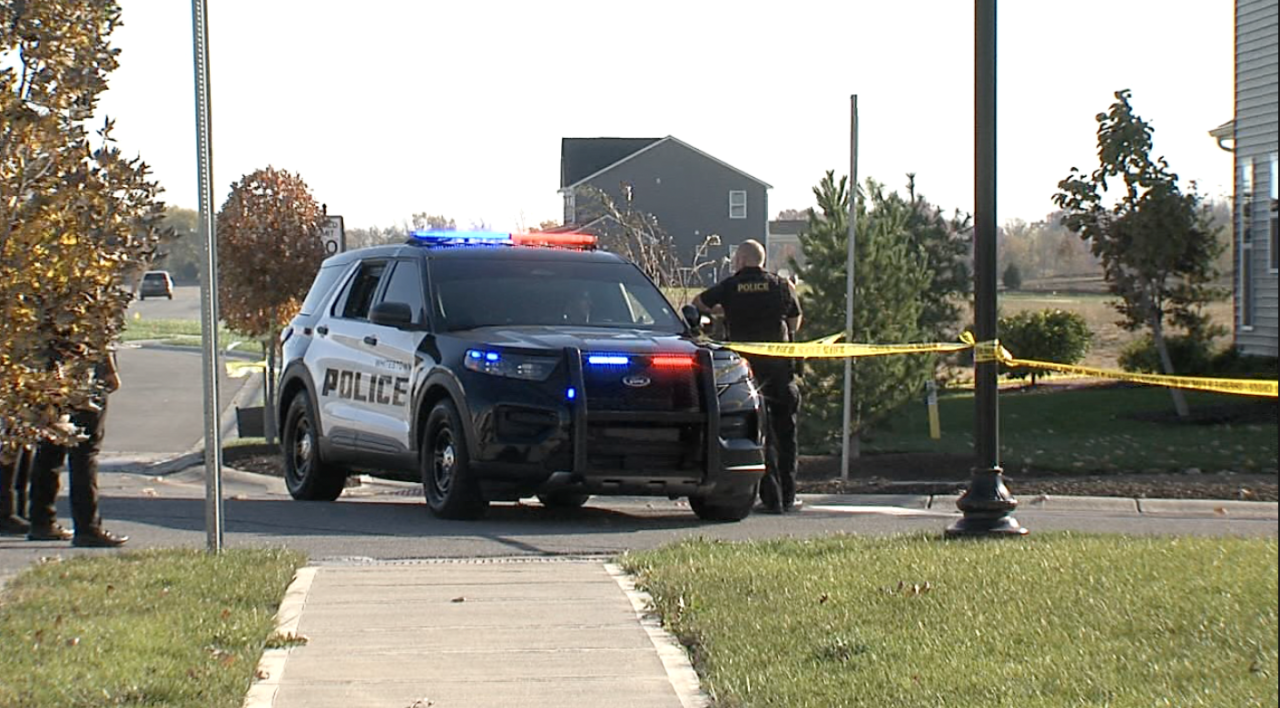
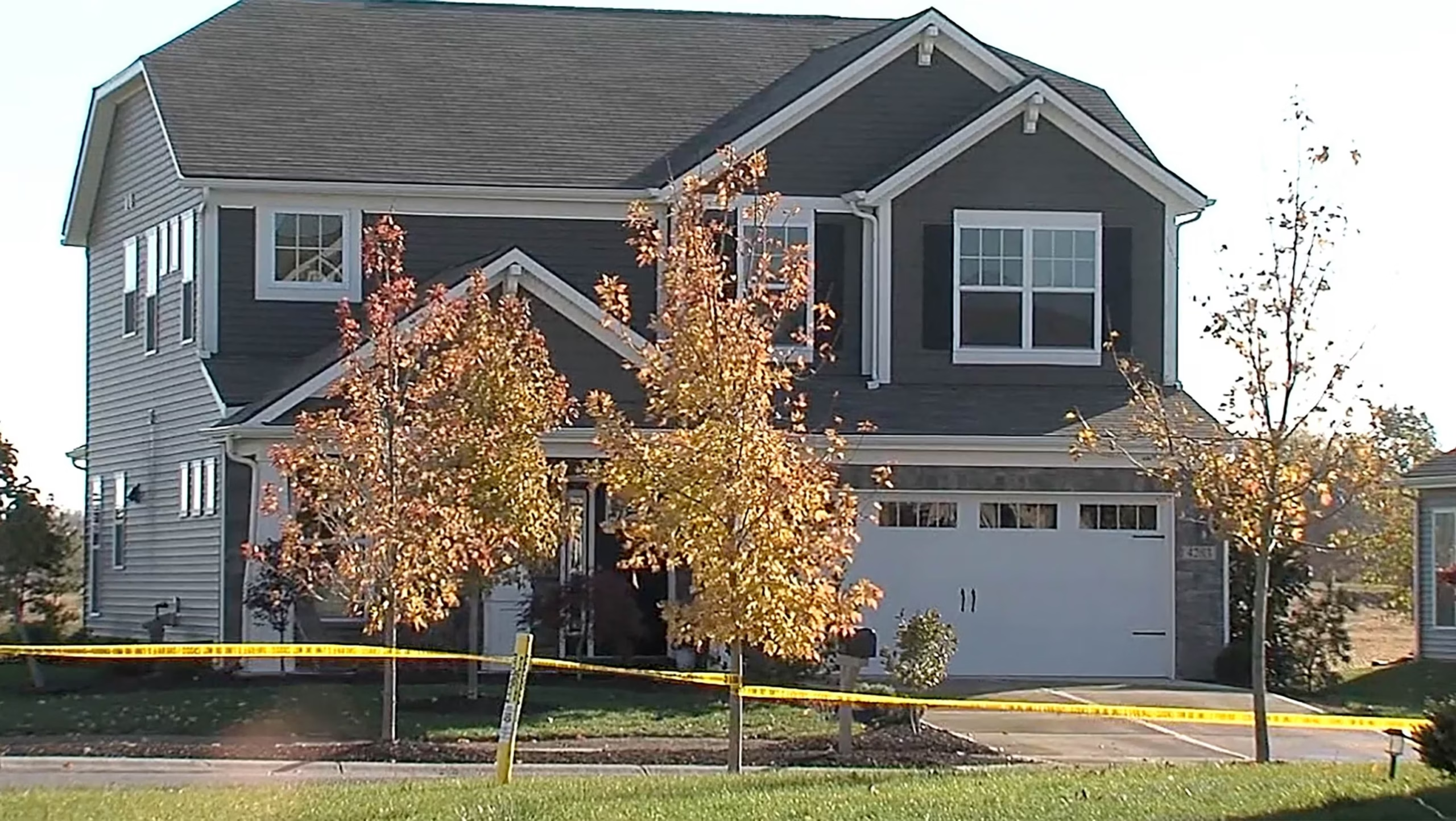
According to investigators, Maria Florinda Rios Perez De Velasquez was working as a house cleaner when she mistakenly went to the wrong address in Whitestown, Indiana.
Authorities say she believed she had arrived at the correct home for a scheduled cleaning appointment.
As she attempted to enter the residence, the homeowner confronted her.
Moments later, gunfire erupted.
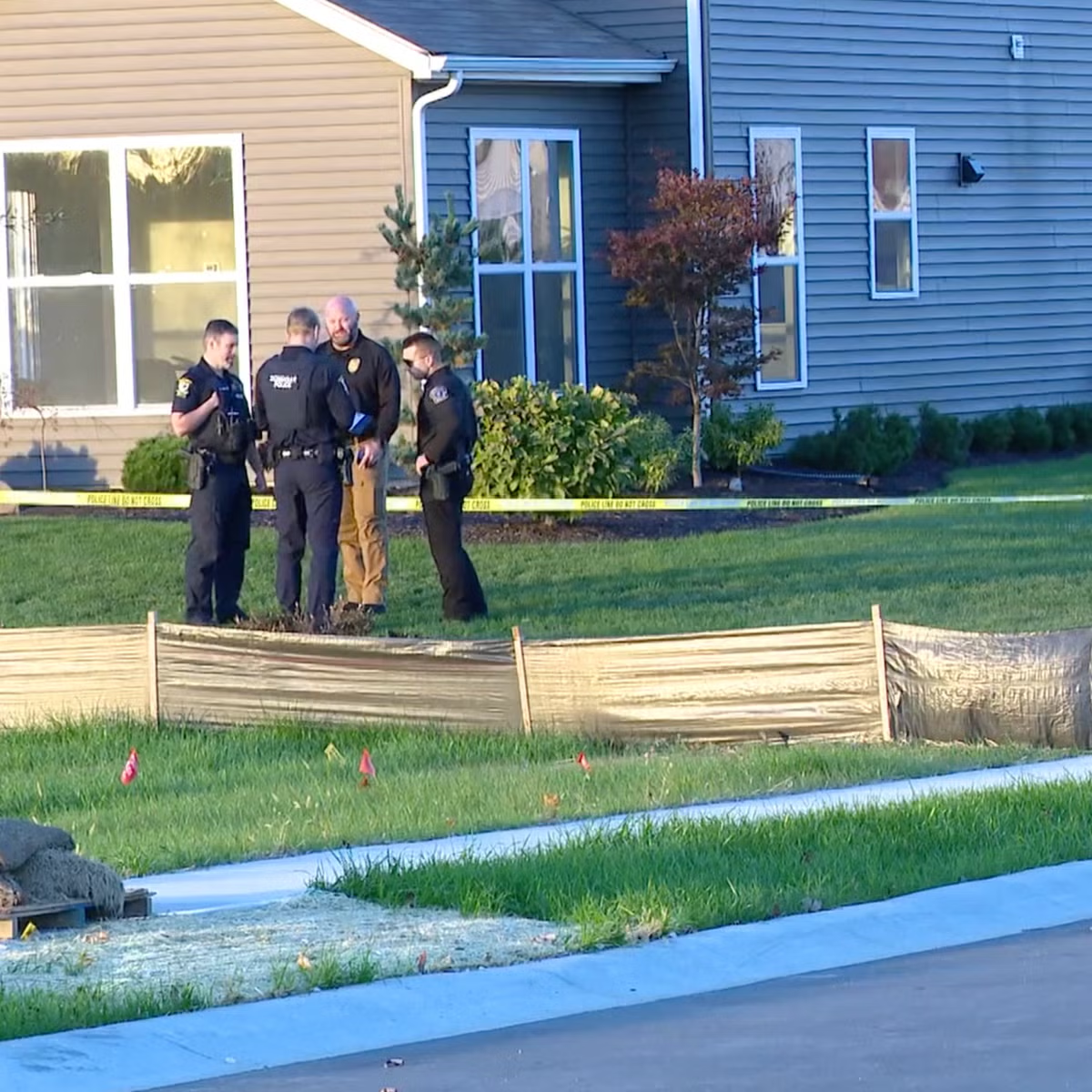
Emergency responders rushed to the scene, but the woman later died from her injuries.
Investigators quickly determined that the victim had simply gone to the incorrect address and had no intention of committing a crime.
That detail immediately transformed the case from what some initially assumed might be a straightforward self defense incident into a much more legally complicated investigation.
The tragedy also raised heartbreaking questions about how a simple mistake could end in the loss of an innocent life.
Prosecutors Say Indiana’s Self Defense Law Does Not Apply
Indiana is one of many states with laws that allow people to defend themselves, their families, and their homes under certain circumstances.
However, prosecutors emphasized that simply invoking Stand Your Ground protections does not automatically shield someone from criminal charges.
In announcing charges against the homeowner, prosecutors indicated that investigators did not believe the legal requirements for justified deadly force had been met.
Although the full evidence will ultimately be presented in court, officials have stated that Indiana’s self defense statute contains very specific legal standards.
Those standards require more than simply finding someone on or near private property.
Instead, investigators must determine whether the homeowner reasonably believed deadly force was immediately necessary to prevent serious harm or an unlawful entry under circumstances recognized by state law.
That legal distinction has become one of the central issues in the case.
Understanding Stand Your Ground Laws

Stand Your Ground laws are often discussed after high profile shootings, but many people misunderstand what they actually do.
Contrary to popular belief, these laws do not create unlimited authority to use deadly force whenever someone feels uncomfortable or frightened.
Instead, they address one specific legal question.
If a person reasonably believes they face an imminent threat of death or serious bodily harm, must they first attempt to retreat before defending themselves?
In states with traditional retreat rules, prosecutors may examine whether someone could have safely avoided violence by leaving the situation.
Stand Your Ground laws generally remove that obligation in places where a person is legally allowed to be.
If the legal requirements are satisfied, individuals may stand their ground instead of retreating before using force.
However, every state defines those requirements somewhat differently.
That means a shooting considered legally justified in one state might produce a completely different outcome elsewhere.
The Difference Between Stand Your Ground and Castle Doctrine
Many people mistakenly use the terms Stand Your Ground and Castle Doctrine interchangeably.
Although they share similarities, they are separate legal concepts.
Castle Doctrine generally applies to a person’s home.
The legal theory comes from the centuries old principle that an individual’s home is their castle and they have the right to defend it against unlawful intrusion.
Stand Your Ground expands beyond the home.
Rather than applying only inside a residence, these laws typically allow individuals to defend themselves without retreating anywhere they are lawfully present, provided the legal conditions for self defense are satisfied.
Both legal concepts still require prosecutors and juries to determine whether the person’s belief that deadly force was necessary was reasonable under the circumstances.
Simply owning property or possessing a firearm does not automatically justify the use of lethal force.
That distinction is expected to play a significant role in the Indiana case.
Why This Case Has Drawn National Attention
The Indiana shooting has generated widespread attention because it appears to involve a tragic misunderstanding rather than an attempted home invasion.
Investigators say the victim was not attempting to burglarize the residence.
Instead, she had reportedly arrived at the wrong location while trying to perform her job.
That detail has resonated with many Americans because simple address mistakes occur every day.
Delivery drivers, contractors, utility workers, rideshare drivers, and home service professionals routinely visit unfamiliar neighborhoods.
Most encounters end with a brief apology and directions to the correct address.
In this case, however, the misunderstanding ended in fatal violence.
The tragedy has prompted renewed discussions about whether homeowners should attempt additional communication before resorting to deadly force whenever circumstances safely allow.
Self Defense Laws Continue to Divide Public Opinion
Supporters of Stand Your Ground laws argue that citizens should never be legally required to retreat when they reasonably believe their lives are in danger.
Organizations supporting expanded self defense rights contend that law abiding individuals deserve legal protection when forced to make split second decisions during dangerous encounters.
They argue that criminals should bear responsibility for creating threatening situations rather than expecting victims to calculate escape routes under extreme stress.
Critics view the laws differently.
They argue that removing the duty to retreat may increase unnecessary violence by encouraging armed confrontations that otherwise could have been avoided.
Some researchers have also questioned whether these laws contribute to higher homicide rates, though debate continues regarding the interpretation of available data.
The Indiana shooting has once again placed these competing viewpoints into the national spotlight.
How Self Defense Laws Differ Across the United States
One reason these cases often generate confusion is that self defense laws are not identical across the country. Every state has developed its own legal framework, even though many share similar principles.
More than 30 states recognize some version of Stand Your Ground protections, allowing individuals to defend themselves without first attempting to retreat if they are lawfully present where the confrontation occurs.
Several other states do not have formal Stand Your Ground statutes but still recognize similar protections through court decisions or jury instructions.
Meanwhile, nearly every state recognizes some form of Castle Doctrine, though the specific requirements for using deadly force inside a home can vary considerably.
Some states presume that an unlawful intruder poses a deadly threat under certain circumstances. Others require prosecutors or juries to closely evaluate whether the homeowner’s fear was objectively reasonable before deadly force can be considered legally justified.
These differences explain why similar shootings may produce dramatically different legal outcomes depending on where they occur.
Previous Cases Have Shaped the National Debate
The Indiana tragedy joins a long list of cases that have fueled public discussion about self defense laws.
Perhaps the most widely known was the 2012 shooting of Trayvon Martin in Florida. George Zimmerman claimed self defense, and his legal team relied heavily on Florida’s Stand Your Ground framework during the trial. Although the law itself was not formally argued as an immunity hearing, its principles became central to public debate surrounding the case.
The verdict intensified national disagreements over whether Stand Your Ground statutes protect innocent citizens or make violent confrontations more likely.
Years later, another highly publicized case involved former Dallas police officer Amber Guyger, who mistakenly entered what she believed was her apartment before fatally shooting Botham Jean inside his own residence.
Her attorneys argued that she believed she faced an immediate threat, but jurors ultimately convicted her of murder.
More recently, prosecutors in Texas rejected attempts to connect self defense protections to the fatal shooting of an 11 year old boy who had been playing a neighborhood prank by ringing doorbells before running away.
Officials emphasized that self defense laws do not automatically justify deadly force simply because someone appears on private property.
Each of these cases demonstrates that courts continue to evaluate self defense claims individually based on the specific facts surrounding each incident.
Why Prosecutors Filed Charges in Indiana
Although the criminal proceedings are still ongoing, prosecutors have already indicated why they believe charges are appropriate.
According to investigators, the available evidence does not support the conclusion that the homeowner faced the type of imminent deadly threat required under Indiana law.
Authorities have suggested that the victim’s mistaken arrival does not automatically establish criminal intent or justify lethal force.
Ultimately, prosecutors must prove beyond a reasonable doubt that the shooting violated Indiana law.
Defense attorneys, meanwhile, will likely argue that the homeowner reasonably feared an unlawful intrusion into the residence and acted under the stress of what appeared to be an immediate emergency.
Jurors will eventually determine whether those beliefs were reasonable based on the totality of the evidence presented during trial.
That process may include testimony from investigators, forensic experts, witnesses, and legal specialists who can explain how Indiana’s self defense statute applies to the circumstances of the case.
The Meaning of “Reasonable Belief”
One of the most important legal concepts in every self defense case is reasonable belief.
The law generally does not ask whether someone was actually in danger.
Instead, courts examine whether a reasonable person in the same situation would have believed deadly force was immediately necessary.
That distinction can significantly influence criminal trials.
Fear alone is not always enough.
Jurors often consider factors such as the person’s actions, available information, lighting conditions, attempts to communicate, opportunities to retreat if required by law, and whether less deadly alternatives existed.
In cases involving mistaken identity or accidental encounters, determining reasonableness can become especially difficult.
What one person perceives as an imminent threat may later appear very different after investigators reconstruct the entire sequence of events.
That is why self defense cases frequently involve lengthy legal proceedings rather than immediate conclusions.
The Human Cost Behind Legal Debates
While legal questions dominate courtroom proceedings, families often remind the public that real people stand behind every headline.
Maria Florinda Rios Perez De Velasquez reportedly left home expecting an ordinary day of work.
Instead, a simple navigation mistake allegedly placed her at the center of a fatal encounter.
For her family, the tragedy represents the permanent loss of a loved one whose only intention was to perform her job.
The homeowner also faces life changing consequences.
Regardless of the trial’s outcome, the incident has resulted in criminal charges, national attention, and emotional trauma that will likely continue for years.
Cases like this illustrate how quickly ordinary situations can escalate into irreversible tragedies when fear, uncertainty, and firearms intersect.
Could Similar Incidents Become More Common?
Experts note that mistaken arrivals at homes have become increasingly common in modern society.
Online shopping has dramatically increased package deliveries.
Food delivery services send drivers to unfamiliar neighborhoods every day.
Home healthcare workers, cleaners, contractors, repair technicians, landscapers, and rideshare drivers routinely rely on GPS systems that are not always accurate.
Simple address errors occasionally result in someone knocking on the wrong door or attempting to enter the wrong property.
Most of these encounters end peacefully after a brief conversation.
However, several recent shootings across the United States involving mistaken addresses have prompted renewed concerns about how homeowners respond to unexpected visitors.
Many law enforcement agencies encourage residents to call police whenever possible if they believe an unfamiliar person poses a threat rather than immediately resorting to deadly force.
Officials also remind homeowners that not every unexpected visitor intends to commit a crime.
Some may simply be lost, confused, or responding to incorrect navigation instructions.
The Broader Debate Over Public Safety
The Indiana shooting has once again highlighted the challenge lawmakers face when balancing two important priorities.
On one hand, citizens expect the legal right to defend themselves against genuine threats.
Few people would argue that homeowners should be powerless during violent home invasions.
On the other hand, lawmakers also seek to minimize unnecessary deaths resulting from misunderstandings or mistaken assumptions.
Finding that balance has proven difficult.
Supporters of existing self defense laws argue that weakening legal protections could place innocent homeowners at greater risk.
Critics contend that broader legal protections may encourage armed responses before situations are fully understood.
Neither side disputes the importance of personal safety.
The disagreement centers on where the legal boundaries should be drawn when uncertainty exists.
As more high profile cases emerge, that debate is unlikely to disappear anytime soon.
What Happens Next in the Indiana Case
The criminal prosecution will now determine whether the homeowner’s actions fall within Indiana’s legal definition of justified self defense.
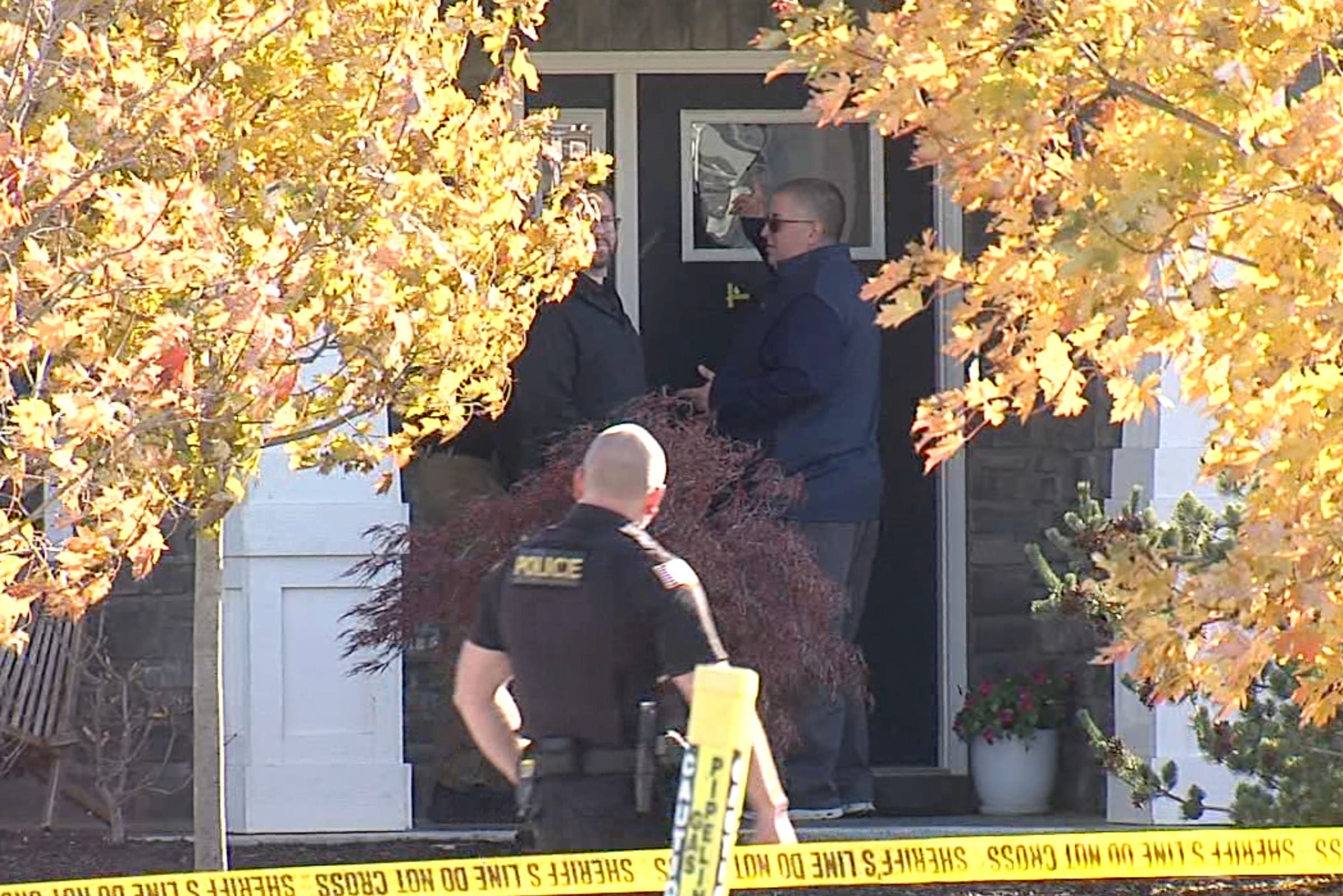
Investigators will continue gathering evidence, interviewing witnesses, and reviewing forensic findings before the case proceeds further through the court system.
Defense attorneys will have the opportunity to present evidence supporting their client’s belief that deadly force was necessary.
Prosecutors, meanwhile, must demonstrate why they believe those legal protections do not apply.
Whatever the final verdict, legal experts expect the case to be closely watched nationwide because it may further clarify how Indiana courts interpret self defense statutes involving mistaken identity and accidental encounters.
The outcome could also influence future discussions about public safety, firearm laws, and homeowner responsibilities.
A Tragedy That Raises Difficult Questions
The fatal shooting of Maria Florinda Rios Perez De Velasquez is about far more than one criminal case. It has become another reminder of how quickly everyday situations can spiral into irreversible tragedy when fear and misunderstanding collide.
Stand Your Ground laws were created to protect individuals facing genuine threats, but they were never intended to eliminate careful legal scrutiny. Every self defense claim ultimately depends on the specific facts, the reasonableness of the perceived danger, and whether the law’s strict requirements were truly met.
As the Indiana case moves through the justice system, it is likely to remain part of a broader national conversation about self defense, homeowner rights, and the responsibilities that come with using deadly force. Regardless of where people stand on the issue, the tragedy underscores a painful reality that legal debates often begin only after lives have already been permanently changed.