
Table of Contents
How a Cardboard Drone Became Reality
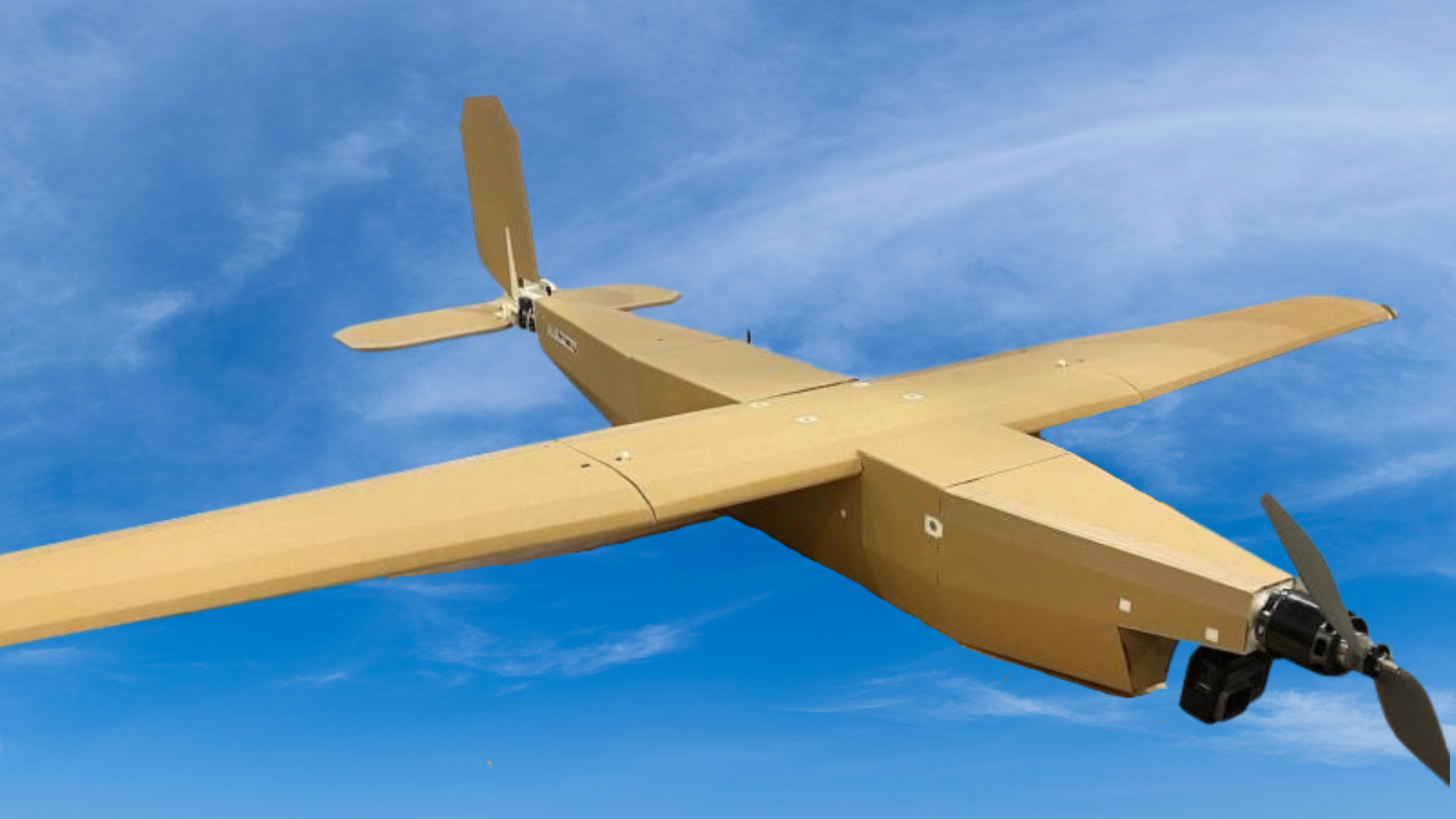
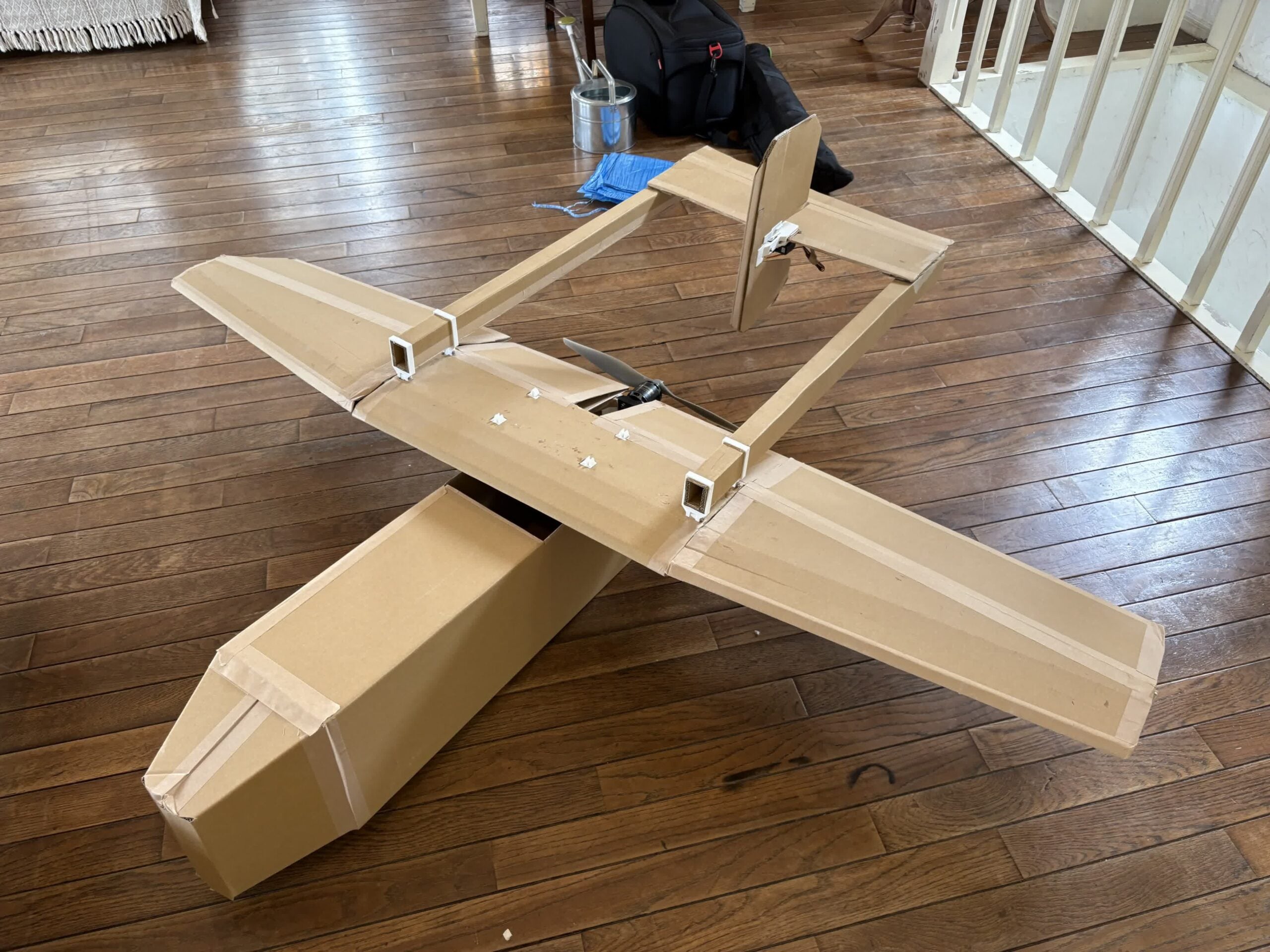
The AirKamuy 150 was developed by Japanese drone manufacturer AirKamuy in response to increasing demand from defense and security communities for cost effective unmanned systems. Traditional military drones typically rely on expensive aerospace grade composites carbon fiber and specialized manufacturing facilities. These materials and production methods drive costs up and create bottlenecks in availability. By contrast AirKamuy’s engineers turned to corrugated cardboard as the primary structural material adding only a water resistant coating to protect against moisture and minor environmental degradation.
Cardboard might seem like an unlikely candidate for an aircraft airframe. But it has several surprising advantages for a low cost platform. It is inexpensive widely available and easy to work with using conventional manufacturing infrastructure that exists in cardboard producing facilities around the world. This means that the drones could be manufactured at scale without specialized aerospace tooling training or supply chains commonly required for advanced composites. The implications extend beyond just cost reduction. Ordinary cardboard factories could in theory switch production lines to drone bodies in times of conflict or urgency dramatically speeding up manufacturing throughput.
The company claims the AirKamuy 150 can be shipped flat packed and assembled in as little as five to ten minutes by technicians with minimal training. A standard international shipping container could hold roughly five hundred of these drones providing an extraordinary amount of aerial assets ready for deployment at short notice. That modularity and swiftness of assembly enhances the platform’s appeal to militaries and defense specialists looking for flexible solutions that do not require major logistical investments.
Performance and Capabilities
Despite its humble materials the AirKamuy 150 is not merely an inert target. It is a fully functioning remotely piloted aircraft capable of traveling around fifty miles or remaining airborne for roughly eighty minutes carrying a three pound payload. Its electric propulsion system keeps noise and heat signatures relatively low and also aligns with a design philosophy centered around simplicity and ease of use.
Payload options are limited by the aircraft’s lightweight build but still sufficient for a range of mission types. According to AirKamuy the drones could be equipped with small reconnaissance sensors electronic warfare packages or limited munitions. In addition to serving as aerial targets for defensive training missions the drones could operate in coordinated swarms to overwhelm enemy air defenses force radar activation or sacrifice themselves as decoys to protect more valuable assets.
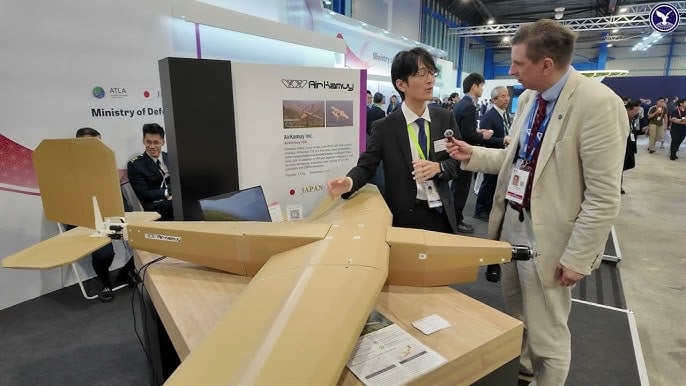
AirKamuy’s Chief Engineer Naoki Morita explained at the Singapore Airshow earlier this year that the platform was primarily envisioned as a counter drone system capable of operating in large numbers. This use case reflects a shift in how armed forces around the world now view drone warfare not as a sparse application of high end vehicles but as an industrialized process where quantity offers strategic advantage.
Why Cost Matters in Modern Drone Warfare
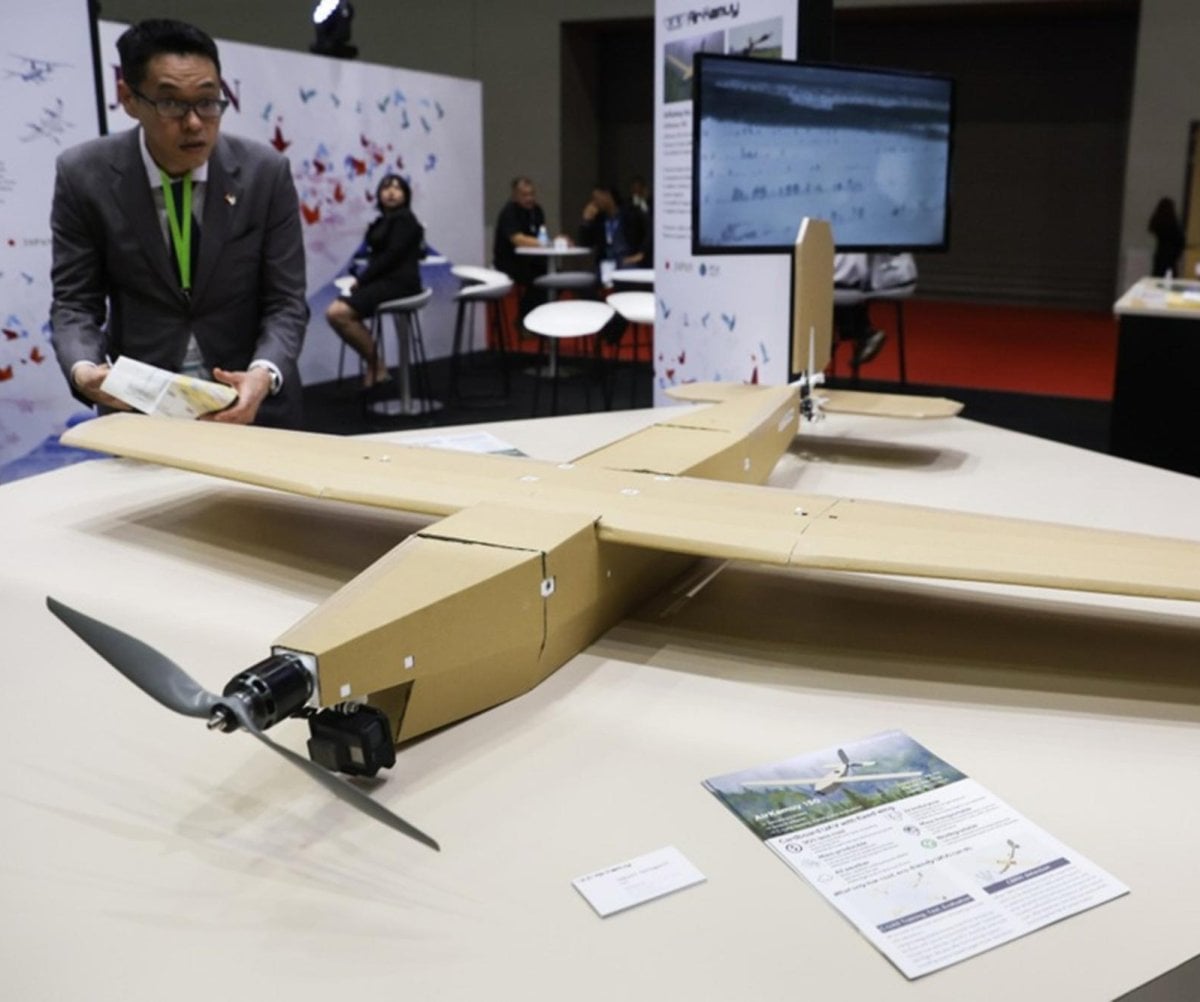
The AirKamuy 150’s cost at around two to two thousand five hundred dollars each places it at an extraordinary price point compared with most military drones traditionally used for reconnaissance or precision strike missions. Even comparatively inexpensive systems like Iran’s Shahed drones used extensively in recent conflicts are estimated to cost around twenty to fifty thousand dollars each. This means the cardboard drones are potentially an order of magnitude cheaper than existing low cost unmanned platforms.
This extreme affordability matters for several reasons. First it removes the economic barrier to widespread deployment. Militaries that once had to carefully ration the use of expensive drones can now potentially deploy them in swarms of hundreds or even thousands without incurring crippling expenses. Second the low price point reduces the strategic value of losing individual units in contested airspace. If an enemy air defense system destroys a high end $500,000 drone the loss may be significant. But if it downs a $2,000 cardboard drone the strategic calculus shifts dramatically.
Finally the sheer possibility of mass production means that during a conflict a belligerent could conceivably saturate adversary defenses with unrelenting waves of these low cost assets. Over time this could force defenders to change tactics invest more in short range point defense systems or expend expensive interceptors against relatively cheap targets leading to resource attrition on both sides.
The Broader Military Context
The development of low cost expendable drones did not occur in a vacuum. Conflicts around the world in recent years have seen astonishing growth in the deployment of unmanned systems by both state and non state actors. In Ukraine for example both Russian and Ukrainian forces have used large numbers of relatively inexpensive drones for reconnaissance and direct attacks on infrastructure military positions and formations. In the Middle East similar tactics have emerged with various militant groups and state militaries employing commercial off the shelf drones modified for combat roles.
These conflicts exposed the changing nature of warfare in the 21st century where unmanned systems have become ubiquitous and where sensor networks remote piloting and automation have shifted the balance away from purely human intensive battlefield assets. In this environment low cost drones take on outsized importance because they democratize access to aerial capabilities for smaller militaries or groups without advanced industrial bases.
Military thinkers now frequently talk about the “attrition economy” in drone warfare where losing an unmanned asset is not only expected but built into the operational plan. Cheap drones can be replenished quickly replaced or even deliberately sent on one way missions to force defensive reactions. This stands in stark contrast to the Cold War and post Cold War era where protecting high value aircraft and pilots was paramount.
Potential Strategic Uses of Cardboard Drones
Analysts see several potential roles for platforms like the AirKamuy 150 beyond their use as training targets. One obvious application is reconnaissance and surveillance in contested areas where risk of loss is high. Traditional reconnaissance aircraft might be expensive to lose or could expose pilots to danger. Cardboard drones operating in swarms could provide persistent situational awareness with acceptable levels of attrition.
Another possible use is as electronic warfare platforms. Small payloads could include jammers or sensors that disrupt or deceive enemy communications or radar systems. In a coordinated attack this could soften defenses ahead of more advanced systems or create openings in electronic networks ripe for exploitation.
Perhaps the most controversial potential application is as one way attack platforms. With lightweight munitions attached these drones could be used for precision strikes against lightly defended targets or serve as kamikaze style assets where their destruction upon impact is part of the mission design. While this raises ethical and legal questions it underscores the strategic flexibility inherent in an inexpensive disposable system.
Finally swarming tactics where large numbers of drones operate in coordinated formations present their own strategic potential. The ability to overwhelm radar systems saturate defense networks and force constant tracking and engagement could significantly degrade an adversary’s ability to respond effectively. The future of autonomous swarms controlled by advanced AI or coordinated algorithms could see battles not between individual vehicles but between arrays of low cost robotic assets executing complex maneuvers.
Japanese Military and Defense Response
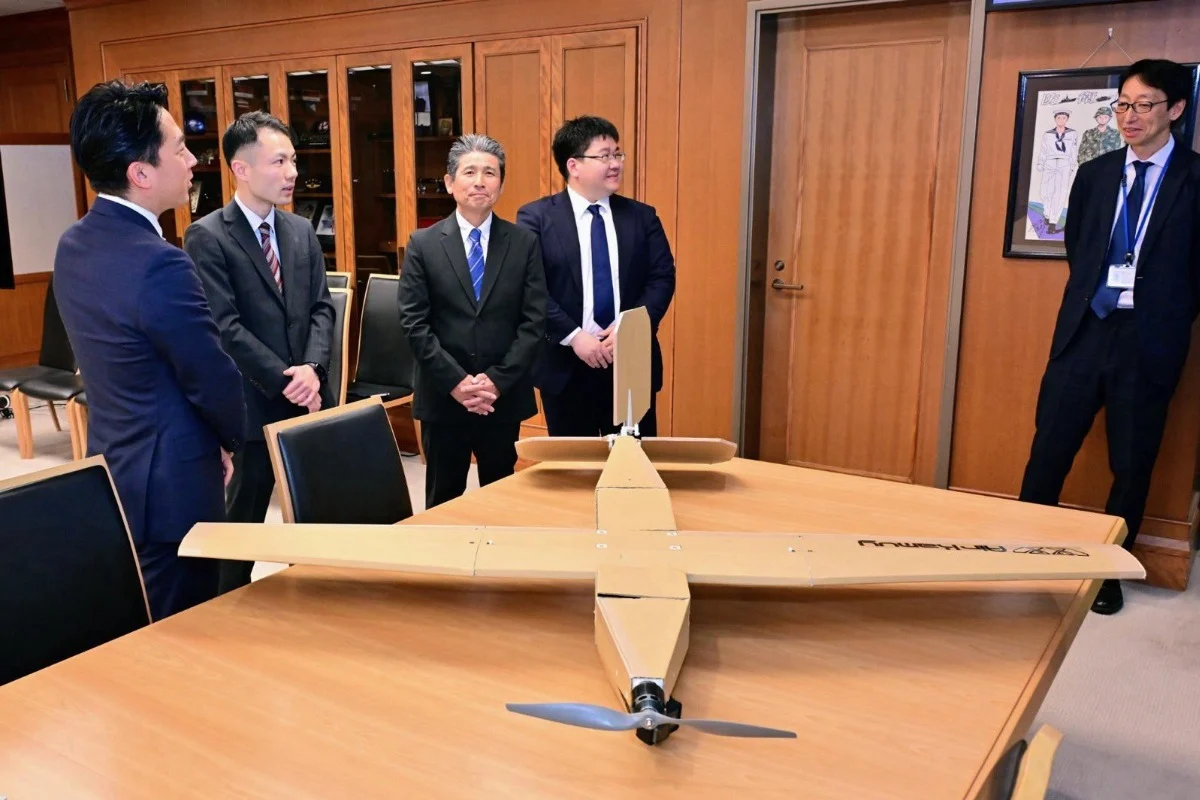
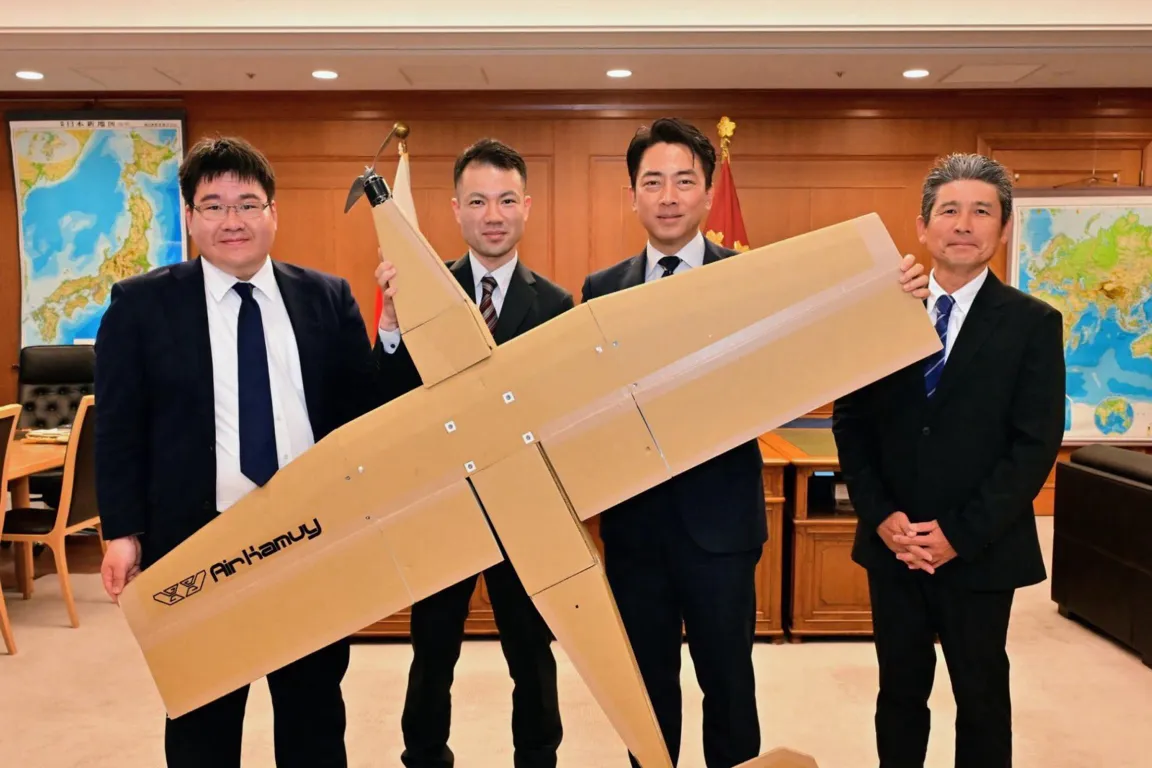
Japan’s Ministry of Defense appears cautiously optimistic about the implications of deploying the AirKamuy 150 drones. Defense Minister Koizumi’s public comments emphasized the drones’ usefulness as training assets and their role in expanding Japan’s unmanned systems capabilities. The Maritime Self Defense Force has reportedly begun integrating them into exercises to refine counter drone tactics as well as explore operational concepts that could extend beyond training.
Japan’s defense posture in the region is shaped by rising tensions across the Asia Pacific and increased interest in modernizing capabilities to address a broad range of security challenges. Low cost drones like the AirKamuy 150 offer a novel tool in Japan’s arsenal that complements more advanced systems and aligns with a defense strategy that values flexibility scalability and resilience.
However not all experts are unequivocally positive. Some worry that the proliferation of extremely cheap drones could lower the threshold for conflict or make airspace control significantly more difficult. If any actor can produce disposable aerial assets quickly and cheaply defensive measures may struggle to keep pace requiring new investment in counter drone technology rapid detection networks and improved electronic defense systems.
Ethical and Legal Considerations
The military use of cardboard drones raises important ethical and legal questions that extend beyond tactical considerations. Cheap expendable unmanned assets that can be used for offensive missions force policymakers to grapple with issues previously associated with high cost weapons. At what point does the deployment of disposable attack drones cross ethical lines? What legal frameworks govern autonomous missions versus remote piloting? How do international laws of armed conflict apply when swarms of low cost drones are deployed across borders or in densely populated areas?
Legal scholars and military ethicists are already debating these questions. Some argue that indiscriminate use of cheap drones could erode long established principles of proportionality and civilian protection in warfare. Others suggest that like other disruptive technologies these drones will necessitate updated international agreements and norms that reflect the changing nature of combat.
Japan itself has defensive legal constraints rooted in its post World War Two constitution that limit offensive military action. How cardboard combat drones fit within the framework of Japan’s self defense only policy will likely be part of continuing discussion within defense circles and the broader public.
What This Means for the Future
The emergence of ultra cheap cardboard combat drones represents more than a curious technological novelty. It reflects a deeper shift in how militaries think about cost scale autonomy and the value of mass produced unmanned systems. As defense planners grapple with the implications of large drone swarms for surveillance deception and attack missions it is becoming increasingly clear that future battlefields will look very different from those of the 20th century.
Cheap and expendable drones may soon operate alongside advanced autonomous systems artificial intelligence guided swarms and networked sensors in ways that are hard to fully predict. For nations like Japan integrating these platforms into training and defense strategy now could provide early operational experience that pays dividends in future conflicts. But the broader strategic ethical and legal questions will require careful deliberation by policymakers military leaders and international institutions alike.
Conclusion
Japan’s deployment of ultra cheap cardboard combat drones developed by AirKamuy is a vivid example of how innovation resourcefulness and unconventional thinking can reshape military capabilities. While the AirKamuy 150 may not replace traditional high end drones it challenges long held assumptions about what aerial platforms must cost how they should be produced and how they might be used in conflict. In a world where mass produced autonomous systems increasingly define the character of modern warfare the cardboard drone may prove both a harbinger of new tactical possibilities and a catalyst for urgent debate about the future of armed conflict.
As the global defense community continues to observe test results training applications and evolving operational concepts the simple cardboard drone may have already achieved its most important role: forcing a reconsideration of how wars are fought and what technologies will matter most in the decades ahead.