
Table of Contents
- Japan Steps Forward With a Carefully Worded Warning
- Why Japan Is Watching the Region So Closely
- Gaza, the West Bank, Lebanon, and Syria Are No Longer Separate Stories
- The Meaning of Japan’s Diplomatic Language
- Japan’s Asset Freeze on Israeli Settlers Signals a Harder Edge
- Why Tokyo Remains Careful on Palestinian Statehood
- A Two State Solution Still Frames Japan’s Position
- Japan’s Broader Foreign Policy Style Is on Display
- Why This Warning Matters Now
- A Cautious Power Trying to Prevent a Wider Fire
Japan Steps Forward With a Carefully Worded Warning
Japan is not always the first country people think of when headlines turn to the Israeli Palestinian conflict or wider Middle East tensions. It does not dominate the story the way the United States, regional powers, or European states often do. Yet that is partly why this latest intervention stands out. When Tokyo chooses to speak with greater clarity, observers pay attention.
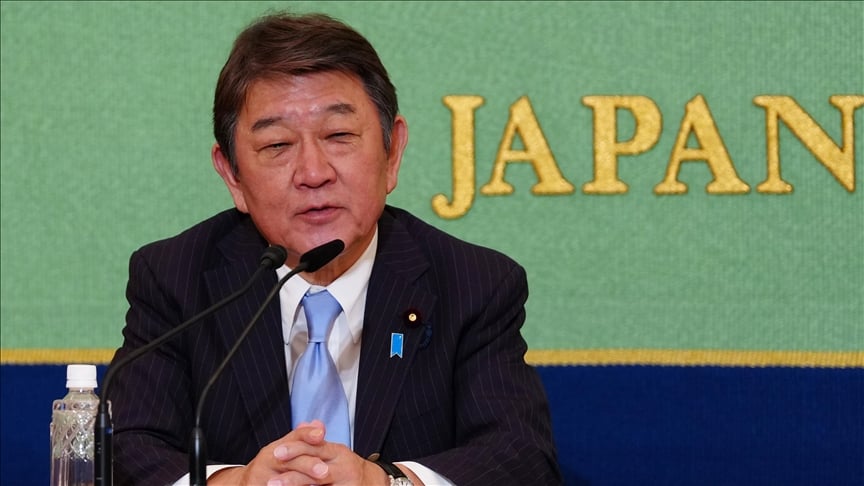
Motegi’s message to Israel was framed in diplomatic language, but its meaning was unmistakable. Japan does not want Israel to take actions in Lebanon, Syria, Gaza, or the West Bank that could intensify instability. That is not a narrow comment tied to a single airstrike or operation. It is a broader warning about trajectory. Japan appears to be saying that the danger no longer lies only in any one incident, but in the cumulative effect of repeated military actions across multiple fronts.
This matters because diplomatic statements often reveal how countries interpret risk. Tokyo is signaling that it sees the region’s conflicts as increasingly interconnected. Violence in Gaza cannot be isolated from developments in the West Bank. Military action in Lebanon cannot be separated from the wider regional atmosphere. Pressure in Syria adds another layer. The more fronts that remain active, the easier it becomes for a contained crisis to become a regional rupture.
Why Japan Is Watching the Region So Closely
Japan’s concern is not abstract. It is deeply tied to economic and strategic realities. The country relies heavily on the Middle East for natural resources, especially oil. That dependence shapes how Tokyo reads any sign of escalation in the region.
When Motegi highlighted Japan’s reliance on oil imports from the Middle East, he was doing more than explaining national interest. He was reminding audiences that regional conflict is not just a humanitarian or diplomatic matter for Tokyo. It is also a question of domestic stability, industrial continuity, and long term security. A worsening conflict can affect energy prices, supply chains, shipping routes, insurance costs, and investor confidence. In a highly interconnected global economy, regional instability can reach Tokyo faster than distance might suggest.
That is why Japan often approaches Middle East diplomacy with a mixture of caution and seriousness. It does not want to be dragged into militarized confrontation, but it also cannot afford indifference. The region matters too much to Japan’s energy security and economic planning. Even when Tokyo’s voice is quieter than that of larger military powers, its calculations are extremely serious.
This also helps explain why Japan tends to prefer diplomatic pressure, multilateral coordination, and incremental sanctions over more dramatic moves. It wants de escalation because de escalation serves both humanitarian goals and national interest.
Gaza, the West Bank, Lebanon, and Syria Are No Longer Separate Stories
One of the most important elements of Motegi’s remarks is that he referred not only to Gaza and the West Bank, but also to Lebanon and Syria. That wider framing tells us something important about how Japan sees the current crisis.
Too often, international coverage treats each arena as if it exists in its own compartment. Gaza is discussed as one front. Settler violence or military actions in the West Bank are treated as another. Lebanon enters the story when cross border fire rises. Syria appears as a separate strategic theater. But from Tokyo’s perspective, these are not isolated crises. They are overlapping pressure points inside one unstable regional system.
That view is hard to dismiss. An attack in one place can trigger retaliation in another. Political pressure in one arena can harden military choices elsewhere. Diplomatic failure on one front can weaken restraint on all fronts. By naming multiple theaters at once, Japan is effectively arguing that the entire regional balance is under stress.
This broader reading of the crisis also makes Japan’s warning more significant. It is not simply asking for moderation in one military campaign. It is urging restraint across a chain of possible escalatory pathways.
The Meaning of Japan’s Diplomatic Language
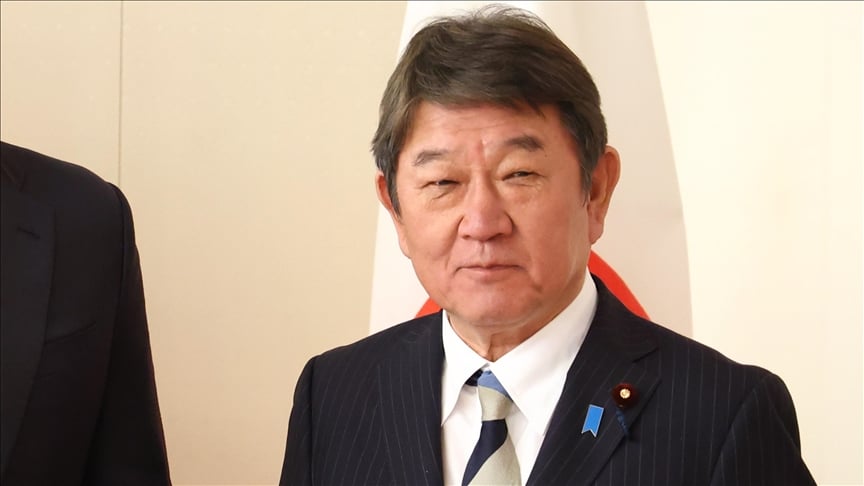
Diplomatic language often sounds restrained, but that does not mean it is weak. When Motegi said Japan had conveyed its position to Israel on various occasions, he was describing a pattern of repeated communication. In diplomacy, repetition matters. It suggests sustained concern rather than a one off reaction.
The phrase “refrain from actions that may undermine regional stability” is also carefully chosen. It avoids theatrical condemnation, but it still carries force. It places the burden on Israel to avoid deepening instability. It frames the issue not merely as self defense or retaliation, but as a regional problem with wider consequences.
That matters because much of modern diplomacy is a contest over language before it becomes a contest over action. The side that defines the situation often shapes how other states respond. By emphasizing regional stability, Japan is trying to shift the frame away from narrow military justification and toward broader responsibility.
This is classic Japanese diplomacy at its most recognizable. It is cautious, deliberate, and designed to preserve communication channels while still signaling disapproval. Tokyo is not seeking dramatic confrontation. It is trying to influence behavior through persistent pressure and international coordination.
Japan’s Asset Freeze on Israeli Settlers Signals a Harder Edge
While Japan remains measured on the question of Palestinian statehood, it has not been completely passive. Motegi pointed to measures taken in July to freeze assets belonging to Israeli settlers in response to worsening conditions in the West Bank. That is a meaningful step, and it suggests Japan is willing to move beyond rhetoric when it sees the situation deteriorating.
Asset freezes are not symbolic in the same way as verbal criticism. They are targeted economic actions. They say that conduct on the ground has crossed a threshold serious enough to warrant material consequences. By using such measures, Tokyo is aligning itself with a growing international view that unchecked settler activity and violence in the West Bank cannot simply be ignored as a secondary issue.
This is significant because Japan is not known for rushing into punitive measures unless it believes the situation is serious and diplomacy alone is insufficient. The move reflects a harder edge in Japanese policy than some observers may expect.
At the same time, the choice of a targeted freeze rather than broader sanctions shows that Tokyo is still trying to calibrate pressure carefully. It wants to register disapproval without collapsing its broader diplomatic posture. That balance is not easy, but it helps explain Japan’s current position. It wants to show principle while preserving room to act as a credible diplomatic actor.
Why Tokyo Remains Careful on Palestinian Statehood
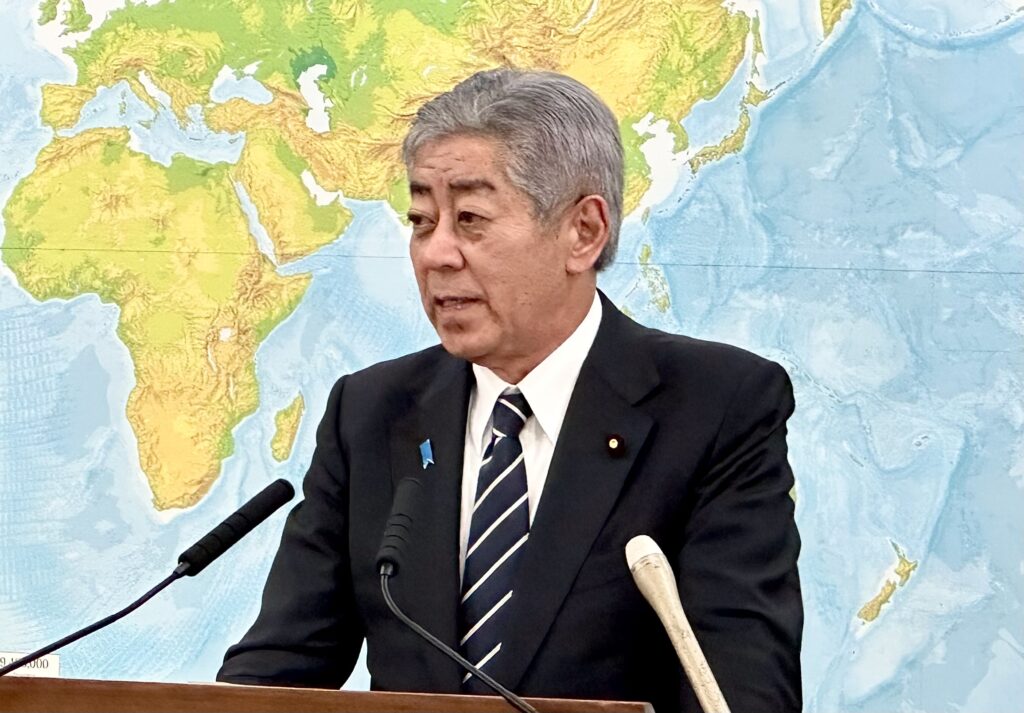
One of the most revealing parts of Motegi’s remarks was his answer on Palestinian statehood. He did not reject the idea. In fact, he linked the future of Palestine and the issue of statehood to the realization of a two state solution. But he also made clear that Japan believes a comprehensive judgment is needed based on national and human rights considerations.
That is diplomatic language for caution. Japan is not closing the door on Palestinian statehood, but it is also not rushing to formal recognition. That caution places Tokyo in a middle position. It wants to preserve support for a two state framework while avoiding a move it may view as politically premature or diplomatically destabilizing.
This hesitation reflects the complexity of Japan’s foreign policy style. Tokyo often prefers to move in coordination with broader international patterns rather than act in a highly unilateral way on major geopolitical questions. It also tries to preserve working relationships with multiple actors at once.
Critics may argue that this approach is too slow and too careful, especially when conditions on the ground continue to worsen. Supporters may say that Japan is trying to protect the possibility of constructive diplomacy by not hardening its posture too early. Both arguments carry weight. What is clear is that Tokyo is trying to balance values and leverage without collapsing into symbolic gestures it believes may have limited practical effect.
A Two State Solution Still Frames Japan’s Position
Despite its caution, Japan continues to anchor its language in the idea of a two state solution. That is important because the phrase has become increasingly fragile in international politics. Many governments still use it, but fewer seem able to explain how it remains achievable under current conditions.
For Japan, however, the phrase still matters. It offers a diplomatic framework that can justify concern over Palestinian rights while also preserving engagement with Israel. It allows Tokyo to speak in the language of international legitimacy and negotiated settlement rather than choosing total alignment with one side’s maximal position.
But this also raises a deeper question. How long can governments continue invoking the two state solution without taking stronger steps to defend the conditions needed for it to exist? If violence intensifies, settlements expand, and regional war risk rises, then the phrase risks becoming more ceremonial than operational.
Japan’s current stance seems to reflect this tension. It wants to keep the idea alive, but it is not yet moving fast enough to satisfy those who believe formal recognition of Palestine is now necessary. That is the dilemma at the heart of Tokyo’s policy.
Japan’s Broader Foreign Policy Style Is on Display
The entire episode offers a window into Japan’s foreign policy character. Tokyo tends to favor stability, predictability, and rules based diplomacy. It is deeply sensitive to disruptions that threaten energy flows or regional order. It also tends to avoid maximalist posturing, instead choosing careful language backed by selective measures.
That style can sometimes look understated in a media environment shaped by dramatic declarations. But understatement should not be mistaken for indifference. In many ways, Japan is doing what it often does best: signaling concern early, preserving diplomatic channels, working with partners, and applying calibrated pressure where it believes pressure is justified.
This style also reflects Japan’s national circumstances. As a country with major economic stakes but more limited military projection compared with the United States, Japan often relies on diplomacy, sanctions, and multilateral cooperation to pursue its interests. It does not benefit from regional chaos, and it rarely sees advantage in rhetoric that makes compromise harder.
In this context, Motegi’s warning to Israel is entirely consistent with Japan’s broader strategic culture. It is a call for restraint rooted in both principle and self interest.
Why This Warning Matters Now
Timing is everything in diplomacy, and Japan’s warning comes at a moment when the region feels unusually fragile. The danger is not only that violence continues, but that it becomes normalized across multiple fronts. Once military actions in Gaza, the West Bank, Lebanon, and Syria are all treated as part of the ordinary background of regional politics, the threshold for a larger war may quietly fall.
Japan appears to understand that risk. Its statement is best read as an attempt to interrupt that normalization. By speaking now, Tokyo is saying that continued escalation is not acceptable, and that major powers cannot treat widening conflict as routine.
This matters because warnings from middle and major powers together can gradually shape international expectations. Israel may not change course because of one Japanese statement alone. But cumulative diplomatic pressure matters, especially when it comes from states with economic weight, international credibility, and strong interest in regional stability.
Japan is therefore adding its voice to a wider effort to prevent the current conflict environment from hardening into something even more dangerous.
A Cautious Power Trying to Prevent a Wider Fire
Japan’s message to Israel is ultimately about more than one bilateral disagreement. It is about a larger fear that the Middle East is moving toward a more explosive phase, one in which localized attacks and retaliations merge into a broader crisis that becomes far harder to contain. By urging Israel to avoid actions that could undermine regional stability, Tokyo is trying to push back against that drift.
At the same time, Japan’s stance reveals its own limitations and tensions. It is willing to freeze assets linked to Israeli settlers, but still cautious on Palestinian statehood. It speaks clearly about concern, yet chooses careful words. It supports a two state solution, but avoids rushing ahead of its own diplomatic rhythm. This combination may frustrate those who want sharper action, but it also reflects how Japan understands its role: a serious, economically exposed, diplomatically minded power trying to influence outcomes without fueling further polarization.
In the end, Motegi’s remarks capture a broader truth about the moment. The Middle East crisis is no longer a set of isolated episodes. It is a regional stress test with global consequences. Japan knows that, and its warning to Israel is rooted in that awareness. The message is simple, even if the diplomacy is measured: do not turn an already dangerous region into something even harder to save.