

Table of Contents
- The Billionaire Bet That Could Redefine Energy
- The Hunt for the Metals That Power the World
- Why Bezos and Gates Are All In
- A Modern-Day Gold Rush, Driven by Algorithms
- The Ethical Dilemma of Clean Energy
- From Tech Titans to Earth’s Treasure Hunters
- The Billion-Dollar Question: Who Owns the Future of Energy?
- The Hidden Fortune Beneath Our Feet
- What This Means for the Rest of Us
- A New Kind of Power
- The Deep Question Beneath the Earth
The Billionaire Bet That Could Redefine Energy
When Jeff Bezos and Bill Gates invest in something together, the world pays attention.
This time, it’s not another tech startup or space company—it’s Kobold Metals, a mining firm using AI to find critical minerals essential for powering the clean energy revolution.
Forget oil. Forget gas. The new gold rush is happening deep underground—where elements like cobalt, lithium, and nickel hold the key to the next industrial revolution: the electrification of everything.
But what makes this investment truly fascinating is how two of the richest men on Earth are betting that the future of sustainability lies not in the sky, but in the soil.
The Hunt for the Metals That Power the World
Cobalt. Nickel. Lithium. These are the lifeblood of modern technology.
Your smartphone, your laptop, your electric car—all depend on them. And yet, these materials are notoriously difficult to find and extract.
That’s where Kobold Metals comes in.
Dubbed the “Google Maps for the Earth’s crust,” the company uses machine learning and geological data to locate high-value mineral deposits more efficiently than ever before.
In other words, Kobold is using AI to solve one of humanity’s oldest problems: finding treasure.
And this treasure doesn’t just mean profit—it means power.
Why Bezos and Gates Are All In
Bezos, through his venture fund Bezos Expeditions, and Gates, via Breakthrough Energy Ventures, have poured millions into Kobold Metals alongside other major backers like Michael Bloomberg.
Their goal? To secure the critical materials needed for electric vehicles (EVs), solar panels, and renewable energy storage.
But there’s also a deeper motivation—control.
Right now, most of the world’s cobalt comes from the Democratic Republic of Congo, where reports of child labor and unethical mining practices have raised serious global concern.
Kobold’s mission is to find new, more sustainable sources—using AI to reduce exploration costs, environmental damage, and human exploitation.
It’s a bold move that could reshape not only the mining industry but also the moral foundation of clean energy itself.
A Modern-Day Gold Rush, Driven by Algorithms
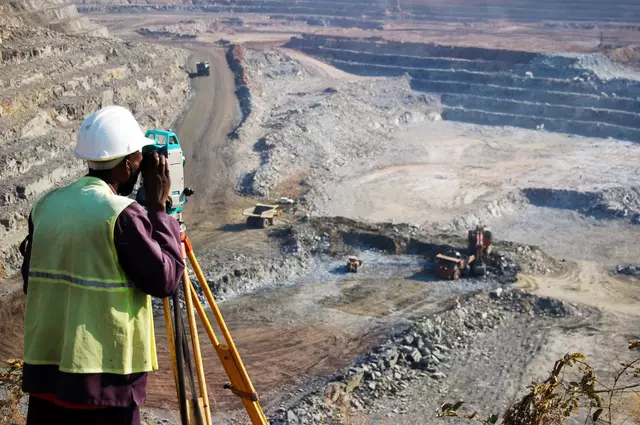
In traditional mining, companies spend years and millions of dollars drilling in the wrong places.
Kobold flips that model.
By feeding satellite imagery, geological surveys, and climate data into powerful AI systems, they can predict where valuable metals are buried—sometimes down to a few meters.
This means fewer wasted resources, less destruction, and faster access to materials that could make renewable energy more affordable.
Their technology has already sparked excitement across the globe—from the copper fields of Zambia to the cobalt-rich regions of Canada.
But as with every revolution, there’s a question lurking beneath the surface: Can “green mining” ever truly be green?
The Ethical Dilemma of Clean Energy
Electric cars may promise zero emissions—but their batteries tell another story.
Mining the materials needed for EVs and solar panels still comes with environmental costs—deforestation, water pollution, and carbon output.
Even the most advanced AI can’t erase the fact that digging up the Earth always leaves scars.
But Bezos and Gates believe the trade-off is worth it, especially if the process can be made cleaner and more efficient.
And with the global demand for EV batteries expected to increase tenfold by 2030, the race to secure sustainable mineral sources has become one of the most lucrative—and controversial—industries on the planet.
From Tech Titans to Earth’s Treasure Hunters
It’s ironic, isn’t it?
The same billionaires who reached for the stars with SpaceX and Blue Origin are now looking underground for the next great leap in human progress.
But this isn’t just about money—it’s about legacy.
Gates has long positioned himself as a leader in climate innovation, while Bezos has invested heavily in carbon removal technologies and reforestation projects through his Earth Fund.
Now, their partnership in Kobold Metals brings the sustainability movement full circle—from cleaning the air to cleaning the Earth itself.
And this isn’t science fiction. It’s already happening.
The Billion-Dollar Question: Who Owns the Future of Energy?
Behind every EV, wind turbine, and solar farm is a simple truth: someone owns the resources that make them possible.
China currently dominates the global supply chain for critical minerals, controlling up to 70% of the world’s cobalt refining capacity.
That’s why Western investors are scrambling to catch up.
Kobold’s AI-driven exploration is seen as the West’s answer to China’s mining monopoly—a way to democratize access to the world’s most valuable resources while maintaining environmental and ethical oversight.
If successful, it could usher in a new age of energy independence—and perhaps even redefine geopolitics in the process.
The Hidden Fortune Beneath Our Feet
According to Kobold’s CEO, the Earth still hides trillions of dollars worth of untapped minerals, much of it locked away in remote, unmapped regions.
For centuries, mining has relied on brute force—dig, hope, repeat.
But now, thanks to AI and cloud computing, we’re entering an era where data, not drills, drive discovery.
Imagine a world where machines pinpoint resources without destroying ecosystems—where mining becomes precise, transparent, and sustainable.
That’s the world Bezos and Gates are betting on.
But as always, the line between innovation and exploitation remains razor-thin.
What This Means for the Rest of Us
If you think this story is just about billionaires and machines, think again.
The metals Kobold is chasing are the same ones inside your phone, your car, and maybe even the solar panels on your roof.
This technology could make EVs cheaper, phones last longer, and renewable energy systems more efficient.
In short, it could lower the cost of living for billions while accelerating the shift away from fossil fuels.
But that depends on one crucial question: Will these innovations stay in the hands of a few—or benefit everyone?
A New Kind of Power
As the world races toward net zero, one thing is clear: energy is no longer just about fuel—it’s about freedom.
The ability to power homes, cars, and industries without destroying the planet will define the 21st century.
And whoever controls the materials that make that possible—controls the future.
By investing in Kobold Metals, Bezos and Gates are doing more than chasing profit. They’re trying to shape the next era of civilization—one driven not by oil rigs or coal mines, but by algorithms, ethics, and the minerals of tomorrow.
The Deep Question Beneath the Earth

Mining has always been about extraction. But in the age of climate crisis, it’s also about redemption.
Can humanity learn to take from the Earth responsibly? Can billionaires truly use technology for global good?
Or will history repeat itself—another cycle of greed, hidden behind the language of progress?
No one knows for sure. But one thing is certain: what lies beneath our feet may determine what kind of future we build above it.
And if Bezos and Gates are right, the next great power source isn’t in the sky—it’s underground, waiting to be found.