

Table of Contents
A Curious Claim That Went Viral—And What the Evidence Really Shows
It’s true: koalas have fingerprints that look shockingly like human ones.
But the claim that they’ve caused crime-scene blunders? That’s unfounded.
Welcome to the weird corner of forensic science where marsupials and human criminals might — in theory — collide.
Koalas with Human-Like Fingerprints
If you’ve seen pictures of koala hands up close, you’d swear they belonged to a toddler. The ridges, loops, whorls — all “fingerprint-style.”
Here’s what scientists found:
- Koalas have opposable digits, especially on their front paws.
- Research (from the mid-1990s at the University of Adelaide) shows that koala fingerprints under a scanning electron microscope are remarkably and unexpectedly similar in pattern to human fingerprints.
- Experts call it “convergent evolution” — two very different species ending up with nearly identical physical traits because they share similar functional demands (in this case: gripping leaves, climbing trees) rather than recent common ancestry.
So yes — on a purely anatomical level, the claim that “koalas have fingerprints like humans” is correct.
The Viral Claim: Crime Scene Confusion

For years, social-media posts have claimed something like:
“Koala fingerprints were once found at Australian crime scenes and confused investigators because they look like human prints.”
It’s catchy. It sounds spooky and quirky.
It spread widely across platforms.
But here’s the key: Snopes investigated. They looked for documented cases of fingerprint confusion.
What did they find?
None. No public records. No confirmed forensic case where a koala’s print was mistaken for a human’s at a crime scene.
As Snopes concludes: the anatomical similarity is real — but the “detectives baffled by koala prints” angle is unfounded.
Why It Seems Plausible — But Doesn’t Hold Up
Let’s dig into why this claim feels believable — and why it doesn’t withstand scrutiny.
Why it could happen:
- If a koala touched a surface that a human later touched, the ridge pattern could look very similar to a human’s.
- In remote areas of Australia where koalas live, it’s plausible a koala could leave its prints on surfaces.
Why it likely doesn’t happen:
- Size and context matter: koala prints tend to be smaller and shaped differently than adult human prints. Forensic investigators are trained to pick up on size, spacing, and the overall pattern of ridges. (Ex: a koala’s “finger” is generally narrower and shorter than an adult human’s.) snopes.com
- Crime scenes are messy and complex — print identification doesn’t rely solely on pattern-matching but also on context, ridge detail, size, orientation, and often DNA/biometric verification.
- No verifiable case: despite the claim circulating widely, no authority or forensic body has confirmed that they were duped by a koala print.
As one New South Wales police senior sergeant said: “Although it would make for a good story, unfortunately I have never heard of Australian Crime Scene Examiners mistaking a koala’s fingerprints with those from a human.”
So while the “what if” is fascinating, the “it did happen” lacks evidence.
What This Means for Forensic Science & Fun Facts
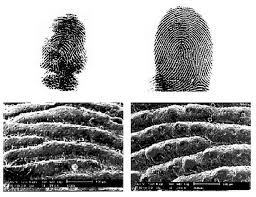
This story sits at the intersection of two domains: serious forensic science and fun animal trivia.
For forensic science:
- It reminds us that fingerprints — while unique — are only one part of the investigative puzzle.
- Size, context, and ridge detail matter.
- The claim underscores the importance of careful verification, especially when you’ve got something that looks like a human print but might not be.
- It also highlights how myth and mystery creep into science when anecdotes outpace evidence.
For animal lovers and trivia fans:
- It’s a cool fact that koalas have such human-like dermatitis ridges. PBS did a full article on it.
- It’s a reminder of how evolution can create similar solutions in wildly different species (arboral climbing demands → gripping ability → fingerprints).
- It makes you stop and think: are you looking at a human hand… or a koala paw?
But remember: just because something could happen doesn’t mean it did.
Takeaway: True, But Not What It Seems
So if you share the meme or the headline: “Koala fingerprints confused cops!”, here’s what you need to filter:
True: Koalas have fingerprints extremely similar to humans.
False/Misleading: There are documented cases of crime-scene investigators being confused by koala prints.
A lesson emerges: Verify before sensationalizing.
And while cute animals and forensic oddities make a great cocktail for viral posts — they don’t always reflect facts.