

Table of Contents
The Rise of Lab-Grown Meat and Its Environmental Benefits
Lab-grown meat, also known as cultured or cultivated meat, is produced by cultivating animal cells in a controlled environment, offering a sustainable alternative to conventional meat production. Unlike traditional meat, which requires large amounts of land, water, and feed to raise livestock, lab-grown meat can be produced with a fraction of the resources. It has the potential to drastically reduce the environmental footprint of meat production by cutting down on greenhouse gas emissions, land use, and water consumption.
The European Commission has backed lab-grown meat as a key component in the transition to a more sustainable food system. Research shows that cultivating meat can also support animal welfare by eliminating the need for slaughtering animals. However, Hungary’s government remains adamant that such innovations threaten the country’s agricultural heritage and the livelihoods of local farmers.
Cultural Protectionism and the Argument for a Ban

Hungarian officials have argued that banning lab-grown meat is necessary to preserve the country’s “traditional rural lifestyles.” Agriculture Minister István Nagy emphasized that food production must be linked to the land, and that introducing lab-grown meat would disrupt the agricultural traditions that are at the heart of Hungarian culture. He stated that if Hungary allowed such technologies, it would risk losing its national identity.
Nagy’s argument for protecting cultural traditions through this ban echoes broader nationalist rhetoric that has become increasingly common in Europe. By framing the issue as one of cultural preservation, Hungary is aligning itself with other nations, such as Italy, that have voiced concerns about the impact of novel foods on traditional culinary practices.
The EU’s Response
The European Commission has strongly criticized Hungary’s decision, arguing that the ban violates EU laws that promote the free movement of goods and the harmonized approval process for novel foods. The EU has a well-established regulatory framework for novel foods, which includes safety assessments conducted by the European Food Safety Authority (EFSA). Critics of the ban argue that Hungary’s move preempts this process and could set a dangerous precedent for other member states.
The EU’s stance is clear: lab-grown meat should be allowed to undergo the same approval process as other food products, with regulatory oversight ensuring its safety for consumers. Experts argue that Hungary’s ban could disrupt the market for innovative food technologies in Europe and undermine efforts to create a more sustainable food system.
Hungary’s Isolation
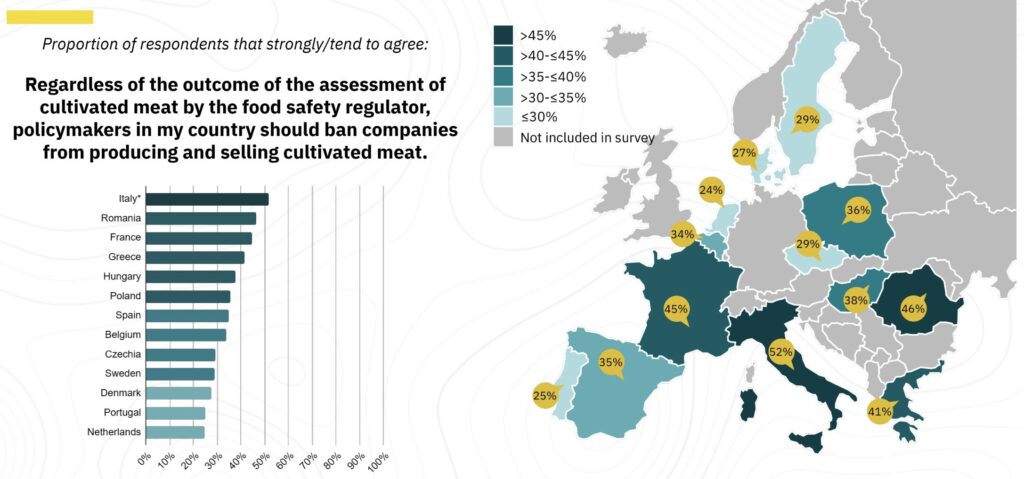
Hungary’s decision has sparked widespread criticism from other EU member states, many of which have embraced lab-grown meat as part of their strategy to combat climate change and food insecurity. Countries like the Netherlands, Lithuania, and Sweden have expressed concern that Hungary’s actions will undermine the EU’s collective efforts to address these pressing issues.
In particular, the Netherlands, which is home to several companies working on cultivating meat, has strongly opposed Hungary’s stance, calling it an obstacle to progress. European farmers, too, are divided on the issue. While some see lab-grown meat as a threat to traditional farming, others are more open to the idea, recognizing the potential benefits of having an additional protein source that could help feed a growing population without the environmental costs associated with conventional livestock farming.
Public Opinion in Hungary
Despite Hungary’s political leaders pushing for the ban, the public opinion on lab-grown meat in Hungary is more divided. Surveys have shown that more than 60% of Hungarians support the sale of lab-grown meat if it passes safety assessments from food regulators. Many consumers are open to the idea of consuming lab-grown meat as long as it is proven to be safe and nutritious.
This disconnect between government policy and public opinion highlights the growing demand for sustainable food options in Hungary. As consumers become more aware of the environmental impact of traditional meat production, they are increasingly receptive to alternatives like lab-grown meat. This creates a paradox, where the government is actively working against a consumer preference that aligns with global sustainability trends.
The Economic and Environmental Costs of the Ban
In addition to the cultural and legal implications, Hungary’s ban on lab-grown meat also carries significant economic consequences. As the global market for alternative proteins grows, countries that embrace these technologies will likely reap economic benefits by establishing themselves as leaders in the production of sustainable food products. By restricting the development of lab-grown meat, Hungary risks missing out on these opportunities.
From an environmental perspective, the ban undermines efforts to reduce the carbon footprint of food production. The meat industry is one of the largest contributors to global greenhouse gas emissions, and lab-grown meat presents a viable solution to this problem. Hungary’s decision to ban it could stall progress toward achieving the EU’s climate goals, particularly in relation to food production.
The Role of Consumers and the Future of Lab-Grown Meat
The future of lab-grown meat in Europe now depends on whether other countries can overcome the legal and political barriers that Hungary has put in place. The European Commission has made it clear that it does not support Hungary’s decision, and it is likely that legal challenges will follow.
At the same time, consumer demand for lab-grown meat is expected to continue growing. As the technology matures and more products are brought to market, it is likely that more European countries will embrace it as part of their food systems. The shift toward sustainable food production is inevitable, and Hungary’s opposition to lab-grown meat may eventually be seen as an outlier in the broader European context.
Conclusion
Hungary’s ban on lab-grown meat represents a broader clash between tradition and innovation, with cultural protectionism being used as justification for stalling technological progress. While Hungary remains committed to its traditional agricultural practices, the EU is moving toward a more sustainable food future that includes lab-grown meat as an essential component.
The decision to ban lab-grown meat may have political and cultural motivations, but it also overlooks the long-term environmental and economic benefits that such technologies offer. As Europe moves toward a more sustainable and innovative food system, Hungary’s stance may become a footnote in the global push for sustainable food production.