
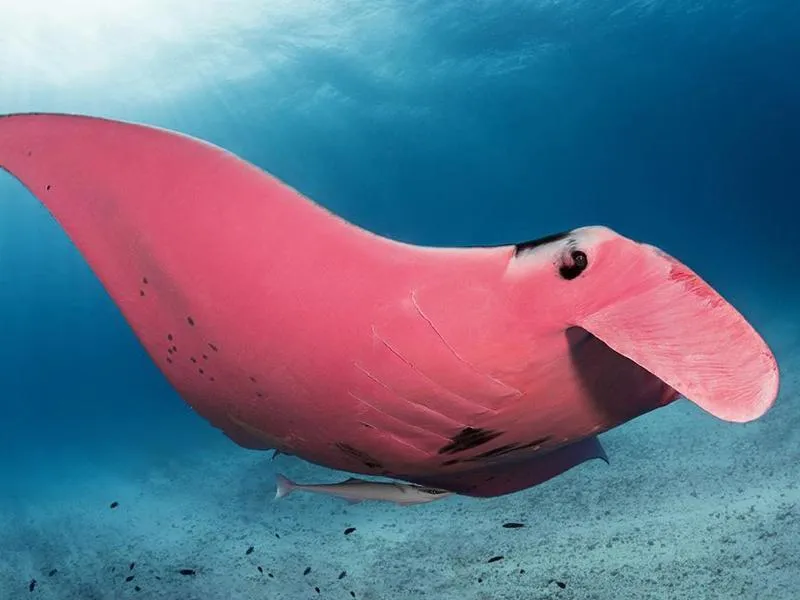
A rare phenomenon has surfaced off the coast of Australia that has stunned marine biologists and ocean lovers alike: a pink manta ray was spotted near Lady Elliot Island, a part of the Great Barrier Reef.
This isn’t just any ordinary sighting — it’s a discovery so unique that it has the potential to change the way we think about manta rays, marine life, and conservation. Imagine the excitement of seeing this rare creature gliding gracefully through the crystal-clear waters, its vibrant pink hue standing out against the blue expanse.
But what makes this discovery even more awe-inspiring is the rarity of the pink manta ray itself. Such sightings are so infrequent that they have captured the imagination of both the scientific community and the general public.
But how rare is this stunning pink manta ray, and why should we care?
Table of Contents
A Glimpse Into the Depths of the Great Barrier Reef
The Great Barrier Reef is home to some of the most diverse and breathtaking marine life in the world. From vibrant coral gardens to shimmering schools of fish, it’s a living, breathing ecosystem that has long been a source of fascination for scientists and tourists alike. But even within this vast and varied ocean environment, sightings like the pink manta ray stand out as extraordinarily rare.
Lady Elliot Island, located at the southern tip of the Great Barrier Reef, is known for its clear waters and healthy reef ecosystems. For years, it’s been a hotspot for divers, snorkelers, and marine researchers. But recently, it became the site of a discovery that no one saw coming.
When a group of marine biologists came across a manta ray with an unusual coloration, they initially thought it might be a trick of the light. However, upon closer inspection, they confirmed that the ray was indeed pink — a vibrant, almost surreal shade that set it apart from the common black and white manta rays found in the region.
A Once-in-a-Lifetime Encounter
What made this discovery even more remarkable is the fact that pink manta rays are so rare that only a handful have been documented throughout history. In fact, this particular manta ray marks only the second confirmed sighting of a pink manta in the world.
So, what makes this ray pink? Is it a rare genetic mutation? Or is it something deeper, perhaps tied to the ocean environment itself?
The answer, researchers believe, lies in the genetics of the ray — a condition known as leucism, which causes the animal to produce less pigment, giving it a lighter, often pinkish appearance. However, scientists are still in the early stages of understanding how this pigmentation occurs and what role it might play in the ray’s survival.
Why the Pink Manta Ray Is So Special
The pink manta ray is more than just a beautiful creature. It’s a symbol of the incredible diversity and mystery of marine life. Here’s why this discovery is so important:
1. Rare Genetic Mutation
While albino animals are often recognized in the animal kingdom, leucism is much less common. In cases of leucism, the animal retains some pigmentation, but in much lower amounts than usual. This unique feature creates the rare pink appearance that makes the manta ray stand out among its black-and-white peers.
The rarity of this genetic mutation makes the sighting of a pink manta ray an extraordinary event, one that catches the attention of both researchers and conservationists around the world.
2. A Symbol for Conservation
The pink manta ray isn’t just a marvel to behold — it’s also a reminder of the vulnerabilities of marine ecosystems. Manta rays, in general, are classified as near-threatened, with populations facing pressures from overfishing, habitat destruction, and climate change. The sighting of such a rare creature serves as a call to action to protect these ecosystems and ensure that such incredible marine life continues to thrive.
3. A Discovery That Sparks Imagination
The concept of finding a rare, one-of-a-kind creature in the depths of the ocean sparks wonder and curiosity. For those lucky enough to witness such an event, it’s an experience that lingers long after the encounter. And for scientists, it’s a goldmine for studying how genetic mutations like leucism manifest in marine life.
This pink manta ray has quickly become a symbol of the unexplored mysteries of the ocean. It’s a reminder that, despite all we’ve learned about the ocean, there are still countless discoveries left to be made.
The Future of Manta Rays: Why Protecting These Majestic Creatures Matters
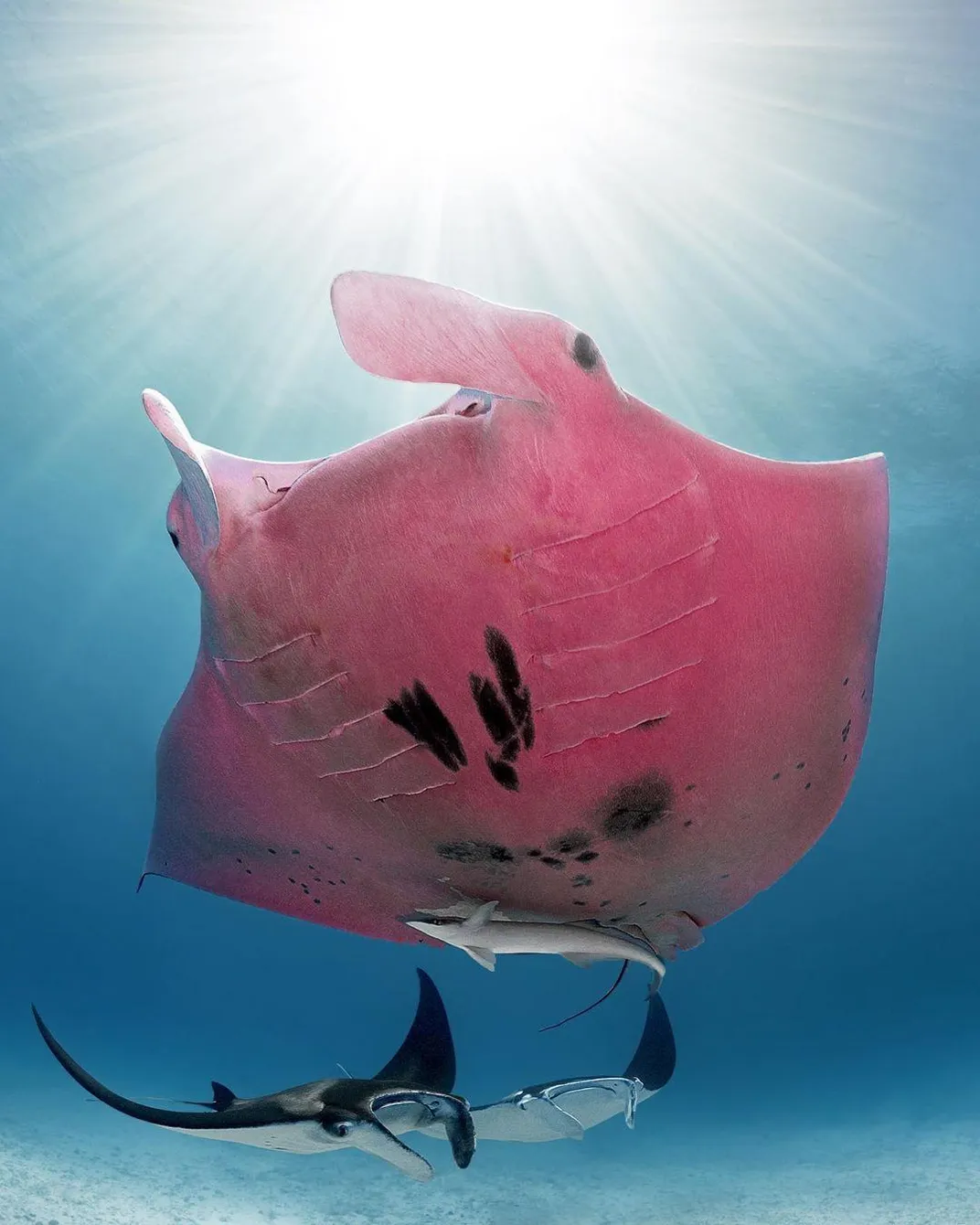
While the discovery of a pink manta ray is an exciting and rare moment, it’s important to remember that the larger story isn’t just about one animal — it’s about an entire species. Manta rays, both the black-and-white and the rare pink variety, play a crucial role in maintaining the health of marine ecosystems.
Manta rays are filter feeders, meaning they consume plankton and other small organisms as they swim through the water. This feeding behavior helps maintain the balance of marine life, ensuring that no one species becomes too dominant. But despite their importance, manta ray populations are under threat.
Threats Facing Manta Rays
- Overfishing: Manta rays are often caught in fishing nets, either accidentally or deliberately. Their gill rakers — the comb-like structures inside their gills — are highly valued in traditional medicine, driving illegal trade.
- Habitat Destruction: Coastal development, pollution, and climate change are all damaging the habitats where manta rays live. Coral reefs, like the one near Lady Elliot Island, are particularly vulnerable.
- Climate Change: Rising ocean temperatures and acidification are disrupting the ecosystems that manta rays rely on for food. This can lead to a decline in plankton populations, which directly impacts the manta ray’s ability to survive.
What Can We Do to Help?
The discovery of the pink manta ray is a cause for celebration, but it also serves as a wake-up call for marine conservation. If we want to ensure that future generations can witness such rare and awe-inspiring creatures, action must be taken to protect marine ecosystems.
1. Support Marine Conservation Efforts
There are countless organizations dedicated to protecting marine life and fighting for the preservation of ecosystems like the Great Barrier Reef. Whether through donations, volunteering, or simply raising awareness, we all have a role to play in conservation.
2. Reduce Your Carbon Footprint
Climate change is one of the biggest threats to marine life. By reducing our carbon footprint, we can help slow the rise in ocean temperatures and protect marine ecosystems from further destruction.
3. Support Sustainable Seafood Practices
The fishing industry plays a significant role in the decline of manta ray populations. Supporting sustainable seafood practices, such as buying from certified sustainable fisheries, helps reduce overfishing and protect vulnerable species.
The Pink Manta Ray: A Reminder of Nature’s Wonders
The sighting of the pink manta ray near Lady Elliot Island is a reminder of the incredible diversity of life that exists beneath the waves. It also serves as a call to action to protect the ocean’s fragile ecosystems — because without these efforts, we risk losing some of the most remarkable creatures our planet has ever known.
As the pink manta ray continues to glide through the waters, we are reminded of how much we still have to discover. The ocean is full of mysteries, and every new discovery brings us one step closer to understanding and appreciating the delicate balance of life that exists within it