
Table of Contents
- The Adorable Secret Hidden in Your Puppies’ Playtime
- A Closer Look: What Play Fights Really Teach Puppies
- The Science Behind the “Fake Pin” Strategy
- What Happens in the Wild? The Wolf Connection
- Why Vulnerability Is a Superpower in the Puppy World
- What Happens If Puppies Never Learn This Skill?
- What Owners Can Learn From Puppy Play Behavior
- Play Fighting and Human Mental Health: A Hidden Benefit
- What Does This Mean for Multi-Dog Homes?
- Are Male Puppies Always Gentle? The Story Takes a Twist
- What If Humans Applied This Puppy Wisdom?
- The Final Lesson: Play Is More Than Play
The Adorable Secret Hidden in Your Puppies’ Playtime
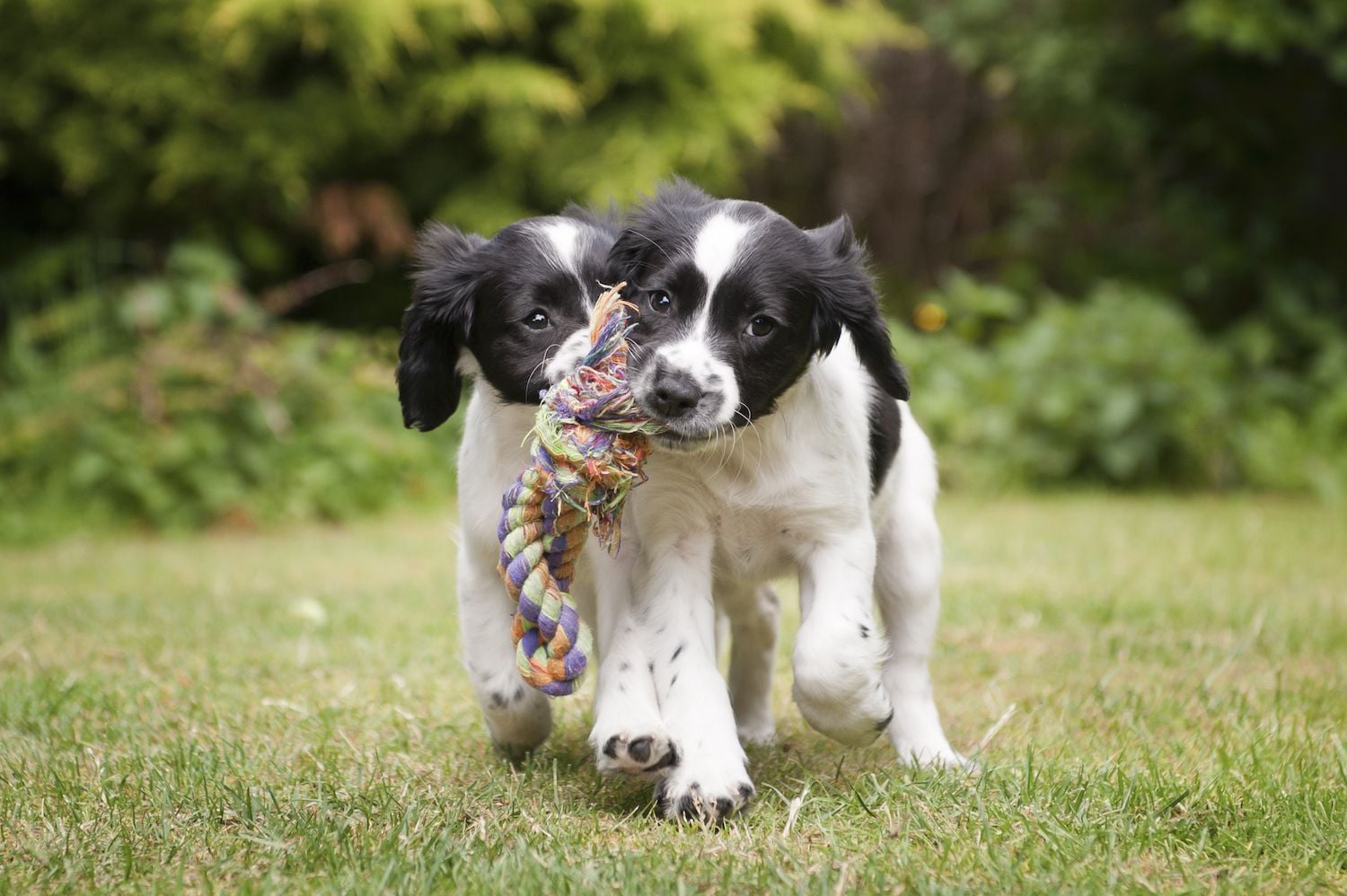
If you’ve ever watched a litter of puppies tumbling across the floor—ears flopping, paws flying, tiny growls vibrating like mismatched engines—you’ve seen pure joy in motion. But behind that cuteness, something fascinating is happening.
And it might be smarter, kinder, and more strategic than you ever imagined.
Researchers studying puppy behavior made an unexpected discovery:
Stronger male puppies often let female puppies win during play fights.
Sometimes they even fake being pinned down—a dramatic flop onto their backs followed by a playful “I give up” wiggle.
But why would the physically stronger puppy pretend to lose?
What does this reveal about canine emotional intelligence, group bonding, and even how dogs form lifelong relationships?
The answer opens a window into a world where vulnerability is a form of strength—and where play becomes the foundation for cooperation, social balance, and even future leadership.
Let’s dive in.
A Closer Look: What Play Fights Really Teach Puppies
To understand why male puppies fake defeat, we must understand what play fighting actually is.
Puppies aren’t trying to hurt each other.
They’re practicing.
Practicing what?
- Bite inhibition
- Body control
- Social ranking
- Reading cues and boundaries
- Negotiating relationships
But more than anything, puppies fight to learn how to get along.
Play is the rehearsal stage for adulthood. And just like humans soften their behavior while playing with younger siblings or smaller children, dogs make adjustments too.
This is where it gets fascinating.
Male puppies—especially the more confident ones—quickly recognize that if they assert dominance too harshly, play stops. And for puppies, “play stopping” is the worst possible outcome.
So what do they do?
They cheat.
Lovingly.
Strategically.
They fake losing so the game continues.
Because in a puppy’s world, connection matters more than winning.
The Science Behind the “Fake Pin” Strategy
Animal behaviorists have observed this phenomenon in multiple studies. During play fights:
- The stronger male puppy allows himself to be pushed over
- He may roll onto his back on purpose
- He may reduce the force of his bites
- He may move slower to “match” the female puppy
- He sometimes pretends to struggle dramatically
It’s not a sign of weakness.
It’s a sign of advanced social intelligence.
Male puppies learn early on that dominating a female—especially long-term—is not beneficial. Female dogs are naturally assertive, strategic, and socially influential within a pack. Allowing them to “win” builds:
- Cooperative bonds
- Mutual trust
- Equal standing in the group
It’s the puppy version of saying:
“I want to keep playing with you—so I’ll let you win today.”
And here’s the twist:
This behavior mirrors patterns in adult wolves and domesticated dogs.
What Happens in the Wild? The Wolf Connection
Dogs descended from wolves, so researchers often compare canine behavior with pack dynamics.
In wolf packs:
- Play is used to build alliances
- High-ranking males often “bow” to playful females
- Mutual respect keeps the hierarchy stable
- Males often soften their behavior toward females to maintain harmony
In other words, even in the wild:
Strong males let females win to strengthen the social fabric.
So when your male puppy flops dramatically on his back while a tiny female puppy stands triumphantly on top of him, you’re not seeing random behavior.
You’re seeing millions of years of instinct, cooperation, and evolutionary wisdom at work.
Why Vulnerability Is a Superpower in the Puppy World
Humans often associate vulnerability with weakness.
But animals understand something deeper:
Vulnerability builds trust.
When a male puppy exposes his belly—the most vulnerable part of his body—he’s sending a clear message:
- “You can trust me.”
- “I don’t want to hurt you.”
- “I’m safe to play with.”
This simple act of pretend-defeat helps create lifelong patterns:
- Stronger social bonds
- Greater cooperation
- Reduced aggression in adulthood
- Higher emotional regulation
- Better adaptability in groups
In many ways, it mirrors human social development. Children who learn to soften their behavior during play often grow into adults with stronger empathy and emotional intelligence.
Puppies aren’t much different.
What Happens If Puppies Never Learn This Skill?
Here’s where it gets interesting—and where the story shifts toward health, training, and even home life.
Puppies who grow up without healthy play interactions often struggle later with:
- Excessive dominance
- Fear-based aggression
- Anxiety around other dogs
- Difficulty interpreting social cues
- Poor impulse control
That’s why responsible breeders and rescues stress keeping puppies together as long as possible. Sibling interactions teach them fundamental lessons no human can replicate—not even the most experienced trainer.
If you’ve ever wondered why trainers recommend socialization so early, this is one reason:
Play teaches dogs how to be emotionally stable adults.
And faking being pinned is one of the earliest signs of this intelligence.
What Owners Can Learn From Puppy Play Behavior
Now let’s connect the science to everyday life—your home, your dog, and your routines.
When you watch your puppy interact with others, you are witnessing:
- Relationship-building
- Emotional negotiation
- Cooperation
- Boundary testing
- Trust formation
This matters for your training and your home environment.
If a male puppy lets a female win, he’s not being submissive—he’s practicing social diplomacy. Owners who misunderstand this may mislabel their puppy as:
- Timid
- Weak
- Lacking confidence
But in reality, he’s demonstrating one of the most desirable traits in dogs:
Self-control.
Dogs who can regulate their own strength often become:
- Better family pets
- Safer around children
- Easier to train
- Less reactive
- More bonded to humans
This skill even affects home improvement decisions—like choosing safe play spaces, building dog-friendly yards, and setting up indoor enrichment zones that encourage healthy social habits.
Play Fighting and Human Mental Health: A Hidden Benefit
Here’s a surprising angle that many readers don’t expect:
Watching dogs play—especially gentle, strategic play—can reduce stress in humans.
Studies show:
- Dog play lowers cortisol
- Soft interactions trigger oxytocin (the bonding hormone)
- Observing cooperative behavior increases positive mood
- Training sessions with playful dogs improve owner confidence
Meaning this tiny behavior—the male puppy flopping over to “lose”—can boost not just his emotional development but yours.
Because when you witness kindness, even in animals, it transforms you too.
What Does This Mean for Multi-Dog Homes?
If you own more than one dog, especially of different sexes, you’ll likely see this dynamic play out as they grow.
Male dogs may:
- Modulate their strength
- Bow to females
- Allow themselves to “lose”
- Choose softer playstyles
This keeps the peace—and makes your home more harmonious.
Dogs who learn these skills early are:
- Less likely to fight
- More likely to share toys
- Better at coexisting with other animals
- Easier to integrate into new environments
These insights can also guide home improvement decisions for pet owners, such as:
- Creating multiple rest zones
- Installing gating systems to prevent overstimulation
- Assigning separate feeding spaces
- Designing safe indoor play areas
When dogs feel emotionally secure, your home feels more peaceful too.
Are Male Puppies Always Gentle? The Story Takes a Twist
Not always.
Just like humans, dogs have personalities. Some male puppies enjoy letting females win. Others struggle with impulse control. Some fake losing once or twice, then forget the rules entirely.
This variability makes each litter unique—and gives behaviorists endless material to study.
But one thing remains constant:
Allowing a female puppy to win is not a sign of weakness, but a sign of emotional flexibility.
And flexibility is what makes dogs such extraordinary companions—to each other and to us.
What If Humans Applied This Puppy Wisdom?
Imagine if every person learned as early as puppies do:
- When to yield
- When to soften
- When to let someone else shine
- When winning isn’t the most important thing
- When connection matters more than competition
Would playgrounds look different?
Would workplaces feel different?
Would families communicate more gently?
It makes you wonder:
If a puppy can fake being pinned to protect a relationship, what could humans accomplish if we valued connection over dominance too?
The Final Lesson: Play Is More Than Play
Puppy play fights are not meaningless chaos.
They’re communication.
They’re learning.
They’re emotional development in motion.
And the behavior that seems the cutest—the male puppy dramatically flopping over in “defeat”—is actually one of the most profound.
It teaches us:
- Empathy
- Cooperation
- Relationship negotiation
- Emotional intelligence
- Kindness
Sometimes the smallest creatures reveal the biggest truths about life.
And sometimes losing—especially on purpose—is a form of love.