
Table of Contents
- The Billboard That Immediately Went Viral
- Why Mississippi Allows Firing Squads
- The Campaign Is Part Of A Larger Crime Messaging Strategy
- Why The Billboard Resonates With Some Americans
- Critics Say The Campaign Crosses A Dangerous Line
- America’s Long Debate Over The Death Penalty
- Social Media Turned The Billboard Into A National Story
- The Debate Over Deterrence And Fear
- Why Political Messaging Around Crime Is Intensifying
- What This Billboard Says About America Right Now
The Billboard That Immediately Went Viral
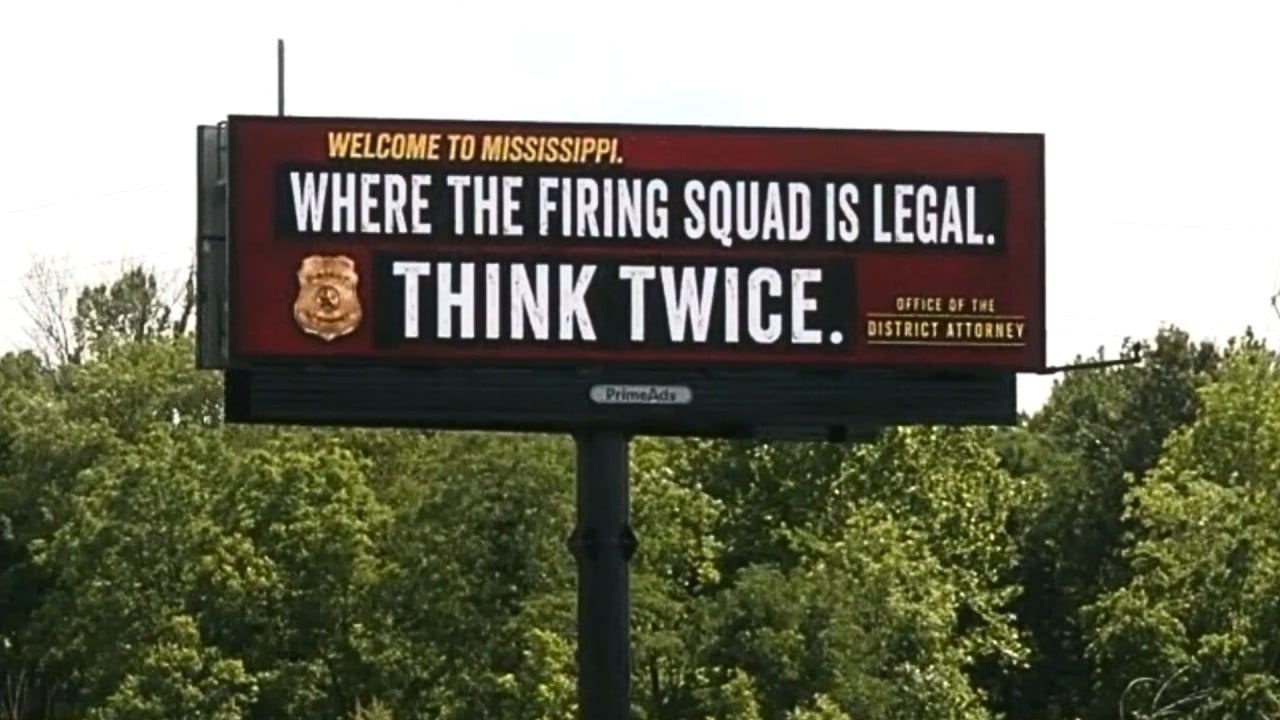
The sign stands along Interstate 55 entering DeSoto County, one of the busiest routes connecting northern Mississippi to the Memphis area. Its message is impossible to miss. Large bold letters warn travelers that firing squads are legal in Mississippi and urge criminals to “think twice.”
Within hours of news reports appearing online, photos of the billboard spread rapidly across X, Facebook, TikTok, Instagram, and Reddit. Some users praised the sign as refreshing honesty in an era where many people believe criminals are not punished harshly enough. Others described it as dystopian, alarming, or politically theatrical.
The billboard became especially viral because of its direct language. Unlike traditional public safety campaigns that focus on community awareness or prevention, this message leans heavily into punishment and fear.
District Attorney Matthew Barton defended the campaign by saying its purpose is straightforward: deterrence.
According to Barton, the goal is to make violent offenders understand that DeSoto County intends to aggressively prosecute serious crimes and support strong sentencing for dangerous criminals.
Why Mississippi Allows Firing Squads
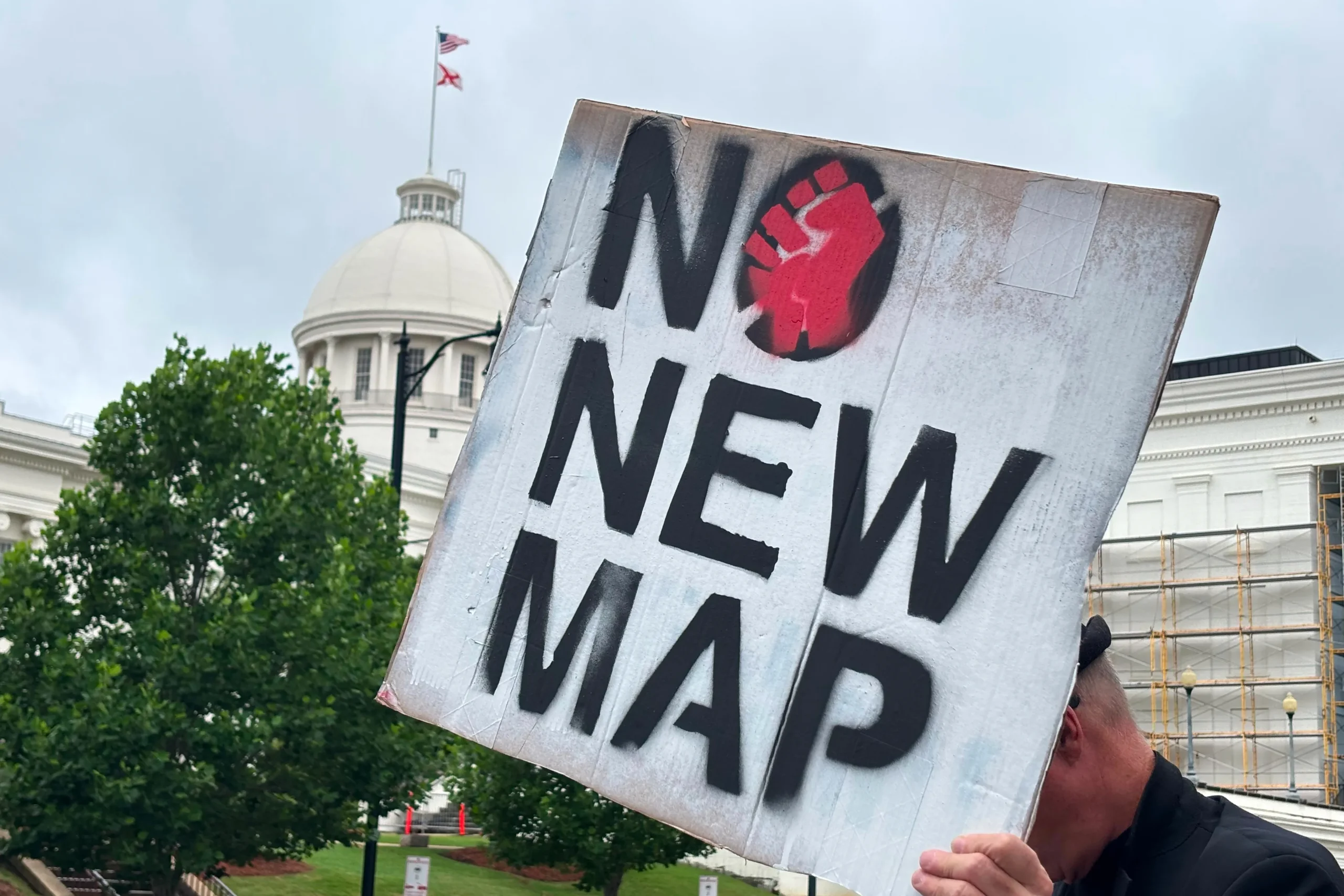
Part of the billboard’s shock value comes from the fact that many Americans did not realize firing squads remain legal in certain states.
Mississippi passed legislation in 2017 authorizing alternative execution methods if lethal injection drugs become unavailable or are ruled unconstitutional. The approved alternatives include firing squads, nitrogen gas, and electrocution.
Although firing squad executions are rare in modern America, the method has gained renewed attention in recent years as some states struggle to obtain lethal injection drugs due to pharmaceutical restrictions and legal challenges.
Supporters of firing squads argue they may actually be more reliable and potentially less painful than problematic lethal injections that have resulted in prolonged executions in some cases. Opponents view firing squads as symbolic of a justice system becoming more brutal and performative.
The Mississippi billboard taps directly into this controversy. Even though the sign does not threaten ordinary citizens, its wording intentionally evokes the harshest possible image of state punishment.
That emotional reaction appears to be part of the strategy.
The Campaign Is Part Of A Larger Crime Messaging Strategy
The firing squad billboard is not an isolated campaign. DeSoto County officials have previously launched aggressive public messaging aimed at discouraging criminals from entering the area.
Earlier campaigns included “TURN BACK NOW” billboards targeting individuals traveling from nearby regions with higher crime rates. These messages framed DeSoto County as a place where criminals would face swift prosecution and serious consequences.
District Attorney Barton has consistently emphasized enforcement based public safety. His office argues that visible deterrence can prevent crime before it occurs by making offenders believe the risks are too high.
This reflects a broader philosophy often associated with tough on crime policies that became politically dominant in various parts of the United States during past decades.
The idea is simple: fear of punishment discourages criminal behavior.
But while supporters believe these campaigns strengthen public confidence, critics question whether billboard messaging truly reduces crime or mainly generates political attention.
Why The Billboard Resonates With Some Americans
The strong reactions to the billboard reveal a deeper national mood surrounding crime and public safety.
In many communities, concerns about violent crime remain emotionally powerful even when crime statistics fluctuate or improve. Viral videos of robberies, assaults, carjackings, and random attacks have amplified public anxiety across social media.
For some Americans, the Mississippi billboard represents frustration finally being expressed openly. They see it as a sign that officials are willing to prioritize victims and stop appearing soft on criminals.
Supporters online described the campaign as “common sense,” “refreshing,” and “exactly what criminals need to hear.” Others argued that fear of consequences is necessary for maintaining order.
Many comments also reflected growing distrust toward criminal justice systems perceived as lenient or inconsistent. In that environment, highly visible deterrence campaigns can become emotionally appealing.
The billboard’s bluntness cuts through the polished language often used in politics. That alone makes it highly shareable online.
Critics Say The Campaign Crosses A Dangerous Line

Not everyone sees the billboard as effective or responsible.
Civil rights advocates and critics of the death penalty argue the sign normalizes extreme punishment and uses fear as a political tool. Some believe it risks turning criminal justice into spectacle rather than focusing on fairness, rehabilitation, and prevention.
Others question whether public threats actually reduce violent crime. Criminologists have long debated whether harsh punishments significantly deter serious offenses, especially crimes driven by desperation, impulse, addiction, or mental illness.
Critics also point out that many violent crimes are not carefully planned with legal consequences in mind. In those situations, a billboard warning may have little practical effect.
There are also concerns about perception. Some observers argue the campaign sends a message of hostility rather than community protection, especially to outsiders driving into Mississippi.
For opponents, the firing squad language feels designed more for headlines and political branding than evidence based crime prevention.
America’s Long Debate Over The Death Penalty
The billboard has reignited broader discussions about capital punishment in the United States.
America remains deeply divided over the death penalty. Supporters believe it delivers justice for the most horrific crimes and protects society from dangerous offenders. Opponents argue it risks wrongful executions, disproportionately affects marginalized groups, and fails to prove strong deterrent value.
Execution methods themselves have become increasingly controversial. Lethal injection was originally introduced as a supposedly more humane alternative, but botched executions and legal disputes created growing complications.
As states searched for alternatives, methods like nitrogen gas and firing squads reentered public discussion.
Utah famously authorized firing squads in certain situations, and South Carolina also moved toward approving the method in recent years. Mississippi’s law exists within this broader national context.
Still, most Americans rarely encounter the subject so directly in everyday life. That is part of why the DeSoto County billboard feels so startling. It transforms an abstract legal policy into a giant roadside warning visible to thousands of drivers each day.
Social Media Turned The Billboard Into A National Story
Without social media, the billboard may have remained a regional news item. Instead, it exploded into a nationwide conversation almost instantly.
Photos spread rapidly because the message is visually dramatic and emotionally provocative. People reposted it not only because of the issue itself but because it triggers immediate reactions.
Social platforms reward content that sparks outrage, debate, amusement, or shock. The firing squad billboard managed to activate all four at once.
Political commentators, influencers, and meme accounts quickly amplified the story. Some praised Mississippi for “sending a message.” Others mocked the campaign as fear based politics.
The viral spread reflects how modern public messaging increasingly operates through social media visibility rather than traditional advertising logic. Officials understand that a billboard today is not just seen by drivers. It becomes digital content capable of reaching millions online.
That changes how campaigns are designed. The more emotionally striking the message, the more likely it is to spread.
The Debate Over Deterrence And Fear
At the center of the controversy is one core question: does fear actually stop crime?
Supporters of deterrence based policies argue that visible consequences influence decision making. If criminals believe they face severe punishment, they may reconsider violent actions.
This logic has shaped policing and sentencing policies for decades. Mandatory minimum sentences, three strikes laws, and aggressive prosecution strategies were all rooted partly in deterrence theory.
However, researchers continue debating how effective these measures truly are. Some studies suggest certainty of being caught matters more than severity of punishment. Others argue social conditions like poverty, addiction, unstable housing, and lack of opportunity often play larger roles in crime rates.
The Mississippi billboard enters this long running debate in a highly public way. It does not present statistics or policy arguments. It presents a blunt emotional warning.
Whether that warning changes behavior remains uncertain. But it undeniably changes the conversation.
Why Political Messaging Around Crime Is Intensifying
Crime remains one of the most emotionally powerful issues in American politics. Public officials know that voters respond strongly to messages about safety, law enforcement, and punishment.
In recent years, political divisions over policing and criminal justice reform have become even sharper. Some communities demanded reform after high profile police violence cases, while others pushed for stronger enforcement after concerns about rising crime.
Campaigns like the DeSoto County billboard reflect this environment. Tough on crime messaging has returned aggressively in many regions where officials believe voters want visible demonstrations of strength and control.
The firing squad language also reflects a shift toward increasingly dramatic political communication overall. In the social media era, subtle messages often disappear. Bold emotionally charged statements attract attention and dominate news cycles.
Whether people love or hate the billboard, they are talking about it. In today’s media environment, visibility itself has become political power.
What This Billboard Says About America Right Now
The DeSoto County firing squad billboard is about more than one prosecutor’s campaign. It reflects broader tensions running through modern America.
Many citizens feel exhausted by crime headlines, distrustful of institutions, and frustrated with political gridlock. Some want harsher punishments and more aggressive enforcement. Others fear the country is moving toward fear driven politics that prioritizes spectacle over solutions.
The billboard captures that divide perfectly.
To supporters, it represents strength, accountability, and a refusal to tolerate violence. To critics, it represents intimidation, political theater, and a dangerous embrace of punitive symbolism.
Its viral success also reveals how deeply emotional public safety has become in the digital age. A simple roadside sign transformed into a national flashpoint because it touched anxieties about crime, punishment, government authority, and cultural identity all at once.
Whether the campaign actually deters violent crime may never be fully measurable. But it has already succeeded in one undeniable way: it forced millions of Americans to confront uncomfortable questions about how far society should go in the name of public safety.
And in a country increasingly shaped by viral political messaging, that conversation is unlikely to disappear anytime soon.