
Table of Contents
- A Hike That Turned Into a Survival Story
- Why Molly’s Disappearance Hit People So Hard
- The Search Was Powered by Donations and Determination
- How Molly Was Finally Found
- The Viral Video Turned Rescue Into Something Personal
- Jessica Johnston’s Survival Was Remarkable Too
- Why the Public Could Not Look Away
- The Rescue Also Revealed the Power of Strangers
- What the Story Means Beyond One Reunion
A Hike That Turned Into a Survival Story
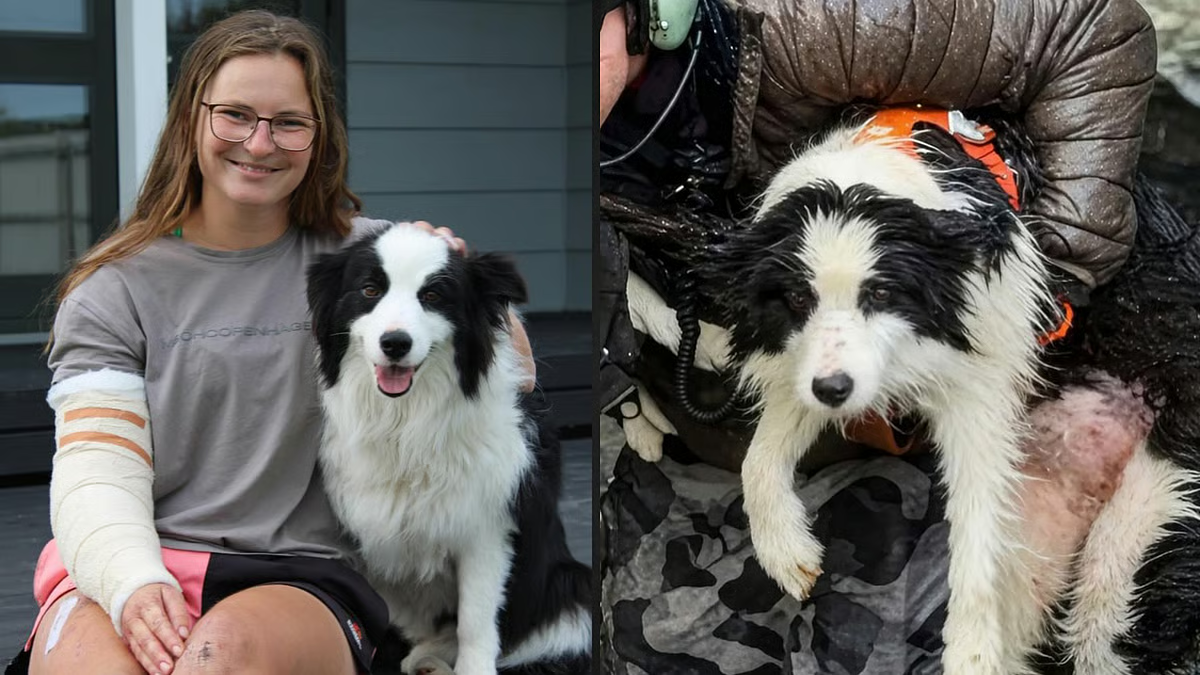
What began as an outdoor adventure quickly became a nightmare. Johnston had been hiking with Molly in the rugged Arahura Valley when she fell down a waterfall and suffered serious injuries. She was airlifted out alive, an outcome rescuers themselves described as remarkable given the scale of the fall and the remoteness of the area. But in the chaos of the rescue, Molly vanished. Suddenly, the story was no longer only about an injured hiker surviving a major fall. It became about the dog left somewhere in the wilderness, out among steep terrain, cold water, rock, mist, and alpine isolation.
That shift is what gave the story its unusual emotional force. A rescued hiker is already a dramatic headline. A missing dog somewhere below a waterfall in wild country adds another layer entirely. It turns a rescue into an open question. Was Molly injured too? Had she run off in fear? Was she trapped? Was she still alive? For days, nobody could say for certain. That uncertainty became its own kind of anguish, especially for Johnston, who was recovering from major injuries while not knowing what had happened to her companion.
Why Molly’s Disappearance Hit People So Hard
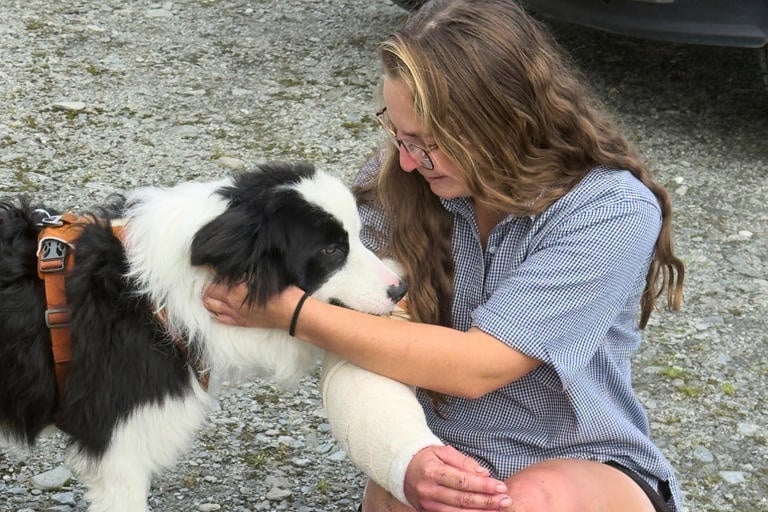
The story gained traction because it combined three things the public responds to intensely: survival, animals, and separation. People could understand immediately what was at stake. Molly was not just a pet mentioned in passing. She was a hiking companion who had been with Johnston through the journey, part of the experience, part of the danger, and part of the emotional weight of the accident. Once Johnston was rescued without her dog, Molly became the unresolved part of the story.
That emotional gap drew strangers in. Social media and news coverage amplified the sense that this was not a routine lost-dog case. It was happening in punishing terrain where official rescue efforts were focused on human survival, not animal recovery. In New Zealand, as in many places, animal rescue in such remote circumstances is not always covered by the same formal systems that respond to human emergencies. That meant Molly’s survival and rescue would depend on private initiative, compassion, and money. The public response showed just how powerfully that combination can mobilize when a story catches hold.
The Search Was Powered by Donations and Determination
One of the most remarkable parts of the story is that Molly was not found by a massive state-funded operation. She was found because people cared enough to create one. Precision Helicopters and the Newton family, moved by Johnston’s situation, helped organize a targeted rescue effort after learning Molly was still missing. Public donations poured in rapidly, with reports saying the fundraiser exceeded its target within hours and raised more than 11,000 New Zealand dollars, enough to support a more serious aerial search using equipment like thermal imaging.
That matters because time was not on Molly’s side. Each passing day made survival seem less likely. The terrain was remote, wet, and difficult to search even from the air. Searchers had only a limited window and limited resources. Yet instead of accepting the odds, the rescuers treated the mission like something still possible. They gathered a team that included experienced volunteers, a helicopter pilot, advanced imaging support, and even another dog, Bingo, who came along as part of the rescue group. The operation had the feel of a community refusing to let the story end badly.
How Molly Was Finally Found

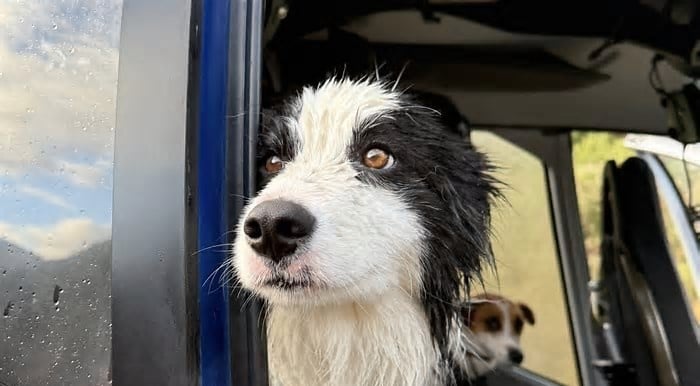
The rescue team made a critical decision to start at the most emotionally obvious and logistically plausible place: the spot where Johnston had fallen. That instinct proved right. Reports say thermal imaging helped identify Molly near the base of the waterfall, close to where Johnston had gone down. She was cold, wet, and stranded among sharp rocks and mist, but she was alive. Some accounts described her as subdued and bedraggled. Others said she appeared in surprisingly good condition considering what she had endured. All agree on the essential fact that after nearly a week alone in brutal conditions, she had survived.
That discovery transformed the story instantly. For days, Molly had been a possibility, a hope, a question mark. In the moment rescuers saw her, she became real again. The team then had to get her out safely. According to reports, the helicopter hovered low while a rescuer approached Molly with food, including sausage, to coax her close enough to be picked up. He then carried her back to the helicopter. Video from the operation shows Molly being lifted to safety, a moment that is gripping not because of spectacle, but because of how fragile the success feels. After so many uncertainties, the rescue suddenly depends on one small animal trusting one stranger at exactly the right moment.
The Viral Video Turned Rescue Into Something Personal
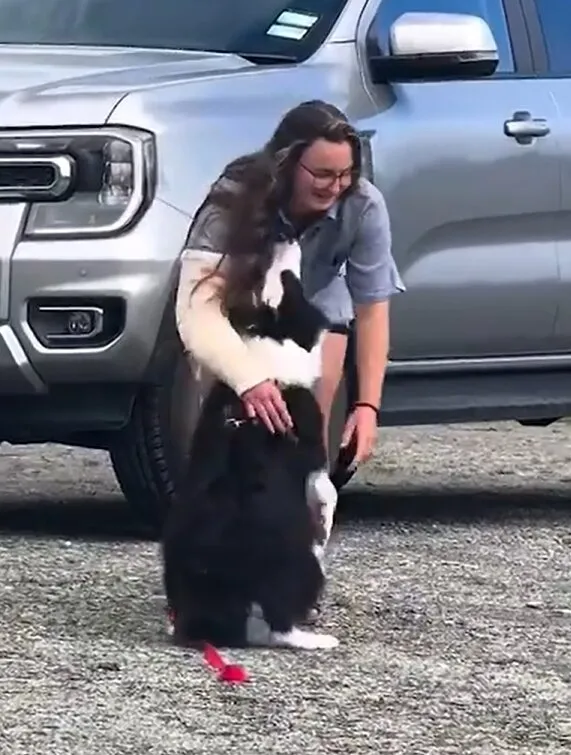
The story might still have spread without the reunion footage, but the video is what pushed it into the emotional center of the internet. It showed Molly being carried into the helicopter and later being brought back to Johnston. In several reports, Johnston is described as injured and still recovering, yet crouching down to greet Molly as the dog runs toward her. That visual did what headlines alone cannot do. It collapsed the entire ordeal into a single human-scale moment. Days of fear, injury, fundraising, searching, guessing, and hoping are suddenly visible in one embrace.
This is why the clip resonated so strongly. It was not only a happy ending. It was proof of relationship. Molly did not just survive. She returned to the person she had been missing from the start. Johnston did not just recover from a fall. She recovered with the one unresolved heartbreak of the ordeal finally healed. In the logic of viral storytelling, that is powerful. In the logic of real life, it is even more so. The reunion did not erase the trauma, but it changed the shape of it.
Jessica Johnston’s Survival Was Remarkable Too

As moving as Molly’s rescue is, Johnston’s own survival remains extraordinary. Reports indicate she fell around 55 meters, roughly 180 feet, and suffered serious injuries including a split elbow and severe bruising. Rescue sources said the water helped break her fall, which likely played a major role in keeping her alive. In many ways, the entire story begins with a survival that was already improbable. Johnston was lucky to live through the initial accident. Molly’s rescue then turned one miracle into two.
That double survival is part of what makes the story feel almost cinematic. Yet its power comes from the opposite of cinema. It feels grounded in pain, weather, distance, and sheer uncertainty. Johnston was not immediately celebrating online from a position of comfort. She was injured, recovering, and living through days of not knowing where Molly was. When rescuers told her the dog had been found, the relief was not abstract. By then it had been earned through real physical suffering and real emotional dread.
Why the Public Could Not Look Away

Stories about lost dogs often go viral, but this one struck a different note because it contained elements of wilderness endurance that people instinctively understand as severe. A dog missing in a neighborhood raises one kind of fear. A dog missing near the base of a waterfall in remote alpine country raises another. The environment itself becomes a character in the story. The rocks, the mist, the cold, the isolation, and the time passing all intensify the emotional stakes.
There is also something deeply human about wanting loyalty to be rewarded. People project a lot onto dogs, often for good reason. When Molly was found near the spot where Johnston had fallen, many readers saw devotion in that detail. Some reports suggest rescuers believe Molly may have stayed near the last place she knew Johnston to be, or slowly returned there over time. Whether by instinct, confusion, or attachment, the image is the same: a dog enduring alone in the landscape of her owner’s disappearance. That idea is almost unbearably moving, which is precisely why the story traveled so far.
The Rescue Also Revealed the Power of Strangers
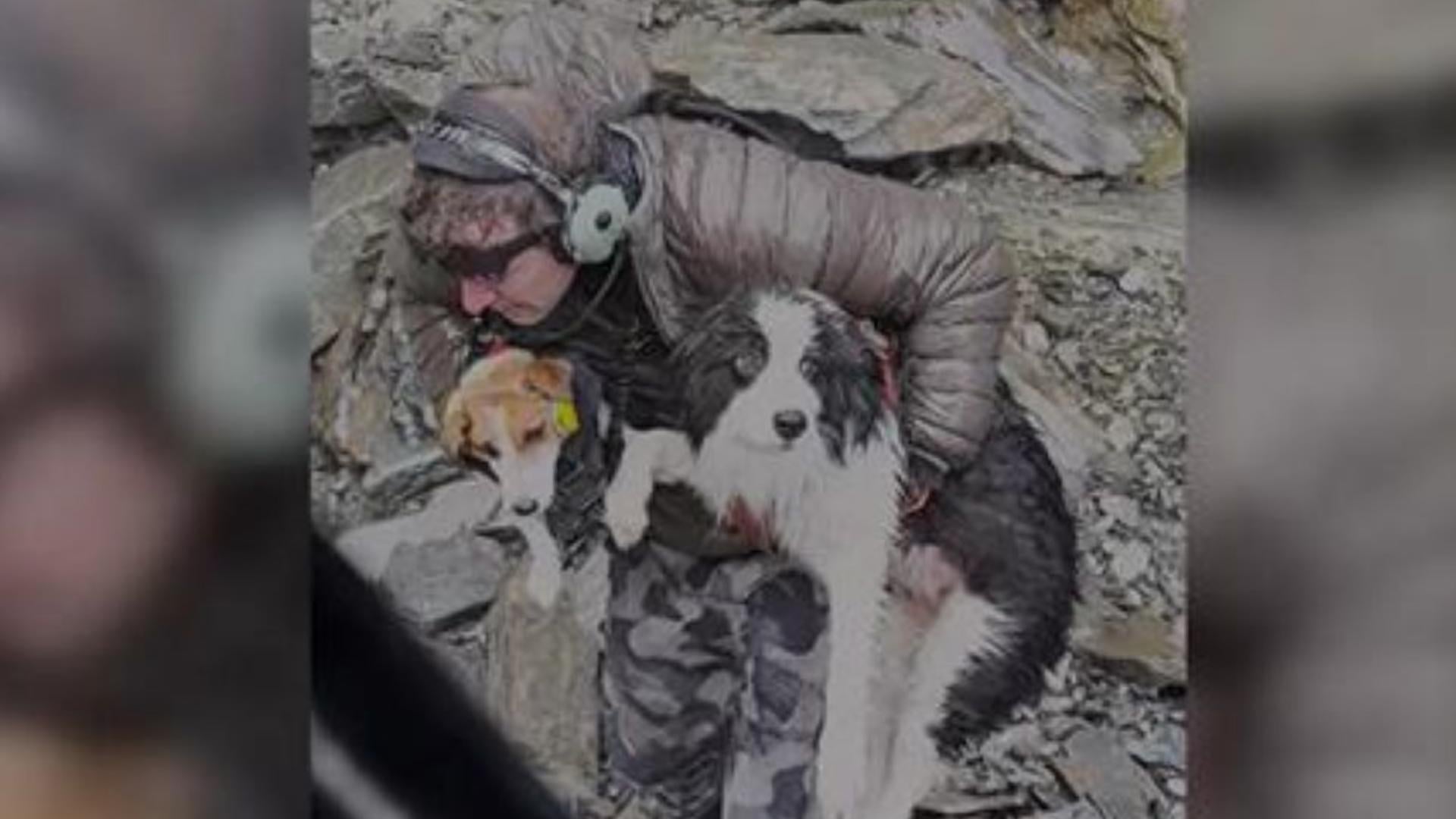
Another reason the story matters is that none of the people who rescued Molly were obligated to do so in the strictest sense. They were not family. They were not people who had known Johnston or Molly before the accident. They were strangers who saw a chance to help and decided that was enough reason to act. Precision Helicopters, the Newton family, the volunteers, and the donors collectively turned concern into logistics. That shift from sympathy to action is what made the rescue possible.
It is easy to talk about community in vague or sentimental ways. This story shows what it looks like when community becomes practical. It becomes flight time. It becomes thermal equipment. It becomes search planning. It becomes a rescuer offering sausage on wet rocks at the bottom of a waterfall. It becomes someone deciding that one missing dog still matters even when the odds say otherwise. In a news cycle often dominated by cruelty or indifference, that kind of coordinated kindness has unusual force.
What the Story Means Beyond One Reunion
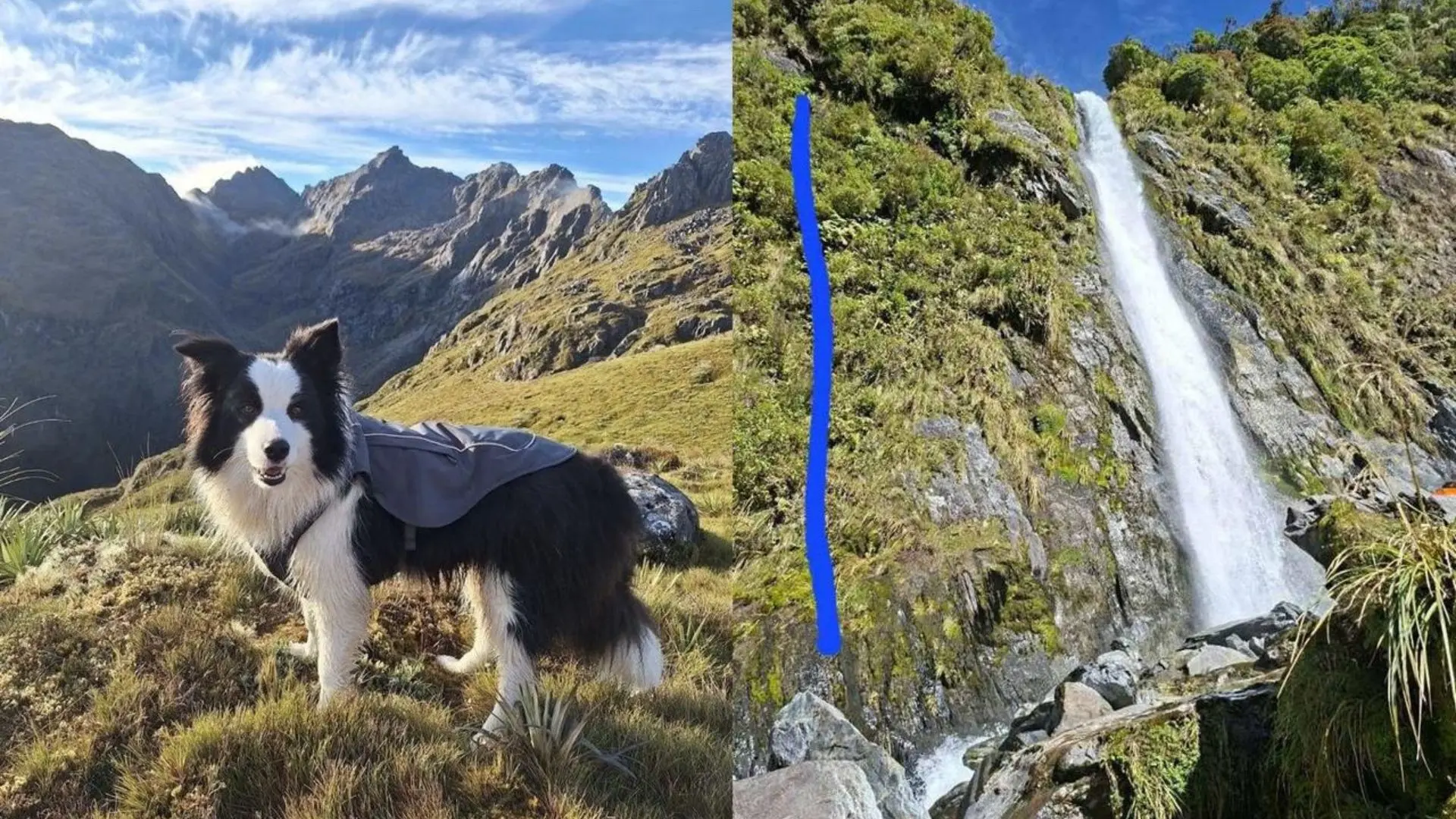
The reunion between Johnston and Molly is the part people will remember most, and rightly so. But the story also points to something broader about how people respond to animal suffering, especially when it is tied to human love and visible endurance. Molly became more than a dog in the public imagination. She became the unfinished part of a survival story, the life still unaccounted for, the vulnerable companion who had not yet made it back. Her rescue resolved not only a search but an emotional narrative that people around the world had begun following as if it were their own.
There is also a quieter meaning here. Outdoor adventure stories are usually told through ideas like bravery, risk, and resilience. This one added tenderness to that list. It reminded people that survival is not always measured only by getting one human out alive. Sometimes survival feels incomplete until the bond that shaped the journey is restored too. Johnston survived the fall. Molly survived the wilderness. But the story did not fully heal in the public mind until they were together again.
In the end, Molly’s rescue went viral because it offered something rare: not a manufactured emotional moment, but a genuinely hard-won one. A hiker survived a devastating fall. A dog disappeared into punishing terrain. Strangers gave money, skill, and time to search. A helicopter team found her alive against the odds. And then, after days of fear, a dog ran back to her injured owner. It is the kind of story people share because they want it to be true, and then keep sharing because, somehow, it was.