

Table of Contents
- The Case of the Muslim Woman Judge
- Why the Court Made This Decision
- Religious Freedom vs. Secularism
- Public Reactions and Protests
- Legal Precedents in Germany and Europe
- Gender Equality and the Headscarf Debate
- International Reactions and Global Perspective
- The Future of Religious Expression in Public Roles
- What This Means for Muslim Women in Europe
- Ethical and Social Implications
- A Broader Debate on Secularism, Religion, and Rights
The Case of the Muslim Woman Judge
In December 2025, a German regional court made a controversial decision to bar a Muslim woman from serving as a judge due to her headscarf, which she wore as part of her religious practice. The woman, who had completed her law degree and was selected for a judicial position, found her appointment rejected by the court because of her headscarf. The court argued that the headscarf could be seen as a violation of Germany’s commitment to secularism and the principle of impartiality in the judiciary. The case quickly became a flashpoint for discussions surrounding the rights of individuals to express their religious beliefs while working in public institutions.
Why the Court Made This Decision

Germany’s legal system is founded on the principle of neutrality in public institutions, meaning that judges, who are expected to be impartial, should not be seen as endorsing any particular religion or political ideology. The court argued that the Muslim woman’s headscarf could be perceived as a symbol of religious affiliation and therefore may undermine the public’s trust in her impartiality. The decision reflects Germany’s broader legal approach to secularism, where religious symbols are often restricted in certain public roles, particularly in education and the judiciary.
Religious Freedom vs. Secularism
At the heart of the ruling is the tension between religious freedom and secularism. For many, the right to express one’s religious beliefs through symbols such as a headscarf is a fundamental right. For others, the court’s ruling reflects an essential aspect of maintaining neutrality in state institutions, which are supposed to serve all citizens, regardless of religious background. The decision has sparked reactions from both sides, with religious freedom advocates arguing that such rulings infringe on the basic rights of Muslims and minority groups, while secularists insist that religious symbols have no place in government roles.
Public Reactions and Protests
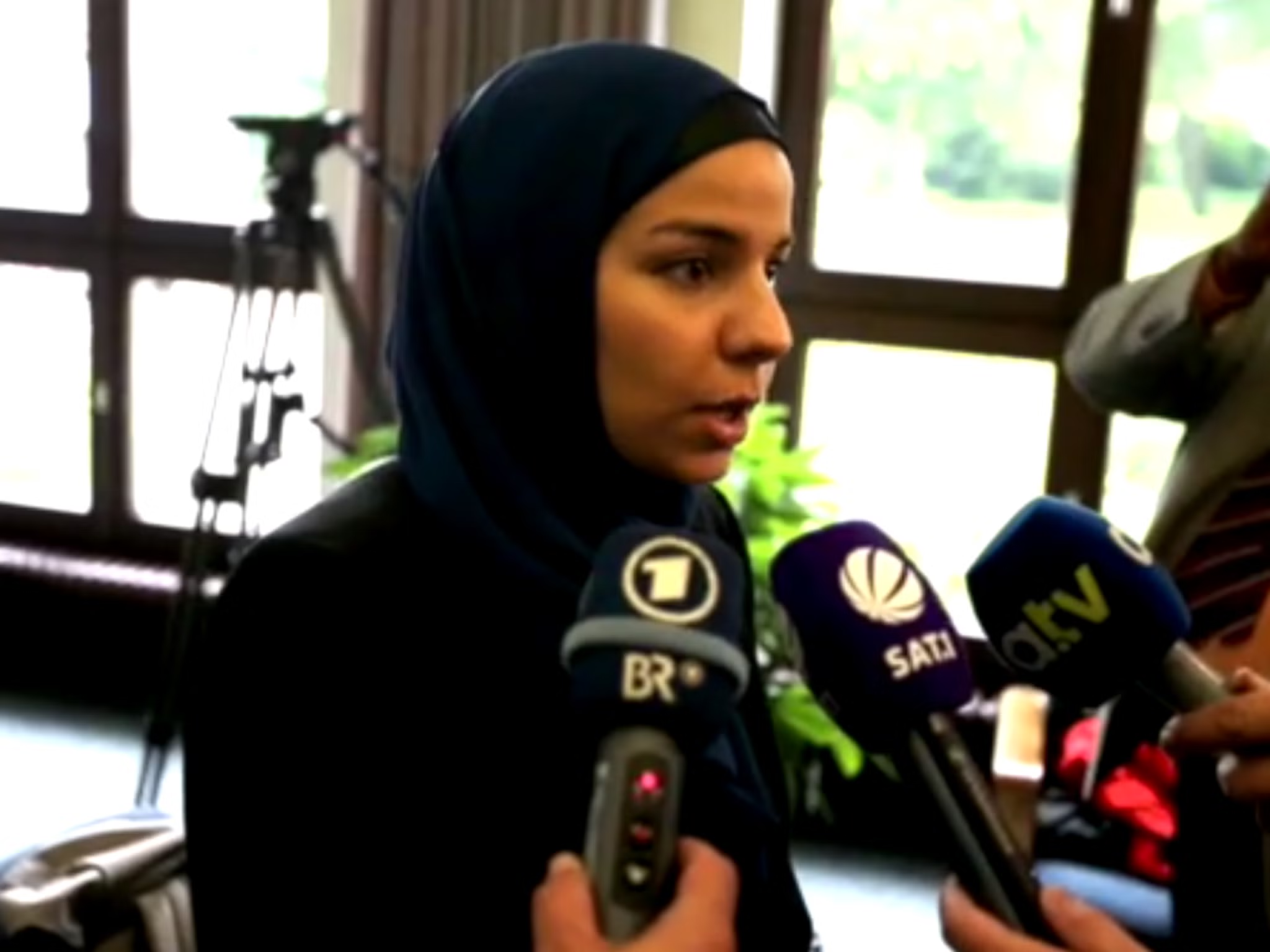
Following the court ruling, there were widespread protests and social media campaigns across Germany. Advocates for religious freedom organized rallies, calling for greater protections for Muslim women who wish to wear religious attire, including the headscarf, in public institutions. Many of the protesters pointed out that the ruling disproportionately affects Muslim women and enforces a form of gender discrimination, as it impacts a woman’s ability to serve in a public role based on her religious dress. On the other hand, supporters of the court’s decision argue that the judiciary’s impartiality must come first and that the appearance of neutrality is crucial to maintaining trust in the legal system.
Legal Precedents in Germany and Europe
This case is not an isolated incident but rather part of a growing debate about religious expression in public spaces across Europe. Similar cases have emerged in other countries, such as France and Belgium, where laws banning religious symbols in schools and public offices have been implemented in the name of secularism. Germany has historically taken a nuanced approach to this issue, allowing some exceptions while also promoting policies that restrict religious symbols in certain public roles. Legal precedents in Germany have generally allowed for restrictions on religious symbols, especially in the context of education and government positions, but the decision to bar a Muslim woman from becoming a judge has intensified the debate.
Gender Equality and the Headscarf Debate

Another key issue raised by this case is the role of gender equality in religious dress debates. Many critics of the headscarf ban argue that it disproportionately affects Muslim women, who may feel compelled to wear the headscarf due to religious or cultural expectations. Some view the court’s ruling as an infringement on gender equality, as it creates barriers for Muslim women who wish to pursue careers in the legal field. Advocates for women’s rights assert that women should have the autonomy to decide how they wish to express their religious beliefs without fear of discrimination in professional settings.
International Reactions and Global Perspective
Internationally, the ruling has sparked a broader discussion on religious freedom and the treatment of Muslim women in Europe. In the wake of the decision, international human rights organizations, including the United Nations and Amnesty International, have expressed concern over the potential for this ruling to set a dangerous precedent in other European countries. Some experts argue that this decision could fuel anti-Muslim sentiments and stigmatize Muslims further. However, others maintain that the issue at hand is about ensuring neutrality in public institutions, particularly in fields that require absolute impartiality, such as the judiciary.
The Future of Religious Expression in Public Roles
Looking ahead, this case could set the stage for future legal battles over religious expression in Germany and beyond. Legal experts anticipate that this issue will continue to evolve, as the balance between religious freedom and secularism is tested in various legal contexts. The court’s decision could also prompt more public discussions about the role of religion in the workplace and how different European nations handle the integration of religious symbols in state roles.
What This Means for Muslim Women in Europe
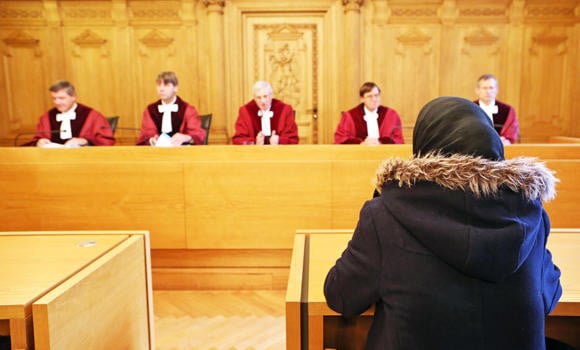
The court ruling is especially significant for Muslim women who aspire to work in public roles. For many, the headscarf is not just a religious symbol, but also a part of their identity. The decision to bar this Muslim woman from becoming a judge underscores the challenges that many Muslim women face in European countries when it comes to balancing their religious beliefs with the expectations of a secular society. It also raises broader questions about how Muslim women are perceived in Europe and the extent to which they are expected to conform to mainstream societal norms.
Ethical and Social Implications
The court’s ruling not only has legal implications but also raises important ethical questions. Can a person’s religious expression, in the form of a headscarf, truly interfere with their ability to perform their duties in a professional role? Is the court overstepping its bounds by regulating personal expression in such a way, or is it upholding a necessary principle of neutrality? These questions continue to stir debate among legal experts, social commentators, and the general public.
A Broader Debate on Secularism, Religion, and Rights
The decision by the German court to bar a Muslim woman from becoming a judge is part of a larger, ongoing debate about secularism, religious freedom, and gender equality in Europe. While the ruling may seem to prioritize neutrality in public institutions, it has also raised profound questions about the treatment of Muslim women and the potential for discrimination based on religious expression. As the conversation continues, it is clear that this case will be a defining moment in how religious symbols are handled in public institutions across Europe, and it may lead to further legal and social challenges in the years to come.