
Table of Contents
- A sudden jolt turned an ordinary Nevada evening into a regional scare
- The earthquake struck near Silver Springs and was felt far beyond the epicenter
- Magnitude confusion reflected the normal first hours of earthquake reporting
- Aftershocks quickly followed and reminded residents the danger was not necessarily over
- Emergency alerts reached phones almost immediately and showed how warning systems are changing
- Early reports suggested limited immediate damage, but inspections were only beginning
- Rural earthquakes can still create serious regional consequences
- What residents need to watch in the hours and days ahead
- A reminder that Nevada’s seismic risk is never fully in the background
A sudden jolt turned an ordinary Nevada evening into a regional scare
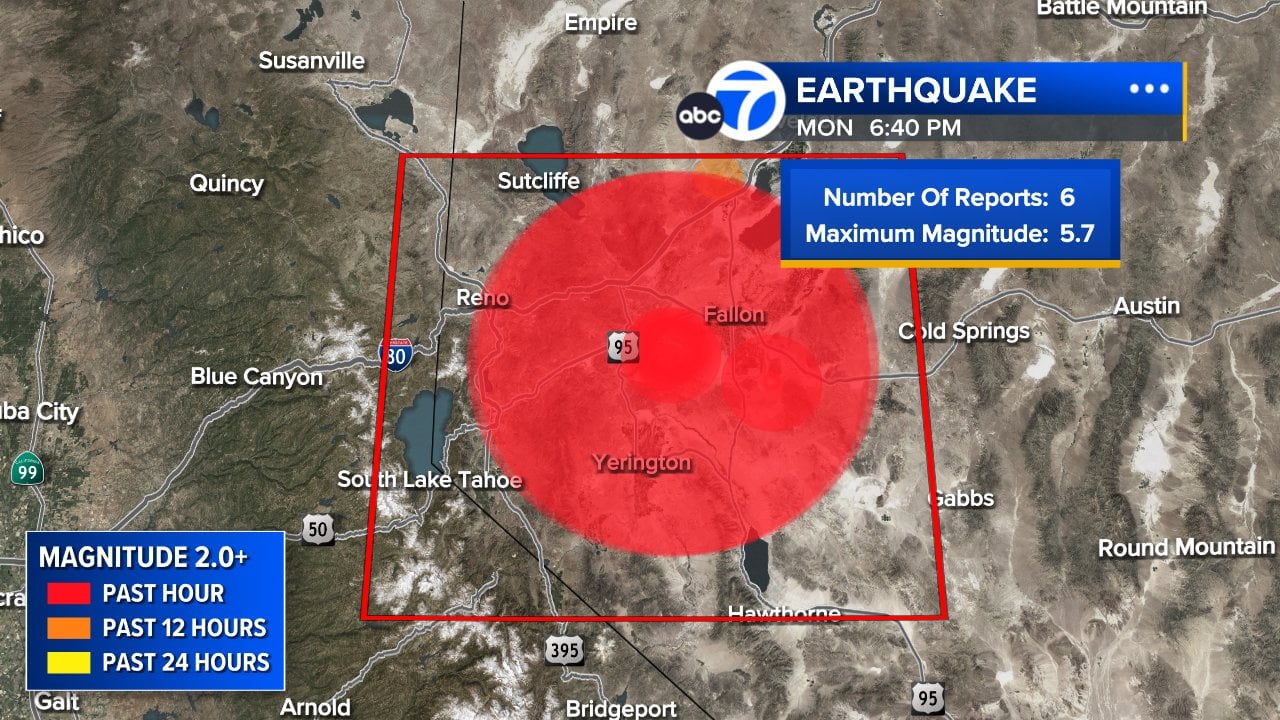
When the ground started moving across western Nevada on Monday evening, many people did not need an official alert to know something serious had just happened. Homes shook, walls rattled, shelves trembled, and within seconds emergency notifications flashed across phones in Carson City, Fallon, Silver Springs, and surrounding communities. The quake struck quickly, but the uncertainty it left behind lasted much longer. In the first hours after the shaking stopped, officials worked to answer the two questions that always matter most after an earthquake: how strong was it, and how much damage did it do.
The earthquake was centered near Silver Springs in western Nevada and was widely felt across the region. Early public reports shifted between a magnitude 5.5 and 5.7 as different agencies reviewed incoming seismic data. Reuters reported the quake as a magnitude 5.7 event near Silver Springs, while local coverage and county emergency statements reflected the same uncertainty that often follows moderate to strong earthquakes in the first hours. The local Nevada Seismological Laboratory also continued reviewing the event as aftershocks spread through the area.
That uncertainty is not unusual after an event like this, but it matters because every decimal point changes how people interpret the danger. A quake in the mid-5 range is strong enough to frighten communities, trigger emergency response, and cause localized damage, especially in older or more vulnerable structures. It is also strong enough to produce a meaningful aftershock sequence, which is exactly what began unfolding almost immediately after the first shaking ended.
The earthquake struck near Silver Springs and was felt far beyond the epicenter

According to Reuters, the earthquake struck Monday evening near Silver Springs, Nevada, at a depth of roughly 9 kilometers, or about 5.6 miles. Other early reporting described the epicenter as southeast of Silver Springs and near Lahontan Reservoir, in a part of Lyon County that sits within a seismically active region of the state. While the epicenter was in a relatively rural area, the shaking traveled widely enough to be felt across western Nevada and into parts of Northern California.
That broad reach helps explain why so many residents immediately began posting about the quake online and checking whether others had felt it too. In places like Carson City and Fallon, the shaking was strong enough to get people out of chairs, away from desks, and into doorways or open areas. The first emotional reaction to a regional quake is often confusion, because it can begin as a vibration, a rolling sensation, or a sharp jolt before people realize what is happening. By the time the emergency alerts reached some phones, many had already recognized that this was not a passing disturbance but a notable seismic event.
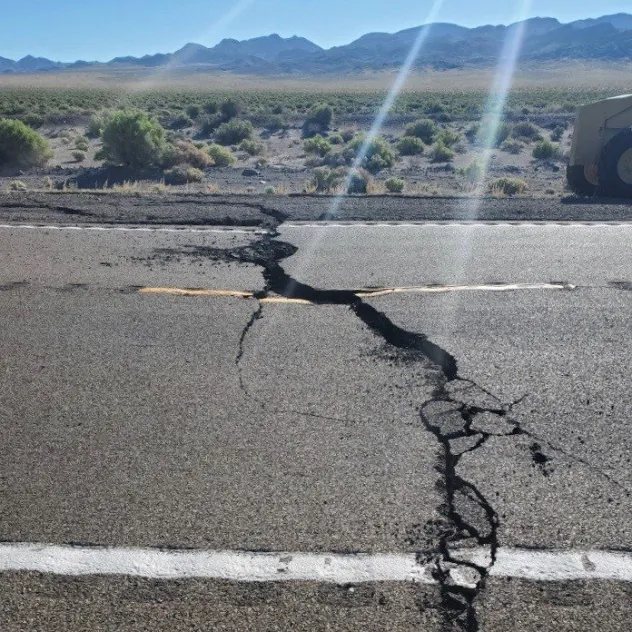
AP later described the quake as a magnitude 5.7 event in rural Nevada that produced strong to very strong shaking and led to reports of at least light to moderate structural damage in some areas. That description suggests the event was large enough not only to alarm residents but to potentially affect buildings, businesses, and infrastructure in more isolated locations close to the epicenter. Even in sparse regions, earthquakes of this size can expose vulnerabilities in roads, older retail spaces, storage buildings, and utility systems.
Magnitude confusion reflected the normal first hours of earthquake reporting
One of the most noticeable features of the early coverage was the shifting reported magnitude. Local and regional outlets cited values ranging from 5.5 to 5.7 as agencies refined the seismic reading. Carson Now reported that the quake was initially described as a preliminary 5.5, then revised upward to 5.7, then adjusted again as investigators continued to examine the event. That kind of back-and-forth can frustrate the public, but it is actually a normal part of modern earthquake science.
When an earthquake happens, automated systems generate rapid estimates based on incoming sensor data. Those first readings are designed to prioritize speed, especially because warning systems and emergency responses depend on getting information out immediately. As more data arrives from a wider network of instruments, seismologists can refine the estimate, adjust the epicenter, and better understand the depth and pattern of rupture. That is why the same quake can appear under slightly different numbers across platforms in the same evening.
For the public, however, the exact difference between 5.5 and 5.7 is often less important than what they personally experienced. If dishes shook, lights swung, or walls groaned, people remember the sensation more than the decimal point. Still, the official number matters for emergency planning, media reporting, and the historical record. It also helps determine how aftershocks are interpreted and whether local governments escalate assessments or precautionary closures.
Aftershocks quickly followed and reminded residents the danger was not necessarily over
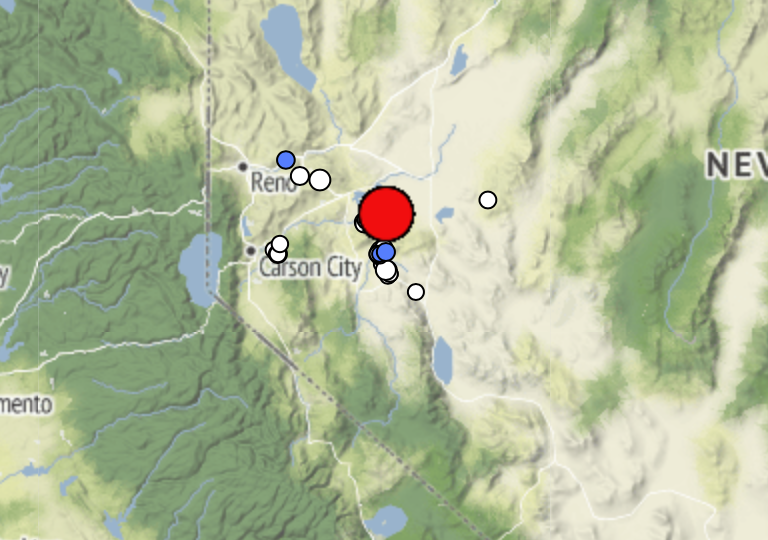
Within the first couple of hours after the main earthquake, aftershocks began stacking up. Carson Now reported that by 7:55 p.m. there had been 43 aftershocks, citing the Nevada Seismological Laboratory. Other local reporting noted that aftershocks had already begun within minutes of the main event, with magnitudes ranging into the mid-3 range. This is a critical part of the story because aftershocks are often what keep communities uneasy long after the initial shaking ends.
Aftershocks can be deeply unsettling because they create a sense that the event is unfinished. Residents do not know whether the next tremor will be mild, strong, or simply enough to trigger more fear. For emergency managers, aftershocks complicate response efforts because they can affect already weakened structures, disrupt inspections, and force crews to stay alert while conducting field checks. In some cases, people return indoors after the first quake only to be shaken again minutes later.
The fact that dozens of aftershocks were recorded so quickly suggests the region’s seismic systems were actively adjusting after the main rupture. That does not necessarily mean a larger event is coming, but it does reinforce the standard safety advice given after significant earthquakes: expect more shaking, stay cautious around damaged structures, and avoid assuming the first event was the last. For many Nevada residents, the aftershocks may have been smaller than the main quake, but psychologically they can be just as disruptive because they prolong uncertainty.
Emergency alerts reached phones almost immediately and showed how warning systems are changing
One of the striking details from local reporting was how quickly earthquake alerts appeared on mobile phones. Carson Now noted that many people received emergency notices within a second of the quake happening. That speed reflects the increasing role of earthquake early warning systems, which are designed to detect the initial waves of an earthquake and send alerts ahead of the stronger shaking when possible. In practice, this means some people closer to the epicenter may get little or no warning, while others farther away may receive a few valuable seconds.
Those seconds matter. Even a very short warning can allow people to step away from windows, stop driving into hazardous areas, brace themselves, or drop and cover. In schools, hospitals, offices, and homes, that kind of immediate notification can reduce panic and injury. It also changes how communities experience earthquakes. Instead of the event being understood only after it begins, people are increasingly encountering it through an alert system that tells them what is happening almost in real time.
At the same time, early warning systems do not eliminate danger. They are tools, not guarantees. Their success depends on distance, network performance, and public understanding of how to respond. In western Nevada, Monday’s quake served as another reminder that real-time alerts are becoming part of everyday disaster response, but they work best when paired with public preparedness and good local communication afterward.
Early reports suggested limited immediate damage, but inspections were only beginning

In the first hours after the earthquake, the most encouraging news was that no major injuries or catastrophic infrastructure damage had been immediately confirmed. Lyon County Emergency Management said there were no significant damages or injuries reported at first review, and no major damage had been identified in hospitals, schools, transportation systems, or utility services. Carson City dispatch similarly reported no immediate injuries or damage in the early aftermath.
Still, officials made clear that this did not mean the region was in the clear. Lyon County said response crews would continue conducting comprehensive damage assessments over the following days, particularly focusing on roads, bridges, water systems, and other essential services. That kind of caution is standard after a moderate earthquake because some structural impacts do not appear immediately. Cracks in foundations, shifted utility lines, weakened masonry, and hidden damage to older infrastructure can take time to identify properly.
AP later reported that there were already signs of light to moderate structural damage in some areas, which suggests the final accounting may prove more serious than the very first assessments indicated. That does not necessarily contradict county statements. In the first hour or two, emergency officials usually focus on life safety and critical systems. As inspections widen and residents report what they are seeing, the picture often becomes more detailed and more complicated.
Rural earthquakes can still create serious regional consequences
Because this earthquake struck in a relatively less populated part of Nevada, some observers may assume the danger was limited. But rural earthquakes can still create broad consequences, especially when they are strong enough to be felt across multiple counties. The effects may be less concentrated than in a dense urban core, but infrastructure in rural regions can be especially vulnerable because it often stretches long distances through difficult terrain and includes older roads, water systems, and utility networks.
There is also the issue of perception. When an earthquake happens near a major city, national attention rises immediately. When it happens in a rural corridor, the impact can be underestimated even if residents experience major disruption. Western Nevada has a long seismic history, and Monday’s quake was a reminder that the region does not need a big-city epicenter to produce a major scare. A strong event near Silver Springs can still rattle Carson City, Fallon, Reno-area communities, and parts of Northern California, while putting emergency systems on alert.
That is why local emergency management agencies responded so quickly. Even in the absence of immediate disaster, a quake of this size requires coordination across law enforcement, utilities, schools, hospitals, and transportation agencies. The public often sees the event as the shaking itself. Officials must treat it as a chain reaction that could affect everything from communications and water access to bridge safety and emergency medical response.
What residents need to watch in the hours and days ahead
In the aftermath of a moderate earthquake, the biggest public danger often shifts from the main shock to the uncertainty that follows. Residents want to know whether stronger aftershocks are coming, whether their homes are safe, and whether infrastructure they depend on has been compromised. While no widespread major damage had been confirmed in the first official reports, the continuing aftershocks and ongoing inspections mean the story is not finished.
People in affected areas will likely be told to watch for new cracks, gas leaks, utility interruptions, and signs of structural movement. They may also be urged to avoid damaged buildings until professionals can assess them. The simple reality after an earthquake is that visible calm can be misleading. A road may appear stable while developing hidden weakness. A wall may still be standing while its support has been compromised. That is why official assessments matter so much in the days after the headlines fade.
This event may also renew public interest in preparedness. Earthquakes arrive without warning, and Monday’s strong regional shaking likely reminded many households how quickly ordinary routines can be interrupted. Emergency kits, communication plans, and basic knowledge about what to do during aftershocks often feel abstract until the house starts moving. Then they become urgent.
A reminder that Nevada’s seismic risk is never fully in the background
Monday evening’s earthquake near Silver Springs was not the largest in modern American history, and early indications suggest it may not become a major disaster. But that does not make it minor in the lives of the people who felt it. For western Nevada residents, it was a sharp reminder that seismic risk in the region is real, active, and capable of disrupting communities with almost no notice. The fast alerts, the conflicting early magnitude reports, the dozens of aftershocks, and the cautious damage checks all added up to the same message: even when the damage is limited, the experience is serious.
In the coming days, the final technical details will become clearer. Seismologists will settle the reviewed magnitude, aftershock sequences will be mapped more precisely, and local officials will report whether infrastructure held up as well as early statements suggested. But the emotional reality is already fixed. For thousands of people across western Nevada, Monday evening became one of those moments that resets the day instantly. One second everything was ordinary. The next, the earth itself was moving under their feet.