
Table of Contents
- When the No Kings movement turned into a mass political warning
- Minnesota became the symbolic center of the movement
- The rallies stretched from major cities to deep red towns
- Protesters brought a wide coalition of causes into one movement
- The movement’s numbers suggest real growth
- Republicans tried to dismiss the protests, but the images were hard to ignore
- The protests spread beyond the United States
- Why this protest moment feels different
- What the No Kings wave could mean next
When the No Kings movement turned into a mass political warning
When news broke that the latest No Kings rallies had spread across all 50 states and into Europe, it became clear this was no longer just another protest weekend. What started as an organized wave of resistance to President Donald Trump’s policies had grown into something much bigger: a sprawling, highly visible public show of anger, exhaustion, and defiance. Organizers said more than 3,100 events were registered for Saturday’s demonstrations, with the movement expecting around 9 million participants. While that estimate had not yet been independently verified, multiple major news reports described the day as the largest No Kings mobilization so far, with huge turnouts in cities, suburbs, and small towns alike.
The demonstrations were fueled by a long list of grievances, but several themes stood out. Protesters denounced Trump’s immigration crackdown, especially the role of federal immigration enforcement in Minnesota. Many also protested the war in Iran, anti transgender policies, and what speakers described as the growing influence of billionaires and authoritarian politics. The movement’s central slogan, “No Kings,” captured that wider fear: that the country was moving away from democratic accountability and toward a politics of force, intimidation, and spectacle.
What follows is not just the story of one day of protest. It is the story of a movement that has steadily expanded, pulled in people from places far outside the usual protest map, and turned public resistance into a shared political language across borders.
Minnesota became the symbolic center of the movement
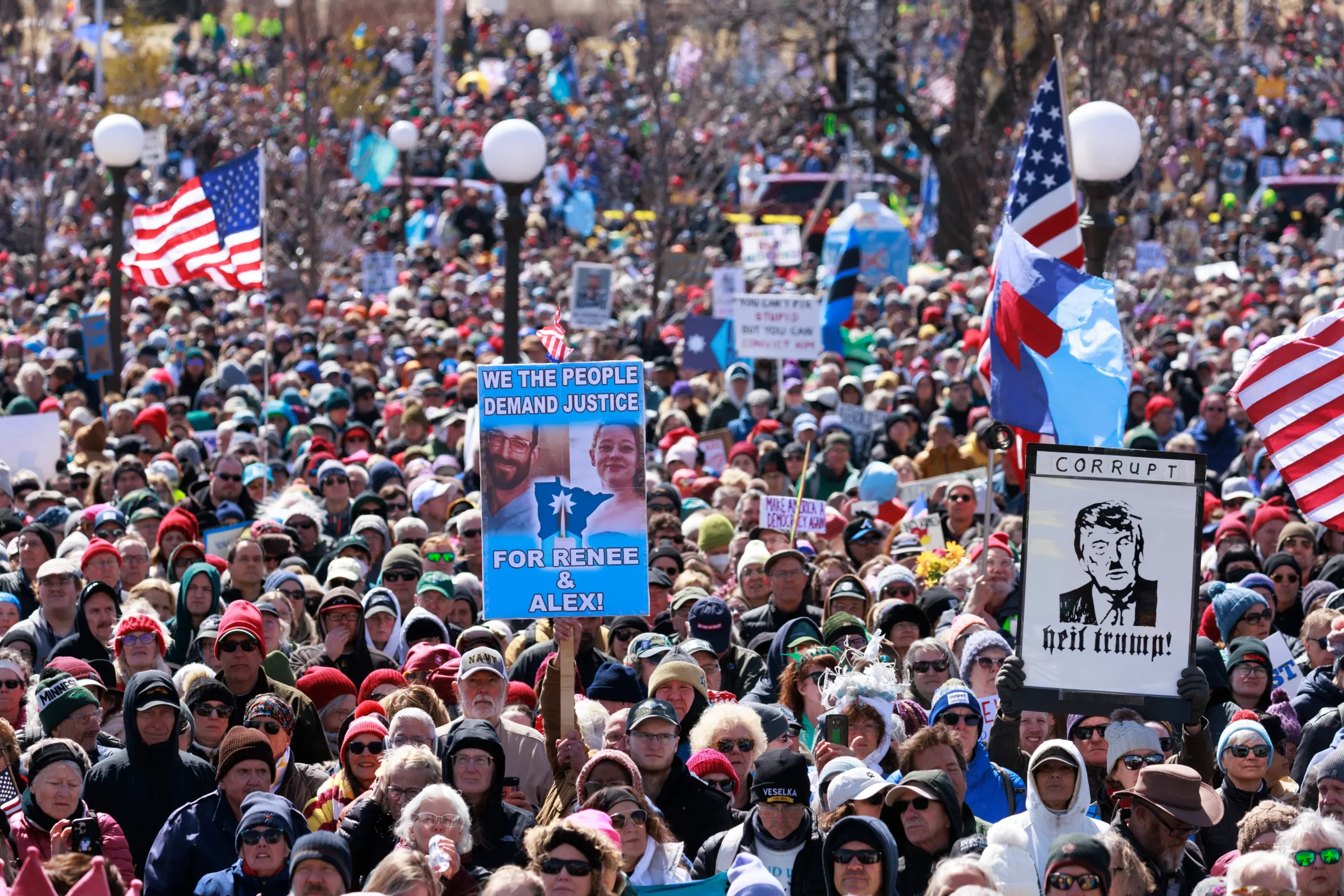
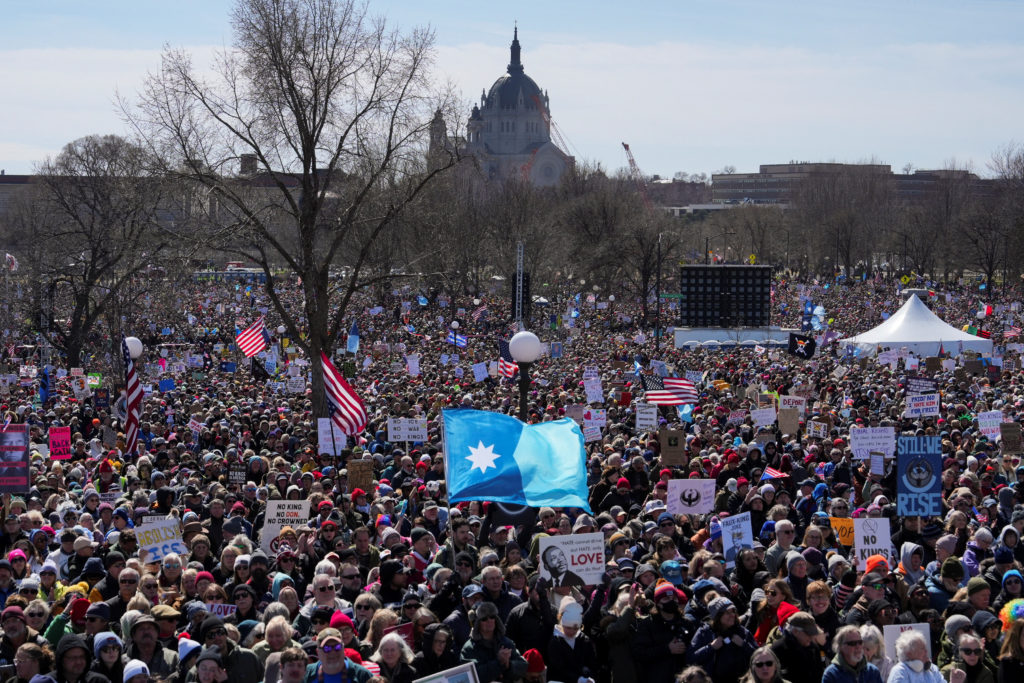
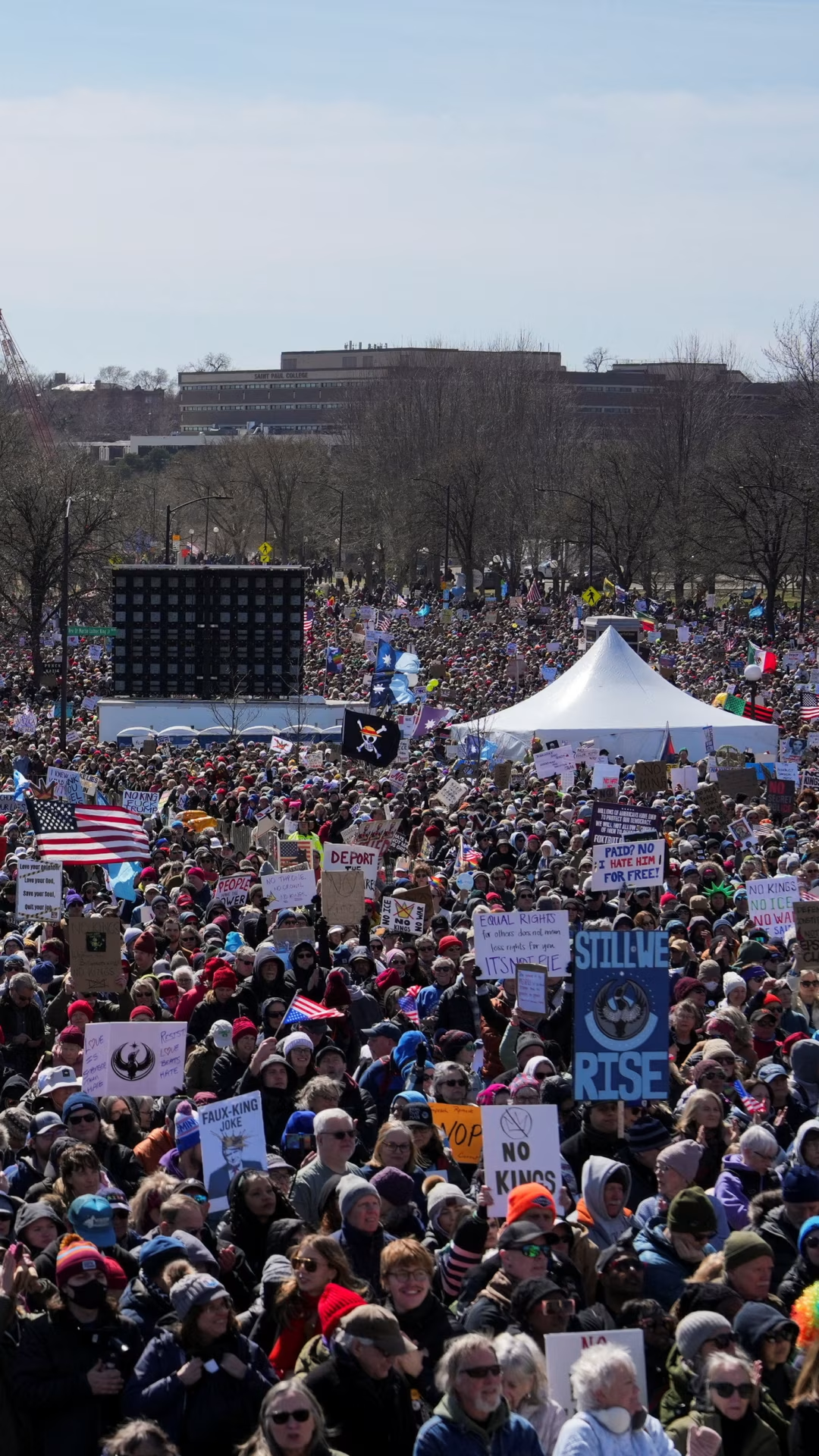
Although rallies took place nationwide, Minnesota became the emotional and political center of the day. The flagship event at the Capitol in St. Paul drew one of the largest crowds, with reports describing tens of thousands and, in some coverage, roughly 200,000 people gathering shoulder to shoulder. The crowd size alone made the event feel historic, but the location gave it deeper meaning. Minnesota had already become a flashpoint in national politics because of the deaths of Renee Good and Alex Pretti, whose fatal shootings by federal agents had triggered outrage and sustained resistance to ICE activity in the state.
Bruce Springsteen’s appearance transformed the rally from a large protest into a cultural moment. At the St. Paul event, he performed “Streets of Minneapolis,” a song he wrote in response to the killings, and praised Minnesotans for resisting what he called invasions of American cities. He framed Minnesota’s pushback as proof that public courage still mattered and that ordinary people could still set the tone of national resistance. Other major figures joined the program as well, including Jane Fonda, Joan Baez, Bernie Sanders, and labor leaders, giving the event the feel of both a protest and a national stage for dissent.
That mattered because movements often need a place that embodies their message. On this day, Minnesota served that role. It stood not only as a site of anger over immigration enforcement, but as a symbol of collective refusal.
The rallies stretched from major cities to deep red towns
One of the most striking features of the latest No Kings protests was not simply the size of the crowds, but how geographically broad they were. Demonstrations took place in giant urban centers such as New York, Washington, Los Angeles, and San Diego, but also in much smaller communities, including places in Idaho and other conservative leaning states. Organizers said two thirds of RSVPs came from outside major urban centers, suggesting the movement had spread well beyond the blue city strongholds critics often point to when dismissing anti Trump protests.
That breadth is politically important. A protest wave looks very different when it is confined to familiar liberal hubs than when it shows up in towns with fewer than 2,000 people and in states Trump won comfortably. Reports highlighted turnout in places such as Driggs, Idaho, and other communities across Wyoming, Montana, Utah, South Dakota, Louisiana, Pennsylvania, Georgia, and Arizona. That does not mean every area was equally mobilized, but it does suggest the movement’s appeal had widened.
For organizers, that spread helps reinforce their central argument: opposition to Trump is not just concentrated in predictable partisan enclaves. It is increasingly visible in smaller communities, mixed suburbs, and regions where public protest has not always been easy or popular.
Protesters brought a wide coalition of causes into one movement
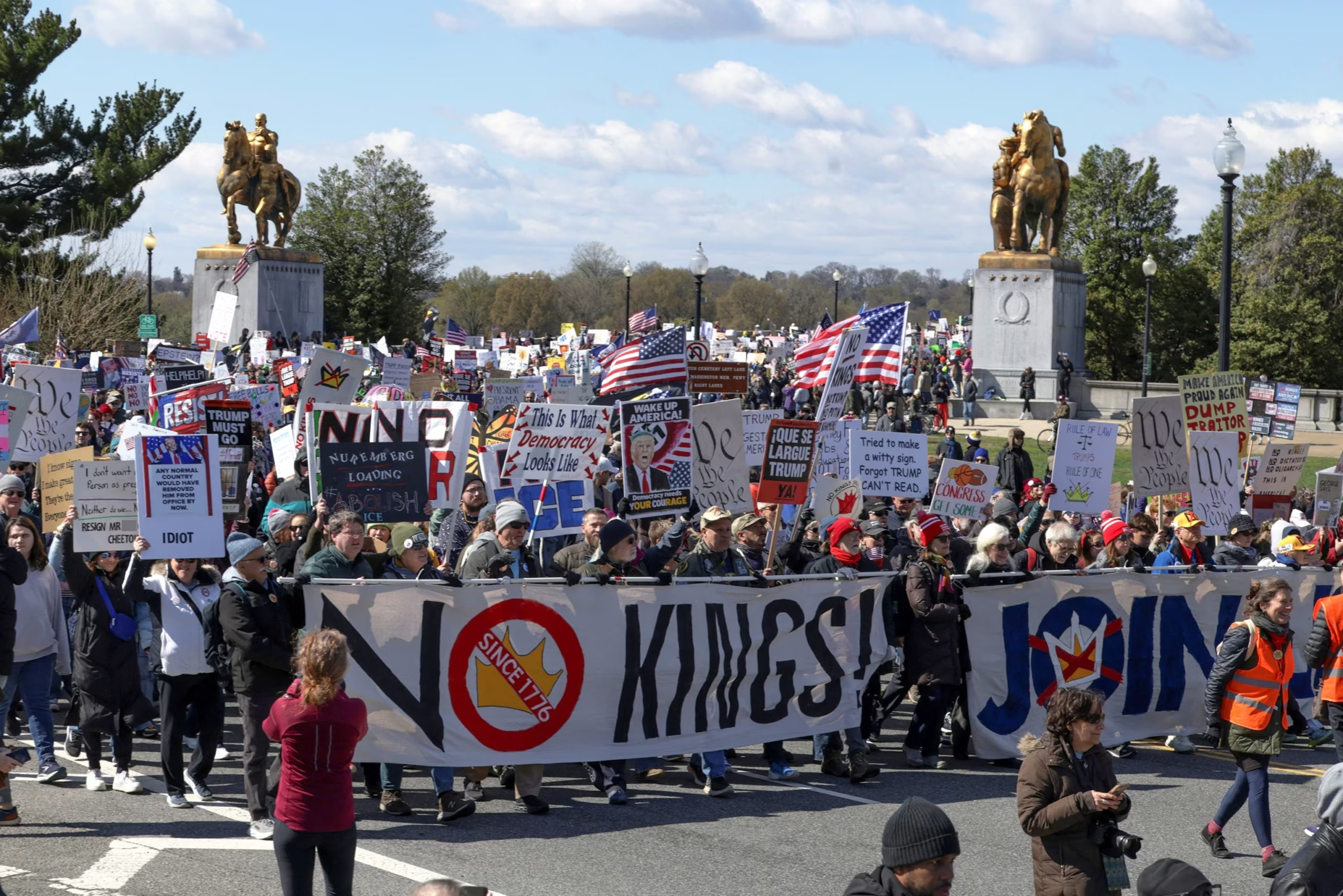
The No Kings protests were not built around a single policy grievance. That was part of their strength and part of their complexity. At many rallies, anti war messages sat beside anti deportation signs. Concerns about transgender rights, economic inequality, executive overreach, and civil liberties all appeared within the same demonstrations. In Washington, protesters marched past the Lincoln Memorial and the National Mall carrying signs like “Put down the crown, clown” and “Regime change begins at home.” In Kansas, crowds mixed satire and outrage, with costumes mocking Trump and theatrical signs turning protest into performance.
That mix can make a movement harder to define, but it can also make it more durable. Rather than depending on one issue that may fade from the headlines, No Kings has absorbed a broad sense of democratic anxiety. People who arrived because of immigration raids could stand beside those motivated by the war in Iran or fears over civil rights rollbacks. The movement’s message was not that every protester shared the same single priority. It was that many different grievances now point to the same political target.
That is one reason the protests felt larger than a routine opposition event. They were not narrowly issue based. They were a gathering point for overlapping forms of political disillusionment.
The movement’s numbers suggest real growth
The scale of the No Kings movement did not appear overnight. Organizers said the first two rounds of protests drew more than 5 million people in June and 7 million in October. For this latest mobilization, they projected 9 million participants and expanded the number of registered events by about 500 compared with the October round. Independent confirmation of those total figures remains incomplete, but even conservative reporting described the day as one of the largest anti Trump demonstrations to date. The Guardian reported more than 8 million participants worldwide, calling it the biggest single day protest in U.S. history.
That growth matters because it suggests the movement is not fading. In many protest cycles, early surges are followed by diminishing turnout, media fatigue, and organizational breakdown. No Kings appears to be resisting that pattern, at least for now. Each round has added new places, larger crowds, and more public figures. Even where attendance estimates vary, the broad direction is clear: more people are showing up, not fewer.
It is also significant that the protests were coordinated across thousands of locations at once. That scale requires a level of infrastructure, communication, and volunteer energy that casual outrage alone cannot sustain. It points to a movement that is learning how to organize nationally while still looking local on the ground.
Republicans tried to dismiss the protests, but the images were hard to ignore
The White House and Republican officials responded with open contempt. White House spokesperson Abigail Jackson described the protests as products of “leftist funding networks” and suggested only the press cared about them. The National Republican Congressional Committee was even harsher, branding them as hate rallies that amplified extremist fantasies.
That response was politically predictable, but it also revealed something about the challenge the protests pose. Officials rarely spend time belittling demonstrations they consider irrelevant. The scale of the rallies, the celebrity participation, and the geographic spread made them too visible to ignore, even if the administration chose to mock them rather than engage with their message. Meanwhile, organizers emphasized that the events were largely peaceful and meant to project moral seriousness, humor, and public solidarity rather than chaos.
There were isolated incidents of unrest. AP reported arrests in some cities, and other coverage noted clashes in Los Angeles and a few confrontations elsewhere. But the overwhelming picture across major coverage was of massive, mostly peaceful demonstrations, with drumming, chanting, costumes, speeches, and large public marches.
The protests spread beyond the United States
Another sign that No Kings had grown beyond a domestic flashpoint was its international reach. Demonstrations were planned in more than a dozen countries, with events reported in places including London, Paris, Rome, and other cities across Europe and beyond. In some countries with constitutional monarchies, organizers reportedly used the phrase “No Tyrants” rather than “No Kings,” adjusting the language while preserving the anti authoritarian message.
The international protests varied in focus, but many tied opposition to Trump with broader fears about far right politics, war, and racial nationalism. In Rome, protesters linked local frustrations with wider anti war messaging. In London, banners targeted the far right and racism. In Paris, many of those gathered were Americans living abroad, joined by labor unions and human rights groups.
That expansion matters because it turns the movement into more than an American partisan event. It suggests that Trump’s politics, and the reaction against them, are now understood globally as part of a wider struggle over democracy, nationalism, state violence, and civic resistance.
Why this protest moment feels different
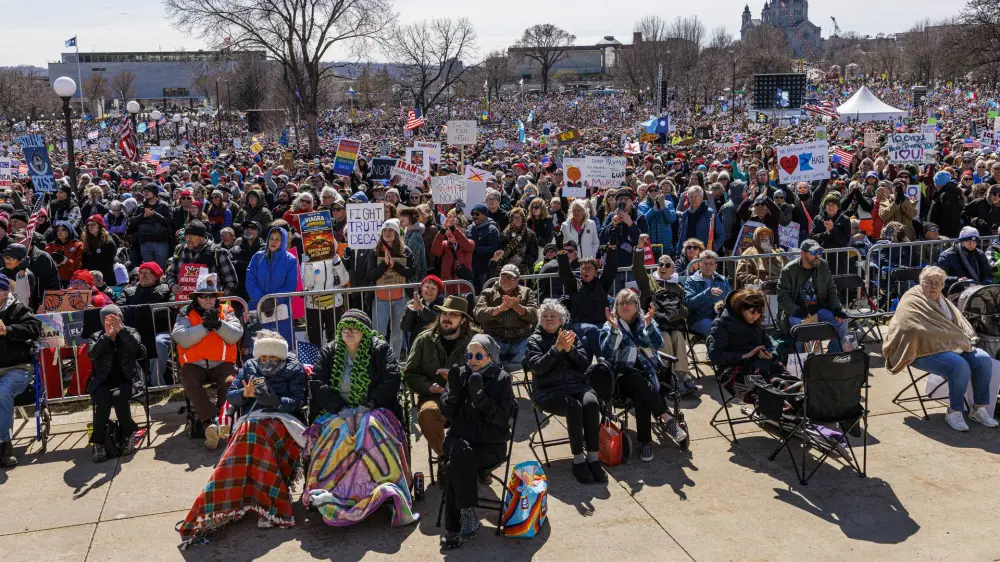
Plenty of American protest waves flare up around a shocking event and then fade. No Kings feels different because it blends immediate outrage with long term organizing. The movement is not only reacting to one policy or one scandal. It is building a sustained narrative that Trump represents a dangerous concentration of power, and that resisting him requires public visibility on a mass scale. Coverage of this latest round repeatedly described the mood not just as angry, but also hopeful, joyful, even mocking at times. Protesters dressed in elaborate costumes, played drums, rang bells, and turned ridicule into a political weapon.
That emotional mix is important. Movements that rely only on fear can burn out quickly. Movements that combine fear with community, spectacle, art, and shared purpose often last longer. The No Kings protests seem to understand that instinctively. They are trying not just to condemn authoritarianism, but to make participation feel meaningful and contagious.
What the No Kings wave could mean next
The biggest unanswered question is whether these protests will translate into lasting political effect. Large crowds matter symbolically, but movements are ultimately judged by whether they change public opinion, influence elections, reshape institutions, or force elites to respond. It is too early to know exactly how far No Kings will go. But after this latest mobilization, it is much harder to dismiss it as a passing expression of outrage.
What is already clear is that the movement has built something unusually broad. It has reached small towns and international capitals. It has attracted celebrities and local activists. It has made room for anti war voices, immigrant rights groups, teachers, civil libertarians, labor organizers, and ordinary people who simply believe democratic norms are under threat. That is not a narrow coalition. It is the kind of coalition that, if it holds together, can keep shaping the national mood well beyond one Saturday.
In that sense, the latest No Kings rallies were not just about crowd size. They were a public warning. Millions of people took to the streets to say that power without restraint, politics without accountability, and nationalism without limits will not go unanswered forever. Whether Trump listens or not, the message has now been delivered in cities, suburbs, small towns, and capitals far beyond the United States. And that may be the most important development of all.