
Table of Contents
- Why Norway Needed This Tunnel — Ferries Were Failing the Coast
- The Engineering Marvel Behind Rogfast — How You Build 27 km Underwater
- Speed, Convenience, Connectivity — What Rogfast Means for Everyday Life
- The Price of Progress — Costs, Tolls, and Economic Ripples
- Why the World Is Watching — What Rogfast Means Globally
- But It’s Not All Smooth — Risks, Challenges, and What Could Go Wrong
- What This Means for Travelers, Commuters, and Everyday People
- The Human Side — What Rogfast Says About Norway’s Ambition
- What Happens After 2033 — The Long Game for Rogfast
- Final Thought — What If Every Coastline Could Break Free?
Why Norway Needed This Tunnel — Ferries Were Failing the Coast
Norway’s coastline is dramatic — fjords, islands, and peninsulas stretch hundreds of miles. For decades, ferries were the only way to connect communities. But ferries come with problems:
- Weather disruptions — snowstorms, wind, rough seas often cancel crossings
- Long wait times — sometimes hours just waiting for the next vehicle load
- Scheduling chaos — always dependent on tide and ferry availability
The result? A coastal highway (the E39) that should take less than a day often stretched into 20+ hours, with seven ferry rides in tow.
That wasn’t just inconvenient. It hurt trade, tourism, and everyday life.
The solution? A bold, daring plan: bypass the sea entirely with a tunnel.
The Engineering Marvel Behind Rogfast — How You Build 27 km Underwater
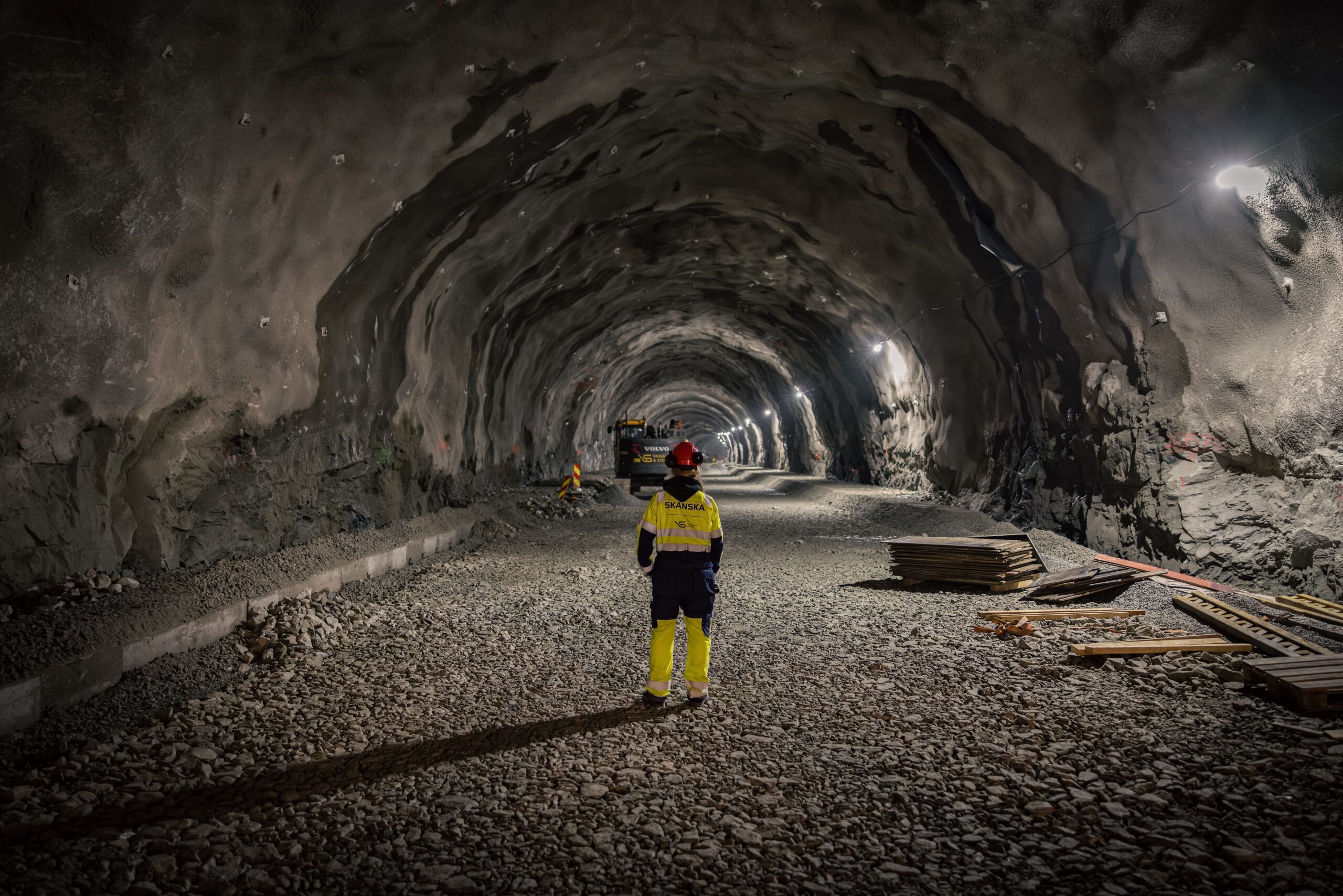
Imagine drilling a tunnel longer than 250 football fields — and doing it under water. That’s the scale of Rogfast.
Key details:
- Length: ~27 km (two tubes, four lanes total)
- Deepest point: 392 m below sea level — deeper than any existing road tunnel in history
- Purpose: Replace unreliable ferry routes and connect Norway’s west-coast communities without delays
Today’s existing subsea tunnel in Rogaland — the Ryfylke Tunnel — was once the world’s longest/ deepest. But Rogfast will surpass it by a wide margin.
Workers carve two separate tubes under the sea floor — one for each direction of traffic — with modern ventilation, safety systems, and careful engineering to manage water pressure, rock stress, and environmental impact.
It’s a project that sounds like science fiction — and that’s exactly the point.
Speed, Convenience, Connectivity — What Rogfast Means for Everyday Life
Once Rogfast opens, everything changes.
- 🚗 Travel times shrink dramatically. The stretch between major cities — previously interrupted by multiple ferry trips — will become a smooth ~35 minute drive.
- 📦 Goods move faster. Freight and delivery routes along the coast will no longer depend on ferry schedules or weather — good for local economies, exports, and small businesses.
- ✈️ Tourism gets a boost. Scenic drives that once required long waits morph into easy, reliable journeys — perfect for travelers craving Norway’s breathtaking nature without uncertainty.
- 🏠 Communities knit closer. Islands and remote peninsulas suddenly feel connected. Families, workers, and services travel with ease. Accessibility becomes real.
In short: Rogfast isn’t just a tunnel. It’s a bridge (underwater) — connecting people, places, and possibilities.
The Price of Progress — Costs, Tolls, and Economic Ripples
Massive infrastructure doesn’t come cheap. Rogfast carries a hefty price tag, and that affects everyone.
- 💰 Construction costs are enormous — funded by a mix of taxpayer money and planned tolls.
- 🚗 Toll fees: expect a fee per crossing, which helps amortize the investment over decades. Some early estimates suggest around the equivalent cost of several liters of petrol — but still worth it for time savings.
- 🏗️ Long-term economic benefits: With faster logistics and smoother transport, industries like fishing, agriculture, manufacturing, and tourism could see real growth. Jobs, exports, and regional investment may accelerate.
For drivers, each trip will cost extra — but the hidden savings (less fuel, time, wear-and-tear, ferry delays) may outweigh the toll in just a few journeys.
Why the World Is Watching — What Rogfast Means Globally
Rogfast isn’t just a Norwegian achievement. It’s a global statement.
- 👷 Engineering ambition: Few countries dare build such a deep underwater tunnel. Rogfast will top global records — creating a blueprint for undersea transport worldwide.
- 🌊 Logistics revolution: Regions with complex coastlines — from island archipelagos to fjords — may follow Norway’s lead. Imagine fixed-link tunnels replacing ferries from Southeast Asia to the Pacific Northwest.
- 🛞 Sustainability gains: Less ferry use, fewer fuel-hungry detours, reduced congestion — a potential climate win if traffic and ferry emissions drop long-term.
- 🧭 Travel culture transform: What once seemed remote becomes reachable; areas previously cut off by geography open up to tourism, commerce, and cultural exchange.
In a world racing to reduce dependence on erratic transport, Rogfast shines as a bold answer: tunnel through the depths, don’t fight the sea.
But It’s Not All Smooth — Risks, Challenges, and What Could Go Wrong
No mega-tunnel is without danger or drawbacks.
- 🏗️ Engineering challenges: The deeper you build, the greater the water pressure, rock stress, and risk. Every foot beneath the fjord brings harder drilling, intense ventilation needs, and safety concerns.
- 🌍 Environmental impact: Construction disturbs marine ecosystems. Over time, impact on underwater life and seabed ecology must be monitored carefully.
- 🚦 Cost and toll burden: Frequent users — local residents, truckers — will feel the toll impact heavily. If tolls rise, affordability becomes a concern.
- 🔄 Maintenance overhead: Long tunnels need constant upkeep, emergency protocols, ventilation, lighting, drainage — decades of expensive commitment.
Even Norway’s rugged terrain isn’t immune to structural challenges. Safety, cost, and environmental care remain priorities.
What This Means for Travelers, Commuters, and Everyday People
Whether you’re a travel-hardened globetrotter, a commuter, or a local fisherman — Rogfast will change the game.
- 🚗 Fewer ferry delays = more reliability. Plan a road trip or just visit family — no ferry timetables, no weather worries.
- 🏡 Real estate shifts. Properties on islands or remote peninsulas may surge in value — now that access isn’t defined by ferry reliability.
- 🧳 Tourism booms. Sensitive to natural beauty but shy of inconvenience — many travelers will choose road trips over flights if they’re smooth, scenic, and predictable.
- 📦 Business gets faster. Deliveries, exports, and small-business logistics benefit — reducing cost, time, and uncertainty.
In short: people move easier. Business moves easier. Life becomes a bit simpler.
The Human Side — What Rogfast Says About Norway’s Ambition
It’s easy to get lost in numbers: 27 km, 392 m deep, billions invested. But at the core of Rogfast is a human story — about connection.
- Families visiting islands without ferry chaos.
- Students commuting to universities free from unpredictable schedules.
- Tourists exploring remote fjords with a stable ride.
- Freight drivers delivering seafood, agriculture, goods — on time, every time.
Rogfast isn’t just a tunnel. It’s a statement: geography doesn’t control life. People do.
What Happens After 2033 — The Long Game for Rogfast
Rogfast isn’t just about immediate convenience. It’s about reshaping Norway’s coast for decades:
- Economic uplift — coastal regions get more investment, industry, and population growth.
- Transport model — ferry-free highways, stable logistics, reduced carbon footprints (if managed well).
- Global blueprint — other coastal nations may export the model, building their own under-sea links.
- Social connectivity — remote communities gain access to healthcare, education, markets, culture, and mobility.
Rogfast isn’t just a tunnel under water — it’s a tunnel into Norway’s future.
Final Thought — What If Every Coastline Could Break Free?
Picture this: a world where seas, fjords, and waters no longer divide us. Where remote isn’t lonely, but connected. Where travel isn’t about delays — but discovery.
Rogfast does that for Norway.
What if tomorrow, another country built its own version?
What if the map we know — islands, peninsulas, isolated regions — becomes a network of tunnels under the sea?
If Rogfast succeeds, it doesn’t just change travel in Norway.
It changes what we believe is possible for the world.
Would you drive through the sea if it meant freedom instead of limits?