

Table of Contents
- Who Are Ilhan Omar and Rashida Tlaib?
- What He Said and Why It Matters
- The Backlash: Political Leaders Respond
- The Impact of Trump’s Remarks on American Politics
- What Does This Say About the State of Free Speech in America?
- Immigration, Race, and Religion
- The Future of U.S. Politics
- What This Means for the Future of American Democracy
Who Are Ilhan Omar and Rashida Tlaib?
Ilhan Omar, a representative from Minnesota, and Rashida Tlaib, a representative from Michigan, both made history in 2018 as the first Muslim women elected to Congress. Since their arrival in Washington, they have been outspoken advocates for progressive policies, including universal healthcare, racial justice, and a more critical stance on U.S. foreign policy in the Middle East. Omar and Tlaib have garnered significant attention for their unapologetic criticisms of the Israeli government, which has led to charges of anti-Semitism from their detractors. However, both have denied these accusations, emphasizing their commitment to human rights and justice.
Trump’s recent comments are not the first time he has targeted Omar and Tlaib. In the past, Trump has taken aim at the two lawmakers in a series of tweets and public statements, often framing them as representatives of a dangerous left-wing agenda. His latest remarks, however, mark a new level of hostility, as he openly calls for their deportation, a step many view as politically charged and deeply divisive.
What He Said and Why It Matters

In his latest remarks, Trump referred to Omar and Tlaib as “lunatics,” suggesting that their views were not only dangerous but deserving of removal from the country. Trump also added that the two women should be institutionalized, a comment widely criticized for its derogatory and ableist tone. The suggestion that elected officials should be deported or institutionalized for their political beliefs raises significant questions about the boundaries of free speech and the role of political dissent in American democracy.
Trump’s comments are seen by many as an attempt to stoke division and rally his base by targeting high-profile, progressive figures. By labeling Omar and Tlaib as extremists, Trump can further cement his position as the defender of conservative values, casting his political opponents as radical and un-American. However, this kind of rhetoric also contributes to a toxic political climate, where insults and personal attacks become commonplace, undermining constructive political discourse.
The Backlash: Political Leaders Respond
Trump’s comments have sparked a firestorm of criticism from both Democrats and Republicans, as well as from human rights organizations and political analysts. Democratic leaders have condemned Trump’s remarks as an example of hate speech that undermines the values of democracy. Speaker of the House Nancy Pelosi called for unity and expressed her disappointment in the former president’s divisive rhetoric. “Our country is built on the idea that people can disagree, but still work together for the greater good,” Pelosi said in response to the comments.
Republicans, too, have faced questions about whether Trump’s comments go too far. Some Republicans have distanced themselves from the former president, expressing disapproval of his harsh rhetoric. “This kind of language has no place in our political dialogue,” said Senator Mitt Romney, a vocal critic of Trump. While many Republicans still support Trump’s policies, his personal attacks on Omar and Tlaib have proven to be a point of contention within the party.
The Impact of Trump’s Remarks on American Politics
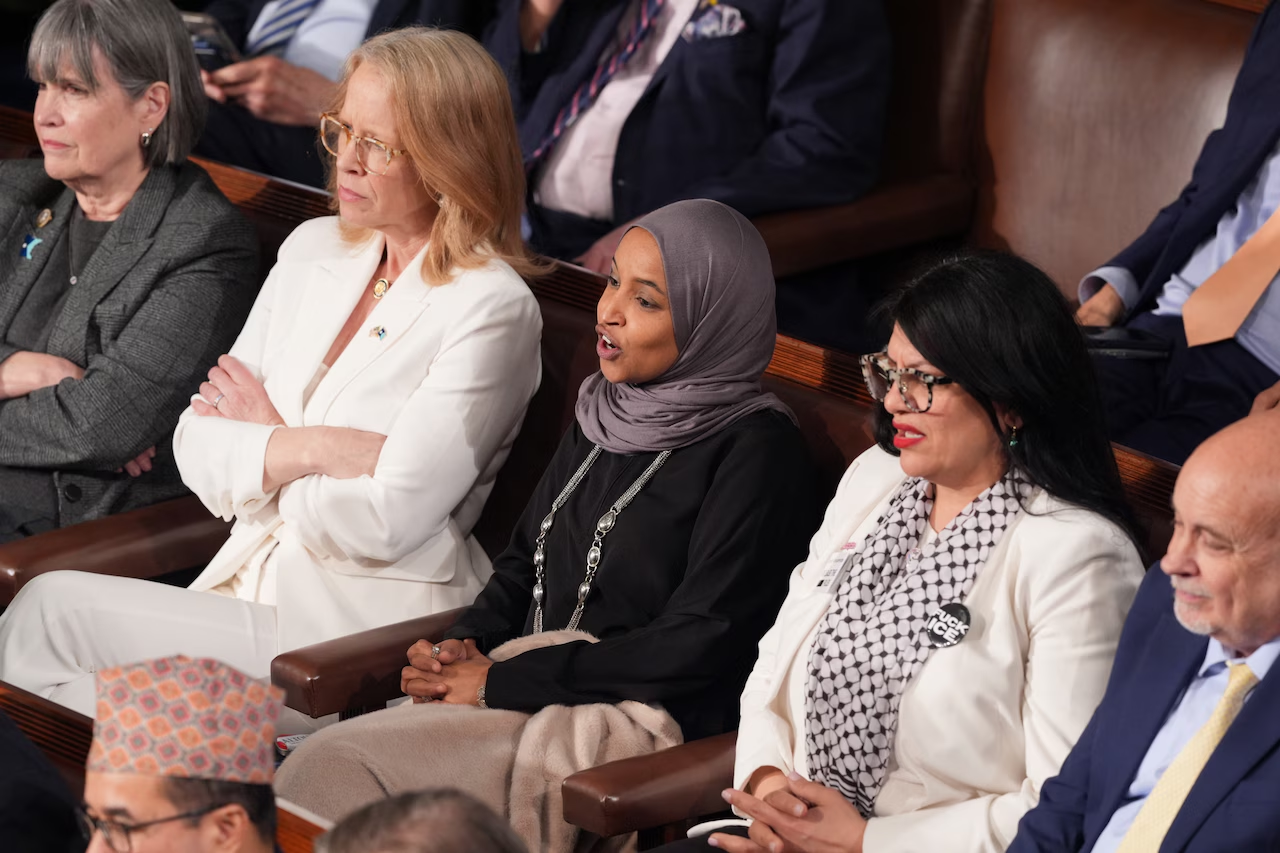
Trump’s call for Omar and Tlaib to be deported or institutionalized underscores the growing polarization of American politics. As political discourse becomes more acrimonious, the lines between legitimate political disagreement and personal attack have become increasingly blurred. Trump’s statements have reignited the culture wars, reinforcing the divide between the progressive left and the conservative right.
For some of Trump’s supporters, his remarks resonate with a deep dissatisfaction with the current state of American politics. They view Omar and Tlaib’s positions on issues such as Israel and U.S. foreign policy as threats to American values, and they welcome Trump’s aggressive stance against them. On the other hand, many progressives see Trump’s remarks as part of a broader campaign to delegitimize and silence dissenting voices. They argue that such attacks undermine the principles of free expression and democracy that the United States was founded on.
What Does This Say About the State of Free Speech in America?
Trump’s comments also raise critical questions about the limits of free speech and the role of elected officials in shaping public discourse. While the First Amendment protects the right to express opinions, even those that are unpopular or controversial, there is a fine line between free speech and incitement to violence or discrimination. By suggesting that two elected officials be deported or institutionalized because of their political beliefs, Trump may be crossing that line.
For many, these comments reflect a broader trend in which political figures use inflammatory language to rally support, often at the expense of civility and respect. As political discourse becomes more hostile, the question arises: where should we draw the line between acceptable political expression and harmful rhetoric? In a nation that prides itself on its commitment to free speech, Trump’s words have reignited a national conversation about the role of political leaders in shaping public dialogue.
Immigration, Race, and Religion

Trump’s remarks also tap into broader cultural and political issues, including immigration, race, and religion. Both Omar and Tlaib are Muslim women of color, and their political views have often put them at odds with the predominantly white, Christian leadership of the United States. Trump’s call for their deportation and institutionalization has been widely interpreted as a racially charged attack, playing on fears of the “other” and reinforcing stereotypes about immigrants and Muslims in America.
By targeting Omar and Tlaib, Trump is capitalizing on a growing anti-immigrant sentiment in the United States. His remarks serve to further divide the country along racial and religious lines, deepening the polarization that has characterized U.S. politics in recent years. Critics argue that such rhetoric not only harms the individuals targeted but also undermines the country’s commitment to inclusivity and equality.
The Future of U.S. Politics

As Trump’s comments continue to reverberate across the political landscape, it is clear that U.S. politics is becoming more polarized than ever. The growing divide between progressives and conservatives is reflected not only in policy debates but also in the language used by political leaders. In this environment, personal attacks and incendiary rhetoric are increasingly seen as acceptable tools for gaining political power, rather than as something to be condemned.
As the 2024 election approaches, Trump’s remarks may serve as a rallying cry for his supporters, further entrenching the ideological divide. However, they also provide an opportunity for voters to reflect on the kind of political discourse they want to support. In an era of intense division, it is crucial for Americans to consider whether personal attacks and incitement to hate will continue to dominate political conversations, or whether a return to civility and respect is possible.
What This Means for the Future of American Democracy
Trump’s call for Omar and Tlaib to be deported and institutionalized is a stark reminder of the dangers of political rhetoric that dehumanizes and marginalizes political opponents. While his words may rally his base, they also risk further alienating large segments of the American population. As the country faces mounting challenges, including economic inequality, racial injustice, and political polarization, it is crucial for leaders to engage in respectful dialogue and work toward solutions that benefit all citizens.
The future of American democracy depends on the ability of political leaders to rise above divisive rhetoric and focus on the issues that truly matter. If the political discourse continues down the path of personal attacks and vitriol, the fabric of American society may be irreparably torn. It is time for Americans to decide whether they want to embrace unity or division in the years to come.