
Table of Contents
- A Landmark Moment for Pet Parents Across Australia
- Why This Is Such a Big Deal
- The Airline That Broke the Barrier
- A Victory for Thousands of Pet Parents
- But How Will It Actually Work? (Here’s What We Know So Far)
- Why Cargo Travel Was Never Ideal
- The Airline Industry Shift: What Experts Are Saying
- How This Policy Could Change Everyday Life for Australians
- Concerns and Questions: What Happens Next?
- A Change Driven by Compassion, Not Just Policy
- If This Happened to You… What Would You Choose?
- A Final Thought: This Is Only the Beginning
A Landmark Moment for Pet Parents Across Australia
It finally happened.
Something millions of Australians have been begging for, hoping for, and tweeting about for years.
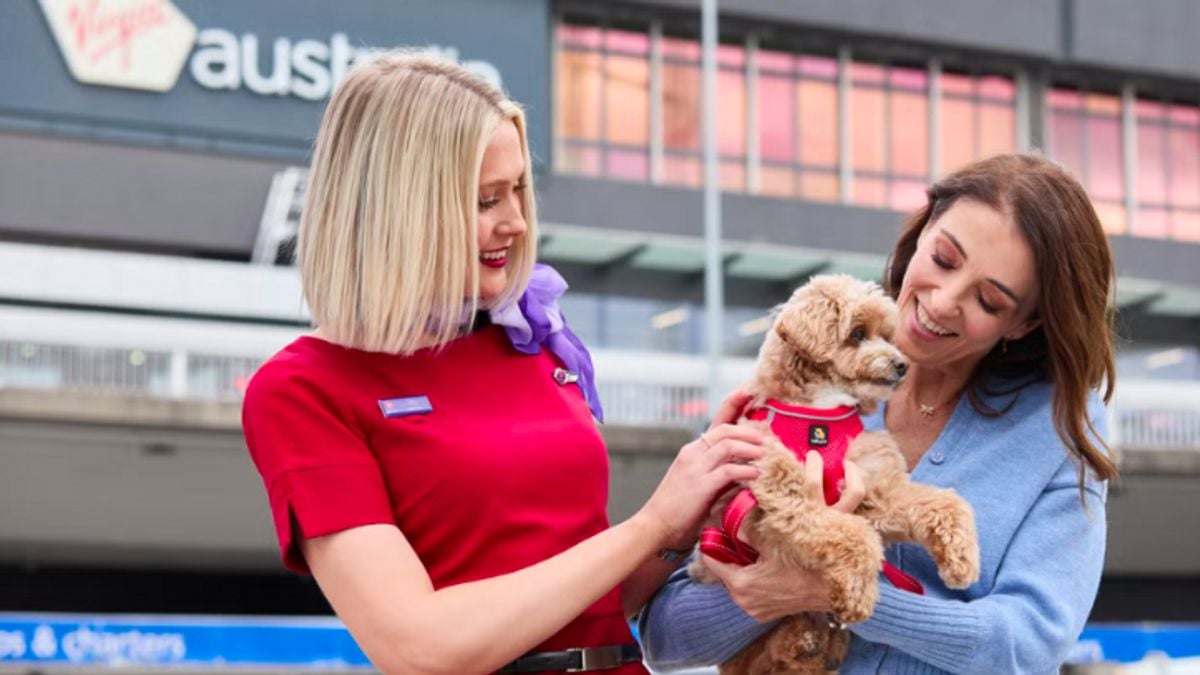
For the first time in history, an Australian airline has officially announced that pets will be allowed to fly inside the cabin with their owners.
No more dark cargo holds.
No more shaking animals pushed onto conveyor belts.
No more heart-racing hours wondering if your dog is scared, cold, or even safe.
Just you… your pet… and a seat on the same plane.
The moment the news broke, pet parents across the country reacted with the same emotion:
“It’s about time.”
But this decision goes far beyond convenience.
It represents a major shift in how Australia treats animal welfare, modern travel, and the emotional bond between humans and their pets.
Why This Is Such a Big Deal
Australia has long stood out as one of the few Western countries that did not allow pets to travel in airplane cabins.
In the United States, Canada, Japan, Europe, and even parts of Southeast Asia, small pets have been flying in carriers beneath airplane seats for years.
But in Australia?
Pets were restricted to one place:
The cargo hold — regardless of size, breed, age, or temperament.
And for many animals, cargo travel is terrifying:
- Loud noises
- Shifting pressures
- Separation from owners
- Zero visibility
- Temperature concerns
- Past incidents of pets being injured or lost
For years, Australian dog owners asked the same question:
“If my pet can sit safely with me on a train, bus, or ferry… why not a plane?”
Finally, an airline listened.
And everything changed overnight.
The Airline That Broke the Barrier
The first airline to step forward and make history (as reported in the news) confirmed what pet owners had dreamed of for decades:
Pets may now travel inside the cabin on select domestic flights.
This policy applies to small dogs and cats who can safely remain inside airline-approved carriers. The airline explained its rationale clearly:
- Improving animal welfare
- Reducing travel stress for both pets and owners
- Aligning Australia with global travel standards
- Increasing customer satisfaction
- Offering new pet-friendly travel opportunities
It wasn’t just an operational decision.
It was a cultural shift.
And experts say it may inspire other airlines — including larger carriers — to follow suit faster than expected.
A Victory for Thousands of Pet Parents
For many Australians, pets are not just “animals.”
They are:
- Family members
- Emotional support companions
- Sources of comfort
- Lifelong friends
And traveling without them has always been stressful.
One owner said:
“Flying with my dog used to be traumatic. She cried, I cried, and the entire flight I wondered if she was okay in cargo. Now she’ll sit right under my seat. This policy changes everything.”
Another added:
“My dog is 14. There was no way I’d ever put him in a cargo hold. We haven’t flown for years because of it. Now we finally can.”
People with service animals and emotional support dogs also celebrated the decision, which creates more equitable travel opportunities for individuals with disabilities and mental health needs.
But How Will It Actually Work? (Here’s What We Know So Far)
Allowing pets in cabins requires more than a simple announcement.
It requires infrastructure, safety procedures, and clear rules.
Here’s what the airline plans to implement:
1. Only Small Pets Allowed
Pets must fit comfortably in an airline-approved carrier that slides beneath the seat in front of the passenger.
2. Advance Registration Required
Only a small number of pets will be allowed on each flight to ensure safety and comfort.
3. Designated Pet Rows
Passengers with pets may be grouped in specific rows to minimize disruptions.
4. Carrier Stays Closed
Pets must remain inside carriers for the entire flight—just like airlines in Europe and the U.S.
5. Cleaning Fees and Extra Charges
A small additional fee will apply, similar to policies worldwide.
6. No Cargo Hold Requirement
Owners will no longer be forced to check their pets into cargo unless they choose to do so.
This policy mirrors international standards that have been successful for decades.
And that’s what makes it powerful:
It’s not an experiment. It’s a global best practice finally arriving in Australia.
Why Cargo Travel Was Never Ideal
Cargo holds are not built for living passengers — not even furry ones.
Many veterinarians have raised concerns for years:
- Temperature variations
- Loud mechanical noise
- Poor visibility
- Separation anxiety
- Stress-induced health problems
Even well-run cargo operations cannot replicate the safety and comfort of sitting near an owner who can:
- Check on the pet
- Comfort them
- Protect them
- React to emergencies
The new policy dramatically improves animal welfare and safety.
For many pets, it can be life-changing.
The Airline Industry Shift: What Experts Are Saying
Aviation analysts suggest this could mark the beginning of a major trend in Australia’s domestic travel sector.
Why?
Because pet-friendly policies increase:
- Customer loyalty
- Booking rates
- Revenue potential
- Tourism flexibility
- Brand enthusiasm
In countries like the U.S. and Canada, airlines that allow pets in cabins consistently rank higher for customer satisfaction.
One aviation expert noted:
“Pet travel isn’t a niche feature anymore.
It’s a mainstream expectation.”
Australia may finally be catching up.
How This Policy Could Change Everyday Life for Australians
This announcement isn’t just about flying.
It’s about freedom.
Freedom for:
- Families relocating interstate
- Travelers on holiday
- Students returning home
- People with emotional support pets
- Seniors who depend on companion animals
- Owners whose pets are too fragile for cargo
Travel becomes accessible not just for humans—but for the animals who help humans live better, happier, healthier lives.
Imagine:
A couple flying with their dog to a new home in Melbourne.
A traveler taking her elderly cat to visit family in Perth.
A family reuniting with their adopted puppy without fearing cargo conditions.
This new policy doesn’t just simplify logistics.
It strengthens bonds.
Concerns and Questions: What Happens Next?
Of course, major policy changes bring big questions:
- How many pets will be allowed per flight?
- Will some passengers object to animals onboard?
- What about allergies?
- What if a dog barks mid-flight?
- Will all Australian airlines adopt the same policy?
These concerns aren’t new.
Airlines around the world have managed them successfully for decades.
Solutions include:
- Allergen-free buffer zones
- Carrier ventilation requirements
- Behavior guidelines for pets
- Vaccination and documentation rules
- Staff training
Australia is not starting from zero; it is adopting a model that already works globally.
A Change Driven by Compassion, Not Just Policy
At the heart of this decision is something simple:
Pets deserve better.
They deserve safety.
They deserve comfort.
They deserve dignity.
And pet owners deserve the peace of knowing their companions are close during stressful moments.
This moment marks a cultural milestone:
Australia is embracing a world where animals’ emotional well-being matters.
Where families aren’t separated by a plane door.
Where dogs aren’t treated as luggage.
Where travel becomes more humane.
If This Happened to You… What Would You Choose?
Imagine you have a small dog.
She shakes when she’s alone.
She sleeps by your side every night.
She follows you from room to room.
Now imagine taking her to an airport.
Would you feel comfortable placing her in a crate, watching her disappear through a cargo door, and hoping she survives the flight?
Or would you choose an airline that lets her sit safely beneath your seat — where you can whisper to her, touch her carrier, and ease her fears?
Most pet owners know exactly which option they would choose.
And that’s why this new policy is so historic.
A Final Thought: This Is Only the Beginning
This announcement signals a shift in what air travel will look like in the coming years.
More airlines will follow.
More routes will open to pets.
More families will travel together.
More animals will be safe.
A door has opened — literally and figuratively — for millions of Australian pets and their humans.
And once that door is opened, it rarely closes again.
Because a nation that loves its animals always finds new ways to protect them.
And now, for the first time ever,
Australia is letting that love fly.