

Table of Contents
- A Zebra That Defies Nature
- The Science Behind Zebra Stripes—and Dots
- A Birth That Captivated Maasai Mara
- Why Travelers Are Flocking to Maasai Mara
- The Genetic Rarity Explained
- A Lesson in Conservation and Awareness
- The Social Media Sensation
- Why Genetic Anomalies Fascinate Us
- Capturing the Moment: Wildlife Photography Tips
- The Future of the Polka-Dotted Foal
- Conclusion: Nature’s Playful Brushstroke
A Zebra That Defies Nature
In the vast plains of Kenya’s Maasai Mara, a newborn foal has stunned wildlife watchers. Unlike the typical striped pattern of its family, this tiny zebra displays polka dots across its body—like nature itself decided to paint a whimsical masterpiece.
Such occurrences are extremely rare. Experts estimate only a handful of polka-dotted zebras have ever been documented. For travelers and wildlife photographers, witnessing this foal in its natural habitat is a once-in-a-lifetime opportunity.
If you were on safari and spotted this creature, what would your first thought be: wonder, disbelief, or a rush to snap the perfect photo?
The Science Behind Zebra Stripes—and Dots
Zebras are famous for their stripes, which have fascinated scientists for decades. Stripes serve multiple purposes: camouflage, temperature regulation, and even insect deterrence. But what causes a polka-dotted pattern instead?
Genetic mutations are the answer. In rare cases, the genes controlling stripe formation can produce spots instead of lines. This is different from albino or melanistic zebras—it’s a unique blend of standard coloration with an unexpected twist.
Wildlife geneticist Dr. Emily Cartwright explains, “It’s as if evolution hit the shuffle button. These dots don’t just make the zebra look unusual—they challenge our understanding of species variation in the wild.”
Imagine if this rare genetic quirk could appear in other species—would we see polka-dotted lions or tigers one day?
A Birth That Captivated Maasai Mara
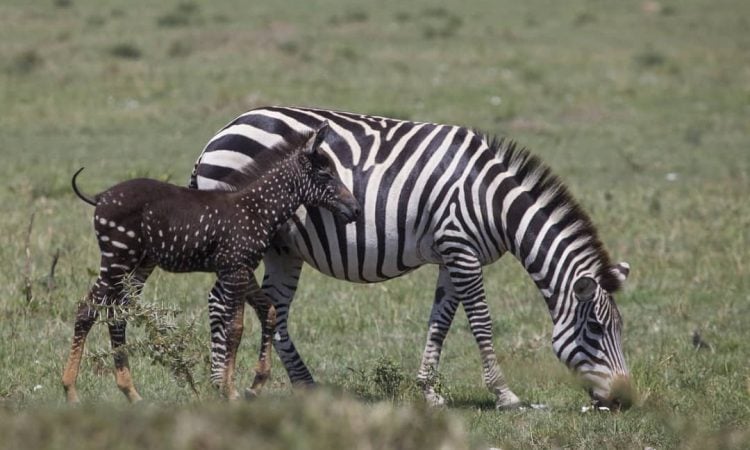
The foal was born during the dry season, a challenging time for young wildlife. Its mother, a healthy adult zebra, tended to it like any other newborn, protecting it from predators and teaching it how to graze.
Tour guides and visitors were instantly captivated. Cameras clicked, drones hovered, and social media buzzed. Within hours, images of the polka-dotted foal spread globally, drawing attention to the Maasai Mara and the importance of wildlife conservation.
Conservationists argue that rare sightings like this foal highlight the need to preserve natural habitats. The Mara is not just a safari destination—it’s a delicate ecosystem supporting countless species, from elephants to cheetahs.
Have you ever considered how many rare genetic miracles go unseen in the wild, lost to human ignorance or habitat destruction?
Why Travelers Are Flocking to Maasai Mara
For wildlife photographers and adventure travelers, the Maasai Mara is legendary. Add a polka-dotted zebra to the mix, and suddenly, this iconic African plain becomes the epicenter of global curiosity.
Luxury safari lodges report increased bookings, and travel agencies are crafting specialized “rare wildlife” itineraries. Health-conscious travelers and nature lovers are drawn by the idea of connecting with untouched landscapes and witnessing evolution in real time.
Beyond the thrill, tourism helps fund conservation. Every visitor contributes to protecting habitats, preventing poaching, and ensuring rare animals like this foal survive for future generations.
Would you make the journey to Kenya if it meant seeing a creature that might never be seen again in your lifetime?
The Genetic Rarity Explained
The polka-dotted foal’s condition, known scientifically as “pseudo-leucism,” occurs when pigment-producing cells develop unevenly. Unlike albino animals, these zebras still have some of their natural coloration, but the lines break into isolated spots.
Researchers are studying the foal’s DNA, hoping to understand if this is a spontaneous mutation or part of a broader genetic pattern in the herd. Similar rare occurrences in other species, like spotted lions or patchy giraffes, suggest nature occasionally experiments with design.
Wildlife enthusiasts often wonder: could these genetic quirks provide insights for human genetics, or even inspire design and innovation in art, architecture, and home décor?
A Lesson in Conservation and Awareness
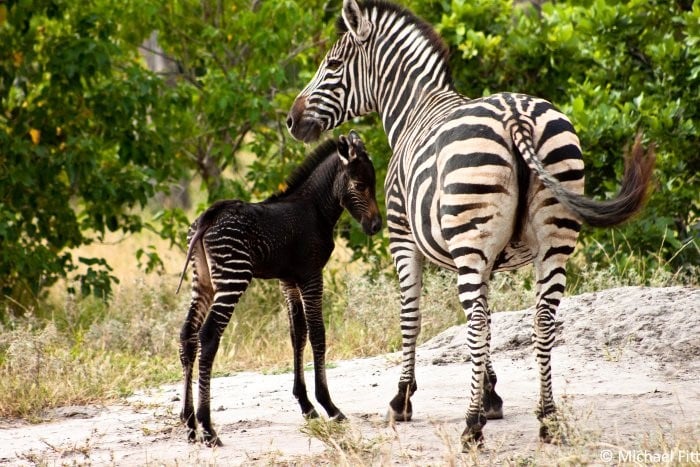
Rare wildlife sightings remind us that every creature matters. The polka-dotted foal has become an ambassador for the Maasai Mara, sparking discussions on biodiversity, eco-tourism, and climate impact.
By protecting the Mara’s grasslands, rivers, and ecosystems, we safeguard not just zebras but elephants, wildebeests, and countless other species. Even the smallest genetic miracle depends on the health of the entire habitat.
Think about it: if one rare foal can inspire global attention, what stories remain untold in endangered ecosystems worldwide?
The Social Media Sensation
Within days of the foal’s discovery, photos and videos went viral. Hashtags like #PolkaDotZebra, #MaasaiMaraMagic, and #RareWildlife trended across platforms. Influencers, photographers, and travel bloggers shared the story, highlighting not only the uniqueness of the zebra but also Kenya’s thriving safari culture.
This digital attention has real-world impact. Increased tourism, funding for conservation, and educational campaigns all tie back to a single, extraordinary animal.
Would you share such a moment online, knowing it could help protect the species and its habitat?
Why Genetic Anomalies Fascinate Us
Polka-dotted zebras aren’t just cute—they challenge our understanding of biology. Scientists study these anomalies to learn about genetics, evolution, and adaptation. In some cases, such traits may offer advantages or disadvantages in survival, affecting predator avoidance, social dynamics, or mating.
For example, could predators recognize unusual patterns more easily, or might they mistake them for a different species? These questions intrigue not only biologists but also educators, parents, and curious minds worldwide.
Every dot tells a story of chance, survival, and evolution’s ongoing experiments.
Capturing the Moment: Wildlife Photography Tips

Travelers hoping to witness such rare phenomena often wonder how to capture it perfectly. Experts advise patience, early mornings for natural light, and respecting wildlife boundaries. Drones can provide aerial perspectives, but only when used responsibly.
This foal offers a lesson in timing and luck. Wildlife photography isn’t just about the camera—it’s about observation, patience, and knowing when to step back to let nature shine.
Imagine standing just meters away from a living miracle. Could you take the perfect shot—or would you simply watch in awe?
The Future of the Polka-Dotted Foal
As the foal grows, its survival will depend on predators, climate, and human activity. Researchers are closely monitoring its development, hoping it thrives and perhaps even passes on its rare genes.
For travelers, wildlife enthusiasts, and scientists alike, this zebra is more than a curiosity—it’s a symbol of nature’s unpredictability, resilience, and beauty.
Could this rare foal inspire a new generation of conservationists, or even influence eco-conscious travel trends worldwide?
Conclusion: Nature’s Playful Brushstroke
The polka-dotted zebra foal of Maasai Mara reminds us that nature is never static. It experiments, surprises, and captivates. One moment, the plains are ordinary; the next, a living work of art emerges.
This foal has sparked wonder, scientific curiosity, and global admiration. It reminds us that the wild holds secrets yet to be discovered—and that every creature, no matter how rare, plays a vital role in the intricate tapestry of life.
Next time you think you’ve seen it all, remember the polka-dotted zebra, and ask yourself: what other wonders might be hiding just out of sight, waiting to transform our understanding of the natural world?