
Table of Contents
- Crete Covered in a Saharan Dust Cloud
- Flight Disruptions and Airport Groundings
- Tornado Strikes and Coastal Damage
- Health Risks and Precautions for Vulnerable Groups
- Storm Erminio and Its Impact on Greece
- Crete’s Vulnerability to Extreme Weather
- International Impact: Canary Islands Also Affected
- Fishermen Warn of Unsafe Conditions
- The Global Phenomenon of Saharan Dust Clouds
- Looking Ahead: The Future of Extreme Weather Events
Crete Covered in a Saharan Dust Cloud
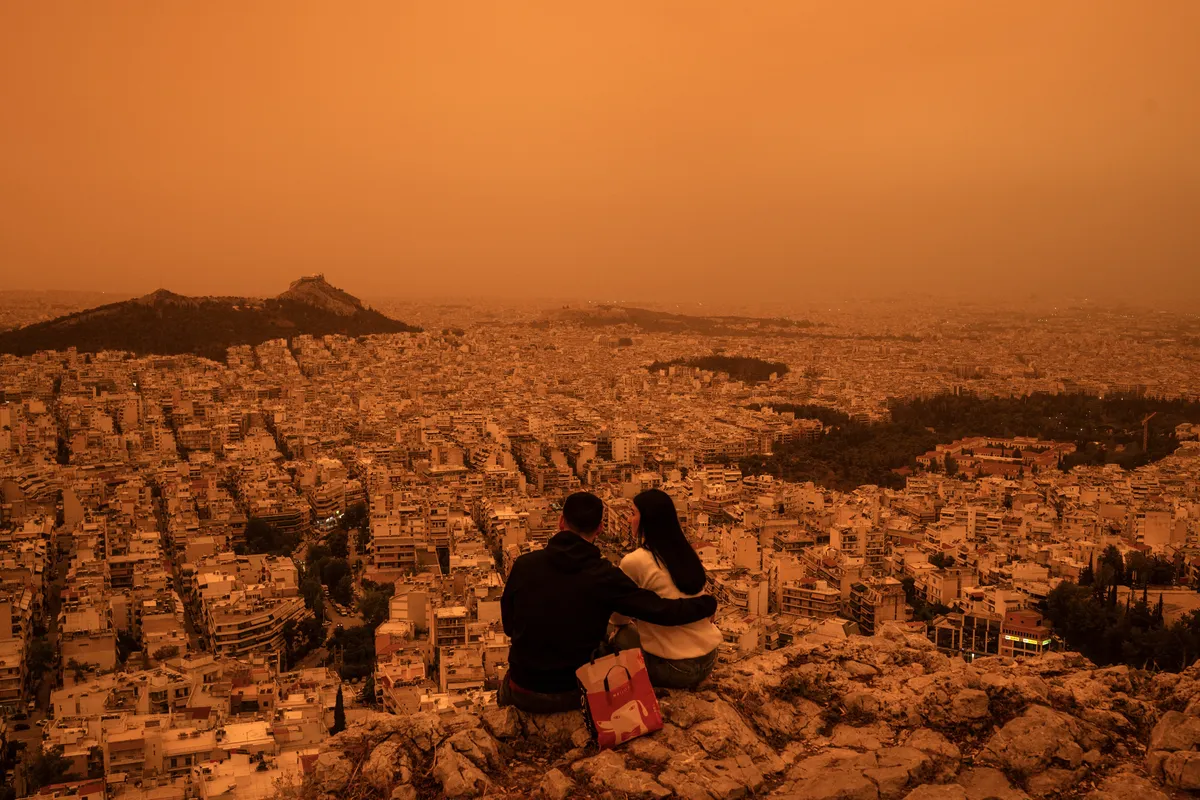
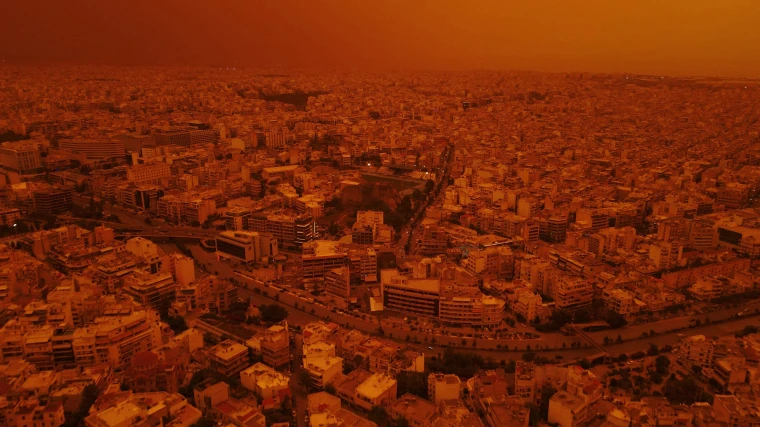
Crete, one of Greece’s most popular tourist destinations, was hit by an unexpected natural phenomenon when a Saharan dust cloud swept over the island. The region’s sky turned an unnatural orange hue, caused by fine particles carried from the Sahara Desert in North Africa. This cloud, also known as “calima,” is a common occurrence in the Mediterranean but has been particularly intense this time. The dense dust obstructed visibility, causing flights to be delayed and even rerouted.
The impact of this natural event was felt across the island, particularly at Heraklion’s main airport, where several flights had to be diverted due to poor visibility. A British Airways flight from London was redirected to Corfu, and a SKY Express flight from Brussels was sent to Athens. Passengers and airport staff alike faced uncertainty as the cloud continued to hang over the island, causing delays in air travel.
Flight Disruptions and Airport Groundings
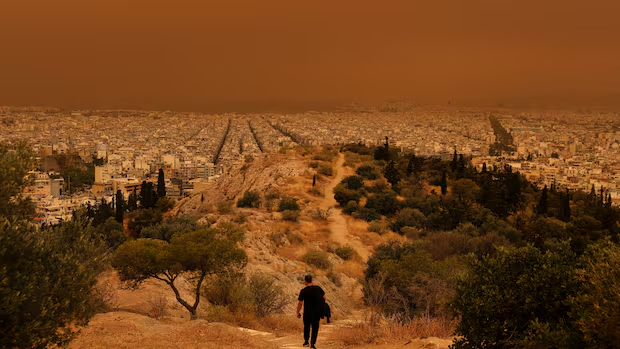
With visibility dropping to dangerously low levels, authorities were forced to ground planes at the island’s main airport. Heraklion, the capital of Crete, became a hub of confusion as travelers scrambled to find alternative flights. The cloud’s impact on air traffic was compounded by the high winds, which caused additional delays and issues at security checkpoints.
Airports in Crete, typically busy with tourists heading to the island for vacation, found themselves overwhelmed. The disruptions resulted in significant financial losses for airlines and frustration for travelers. The situation highlighted the vulnerability of air travel in the face of extreme weather events and natural phenomena like Saharan dust clouds.
Tornado Strikes and Coastal Damage
The Saharan dust cloud wasn’t the only extreme weather event affecting Crete. As the dust storm swept across the island, it was accompanied by a powerful tornado that caused widespread damage, particularly in the coastal area of Pachia Ammos. A truck preparing to load agricultural exports was flipped over by the violent winds, and two pine trees were uprooted. Greenhouses in the area were damaged, and a wall at a ceramics factory collapsed.
The tornado’s strength caught many locals and tourists by surprise, further complicating the already difficult situation caused by the dust cloud. The high winds also whipped up dangerous coastal conditions, with large waves surging into the old town of Ierapetra, causing flooding and disruption. These natural disasters served as a stark reminder of the unpredictable power of nature and its potential to wreak havoc on communities.
Health Risks and Precautions for Vulnerable Groups
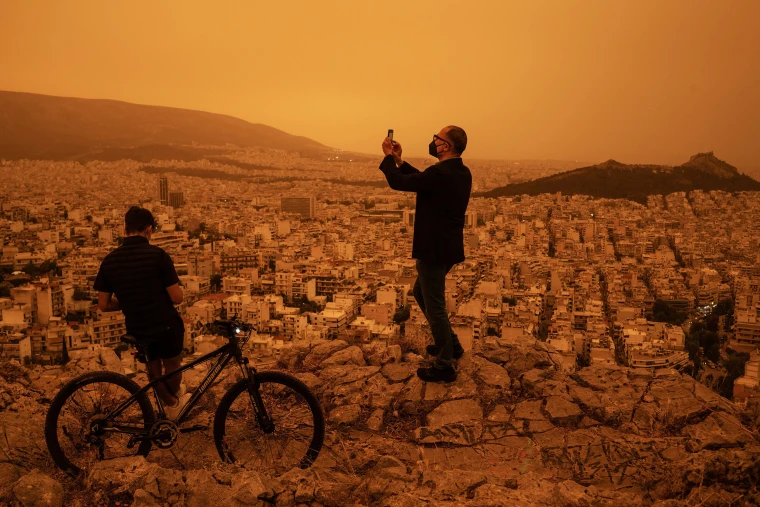
The dust cloud brought more than just travel chaos and property damage—it also posed serious health risks, particularly for vulnerable groups such as the elderly, children, and those with respiratory conditions. Experts warned that elevated levels of airborne particles could cause breathing difficulties, exacerbating conditions like asthma and other lung diseases.
Meteorologists reported that dust levels in Crete had exceeded 1,000 micrograms per cubic meter, far above the safe limits for air quality. Local health authorities advised residents and tourists to avoid outdoor activities, particularly those involving strenuous exercise. Many people wore masks and took extra precautions to protect their respiratory health as the dust continued to linger in the atmosphere.
Storm Erminio and Its Impact on Greece
The Saharan dust cloud wasn’t the only weather phenomenon affecting Crete and Greece as a whole. Storm Erminio, a powerful system bringing heavy rainfall, thunderstorms, and strong winds, compounded the chaotic conditions on the island. The storm added to the challenges already posed by the dust cloud, leading to further flooding in several areas.
The combined effects of the dust storm and Storm Erminio have left authorities in Greece scrambling to mitigate the damage. Civil protection agencies have been on high alert, with emergency services being dispatched to areas affected by the storm’s high winds and heavy rains. The storm has also affected other parts of Greece, including popular tourist destinations like Santorini and Rhodes, causing widespread disruption.
Crete’s Vulnerability to Extreme Weather
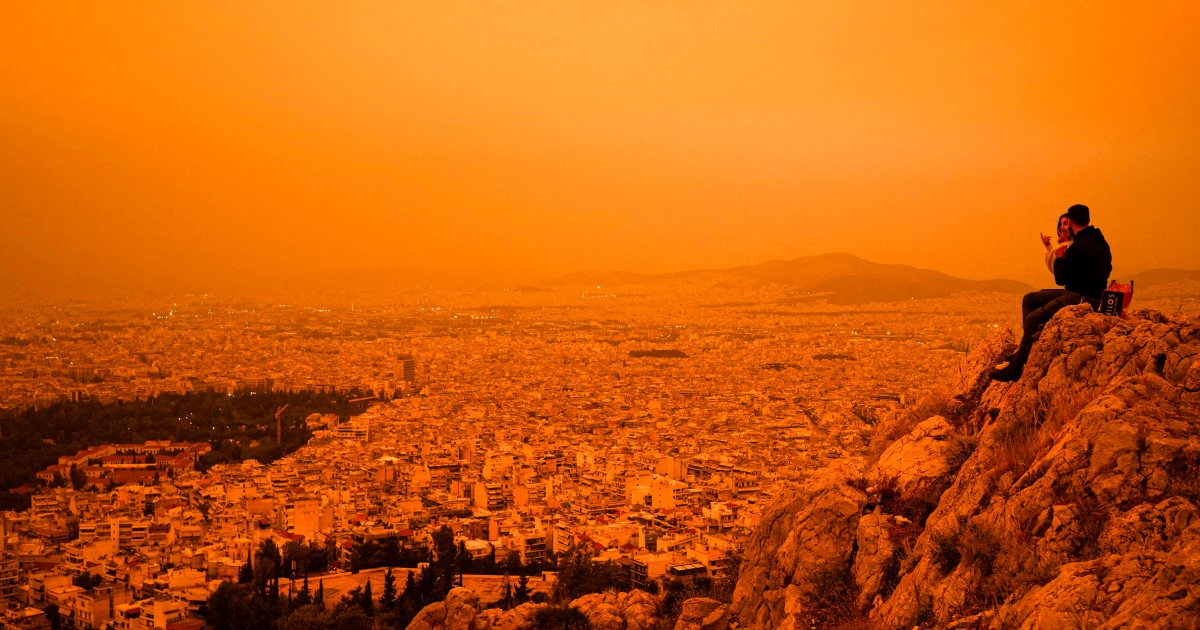
Crete, being an island in the Mediterranean, is particularly vulnerable to extreme weather events. The island’s geographical location makes it susceptible to both Saharan dust clouds and powerful storms that can cause significant damage. Experts have pointed out that climate change may be contributing to the increasing frequency and intensity of such weather events.
The region’s infrastructure, while robust, faces challenges in coping with such extreme conditions. With more frequent dust storms, tornadoes, and other severe weather events, Crete will need to adapt to these new realities by strengthening its disaster preparedness and response systems. The Greek government and local authorities have pledged to increase efforts to safeguard both residents and tourists from the growing threat of extreme weather.
International Impact: Canary Islands Also Affected
Crete’s experience with the Saharan dust cloud is not unique. The Canary Islands, located off the coast of North Africa, have also been impacted by the same weather phenomenon. The dust cloud, known as “calima,” is a regular occurrence in the region, but experts have noted that this particular event is more extreme than usual.
As with Crete, authorities in the Canary Islands have advised residents and tourists to take health precautions, especially those with respiratory issues. The impact of the dust storm on air quality and visibility has been significant, causing disruptions in daily life and prompting health advisories. It’s clear that the phenomenon of Saharan dust clouds is a growing concern across the Mediterranean, with Crete and the Canary Islands bearing the brunt of its effects.
Fishermen Warn of Unsafe Conditions
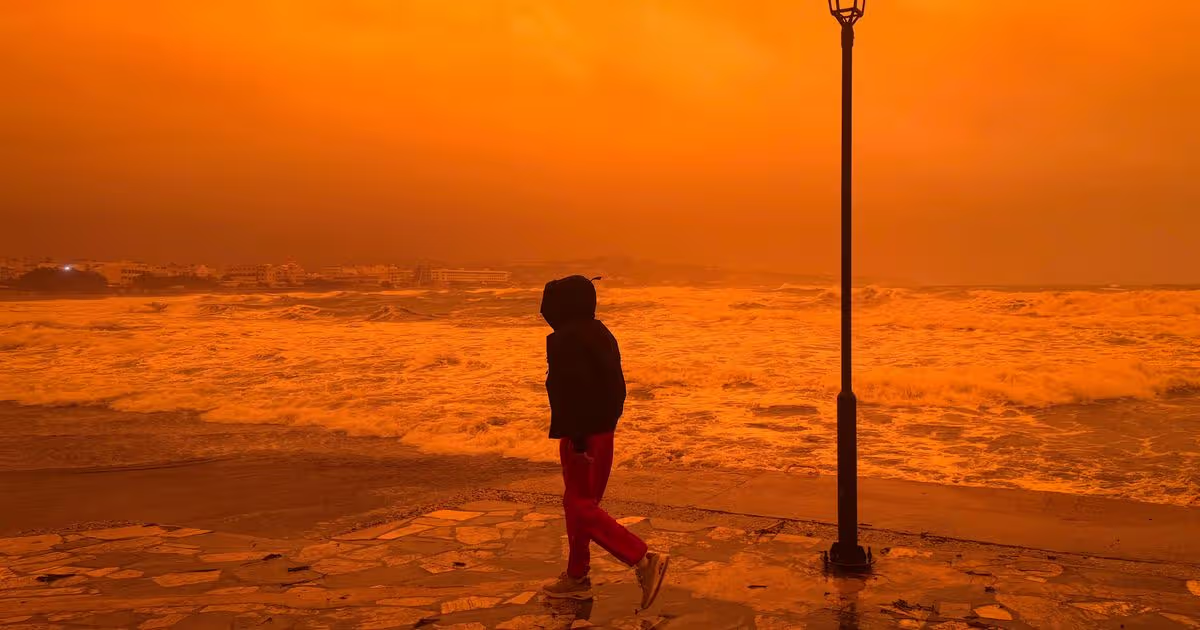
In addition to the damage caused by the tornado and storm, local fishermen have raised alarms about the safety of their operations. The dust cloud and high winds have made conditions in the harbors and on the sea particularly dangerous. Fishermen have warned that the harbor remains unprotected and unsafe, with the risk of further damage to boats and fishing equipment.
The situation has also affected the fishing industry’s ability to export goods, with several shipments delayed or canceled due to the ongoing disruptions. The combination of severe weather, high winds, and reduced visibility has put the livelihoods of local fishermen at risk and further compounded the economic challenges facing the island.
The Global Phenomenon of Saharan Dust Clouds
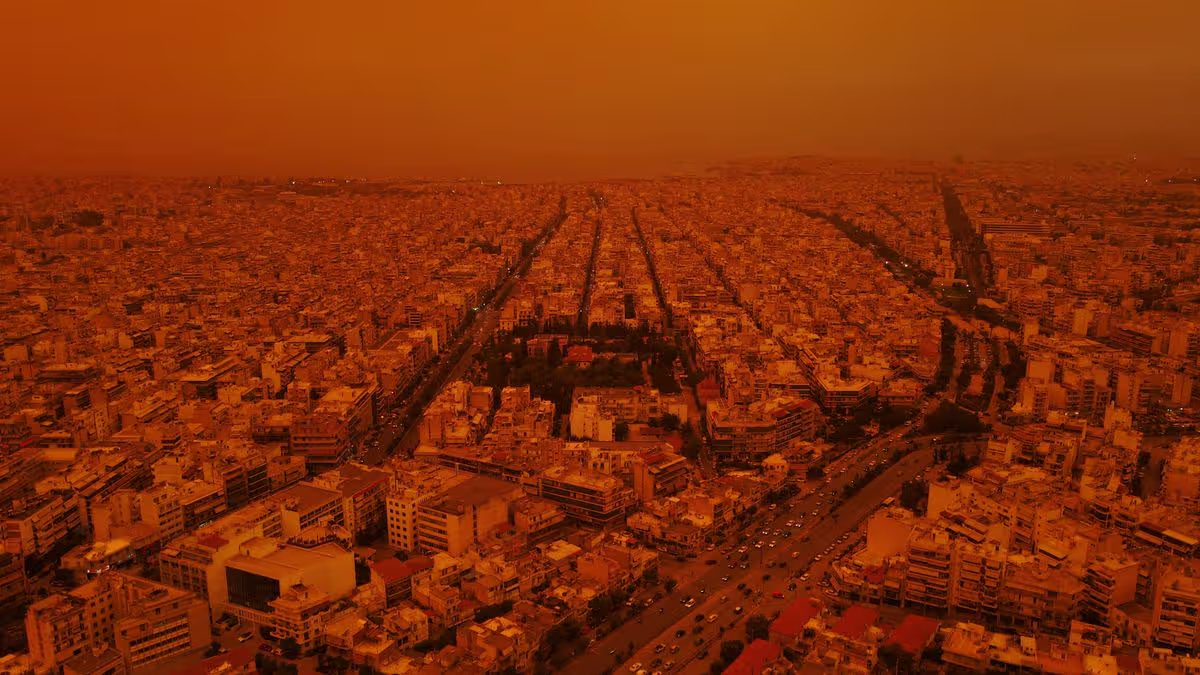
The Saharan dust cloud is not only a regional issue but a global one. These dust clouds are carried by winds across vast distances, affecting areas far beyond the Mediterranean. In recent years, scientists have observed an increase in the frequency and intensity of these dust events, which have been linked to climate change.
As these dust clouds travel across the Atlantic, they can affect air quality, disrupt flights, and contribute to respiratory issues in the regions they reach. The impact of these storms on tourism, agriculture, and daily life is significant, highlighting the need for better preparedness and understanding of this global phenomenon.
Looking Ahead: The Future of Extreme Weather Events
The Saharan dust cloud and the accompanying weather disruptions in Crete are a reminder of the growing frequency of extreme weather events. As climate change continues to affect weather patterns, it’s likely that we will see more intense dust storms, hurricanes, and tornadoes in the coming years. For Crete and other Mediterranean islands, this means a need for stronger infrastructure, more robust disaster response systems, and greater public awareness of the risks posed by these natural events.
In the face of such challenges, local governments and international organizations must collaborate to address the broader issue of climate change and its effects on weather patterns. As the situation in Crete and other affected areas continues to evolve, it will be essential to monitor the long-term impact of such extreme weather events on the economy, public health, and the environment.