
Table of Contents
- When the Claim Surfaced, It Sounded Almost Impossible
- The Smell of Rain Has a Name, and a Deep History
- Why Humans Detect Rain So Precisely
- Sharks and the Myth of the Blood Scent
- The Human Nose Is Far More Advanced Than We Realize
- Why We Underestimate Our Own Senses
- Rain, Memory, and the Brain’s Emotional Map
- Other Hidden Superpowers of the Human Body
- Why These Discoveries Matter Today
- What Happens When We Reconnect With Our Senses
- The Evolutionary Message Hidden in Rain
- Conclusion: The Extraordinary Is Already Within Us
When the Claim Surfaced, It Sounded Almost Impossible
When scientists began explaining that humans can smell rain more accurately than sharks can smell blood, the reaction was immediate disbelief. Sharks have long been portrayed as the ultimate sensory predators, capable of detecting a single drop of blood from miles away. Humans, by contrast, are often described as visually dominant but sensory dull, especially when compared to animals.
Yet the science tells a very different story.
The comparison is not meant to diminish sharks, but to highlight how profoundly misunderstood the human sensory system truly is. Beneath the surface of everyday experience lies a biological capability so refined that it rivals — and in some cases surpasses — the senses of animals we consider superhuman.
The Smell of Rain Has a Name, and a Deep History
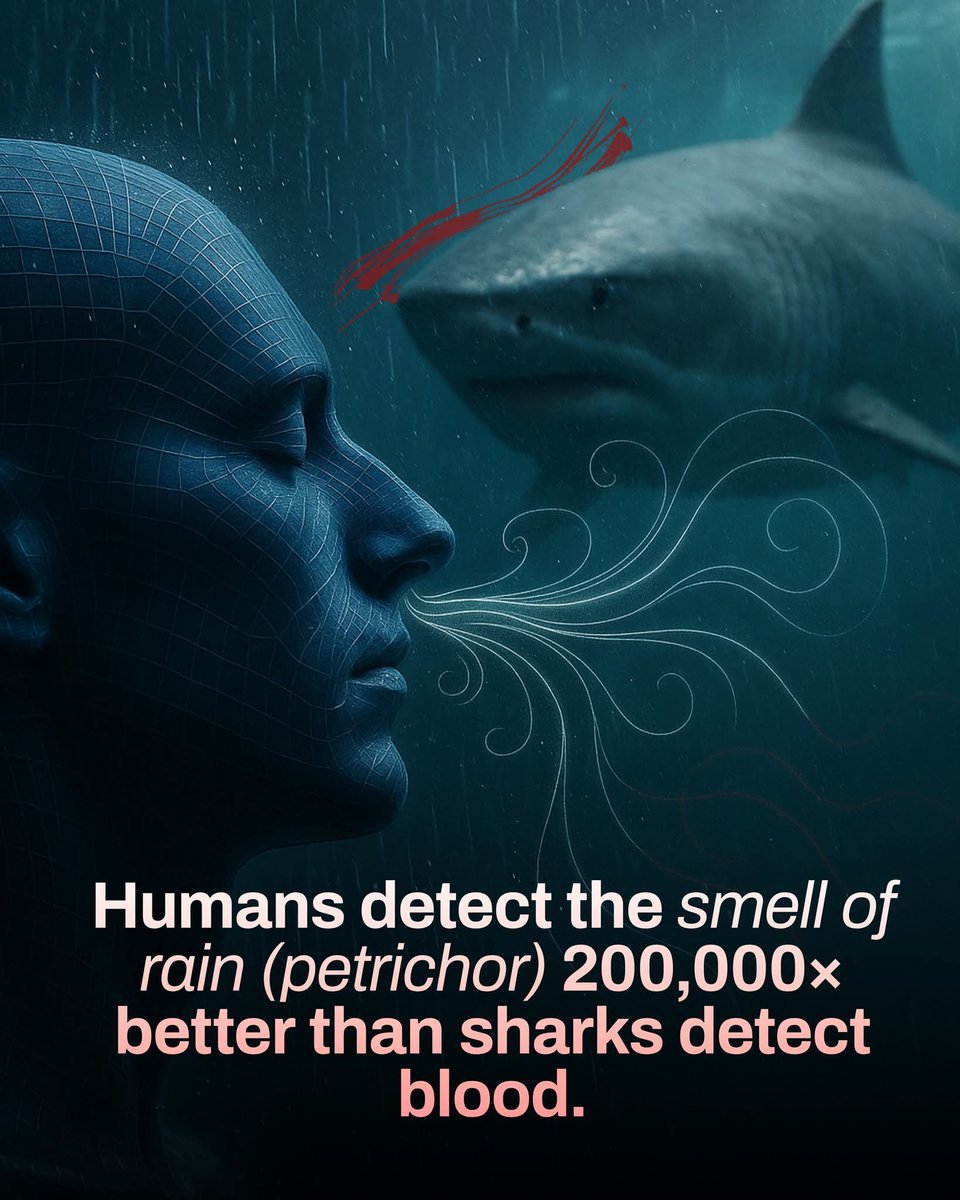
The scent that rises just before or after rainfall is known as petrichor, a word coined in the 1960s to describe the earthy, calming aroma released when rain hits dry soil. That smell is produced by a complex mixture of plant oils, bacteria, and airborne compounds.
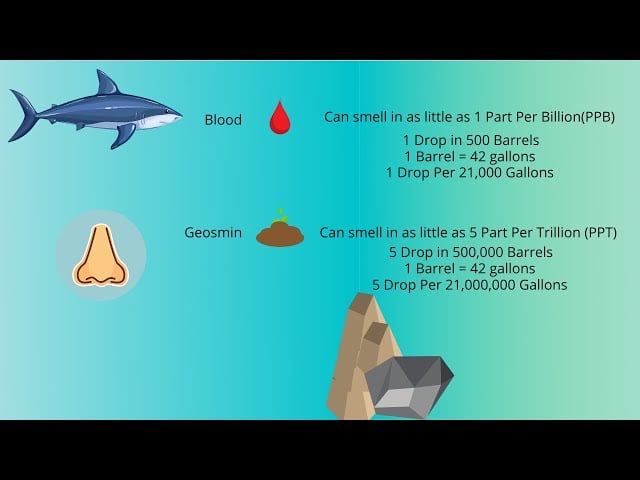
One bacterium in particular, actinomycetes, releases a molecule called geosmin. Humans are extraordinarily sensitive to geosmin, capable of detecting it at concentrations as low as a few parts per trillion.
This level of sensitivity is not an accident of evolution. It is believed to have helped early humans locate water sources, fertile land, and safe environments long before modern tools existed.
Why Humans Detect Rain So Precisely
From an evolutionary standpoint, the ability to smell rain would have been invaluable. Rain often meant survival. It signaled the presence of water, plant growth, and the movement of animals.
Humans who could detect rain from a distance would have been better equipped to prepare shelter, track herds, or migrate toward more fertile areas. Over thousands of years, this sensitivity became finely tuned.
Today, even though we rarely rely on scent for survival, the ability remains embedded in our biology.
Sharks and the Myth of the Blood Scent
Sharks do possess an extraordinary sense of smell, but popular culture has exaggerated it. While sharks can detect blood in water, their sensitivity depends on water currents, distance, and chemical concentration.
Contrary to myth, sharks do not instantly swarm at the slightest trace of blood from miles away. Their sense of smell is impressive, but it is not infinitely precise.
When scientists compare human sensitivity to geosmin with sharks’ sensitivity to blood, they are comparing thresholds of detection — and in that comparison, humans outperform sharks.
The Human Nose Is Far More Advanced Than We Realize
The human nose contains around 400 different types of scent receptors. This diversity allows humans to distinguish an estimated trillion different smells, far more than previously believed.
Smell is also the only sense directly connected to the brain’s limbic system, which governs memory and emotion. This is why certain scents can instantly trigger vivid memories or emotional reactions.
The smell of rain, in particular, often evokes calm, nostalgia, or anticipation, reflecting its deep neurological connection.
Why We Underestimate Our Own Senses
Modern life has trained humans to prioritize sight and sound over smell. Urban environments, artificial fragrances, and constant sensory noise dull our awareness of subtler signals.
As a result, many people assume their sense of smell is weak. In reality, it is simply underused.
When attention is focused, humans can detect incredibly faint chemical cues, often without consciously realizing it.
Rain, Memory, and the Brain’s Emotional Map
The scent of rain is not just detected; it is remembered. Because smell bypasses the brain’s rational filters, it can evoke memories from childhood, past travels, or emotional milestones with startling clarity.
This is why the smell of rain can feel deeply personal. It activates neural pathways formed long before language or conscious reasoning.
Scientists believe this emotional link reinforces our sensitivity, making the smell of rain both biologically and psychologically powerful.
Other Hidden Superpowers of the Human Body
The rain comparison is just one example of how humans possess underestimated abilities. Studies have shown that humans can detect subtle changes in temperature, recognize faces with remarkable accuracy, and sense emotional cues from micro-expressions lasting fractions of a second.
Even balance, spatial awareness, and pattern recognition far exceed what we consciously register.
These abilities evolved not for convenience, but for survival.
Why These Discoveries Matter Today
Understanding the true capabilities of the human sensory system reshapes how we think about human potential. It challenges the narrative that humans are weak compared to animals and dependent solely on technology.
Instead, it reveals that modern humans carry ancient biological tools that still function with extraordinary precision.
In fields ranging from neuroscience to mental health, this understanding opens new possibilities for training, therapy, and well-being.
What Happens When We Reconnect With Our Senses
Mindfulness practices, nature exposure, and sensory awareness exercises have been shown to sharpen perception. When people slow down and pay attention, their senses often become more vivid.
The smell of rain becomes stronger. Textures feel richer. Sounds gain depth.
These changes are not imagined. They reflect the brain reallocating attention to sensory input it has long ignored.
The Evolutionary Message Hidden in Rain
Rain is more than weather. For most of human history, it was a message from the environment. It meant renewal, danger, opportunity, or migration.
Our ability to smell rain is a reminder that humans evolved in constant conversation with nature, guided by senses that modern life rarely acknowledges.
Even now, those messages are still being received — quietly, instinctively, and with remarkable accuracy.
Conclusion: The Extraordinary Is Already Within Us
The revelation that humans can smell rain better than sharks can smell blood is not a novelty fact. It is a window into a deeper truth about the human body.
We are not sensory amateurs in a world of animal specialists. We are highly adapted beings with capabilities shaped by millions of years of evolution.
The problem is not that humans lack extraordinary senses. It is that we have forgotten how extraordinary they already are.
And sometimes, all it takes to remember is the first scent of rain in the air.