
Table of Contents
- The Love Story Beneath the Waves
- The Unusual Design of the Seahorse
- The Struggle of a Slow Swimmer
- A Tail That Anchors and Protects
- Holding On — To Life and to Each Other
- The Science of a Perfect Grip
- The Art of Staying Still
- A Symbol of Strength in Connection
- Lessons from the Ocean’s Gentle Architect
- The Future Inspired by a Tail
- Why the World Needs More Seahorses
- The Quiet Power of Holding On
The Love Story Beneath the Waves
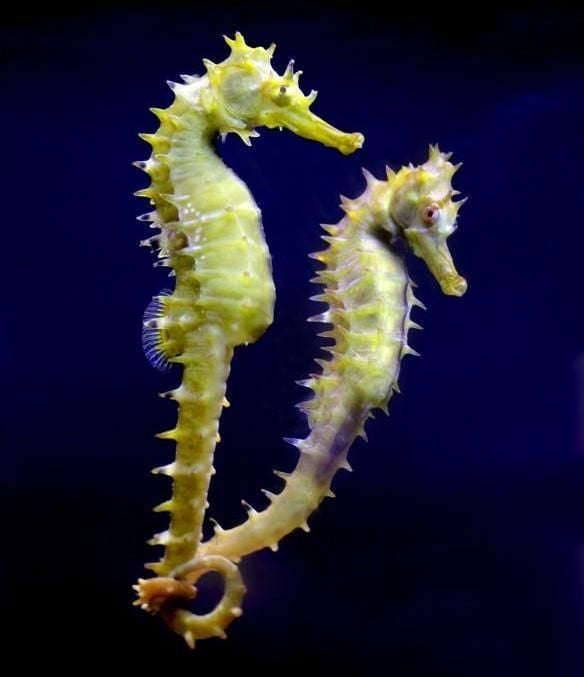
In the quiet blue depths of the ocean, two seahorses drift side by side.
Their tiny fins flutter like wings, their heads tilt toward one another—and their tails intertwine.
To the casual observer, it’s an adorable image of affection. But to scientists, it’s much more than that.
That simple act of holding tails is a marvel of biology and survival—a delicate dance between connection and adaptation that has helped seahorses endure for millions of years.
The Unusual Design of the Seahorse
Seahorses are unlike any other fish on Earth.
They swim upright, have bony plates instead of scales, and their heads curve gracefully like chess knights. But perhaps their most remarkable feature is hidden behind that beauty—their tail.
While most fish use tails for speed and propulsion, seahorses use theirs for something else entirely: grasping.
Their tails are prehensile, meaning they can curl around objects and hold on tight, much like a monkey’s tail or a human hand.
It’s one of nature’s most unexpected designs—a survival tool born not from strength, but from gentleness.
The Struggle of a Slow Swimmer
To understand why seahorses evolved such a unique tail, you first have to understand what they aren’t: good swimmers.
Their bodies are built vertically, not streamlined like most fish. Their dorsal fins flutter up to 35 times per second, but even then, they move slower than the average human walks.
In calm waters, that’s fine. But in a stormy sea or a strong current, it’s a recipe for disaster.
That’s where the prehensile tail becomes their lifeline.
A Tail That Anchors and Protects
When currents pick up, seahorses simply curl their tails around seaweed, coral, or seagrass and hold tight.
This allows them to stay anchored in place while waves rush past, saving precious energy and avoiding predators.
The tail is incredibly flexible yet strong—it can withstand high pressure, twist around rough textures, and grip surfaces with surprising force.
It’s also armored with bony rings, giving it both protection and flexibility—a design so efficient that engineers have studied seahorse tails to inspire robotic arms and underwater tools.
Nature, once again, outsmarted us first.
Holding On — To Life and to Each Other
But beyond survival, the seahorse’s tail carries another meaning: connection.
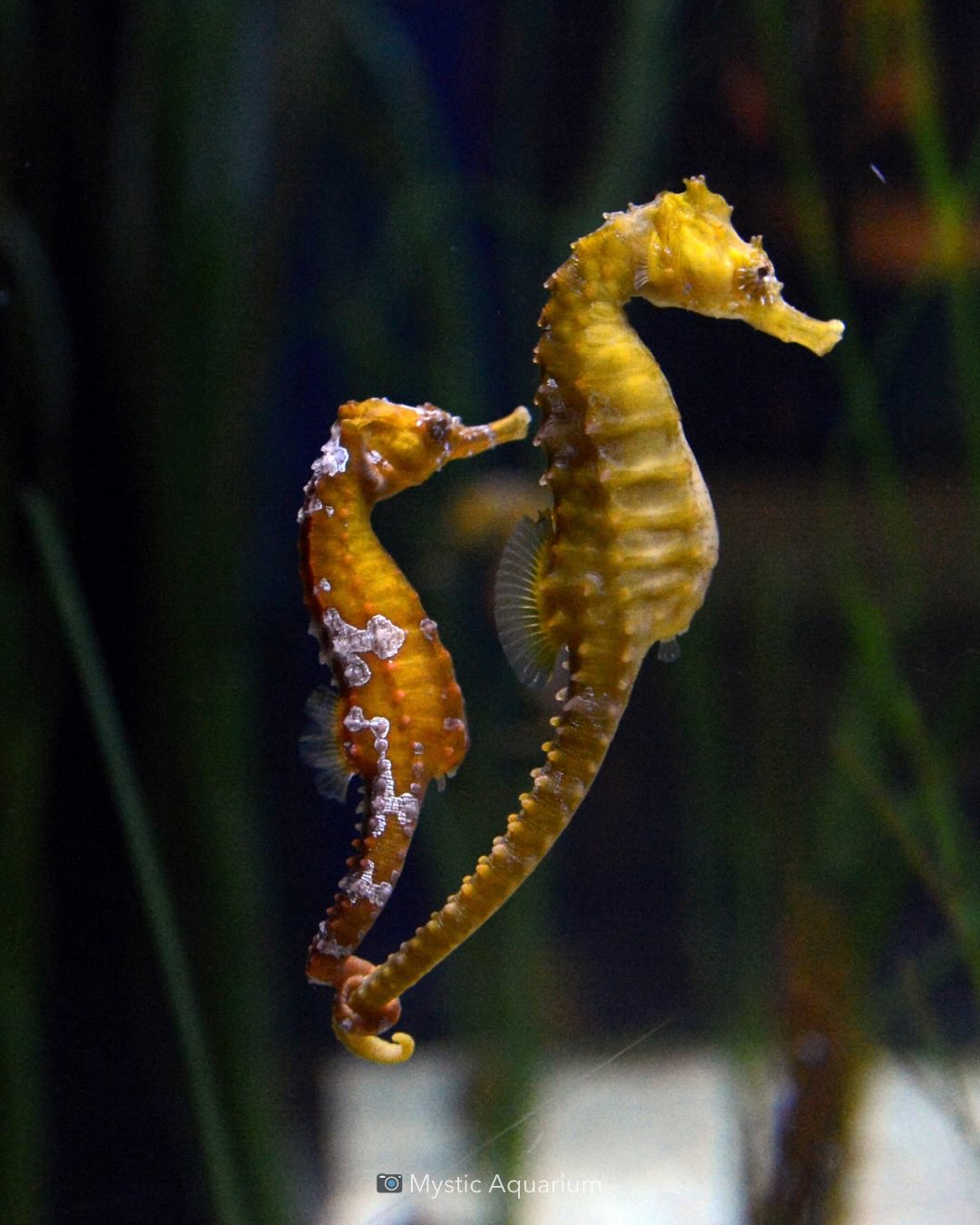
When seahorses find a mate—a bond that can last a lifetime—they use their tails to hold onto each other.
They drift together through the water, anchored by that small but powerful link. In rough seas, they don’t swim apart—they cling tighter.
Scientists believe this behavior helps reduce stress and allows them to stay close during courtship and feeding.
To many, it’s a reminder that in a world full of chaos, sometimes the key to survival is simply holding on to someone else.
The Science of a Perfect Grip
The seahorse’s tail isn’t just emotional—it’s an engineering masterpiece.
Researchers at the University of California, San Diego discovered that its structure combines square-shaped bone segments that make it both flexible and strong.
When compressed, these plates slide over each other rather than breaking—absorbing shock and distributing force evenly.
This design inspired innovations in robotic grasping technology, prosthetics, and even underwater exploration tools that mimic its ability to hold fragile objects gently without crushing them.
Who would have thought that one of the ocean’s most fragile-looking creatures could inspire the future of robotics?
The Art of Staying Still
While other sea creatures rely on speed to escape predators, seahorses have mastered the art of stillness.
Camouflaged among coral and sea grass, they hold onto plants with their tails and sway gently, blending perfectly into the current.
Their ability to stay motionless not only conserves energy—it also makes them nearly invisible.
To survive, they don’t fight the water.
They move with it.
There’s a quiet wisdom in that—a lesson in patience, adaptability, and balance that extends far beyond the ocean floor.
A Symbol of Strength in Connection
In many cultures, seahorses are seen as symbols of love, loyalty, and calm resilience.
Their tails, always reaching out to connect, remind us that strength doesn’t always roar—it sometimes holds gently.
Where sharks dominate with force, seahorses survive through cooperation and stillness.
It’s a metaphor for life in its purest form: when the waves get rough, you don’t need to swim harder—you just need to hold on tighter.
Lessons from the Ocean’s Gentle Architect
Every part of the seahorse’s anatomy seems to carry a quiet message.
Its curved neck suggests humility.
Its slow movements teach mindfulness.
Its prehensile tail teaches the importance of anchoring yourself to something that keeps you steady—whether that’s a person, a purpose, or faith.
And maybe that’s why humans have always been fascinated by them.
They reflect a truth about us, too: no matter how turbulent the world gets, we survive not by fighting alone, but by staying connected.
The Future Inspired by a Tail
Beyond symbolism, seahorse tails are reshaping modern technology.
Engineers are using their structure to design flexible yet durable robotic arms for delicate underwater repairs and minimally invasive surgical tools that mimic the tail’s gentle grip.
Even in material science, researchers are exploring how the tail’s square geometry could lead to stronger, lightweight armor for vehicles and drones.
From ocean life to human innovation, the seahorse continues to prove that grace and resilience can coexist.
Why the World Needs More Seahorses
As climate change and pollution threaten coral reefs, seahorses are among the species most at risk.
Their habitats—delicate ecosystems of seaweed and coral—are disappearing fast. Without those anchors, they lose their homes and the very structures they rely on for survival.
Conservation groups are now working to protect seahorse populations by restoring marine vegetation and banning illegal trade.
Saving the seahorse isn’t just about one species—it’s about preserving the quiet balance of the ocean itself.
Because when seahorses disappear, we lose more than just beauty. We lose a teacher of patience, love, and connection.
The Quiet Power of Holding On
In the end, the story of the seahorse’s tail isn’t just about anatomy—it’s about endurance.
It’s about learning to stay grounded in a world that never stops moving.
It’s about finding strength in stillness, stability in softness, and courage in connection.
Next time you see a picture of two seahorses holding tails, remember: they aren’t just showing affection. They’re surviving together.
And maybe, in our own way, we are too.