
Table of Contents
- A Quiet Yard, A Sudden Loss
- Walking Seven Miles a Day for Hope
- Why Bam Bam Was More Than a Dog
- A City Mobilizes for One Man’s Search
- Home, Health and Hidden Safety Lessons
- The Power of Community and Social Media
- What Comes Next: Recovery, Support, and Moving Forward
- Why This Matters Globally
- Final Thoughts: A Reunion That Resonates
A Quiet Yard, A Sudden Loss
It was an ordinary evening in Chicago’s Logan Square neighborhood when 58-year-old Angel Santiago stepped into his backyard—and his world shifted. His 14-year-old service dog, Bam Bam, vanished. For Angel, legally blind from glaucoma, Bam Bam was more than a pet. He was an essential partner in navigating life.
Two strangers entered his yard, scooped up Bam Bam and left. Angel called out, tried to stop them—but he couldn’t locate them. Suddenly, the heart of his independence felt fragile.
If you lost your best friend overnight, how far would you go to get them back?
Walking Seven Miles a Day for Hope
Rather than give up, Angel transformed grief into motion. He walked seven miles every single day, canvassing streets, handing out flyers, calling for help. Community members say they saw him calling “Bam Bam!” at all hours.
A GoFundMe campaign raised over $20,000 to hire a pet detective, print flyers, organize volunteers and offer a reward. The story spread on social media, turning neighbors into search parties, and strangers into allies.
What drives someone to keep going when the odds feel impossible?
Why Bam Bam Was More Than a Dog
Bam Bam wasn’t just a companion—he was Angel’s guide through a sightless world. His service dog tasks helped Angel live with confidence despite his vision loss. Losing Bam Bam meant losing more than a friend—it meant losing part of his mobility, safety, and independence.
That’s why the urgency and emotion captured hearts across Chicago and beyond. Social media posts, volunteer tip-lines and even billboard offers by animal-rights groups joined the effort. The message was clear: this dog mattered.
If Bam Bam could be returned, what would that restoration mean for Angel—and for the many others who rely on service animals?
A City Mobilizes for One Man’s Search

Chicago’s 16th Police District received numerous tips. Flyers filled lampposts. Neighbors shared ring-camera footage. Even international calls poured in—from Spain, New Zealand, and other countries moved by the story.
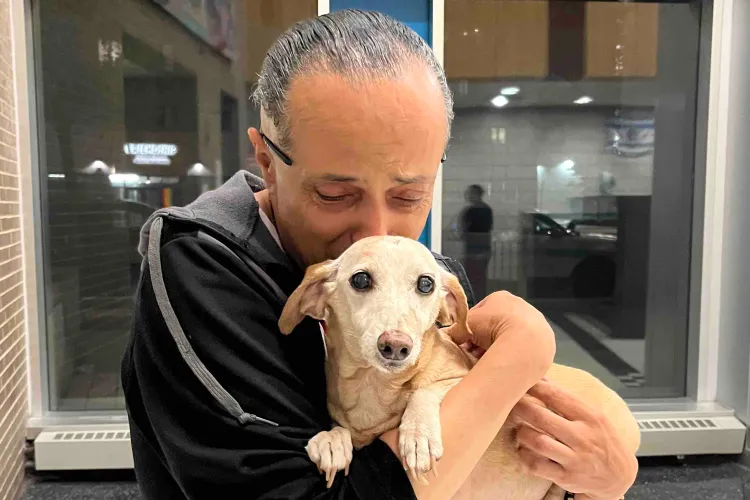
Then, one evening on August 19, an anonymous man and woman dropped Bam Bam at the police station. His microchip confirmed his identity. Angel rushed in, tears visible, and embraced his 14-year-old Dachshund. Months of worry turned to relief.
Could a single act of kindness—or thousands—be enough to restore what loss nearly stole?
Home, Health and Hidden Safety Lessons
This reunion isn’t just a heart-warming story—it holds practical lessons. For homeowners: ensure fences and gates are secure, especially for vulnerable individuals. For anyone relying on service animals: ensure microchipping and identification tags are current.
Health-wise, the story underscores how emotional and physical wellbeing are interwoven. Loss of a service animal can trigger stress, anxiety and mobility challenges for someone already living with disability. Reunions can restore more than a pet—they help restore life.
Would you review your own home and safety routines today if it meant protecting someone’s independence?
The Power of Community and Social Media
The Bam Bam case shows how grassroots efforts amplified by social platforms can make a difference. A simple flyer campaign ballooned into thousands of shares, helping keep Angel’s search alive. The $20,000+ fund didn’t just buy resources—it galvanized hope.
Marketing specialists call it “social empathy in action.” When people see real human-stories behind headlines, they connect, share, help. For causes ranging from nonprofits to business launches, this is a blueprint: humanize your story, rally support, and empower outreach.
If you had a message to share—could the right network be the difference between silence and success?
What Comes Next: Recovery, Support, and Moving Forward
Now that Bam Bam is home, the work continues. Veterinarians will assess his health. Angel and his supporters will rebuild routines that were disrupted. Law-enforcement investigations still seek the perpetrators.
There’s also a broader call to protect service animals and their owners—ensuring such thefts never happen again. For Angel, each step forward matters. For communities, every effort counts.
Could this story spark stronger protections for service animals, better neighbor vigilance, and a deeper understanding of disability support?
Why This Matters Globally
While this happened in Chicago, the implications span far beyond. Around the world:
- Millions rely on service animals for mobility, health, and independence.
- Stolen or missing animals disrupt lives, not just companionship.
- Community support and identification systems—microchips, social-media alerts, neighborhood networks—are critical.
When we protect one life, we protect many. When we act together, we rebuild what loss tore down.
Final Thoughts: A Reunion That Resonates

Angel Santiago and Bam Bam’s reunion is more than a feel-good headline—it’s a testament to perseverance, community, and the profound bond between human and service animal. In a world where technology, home security, health systems and social networks intersect, stories like this remind us what really matters.
Whether you’re a homeowner reviewing your security systems, a health-professional advising clients, or simply someone moved by loyalty and hope—ask yourself: If this were your life on the line, how far would you go to bring someone home?
Because sometimes, love and determination walk thousands of miles—or seven every day—until everything aligns again.