
Table of Contents
- FBI Investigation Leads to International Crackdown
- Victims Thought They Were Speaking to Federal Agents
- Fear Became the Most Powerful Weapon
- Caller ID Spoofing Made the Scam Look Real
- Older Americans Were Hit Especially Hard
- The Scam Followed a Repeating Pattern
- Why These Scams Continue to Grow
- Authorities Warn Americans to Stay Skeptical
- What Victims Should Do Immediately
- The Shutdown May Not End the Threat
FBI Investigation Leads to International Crackdown
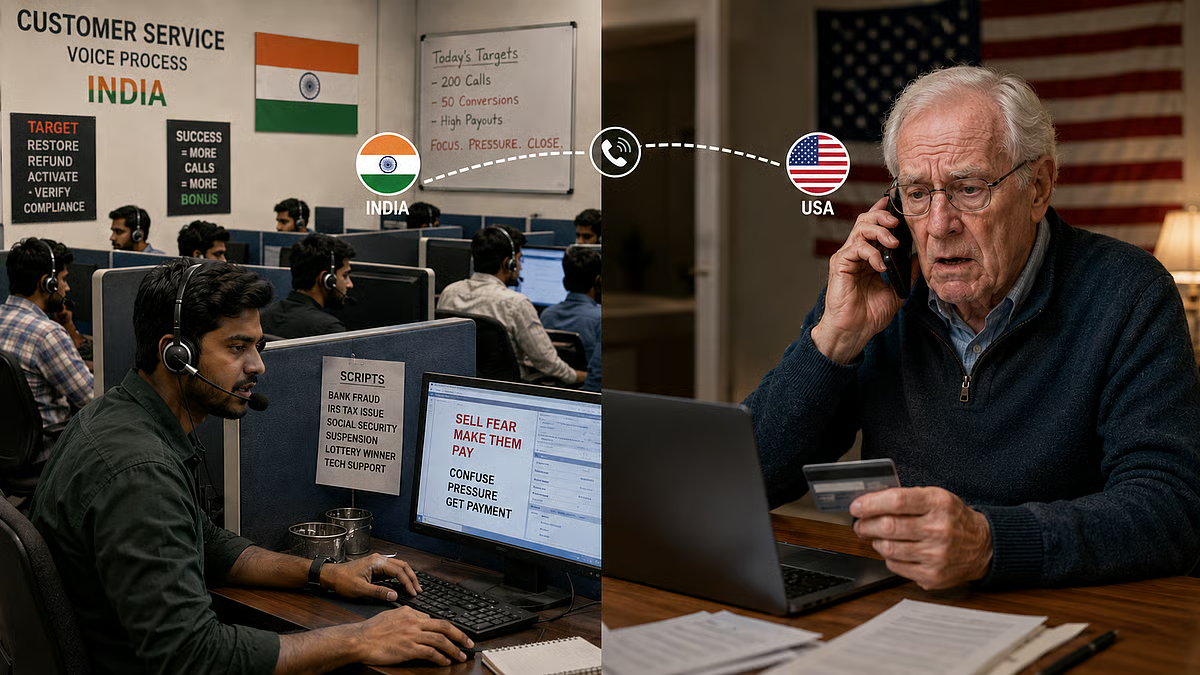
The FBI Baltimore Field Office, together with Montgomery County Police Department and the Montgomery County State’s Attorney’s Office, announced that investigators had traced a large number of fraud complaints back to organized scam call centers operating in India.
According to authorities, the scam network had allegedly been targeting Americans since 2022 through elaborate government impersonation schemes designed to convince victims that their Social Security numbers had been linked to serious criminal activity.
Investigators say the operation ultimately involved three India-based call centers that allegedly helped orchestrate the fraud campaign. The scam reportedly affected at least 660 victims across the United States, with total losses reaching approximately $48.7 million.
In Maryland alone, nearly two dozen victims reportedly lost more than $6.2 million combined.
Officials described the operation as highly coordinated and extremely convincing, using psychological pressure, fake credentials, spoofed phone numbers, and even couriers who physically collected valuables from frightened victims.
The case has now become one of the most significant Social Security impersonation scam investigations in recent years.
Victims Thought They Were Speaking to Federal Agents
One of the most disturbing details of the investigation is how believable the scammers appeared to be.
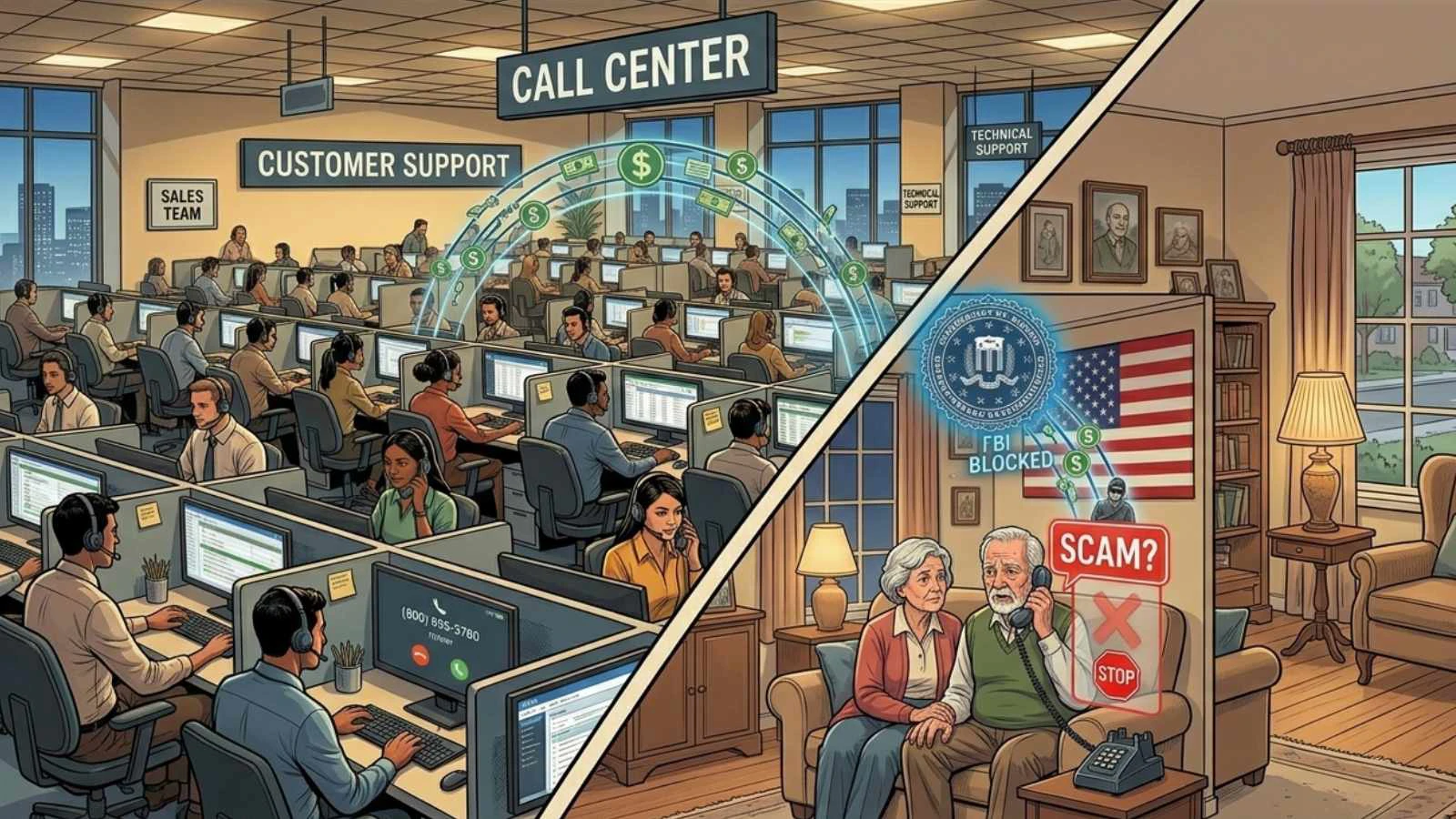
Victims reportedly received emails, calls, and messages claiming to come directly from the Social Security Administration. Some were told their Social Security numbers had been suspended due to connections to crimes such as drug trafficking or money laundering.
Others were informed that federal authorities were preparing arrest warrants against them.
The scammers allegedly used fake badges, fabricated case files, and official sounding language to create panic. In many cases, victims believed they were speaking with genuine government agents trying to help them secure their money before it was seized.
Two victims identified only as Lisa and Sahadev shared how the scammers manipulated them emotionally.
Sahadev reportedly said the callers even sent him what appeared to be proof of their identities, including badges that looked authentic.
Lisa explained that fear completely took over her judgment.
She reportedly handed over her life savings because she genuinely believed the scammers were trying to protect her from a larger criminal investigation.
That emotional manipulation became one of the central tools used by the fraud network.
Fear Became the Most Powerful Weapon
Authorities say the scammers relied less on technology and more on psychological pressure.
The Federal Trade Commission has repeatedly warned that fear based scams are among the most effective fraud tactics because they push victims into making decisions quickly without verifying information.
In many of these cases, victims were reportedly told that their bank accounts were at immediate risk of being frozen or confiscated by the government.
The scammers allegedly convinced people that the only way to protect their savings was to withdraw their money immediately and move it into supposedly secure locations controlled by federal investigators.
Some victims were instructed to convert their savings into gold bars.
Others were told to purchase cryptocurrency.
Several victims reportedly handed cash or valuables directly to couriers working as “money mules” connected to the operation.
Investigators say some of these couriers physically collected gold bars from victims who believed they were assisting federal law enforcement.
Montgomery County State’s Attorney John McCarthy said prosecutors secured 10 indictments connected to the case, including alleged couriers involved in transporting valuables.
The sophistication of the operation made many victims believe they were participating in legitimate federal procedures.
Caller ID Spoofing Made the Scam Look Real

One reason the scam became so effective is because modern fraud networks can now manipulate caller ID systems.
The FTC says many victims receive calls that appear to come directly from government agencies, including the Social Security Administration itself.
When people see an official agency name on their phones, they are far more likely to answer the call and trust the person speaking to them.
Once the scammers establish contact, they often keep victims on the phone for hours.
Investigators say the callers create a constant atmosphere of urgency and fear. Victims are told not to contact family members, banks, or local police because doing so could supposedly interfere with a federal investigation.
In some cases, scammers reportedly stayed on the phone while victims drove to banks and withdrew large sums of money.
Experts say this isolation tactic is designed to prevent victims from hearing outside opinions that could expose the scam.
The emotional pressure becomes so intense that victims stop thinking rationally and begin following instructions automatically.
Older Americans Were Hit Especially Hard
Although people of all ages can become victims of scams, authorities say older adults continue to face the greatest financial risks.
Federal Trade Commission data from 2024 showed that Americans over 60 were significantly more likely to report losses exceeding $10,000 in government impersonation scams.
Even more alarming, older victims were more than three times as likely to report losses over $100,000 compared to younger age groups.
Combined losses among older Americans reportedly reached hundreds of millions of dollars.
Experts say scammers often target retirees because they may have accumulated savings over decades and may also be less familiar with evolving digital fraud tactics.
But financial losses are only part of the damage.
Organizations such as AARP warn that victims frequently experience severe emotional distress after realizing they were deceived. Many suffer shame, depression, anxiety, and fractured relationships with family members who struggle to understand how the fraud happened.
For some retirees, the stolen money represented decades of work and their entire retirement safety net.
That emotional devastation can last far longer than the financial damage itself.
The Scam Followed a Repeating Pattern
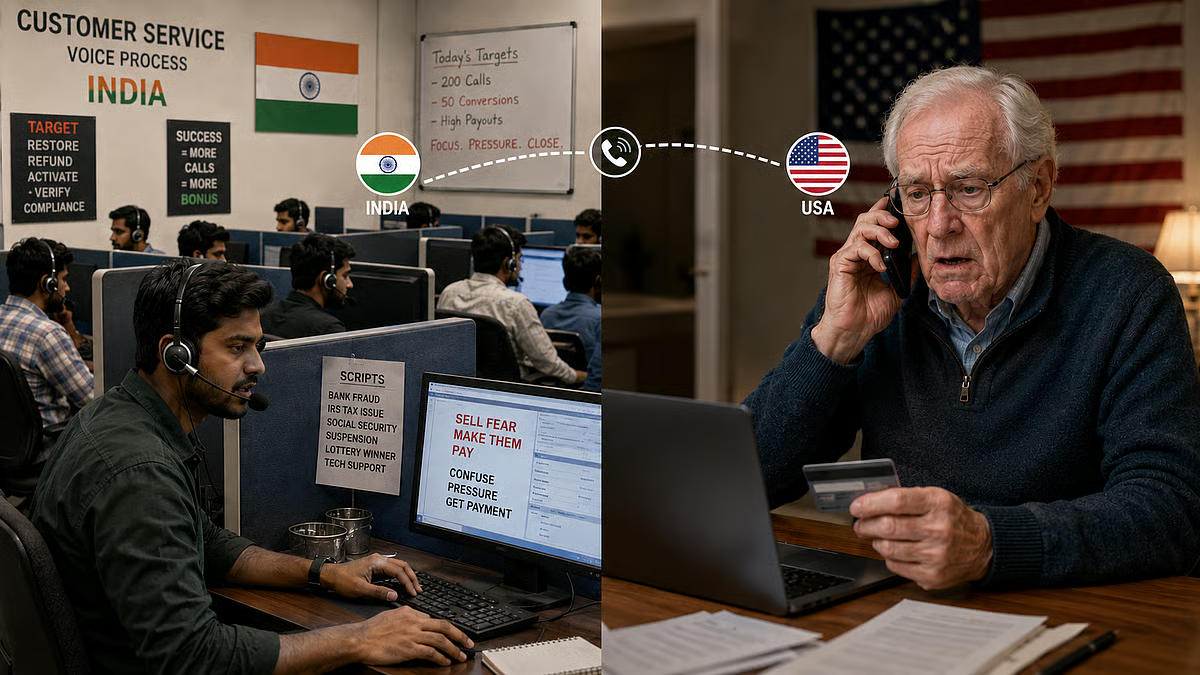
Authorities say the Social Security impersonation scam usually follows a predictable structure.
First, victims receive unexpected contact through a phone call, email, text message, or social media message.
The scammer then claims that the victim’s Social Security number has been connected to criminal activity.
Next comes the fear escalation.
Victims are allegedly told they could face arrest, frozen bank accounts, seized assets, or legal prosecution unless they cooperate immediately.
The scammer then introduces a fake solution.
Victims are instructed to withdraw money, buy gold, transfer cryptocurrency, or move funds into so called “safe accounts” supposedly controlled by federal authorities.
Finally, scammers isolate the victim emotionally by warning them not to tell anyone what is happening.
Federal officials stress that real government agencies do not operate this way.
The Social Security Administration says it will never threaten arrest over the phone, demand immediate payments, request gold or cryptocurrency, or instruct people to transfer funds into protected accounts.
Officials also warn that legitimate agencies do not suspend Social Security numbers or contact people through social media demanding payments.
Why These Scams Continue to Grow
Despite repeated warnings from federal agencies, government impersonation scams continue expanding because they remain extremely profitable.
Fraud experts say international scam networks have become increasingly organized, operating almost like corporate businesses with specialized employees, scripts, technology teams, and financial couriers.
Some operations reportedly train workers specifically in emotional manipulation and psychological pressure techniques.
The growth of cryptocurrency has also made scams more difficult to reverse.
Traditional bank transfers sometimes allow authorities to freeze or recover funds if fraud is reported quickly enough. Cryptocurrency transactions, however, are often much harder to trace or reverse once completed.
At the same time, AI generated voices, realistic fake documents, and advanced spoofing technology are making scams appear more authentic than ever before.
Experts warn that future fraud operations may become even harder to detect.
Authorities Warn Americans to Stay Skeptical

Federal agencies continue urging Americans to approach unexpected government related calls with extreme caution.
The Social Security Administration says several warning signs should immediately raise suspicion.
These include threats of arrest, demands for secrecy, requests for payment through gift cards or cryptocurrency, instructions to move money into protected accounts, or pressure to act immediately.
Authorities stress that real federal agencies do not demand payment through unusual methods or threaten people over the phone.
Experts also encourage families to openly discuss scams with older relatives.
Many victims stay silent because they feel embarrassed or fear judgment from loved ones. That silence can make them more vulnerable to repeated scams.
Law enforcement officials say education and conversation remain some of the strongest defenses against fraud.
The more people understand how these schemes operate, the less effective scammers become.
What Victims Should Do Immediately
Officials say anyone who believes they have been targeted should act as quickly as possible.
Victims who paid through debit cards, credit cards, payment apps, or bank transfers are encouraged to contact their financial institutions immediately to request fraud investigations or transaction reversals.
People who sent cryptocurrency are advised to contact the exchange or platform used for the transaction and report the fraud.
Authorities also recommend filing reports with local police, the Federal Trade Commission, and the FBI’s Internet Crime Complaint Center.
If valuables or cash were mailed, victims should contact the U.S. Postal Inspection Service as quickly as possible to determine whether packages can still be intercepted.
Experts say rapid reporting can sometimes reduce losses and may help investigators identify broader fraud networks.
The Shutdown May Not End the Threat

While investigators succeeded in shutting down one major operation, authorities warn that similar scam networks continue operating around the world.
Government impersonation fraud remains one of the fastest growing financial crimes targeting Americans today.
Experts say scammers constantly adapt their tactics based on public awareness campaigns and law enforcement actions. When one scheme becomes widely recognized, another often quickly replaces it.
That is why officials believe public awareness will remain essential moving forward.
The investigation into the India-based call centers exposed how vulnerable fear and confusion can make even cautious people. It also showed that anyone, regardless of age or education level, can become a target when scammers create enough panic and urgency.
For many victims, the damage cannot simply be measured in dollars.
It includes broken trust, emotional trauma, and the painful realization that criminals exploited their fears during moments of vulnerability.
And while one international fraud network may now be dismantled, authorities say the larger battle against sophisticated scam operations is far from over.