
Table of Contents
- The Announcement That Stunned The World
- Putin’s Endorsement Added Political Weight
- Why Scientists Called The Approval Premature
- What The Registration Actually Allowed
- How Sputnik V Was Designed
- The Adenovirus 5 Concern
- The Race For A Vaccine Became Political
- Why Public Trust Was So Important
- Russia Planned Larger Trials
- The Bigger Lesson From Sputnik V
The Announcement That Stunned The World
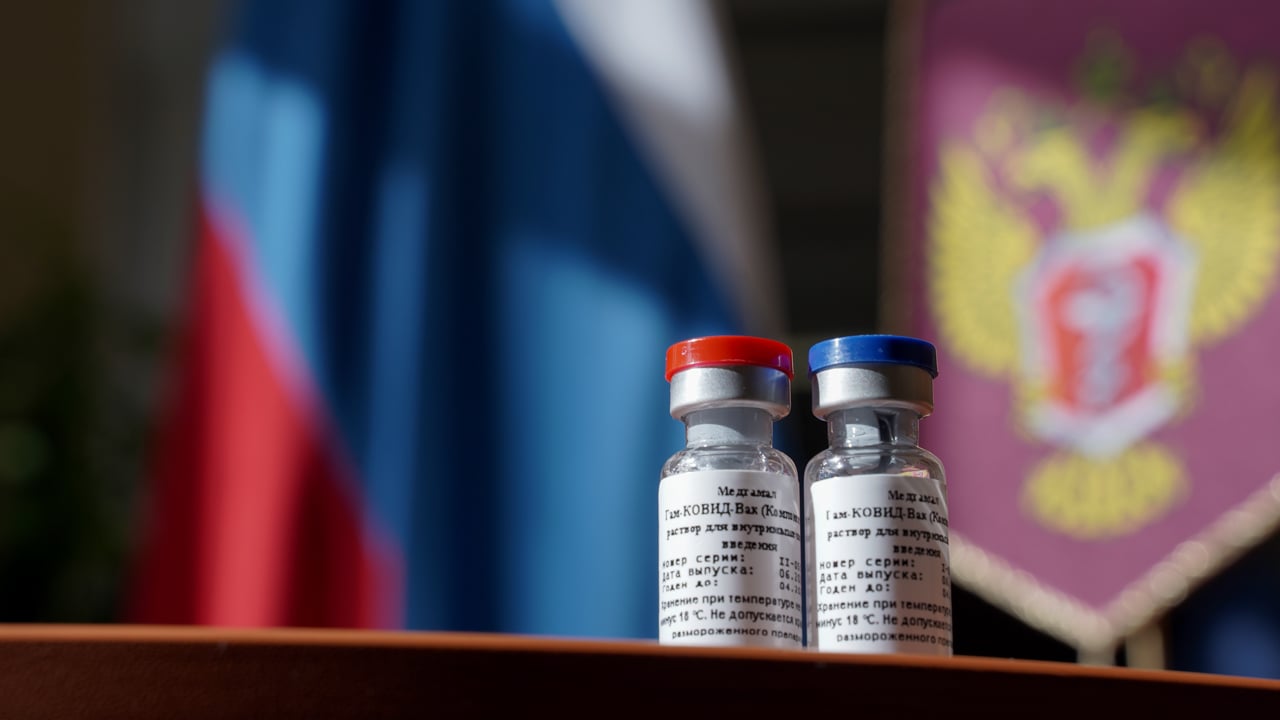
Russia’s approval of Sputnik V came during one of the most intense periods of the pandemic. Countries were desperate for vaccines, hospitals were under pressure, and governments were looking for any sign that normal life could eventually return.
In that environment, the claim that Russia had approved the first COVID 19 vaccine created immediate global attention. It seemed, at first, like a dramatic scientific victory.
However, the excitement quickly turned into skepticism when details emerged. The vaccine, developed by the Gamaleya Research Institute of Epidemiology and Microbiology in Moscow, had not yet completed a large phase III trial. That type of trial is normally essential because it tests a vaccine in thousands of people and helps determine whether it actually prevents disease while remaining safe.
Instead, the available human testing appeared to involve only a small number of participants.
For many scientists, that was not enough.
Putin’s Endorsement Added Political Weight
President Vladimir Putin reportedly said the vaccine had passed all necessary steps and even mentioned that one of his adult daughters had received it. His comments gave the vaccine enormous political visibility.
The endorsement was powerful because it framed Sputnik V as more than a medical product. It became a symbol of Russian scientific strength, national confidence, and geopolitical competition.
The name itself carried symbolic meaning. “Sputnik” recalled the Soviet satellite launched in 1957, a moment when the Soviet Union shocked the world by beating the United States into space. By naming the vaccine Sputnik V, Russia appeared to position the pandemic response as another historic race.
But vaccines are not judged by symbolism. They are judged by data.
That was exactly where many researchers said the announcement fell short.
Why Scientists Called The Approval Premature
The biggest concern was simple: the vaccine had not yet gone through the type of large, rigorous trial normally required before widespread public use.
Small early trials can show whether a vaccine triggers an immune response and whether obvious side effects appear in a limited group. But they cannot reliably prove broad safety or real world effectiveness.
Rare side effects may only appear when thousands or millions of people receive a vaccine. Effectiveness also requires comparing vaccinated people with unvaccinated participants over time to see whether the vaccine actually reduces infection or severe disease.
Without that data, scientists warned that early approval could be risky.
Some experts in Russia also criticized the decision. Svetlana Zavidova, head of the Association of Clinical Research Organizations in Russia, reportedly called the move ridiculous and said she felt shame for her country. She argued that accelerated registration would not make Russia a true leader, but could expose citizens to unnecessary danger.
Her concern reflected a larger principle in medicine: speed matters during a crisis, but trust matters even more.
What The Registration Actually Allowed
One confusing part of the story involved the word “approval.”
Russia’s Ministry of Health issued a registration certificate for the vaccine, but that did not mean immediate mass vaccination for the entire population. According to the available details at the time, the certificate allowed limited use among certain vulnerable groups, such as medical staff and older citizens.
The certificate also reportedly stated that the vaccine could not be used widely until January 1, 2021.
That detail mattered because it suggested Russia itself recognized that broader testing still needed to happen.
Still, the public messaging around the announcement was much louder than the limitations in the certificate. Headlines around the world described Russia as approving the first COVID 19 vaccine, while many readers may not have understood that the vaccine still lacked completed large scale trial evidence.
This mismatch between press release language and scientific caution became one of the major reasons the announcement generated controversy.
How Sputnik V Was Designed
Sputnik V used a viral vector approach. The vaccine relied on modified adenoviruses, which are viruses that can cause common cold like illnesses, to deliver genetic instructions for the spike protein of SARS CoV 2.
The spike protein is the part of the coronavirus that helps it enter human cells. By exposing the immune system to instructions for that protein, the vaccine aimed to teach the body how to recognize and respond to the virus.
The design involved two doses using different adenovirus vectors. One dose used adenovirus 26, while the booster used adenovirus 5. This method, often called prime boost, was designed to strengthen the immune response.
Gamaleya had experience with similar vaccine technologies, including work involving Ebola and Middle East respiratory syndrome. Russian officials used that history to argue the platform was familiar and promising.
But having experience with a vaccine platform is not the same as proving a new vaccine works against a new disease.
That was the central scientific objection.
The Adenovirus 5 Concern

Some vaccine experts had additional concerns about the use of adenovirus 5 as part of the vaccine design.
The concern was not that adenovirus 5 automatically made a vaccine unsafe. Rather, it came from earlier research involving an HIV vaccine trial that used adenovirus 5 as a vector. That trial was stopped after researchers found troubling signals involving increased vulnerability among some participants.
The situation was not identical to COVID 19, but it made some researchers more cautious about vaccines using that vector.
Scientists wanted more data before millions of people received a vaccine with that component.
This was another reason many experts argued that Sputnik V needed full phase III testing before any broad rollout.
The Race For A Vaccine Became Political
The global vaccine race was never purely scientific. It also became political.
Governments wanted to show strength, competence, and speed. Pharmaceutical companies wanted to prove they could deliver solutions. Citizens wanted hope. Markets wanted certainty.
In that atmosphere, the first country to announce a vaccine approval could gain prestige.
Russia’s announcement came as the United States, China, Europe, and other nations were also pushing vaccine development at record speed. In the United States, there was growing debate over whether emergency authorization could be influenced by political pressure ahead of the 2020 election.
That comparison made the Sputnik V controversy even more important. It raised a question that applied far beyond Russia: how fast is too fast when the world desperately needs a vaccine?
Emergency situations can justify faster processes, but scientific safeguards still matter.
If people believe vaccines are approved because of politics rather than evidence, public trust can collapse.
Why Public Trust Was So Important
Vaccines depend on public confidence.
Even a highly effective vaccine cannot stop a pandemic if people refuse to take it. That is why transparency, trial data, and independent review are so important.
When a government announces approval before publishing strong evidence, it risks creating doubt. People may wonder what data is missing, whether side effects were fully studied, and whether political goals influenced the decision.
That doubt can spread quickly, especially during a global crisis already filled with fear and misinformation.
Scientists criticizing Russia’s decision were not necessarily saying Sputnik V would fail. Many were saying the evidence was not yet strong enough to justify the level of confidence being presented publicly.
That distinction mattered.
A vaccine can be promising and still need more testing. A country can be proud of its scientists while still waiting for proper evidence. Speed and safety do not have to be enemies, but when speed overwhelms transparency, trust becomes fragile.
Russia Planned Larger Trials
After the announcement, Russia said larger trials would begin soon and involve participants in several countries, including Russia, the United Arab Emirates, Saudi Arabia, Brazil, and Mexico.
The Sputnik V website reportedly stated that a phase III trial involving more than 2,000 people would begin in August 2020. Mass production was also expected to start in September.
To many observers, that timeline seemed backward. Normally, large efficacy trials happen before approval for public use, not after.
Still, Russian officials defended the approach by pointing to urgency, prior platform experience, and the need to protect vulnerable groups.
The debate reflected one of the hardest problems of the pandemic. Waiting too long could cost lives. Moving too fast could also create risks. The challenge was finding the right balance.
The Bigger Lesson From Sputnik V
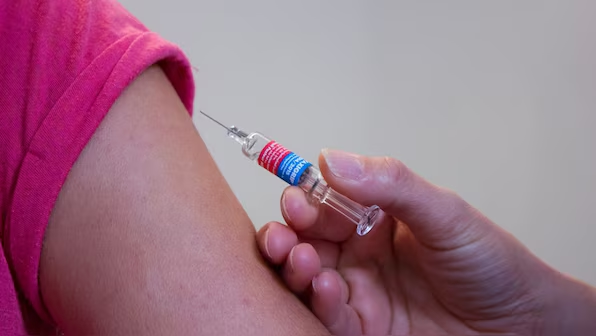
The Sputnik V story became one of the most dramatic examples of how science, politics, and public messaging collided during the pandemic.
Russia wanted to present itself as a leader in the global vaccine race. The announcement gave the country a powerful headline and a symbolic victory. But for many scientists, the real victory would only come after transparent data showed the vaccine was safe and effective in large groups of people.
The controversy also reminded the world that medical breakthroughs cannot be built on press releases alone.
A vaccine is not proven because a leader praises it. It is not trusted because it has a powerful name. It becomes trusted through careful testing, open data, independent review, and real world evidence.
In the end, the most important question was never whether Russia could announce a vaccine first. The real question was whether the vaccine could earn global scientific confidence.
During a pandemic, hope is necessary. But hope must be matched with evidence.
That was the lesson behind the Sputnik V controversy: in the race to defeat a virus, being first can make headlines, but being proven is what protects people.