
Table of Contents
- It Started With a Scheduling Complaint. It Ended With $39 Million.
- The Rule Starbucks Broke: Fair Workweek Laws
- How a Coffee Chain With 9,000+ U.S. Stores Got Caught Breaking the Rules
- $39 Million — Where Does It Go?
- The Hidden Cost of “Just One Shift Change”
- Why This Case Matters: Workers Are No Longer Afraid to Speak Up
- The Financial Side: Why Corporations Fear Laws Like This
- The Bigger Picture: A Global Shift Toward Worker Protection
- Is Starbucks the Villain — or a Symbol of a Broken System?
- What Happens Next? The Future of Hourly Work Just Changed Forever
- The Real Story: A Win for Workers Who Never Thought They Had Power
- Final Question: If This Happened at Starbucks… Where Else Is It Happening?
It Started With a Scheduling Complaint. It Ended With $39 Million.
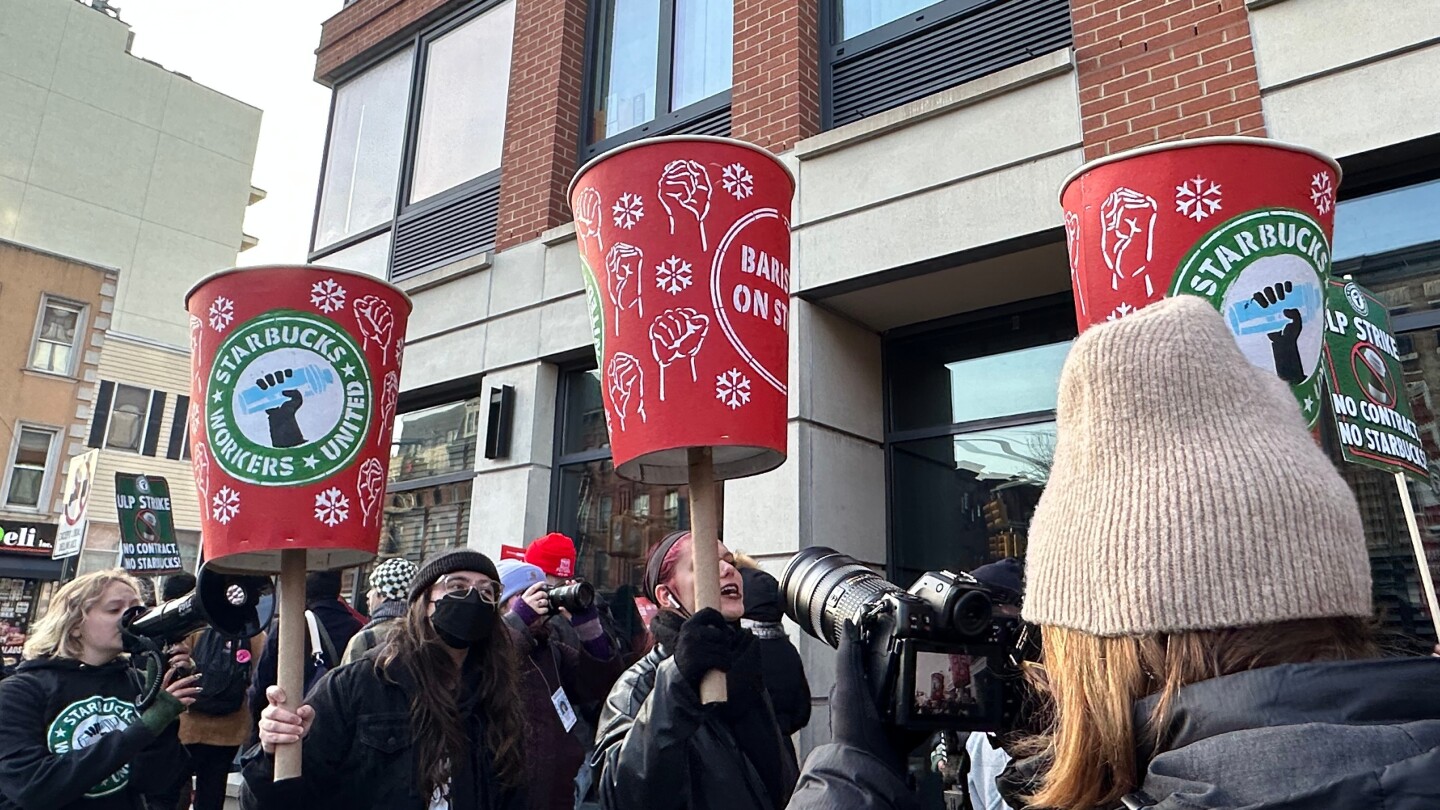
On an ordinary morning in New York City — the same city where Starbucks cups crowd subway platforms and office desks — something unusual happened.
Starbucks, one of the most recognizable brands on the planet, quietly agreed to pay $39 million to settle claims that it violated New York City’s labor laws.
This wasn’t just a fine.
It wasn’t just a slap on the wrist.
It became the largest labor law settlement in the city’s history.
And it all began with something many people overlook in corporate America:
Workers who were tired of being pushed around by unpredictable schedules, lost hours, and unfair labor practices.
Before we dive deeper, ask yourself:
👉 Have you ever worked a job where the schedule changed hours before your shift?
👉 Have you ever been told to stay late without warning — or go home early with no pay?
For thousands of Starbucks workers in NYC, this wasn’t just inconvenience.
It was life.
The Rule Starbucks Broke: Fair Workweek Laws
New York City’s Fair Workweek Law, enacted in 2017, was designed to protect hourly workers from something most white-collar executives never experience:
labor instability.
Under the law, employers must:
- Provide consistent, predictable schedules
- Give advance notice (usually 14 days)
- Offer additional pay for last-minute changes
- Avoid “clopening” shifts (close late, open early)
- Offer available hours to existing workers before hiring new ones
Starbucks, investigators say, repeatedly failed to do this.
Workers reported:
- Schedules changing the night before
- Being asked to work without proper notice
- Not receiving required premium payments
- Not being offered open shifts
- Being forced into unpredictable and exhausting routines
When thousands of schedules began telling the same story, the city took action.
How a Coffee Chain With 9,000+ U.S. Stores Got Caught Breaking the Rules
Starbucks is no small player. It is one of the biggest hourly employers in the United States.
But that scale is exactly what became the problem.
Investigators discovered:
✔ A pattern of systemic violations
Not isolated mistakes — widespread, recurring, repeated.
✔ Scheduling software that made non-compliant changes
Algorithms, not managers, sometimes controlled shift patterns.
✔ Workers who were owed premium pay
Legally, they should have been paid for abrupt changes.
✔ A corporate culture pushing for flexibility — at the workers’ expense
One former employee described it as:
“Starbucks got the stability. Workers got chaos.”
And chaos, in labor terms, means money owed.
$39 Million — Where Does It Go?
This massive settlement includes:
Direct payments to workers
Tens of thousands of baristas, supervisors, and shift leads will receive restitution.
Penalties and compliance requirements
Starbucks must now follow strict procedures for:
- Future scheduling
- Time tracking
- Shift coverage
- Work hour distribution
- Manager training
Long-term oversight
The city will monitor Starbucks stores to ensure violations don’t creep back in.
This isn’t just a payout — it’s an overhaul.
But the bigger question is:
How did one scheduling problem grow into a $39 million reckoning?
The Hidden Cost of “Just One Shift Change”
To most workers, losing a shift means losing gas money, grocery money, or rent money.
To a corporation?
It’s just a line of text moved around a digital calendar.
But those “small changes” add up:
- Lost wages
- Lost sleep
- Lost childcare arrangements
- Lost commute money
- Lost financial stability
And every time Starbucks changed a shift without notice, the company bypassed the legal requirement to pay workers premium pay.
Do that once — it’s a violation.
Do it hundreds of thousands of times — it becomes history.
Why This Case Matters: Workers Are No Longer Afraid to Speak Up
This settlement didn’t happen in a vacuum.
It comes after:
- Amazon warehouse protests
- Trader Joe’s union fights
- McDonald’s wage complaints
- Hollywood writers’ and actors’ strikes
- A national wave of unionization
Workers today are more informed and more organized than ever.
They understand:
👉 Their rights
👉 Their labor value
👉 Their bargaining power
And they are demanding accountability from billion-dollar corporations.
Once upon a time, hourly workers were invisible.
Not anymore.
The Financial Side: Why Corporations Fear Laws Like This
High-intent finance keywords integrated:
Violating the Fair Workweek Law doesn’t just trigger fines.
It triggers:
- Corporate reputation damage
- Legal fees
- HR compliance audits
- Payroll restructuring
- Higher insurance premiums
- Investor scrutiny
Shareholders hate instability.
And labor law violations create instability.
Starbucks’ $39 million payout sends a loud message to other companies:
Ignoring scheduling laws is no longer “cheaper than compliance.”
The financial risk is too high.
The PR cost is even higher.
The Bigger Picture: A Global Shift Toward Worker Protection
This settlement reflects a growing worldwide trend:
Countries around the globe are reconsidering the rights of hourly workers, especially in:
- Retail
- Foodservice
- Logistics
- Hospitality
- Delivery services
From Europe to Australia to Canada, governments are:
- Setting minimum schedule guarantees
- Limiting unpredictable shifts
- Requiring compensation for changes
- Investigating wage theft
- Expanding worker protections
NYC just reinforced a global reality:
Workers are the backbone of the economy — not disposable labor for corporate convenience.
Is Starbucks the Villain — or a Symbol of a Broken System?
Here’s the twist:
Starbucks is not the only company violating these rules.
It’s simply the one that got caught the biggest.
Other major brands have faced similar investigations:
- Chipotle: $20 million in Fair Workweek violations
- Panda Express: multi-million-dollar wage settlements
- Amazon: labor audits and fines
- Walmart: history of wage disputes
The Starbucks case shines a spotlight on a much deeper issue:
👉 Hourly workers are underprotected.
👉 Corporations rely on flexibility but offer none.
👉 Scheduling algorithms often prioritize profit over people.
Starbucks isn’t the cause of the problem.
It’s the symptom.
What Happens Next? The Future of Hourly Work Just Changed Forever
Businesses across NYC — and beyond — are now:
- Updating scheduling software
- Training managers on compliance
- Recalculating premium pay rules
- Rewriting HR policies
- Reviewing payroll logs
- Preparing for audits
This case is now every corporation’s warning.
If Starbucks can be fined $39 million…
No company is safe from scrutiny.
For hourly workers, though?
This is the beginning of a new era.
The Real Story: A Win for Workers Who Never Thought They Had Power
If you’ve ever worn an apron, worked behind a counter, or stood for hours with a headset, this settlement is more than a headline.
It’s validation.
It’s proof that:
- Your time matters
- Your stability matters
- Your rights matter
- And your voice can change the system
Starbucks workers weren’t union presidents.
They weren’t lawyers.
They weren’t CEOs.
They were:
Baristas.
Shift leads.
Supervisors.
Students.
Parents.
Immigrants.
Young adults trying to survive in the most expensive city in America.
And they won.
Final Question: If This Happened at Starbucks… Where Else Is It Happening?
How many companies are shifting schedules without notice?
How many workers are losing money without realizing it?
How many corporations owe millions for violations nobody has reported yet?
The Starbucks case is a wake-up call — not just to companies, but to workers everywhere.
Because the truth is simple:
**The labor revolution isn’t coming.
It’s already here.**