
Table of Contents
- The Video That Stopped the Meeting from Being Routine
- What We Know — The Dozing, The Denial, and the Fallout
- Why It Matters — Beyond Just Embarrassing Clips
- The Bigger Story — What This Means for Politics, Democrats, Republicans, and Voters
- What Happens Next — Could This Be a Catalyst for Change?
- If You Were in Charge — What Would You Do?
- Final Thought — A Blink, a Nod, and a Wake‑up Call
The Video That Stopped the Meeting from Being Routine
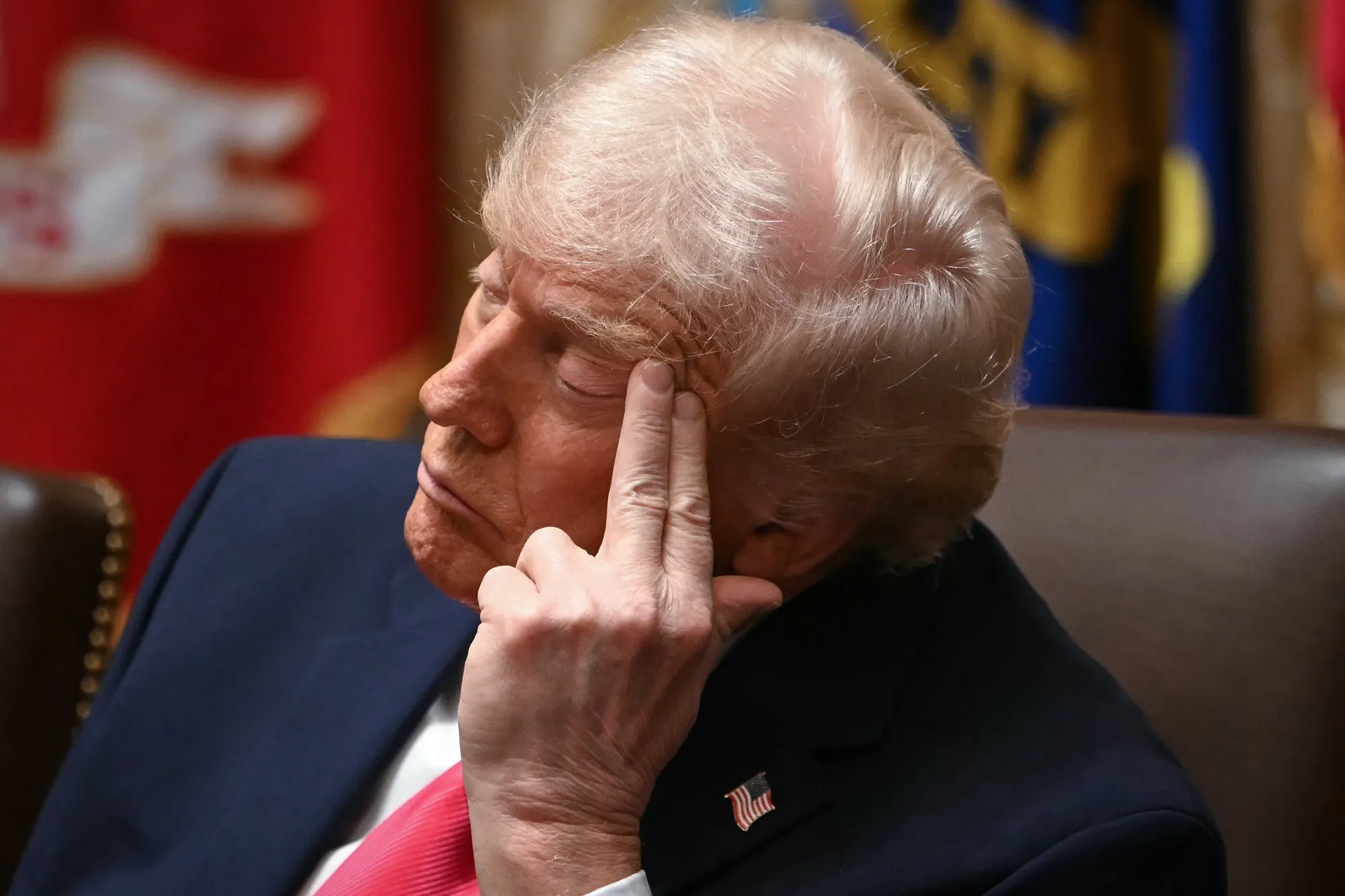
It was supposed to be just another cabinet meeting — routine updates, policy discussions, and that familiar swirl of political choreography. But halfway through, cameras captured something unexpected: the president of the United States closing his eyes for extended periods of time.
Not just a blink. Not just a glance downward. Multiple times. Nine separate moments. The kind of nod that looks like sleep. Over nearly six minutes, while advisers spoke, briefs were given, decisions hung in the balance.
Suddenly, what was meant to showcase leadership and energy turned into a global meme — with a nickname twist no one saw coming: from “Sleepy Joe” to “Sleepy Trump.”
That moment didn’t just raise eyebrows. It flipped the script. And for millions watching, it begged a question few felt comfortable putting into words: Is he really that awake?
What We Know — The Dozing, The Denial, and the Fallout
The Meeting That Lasted Over Two Hours
On December 2, 2025, the president convened a regular Cabinet meeting — one that stretched for more than two hours. As secretaries rotated giving updates — on foreign policy, domestic initiatives, budgets — the cameras stayed fixed. And on video, Trump’s head dipped, his eyes closed, his forest-green tie swaying backward and forward, almost rhythmically.
Observers from media outlets counted at least nine separate episodes where his eyes stayed closed for several seconds; cumulatively, he appeared to be asleep for nearly six minutes.
Official Response: “He Was Listening Attentively”
As media coverage exploded, the White House pushed back. According to Press Secretary Karoline Leavitt, the president was “listening attentively and running the entire meeting.”
In statements, they pointed to what came afterward: a robust press conference, sharp remarks on immigration, policy declarations — all used as proof that he remained sharp and alert.
But the optics had already taken on a life of their own.
Viral Backlash: Memes, Mockery, and Public Doubt
Within hours, the footage was everywhere — social media flooded with “Sleepy Trump” memes, late‑night comedians roasted the moment, critics questioned his stamina for office. Celebrities and political commentators alike chimed in. The moment morphed into a cultural meme, complete with hashtags and late‑night jokes.
Even longtime supporters began to squirm. Older age, intense schedule, and a history of late‑night postings on social media — many pointed out the contradictions in calling oneself “sharp” while repeatedly nodding off mid‑discussion.
Why It Matters — Beyond Just Embarrassing Clips
This isn’t just about a sleepy moment caught on camera. What this reveals — and what it may have consequences for — runs deeper.
Leadership Perception and Public Confidence
A president nodding off while topics of national importance are discussed — inflation, foreign policy, budget cuts, national security — can undermine public confidence. Even if decisions are sound, public perception can shape legitimacy.
Citizens expect their leader to be fully present, especially in times of global uncertainty. When a video suggests otherwise, it becomes difficult to separate optics from reality.
Age, Health, Fitness — Not Just Talking Points
At 79, Trump is already the oldest individual to serve as U.S. president. Questions around stamina, energy, and cognitive sharpness are not new. But public events like this reshape the conversation — shifting from speculation to images, from debate to what people can see.
In an era where world leaders face unprecedented global crises — climate, war, economic uncertainty — the demands on mental and physical endurance are staggering. The footage invites scrutiny, not just from opponents — but from allies, citizens, and historians.
The Media Age: Every Moment Is Recorded — Forever
Never before has global leadership been so transparent. Cameras, phones, social media — everything is recorded. A single unguarded moment can spread worldwide in seconds.
For public figures, especially heads of state, that means there are no do‑overs. Every blink, nod, sigh is potentially the next headline. And once it’s out — it never disappears.
So yes — this matters. Maybe more than we want to admit.
The Bigger Story — What This Means for Politics, Democrats, Republicans, and Voters
From “Sleepy Joe” to “Sleepy Trump”: A Role Reversal
For years, Trump used the nickname “Sleepy Joe” to question his predecessor’s alertness. Now, the tables have turned. The irony isn’t lost on most observers — and the meme‑ification of the moment makes it even sharper.
That reversal matters politically. It challenges long‑standing narratives about energy, leadership, and age.
Allies, Adversaries — And the Pressure on Both
Republicans and conservatives who supported Trump partly because of his energy — his non‑stop rallies, larger‑than‑life presence — now face a difficult optics battle. Supporters can double down: say it was a moment of fatigue, not weakness. Or they can pivot: emphasize results over appearances.
Meanwhile, critics and opponents see it as a strong symbol of decline. For them, it’s evidence — not just opinion.
Voters and the Future — What Does This Mean for Democracy?
Ultimately — the burden shifts to voters. Do we decide based on optics or outcomes? Based on energy or experience?
In a media‑saturated world, such moments influence perceptions as much as policies. For a public used to evaluating celebrities and influencers on minute details — this is just politics meeting modern culture.
The bigger question: do we accept fatigue… or demand accountability?
What Happens Next — Could This Be a Catalyst for Change?
Pressure for More Transparency
With public trust shaken, the White House might be compelled to offer more frequent — and more transparent — health checks. Age and health in political leadership may become front‑and‑center issues, not just whisper campaigns.
Media will likely push for more scrutiny: longer meetings, more photos, less controlled settings. Because when optics matter, controlled highlights aren’t enough.
A Turning Point for Youth vs. Experience Debate
America — and perhaps the world — may increasingly weigh the trade-off between “experience and wisdom” and “energy and alertness.” The orange-haired, camera-ready protester may soon be less appealing than a calm, calculating official — especially if clips like this resurface.
The Risk of It All Blowing Over
Of course — there’s always the risk this becomes a forgettable meme. The president continues work. Policies advance. The next scandal emerges. And the world moves on. But even then — the memory stays. The image persists. And for some, that may be reason enough to reconsider: leadership isn’t just about decisions. It’s about presence.
If You Were in Charge — What Would You Do?
Let me ask you: if you were a senior adviser, a cabinet member, or just an ordinary citizen concerned with leadership — would you press for stricter mental‑fitness standards? Demand more transparency?
Imagine a country where leaders regularly share cognitive test results, physical fitness logs, and rest schedules — so the public can judge for themselves. Would that build trust — or lead to more skepticism, more paranoia?
Because after moments like this… nothing is off the table anymore.
Final Thought — A Blink, a Nod, and a Wake‑up Call
Sometimes, a blink means nothing.
But sometimes — especially when cameras are rolling — a moment’s lapse becomes a lifetime’s question.
For Trump, the “Sleepy Trump” moment may be an embarrassing footnote — or a turning point.
For voters, it’s a reminder: leadership isn’t just measured in laws passed — but in presence, energy, clarity.
Whether this moment changes anything — or fades into the noise — depends on what comes next. But one thing’s certain: for better or worse, the world won’t look at sleepy the same way again.