
Table of Contents
- The Remark That Sparked Immediate Controversy
- What Is the Right to Try Act?
- Did Trump Literally Mean “Dead”?
- Social Media Reacts to the Viral Clip
- The Role of Mehmet Oz During the Event
- Why Experimental Medicine Sparks Emotional Debate
- The History of Trump’s Medical Claims
- Could Experimental Drugs Really Save “Hopeless” Patients?
- Why This Story Resonated So Strongly
- What This Means for Public Trust in Medicine
The Remark That Sparked Immediate Controversy
When news organizations and social media users replayed the clip, reactions varied wildly depending on political perspective. Some interpreted Trump’s words as metaphorical, arguing he was describing critically ill patients who unexpectedly recovered after receiving experimental treatment. Others saw the statement as another example of the president making medically questionable claims without scientific clarity.
The controversy deepened because Trump did not name the drug, provide evidence, identify the patient, or explain the circumstances behind the alleged recovery. Without specifics, medical experts and journalists were left trying to reconstruct the context of the remark from the broader discussion surrounding the Right to Try Act.
Critics argued that casually discussing life-saving miracle drugs without evidence could spread misinformation and create false hope among seriously ill patients and families desperate for treatment options. Supporters countered that Trump was simply highlighting stories of extraordinary recoveries made possible by loosening restrictions on experimental medicine.
The moment quickly became another example of how Trump’s communication style can dominate national headlines with only a few unscripted sentences.
What Is the Right to Try Act?
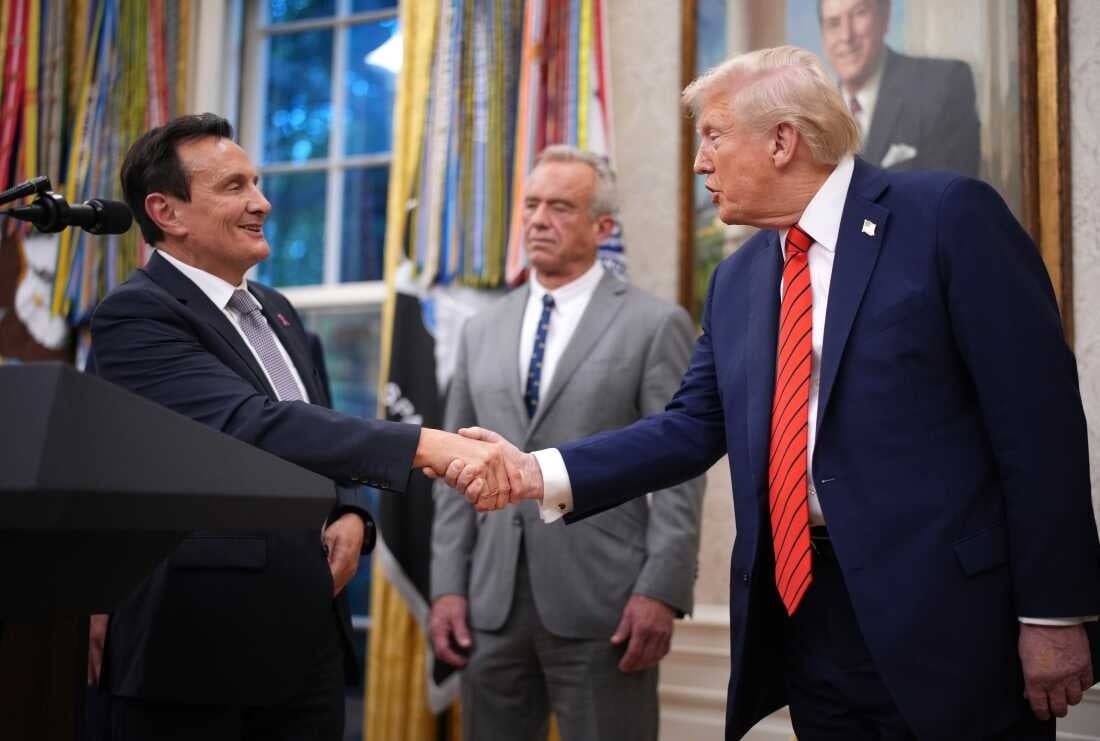
To understand why Trump made the statement, it helps to understand the legislation he was discussing.
The Right to Try Act was signed into law during Trump’s first administration in 2018. The law allows terminally ill patients to seek access to experimental drugs that have not yet received full approval from the U.S. Food and Drug Administration.
Supporters of the law argued that patients facing life-threatening illnesses should have the freedom to try potentially promising treatments, even if those treatments remain under investigation. Many advocates framed the law as a compassionate effort to give dying patients one final chance when traditional medicine had failed.
Trump frequently promoted the legislation as one of his administration’s major healthcare achievements. He often described emotional stories involving terminal patients who allegedly benefited from experimental treatments after running out of conventional options.
However, critics argued that patients already had pathways to access experimental treatments through existing FDA expanded access programs before the law was passed. Some medical ethicists also warned that desperate patients could become vulnerable to exploitation from clinics or doctors offering unproven therapies.
This ongoing debate helps explain why Trump’s recent comments immediately reignited controversy surrounding the broader Right to Try movement.
Did Trump Literally Mean “Dead”?
One of the biggest questions surrounding the controversy is whether Trump intended his remarks literally.
Medical science currently has no approved pharmaceutical drug capable of reviving someone who is biologically dead in the way popular culture imagines. While emergency medicine can sometimes revive patients whose hearts temporarily stopped, that process involves rapid medical intervention, CPR, defibrillation, oxygen support, and advanced hospital care rather than a miracle injection that reverses death itself.
Critics therefore argued that Trump’s wording crossed into scientifically misleading territory.
At the same time, longtime observers of Trump’s speaking style noted that he frequently exaggerates stories to emphasize emotional impact. Phrases like “dead,” “gone,” or “miracle” are often used rhetorically rather than medically during his speeches.
Some supporters suggested Trump may have been describing a patient who appeared close to death, received last rites, and then unexpectedly improved after experimental treatment. Such recoveries, while rare, are medically possible in certain circumstances.
Still, because the president never clarified the statement in detail, the ambiguity itself became part of the story.
Social Media Reacts to the Viral Clip
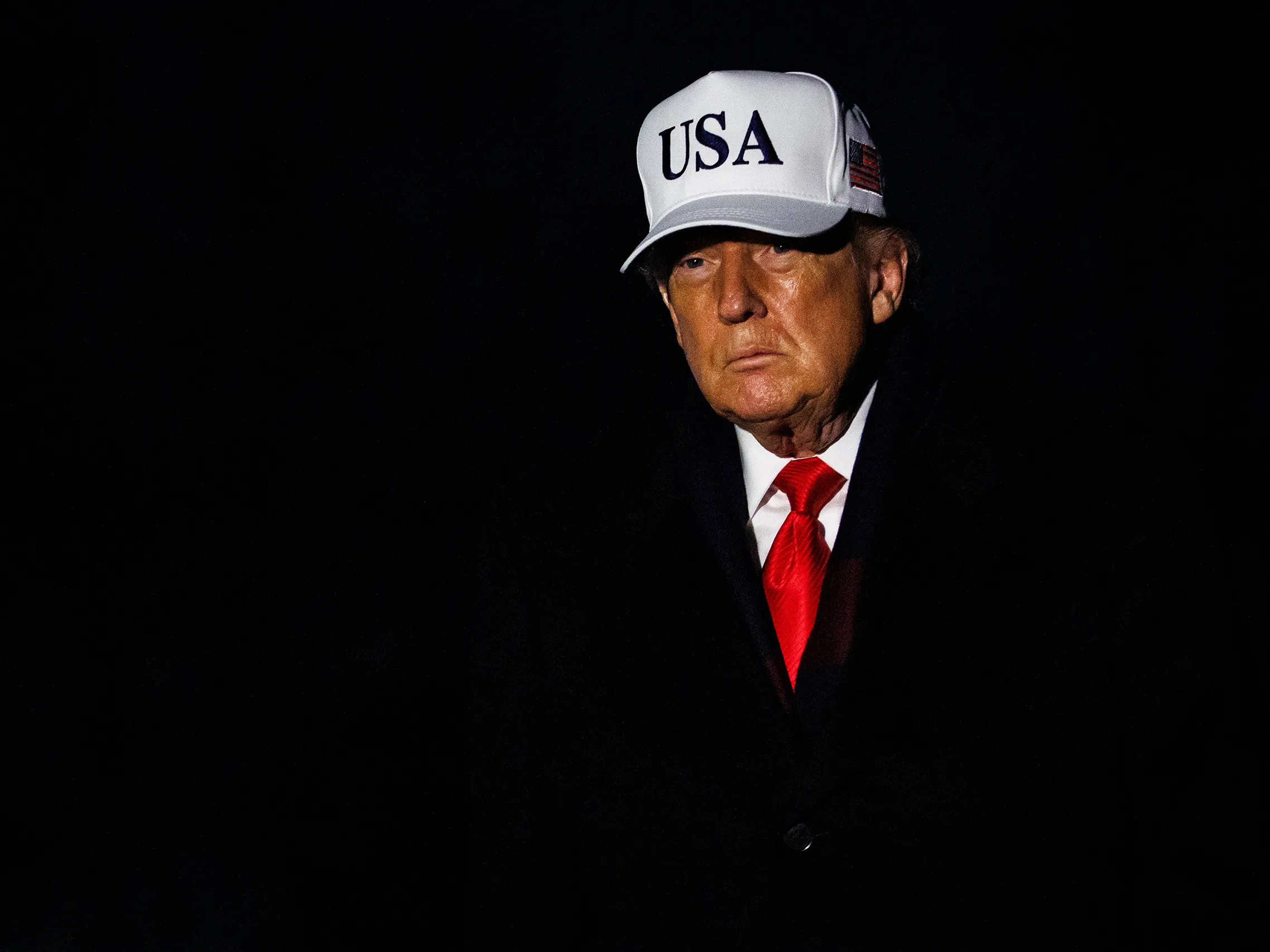
Within hours of the clip circulating online, social media users transformed the moment into one of the biggest viral political stories of the week.
Some users joked that Trump sounded like he was describing the plot of a science fiction or zombie movie. Others posted memes imagining pharmaceutical companies creating resurrection drugs. Political commentators on both sides of the aisle dissected the statement frame by frame.
The clip also sparked wider discussions about public trust in science and medicine. Critics argued that political leaders discussing medical breakthroughs without evidence contributes to confusion in an era already filled with misinformation online.
Meanwhile, Trump supporters framed the backlash as another example of the media overreacting to the president’s off-the-cuff remarks. Some argued the statement was obviously metaphorical and accused critics of intentionally taking it literally for political purposes.
The viral nature of the moment reflects how modern political communication increasingly operates in the age of short clips and rapid reactions, where a few seconds of video can dominate national conversation for days.
The Role of Mehmet Oz During the Event
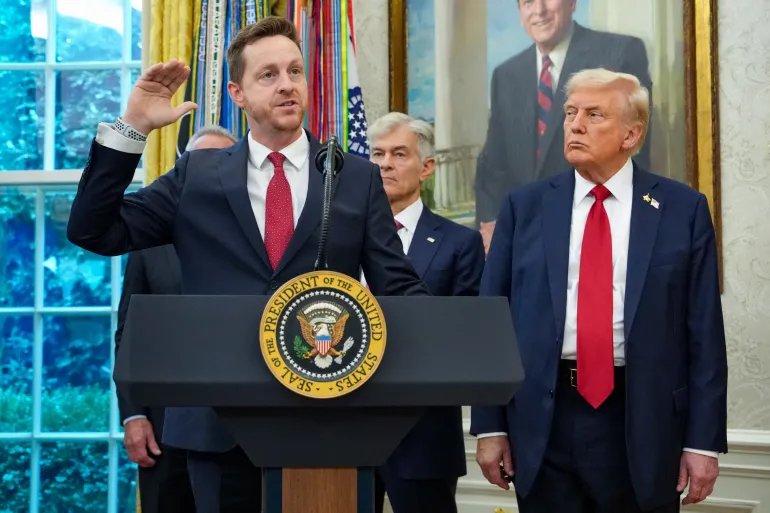
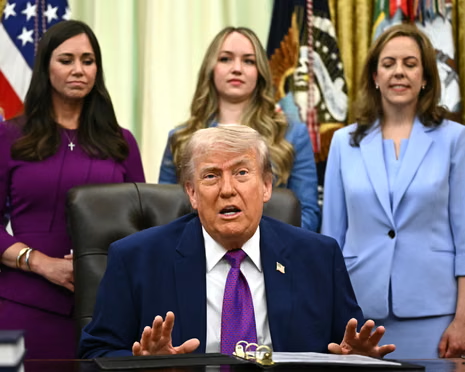
Another reason the clip gained attention was the visible reaction of Mehmet Oz, the television personality and former Senate candidate who currently serves as Administrator for the Centers for Medicare and Medicaid Services.
Viewers quickly noticed Oz standing in the background while Trump delivered the remarks. Social media users repeatedly replayed the footage, analyzing Oz’s facial expressions during the moment.
Some interpreted his reaction as surprise or discomfort, though others argued internet users were overanalyzing normal body language. Regardless, Oz’s presence added another layer of intrigue because he has long been associated with controversial medical claims and alternative health discussions throughout his television career.
For critics of the administration, the visual symbolism became impossible to ignore: a president making extraordinary claims about miracle drugs while a celebrity doctor stood silently nearby.
The moment further fueled conversations about the blending of entertainment, politics, and medicine in modern American culture.
Why Experimental Medicine Sparks Emotional Debate
The controversy also highlights a deeper issue that extends far beyond politics. Experimental medicine occupies an emotionally charged space where hope, desperation, science, and ethics often collide.
For terminally ill patients and families, experimental drugs can represent possibility during moments of overwhelming fear. Stories of unexpected recoveries naturally attract attention because they speak to universal human hopes surrounding survival and medical breakthroughs.
At the same time, history contains countless examples of miracle cures later proving ineffective, exaggerated, or even dangerous. Medical experts therefore stress the importance of careful clinical testing, peer-reviewed evidence, and scientific transparency before making sweeping claims about treatment success.
This tension creates fertile ground for political controversy whenever public figures discuss experimental healthcare.
Trump’s comments tapped directly into that emotional space. To supporters, he sounded optimistic and compassionate about giving dying patients another chance. To critics, he appeared reckless for discussing dramatic medical claims without evidence.
Both reactions reveal how deeply personal and emotionally sensitive healthcare discussions have become in modern politics.
The History of Trump’s Medical Claims
Trump’s recent comments also fit into a broader pattern that has followed him throughout both of his presidencies.
Over the years, the president has repeatedly drawn scrutiny for statements involving medicine, science, and public health. During the COVID-19 pandemic in particular, his remarks about treatments, disinfectants, vaccines, and medications generated intense criticism from scientists and political opponents.
Supporters often defend Trump by arguing he speaks conversationally rather than technically, and that critics intentionally interpret his words in the worst possible light. Opponents argue that presidents carry enormous influence and therefore have a responsibility to communicate clearly on scientific matters.
This divide helps explain why even a brief comment about experimental drugs quickly escalated into national debate.
The issue is not simply about whether Trump exaggerated. It is about whether public figures should make emotionally charged medical claims without clear evidence, especially in an era when misinformation spreads rapidly online.
Could Experimental Drugs Really Save “Hopeless” Patients?
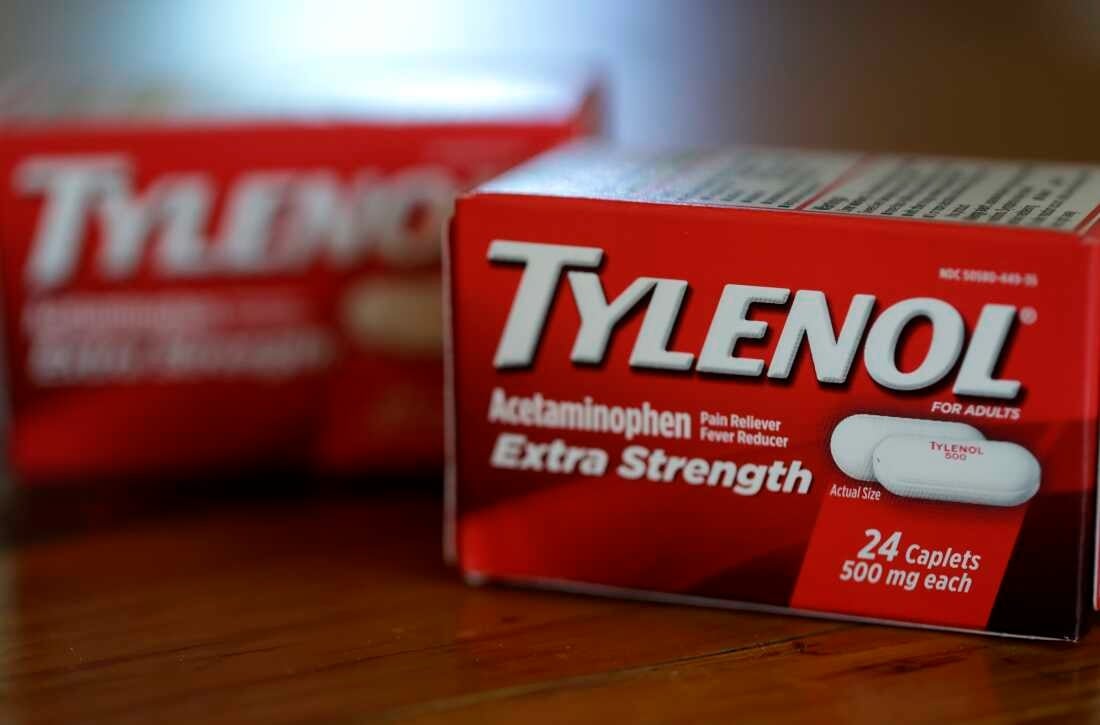
Despite the controversy surrounding Trump’s wording, experts acknowledge that experimental treatments can sometimes produce remarkable outcomes.
Medical history contains documented cases where patients with severe illnesses unexpectedly responded to treatments that initially seemed unlikely to work. Advances in cancer immunotherapy, gene therapy, and personalized medicine have transformed outcomes for some patients previously considered beyond help.
However, experts emphasize that these breakthroughs emerge through years of clinical research, scientific testing, and regulatory oversight.
The danger, critics say, lies in oversimplifying complex medicine into dramatic miracle stories.
A terminal patient showing improvement after receiving experimental treatment is not the same as a pharmaceutical drug literally reversing death. Yet emotionally powerful narratives can blur those distinctions in public conversation.
This is especially true in political settings where dramatic storytelling often generates stronger reactions than technical explanations.
Why This Story Resonated So Strongly
Part of what made Trump’s comments spread so rapidly is that they touched on one of humanity’s oldest fascinations: defeating death itself.
Stories about resurrection, miracle cures, and impossible recoveries have existed throughout history across religion, mythology, science fiction, and medicine. Even in modern society, the idea that science could someday reverse death remains emotionally and culturally powerful.
Trump’s wording unintentionally tapped into that psychological fascination.
For some viewers, the statement sounded hopeful. For others, it sounded absurd. But either way, it instantly captured public imagination in a way ordinary political speeches rarely do.
The story also reflects the increasingly blurred boundaries between politics, entertainment, social media, and viral culture. Modern political moments are no longer analyzed solely through traditional journalism. They are dissected through memes, reaction videos, online commentary, and emotionally charged algorithms designed to maximize engagement.
In that environment, a single dramatic sentence can eclipse an entire policy discussion.
What This Means for Public Trust in Medicine
Beyond the political arguments, the controversy raises larger questions about public trust in science and healthcare communication.
Medical experts already face major challenges combating misinformation online, particularly regarding vaccines, experimental therapies, and miracle cures. Public confusion increases when influential figures discuss medical topics in ways that appear exaggerated or unclear.
At the same time, supporters of broader experimental treatment access argue that bureaucratic caution can sometimes delay life-saving innovation. They believe terminally ill patients deserve more freedom to pursue unconventional therapies without excessive restrictions.
This tension between scientific caution and desperate hope is unlikely to disappear anytime soon.
Trump’s comments may eventually fade from the news cycle, but the broader debate surrounding experimental medicine, public trust, and political communication will continue evolving. In many ways, the viral reaction to his remarks reveals something larger about modern society itself: people desperately want to believe in medical miracles, yet they are also increasingly skeptical of the people delivering those promises.
That contradiction may be one of the defining challenges of modern healthcare communication in the years ahead.