

Table of Contents
- A Major Shift In The Green Card Process
- Why Adjustment Of Status Matters
- Families Fear Long Separations
- Workers And Employers Could Also Be Hit
- Backlogs Could Make The Problem Worse
- Legal Challenges Are Expected
- Democrats And Advocates Push Back
- What The Administration Says
- What Immigrants Should Watch Next
- A Policy That Could Redefine Legal Immigration
A Major Shift In The Green Card Process
The new policy directs immigration officers to consider whether applicants should instead complete their green card process through consular processing. That means applying at a U.S. embassy or consulate outside the United States.
USCIS says officers should review each case based on relevant facts and circumstances. Applicants with extraordinary circumstances may still be allowed to adjust status inside the U.S., but the policy signals a much stricter approach.
The administration argues that this change restores the system to what the law originally intended. Officials say it prevents people from using adjustment of status as a loophole and allows USCIS to focus resources on other cases, including naturalization applications and protections for certain victims of crime or trafficking.
But critics see something very different. To them, this is a dramatic restriction on legal immigration. They argue that forcing people to leave the country before receiving permanent residence could create confusion, financial strain, family separation, and legal uncertainty.
Why Adjustment Of Status Matters
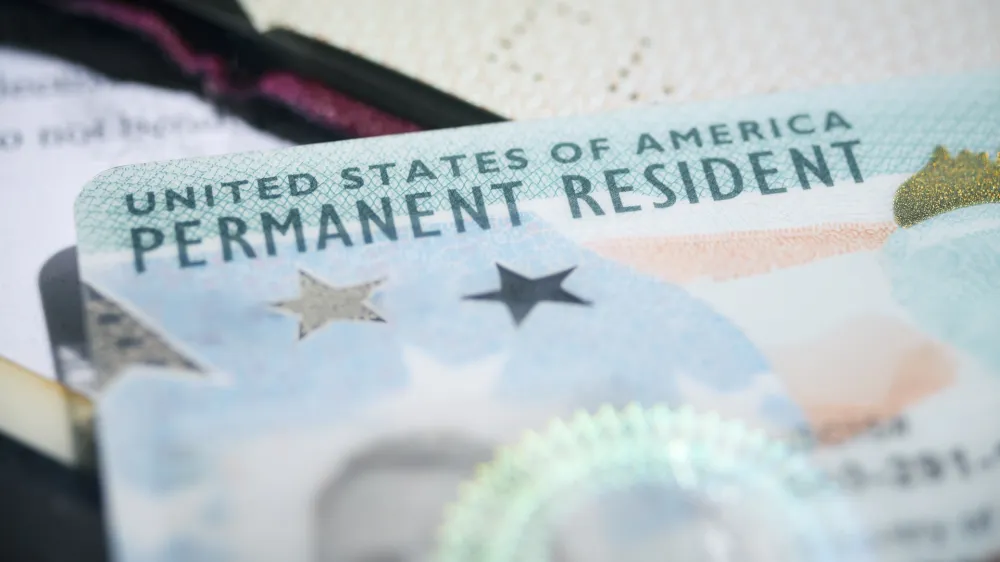
Adjustment of status has long been one of the most important pathways for immigrants already living legally in the United States. It is commonly used by spouses of U.S. citizens, foreign workers, students, refugees, and other eligible applicants.
The process allows someone who qualifies for permanent residence to apply without disrupting their life in America. They can often continue working, studying, raising children, and living with family while the government reviews their application.
That stability matters. Immigration cases can take a long time. Backlogs are already severe, and many applicants have spent years waiting for visa availability, document approval, interviews, and final decisions.
If applicants are forced to leave the U.S., the entire emotional and practical burden changes. A person may have to resign from work, separate from family, move back to a country they have not lived in for years, and wait for a consular appointment with no guarantee of quick approval.
Families Fear Long Separations
One of the strongest criticisms of the policy is that it could separate families. Lawmakers and immigrant advocates warn that spouses, parents, and children could be divided simply because one family member is required to finish the process overseas.
For mixed-status families, the risk feels especially serious. A U.S. citizen may be married to someone applying for a green card. Children may be citizens while one parent is still waiting for permanent residence. Under the new approach, that parent could be pushed abroad during the final stage of the process.
Supporters of immigrant families argue that this creates unnecessary hardship. Many families depend on two incomes, shared parenting, and stable routines. Losing one parent or spouse for months or years could damage children emotionally and families financially.
Critics also worry about applicants from countries affected by travel restrictions, political instability, or limited consular availability. In those cases, leaving the U.S. could become more than an inconvenience. It could become a long-term separation with no clear timeline.
Workers And Employers Could Also Be Hit
The policy could also affect foreign workers in industries that rely on skilled immigrants. Doctors, engineers, researchers, technology workers, and other professionals often move from temporary visas toward permanent residence through employment-based green card categories.
If these workers must leave the U.S. to complete the process, employers could face disruptions. A hospital could lose a doctor. A research lab could lose a scientist. A technology company could lose a key employee during an already slow immigration process.
Business groups and immigration attorneys are likely to argue that the policy makes America less competitive. The U.S. has long attracted global talent by offering a pathway from temporary work authorization to permanent residence. If that path becomes more unpredictable, some workers may choose other countries with clearer immigration systems.
The concern is not only about individual workers. It is also about the broader economy. Immigrants contribute labor, taxes, innovation, entrepreneurship, and long-term community investment. A policy that makes legal immigration harder could have ripple effects far beyond immigration offices.
Backlogs Could Make The Problem Worse
The green card system is already under heavy pressure. Backlogs have grown significantly over the past decade, and many applicants wait years before receiving final decisions.
Consular processing also has its own delays. U.S. embassies and consulates around the world handle large numbers of visa applications, interviews, security checks, and document reviews. Adding more green card applicants to that system could increase pressure on already strained offices.
This is one reason immigration attorneys are watching the policy closely. Even if some applicants are legally allowed to continue their cases, the practical effect may be slower processing, more uncertainty, and higher costs.
For applicants, the fear is simple. Leaving the U.S. for a consular interview sounds straightforward on paper, but in reality, it can involve travel expenses, lost income, housing disruption, legal fees, document delays, and the risk of being unable to return quickly.
Legal Challenges Are Expected
The new policy is likely to face legal challenges. Immigration attorneys and advocacy groups are expected to examine whether the administration can sharply restrict adjustment of status without changing the underlying law.
Some legal experts point out that U.S. immigration law still allows eligible applicants physically present in the country to seek adjustment of status. The administration’s position focuses on discretion, arguing that approval is not automatic and can be limited.
That distinction will likely become central in court. The government may argue that it is not eliminating adjustment of status, only instructing officers to treat it as an extraordinary benefit. Opponents may argue that the policy effectively guts a lawful pathway that Congress created.
Courts may also examine whether the policy was implemented properly, whether it conflicts with existing regulations, and whether it harms applicants in ways that violate administrative law.
Until those legal questions are resolved, applicants may face a confusing and uncertain environment.
Democrats And Advocates Push Back
Democratic lawmakers quickly criticized the move, calling it an attack on legal immigration. Several warned that the policy could tear families apart and punish people who are trying to follow the law.
Immigrant justice advocates also argue that the policy creates fear among applicants who may already be eligible for green cards. If people believe applying could force them to leave the country, some may delay or avoid filing altogether.
That could create another unintended consequence. Instead of encouraging legal pathways, the policy may discourage eligible immigrants from engaging with the system.
Advocates say the administration’s approach sends a harsh message. Even those who qualify for permanent residence may now face a more difficult and unpredictable road.
What The Administration Says
The Trump administration says the change is necessary to protect the integrity of the immigration system. USCIS argues that adjustment of status should not replace regular consular processing and that officers must evaluate whether each applicant truly deserves that form of relief.
Officials also say the policy will help free limited agency resources for other priorities. In their view, the current system has stretched USCIS capacity and allowed too many people to rely on in-country adjustment when they should be applying abroad.
This argument fits within the administration’s broader immigration agenda, which has focused on tighter enforcement, stricter eligibility review, and reducing what officials describe as abuse of legal pathways.
To supporters, the policy restores order. To critics, it creates chaos.
What Immigrants Should Watch Next
For immigrants currently applying for a green card, the most important issue is how USCIS officers will apply the policy in real cases. The memo creates a new tone and standard, but the full practical impact may only become clear as applications are reviewed.
Applicants with pending cases should pay close attention to official USCIS notices and consult qualified immigration attorneys before making travel decisions. Leaving the United States during an immigration case can carry serious risks, especially for people with past status issues, unlawful presence, or complicated immigration histories.
The phrase extraordinary circumstances will also become extremely important. Many applicants will want to know what qualifies, how much evidence is needed, and whether family hardship, medical needs, safety concerns, or employment disruption will be considered.
Until more guidance emerges, uncertainty will remain high.
A Policy That Could Redefine Legal Immigration
This green card policy shift is more than a technical immigration change. It could reshape how thousands, possibly millions, of people experience the path to permanent residence in the United States.
For the administration, the policy is about restoring legal order and limiting discretionary relief. For critics, it is a dangerous move that makes legal immigration harder, separates families, disrupts workplaces, and adds pressure to an already overloaded system.
The biggest question now is whether the courts, Congress, or public pressure will change the policy before its full impact is felt.
For immigrants waiting on green cards, the message is unsettling. A process that once allowed many people to build their future inside the United States may now require them to leave first, wait abroad, and hope the system lets them come back.