
Table of Contents
- Trump Name Removed From Kennedy Center
- A Landmark At The Center Of A Legal Fight
- The Court Ruling That Changed Everything
- Tarps, Scaffolding, And A Pre-Dawn Operation
- Why The Removal Went Viral
- A Battle Over Washington’s Image
- The Kennedy Name And Public Memory
- The Administration’s Fundraising Argument
- Crowds Gather In The Rain
- Lawmakers And Legal Pressure
- Website References Also Disappeared
- A Cultural Institution Under Pressure
- What This Means For Trump
- A Moment Bigger Than Signage
Trump Name Removed From Kennedy Center
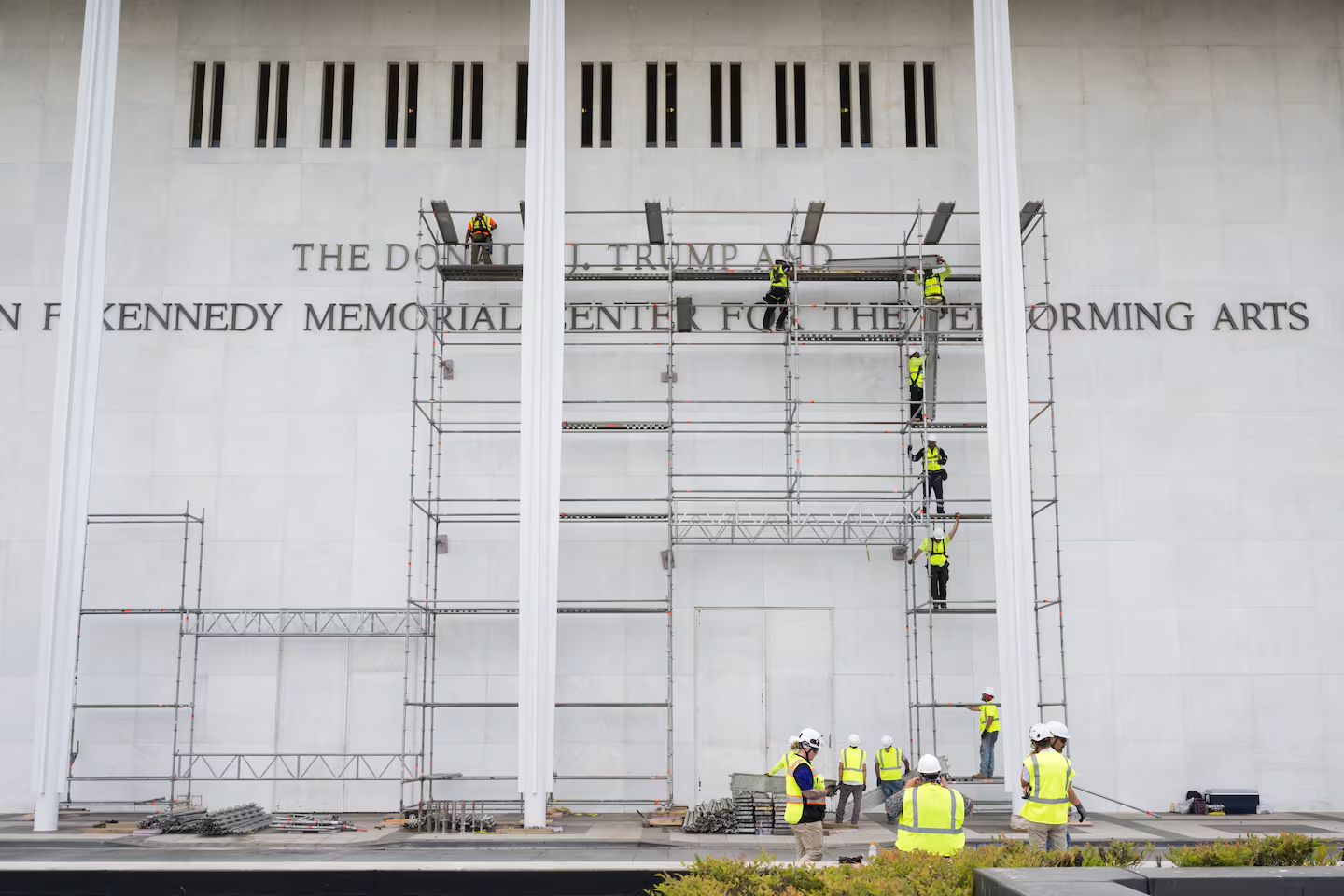
When workers began taking down Donald Trump’s name from the Kennedy Center in Washington, D.C., the removal became far more than a routine change to a building facade. It turned into a symbolic moment in a broader fight over presidential power, public institutions, cultural identity, and the legal limits of political branding. The letters had been added less than six months earlier, turning the landmark into what supporters described as a donor-friendly tribute and critics called an unprecedented political takeover of one of America’s most recognizable performing arts venues.
The removal followed a court ruling that the Kennedy Center could not be renamed without approval from Congress. Hours after a court-ordered deadline passed, workers began removing the bronze letters from the building. Scaffolding went up. Tarps were placed over the work area. Crowds gathered in the rain to watch a moment many believed represented more than a signage dispute. For Trump’s opponents, it was accountability. For his allies, it was another legal and political clash over the shape of the nation’s capital.
A Landmark At The Center Of A Legal Fight
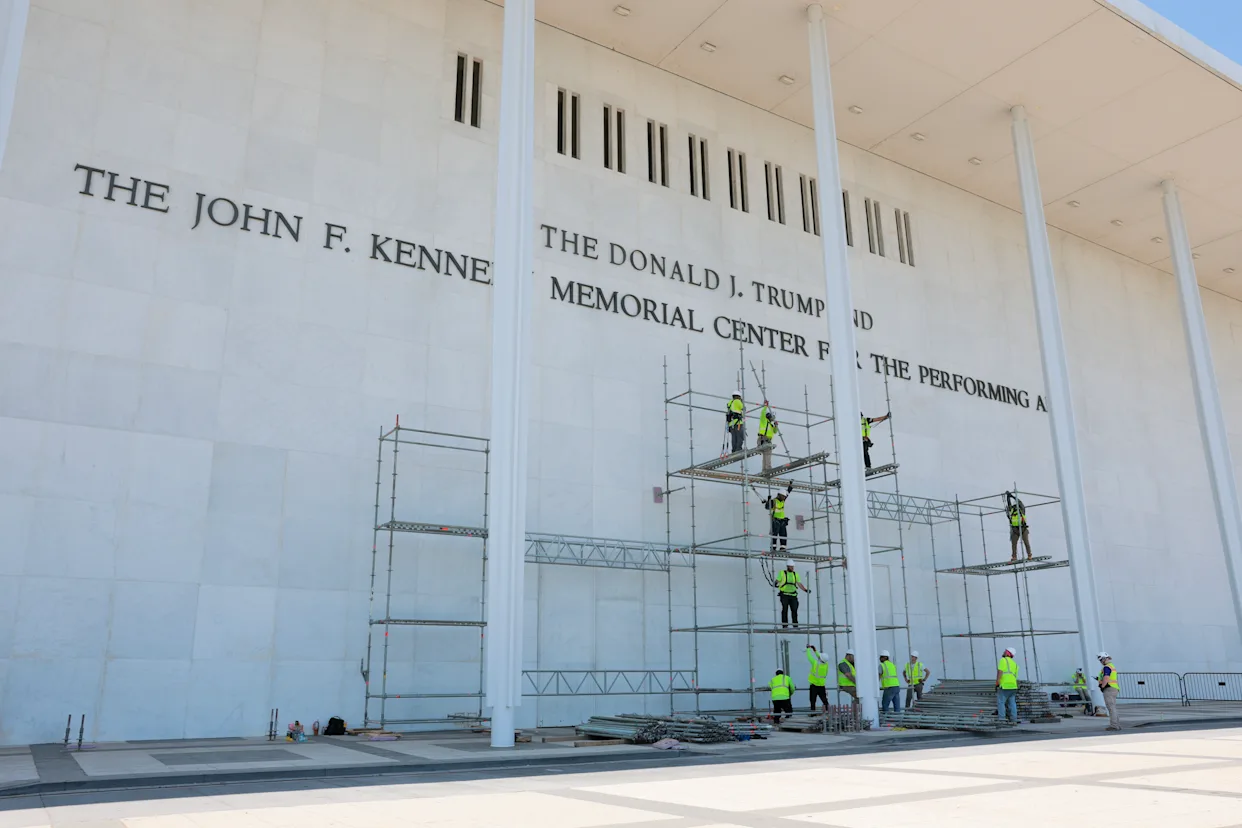
The John F. Kennedy Center for the Performing Arts has long stood as one of Washington’s most important cultural landmarks. It was created to honor President John F. Kennedy and to serve as a national center for music, theater, dance, opera, and public performance. Its name is not simply a decorative label. It carries historical, cultural, and legal meaning.
That is why the attempted renaming became so controversial. After Trump returned to office for a second term, his administration moved quickly to reshape the leadership of the Kennedy Center. The existing president, board chair, and board members were removed or replaced, and a new group of trustees installed Trump as chairman. Soon after, Trump’s name was added to the building, placing him alongside Kennedy on the facade.
Supporters of the change argued that the name could help attract donors and support major renovations. Critics argued that the move turned a national arts institution into a monument to a sitting president’s personal brand. The dispute quickly moved from politics into court.
The Court Ruling That Changed Everything
A federal judge ruled that the Kennedy Center could not legally be renamed without congressional approval. The reasoning was direct: Congress had established the center’s name in law, and only Congress had the authority to change it. That decision put the Trump administration and the Kennedy Center’s new leadership under a deadline to remove references to Trump from the building, website, and official materials.
The administration tried to stop or delay the removal by asking a higher court for emergency relief. In court filings, officials argued that Trump’s name had become important to fundraising efforts and that removing it could disrupt donations connected to renovations. But the appeals court denied the request.
With that decision, the legal path was clear. The name had to come down. What remained was the question of how, when, and how visibly the removal would happen.
Tarps, Scaffolding, And A Pre-Dawn Operation
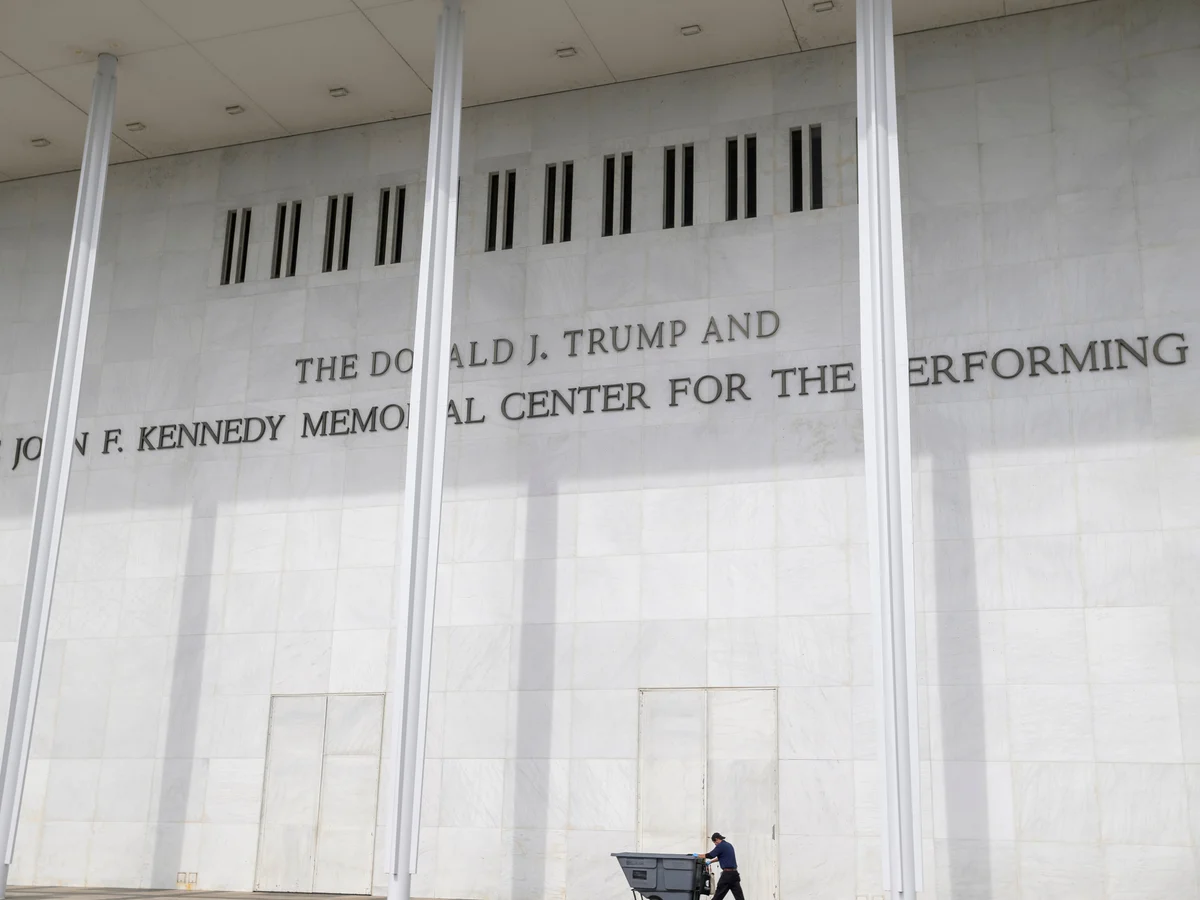
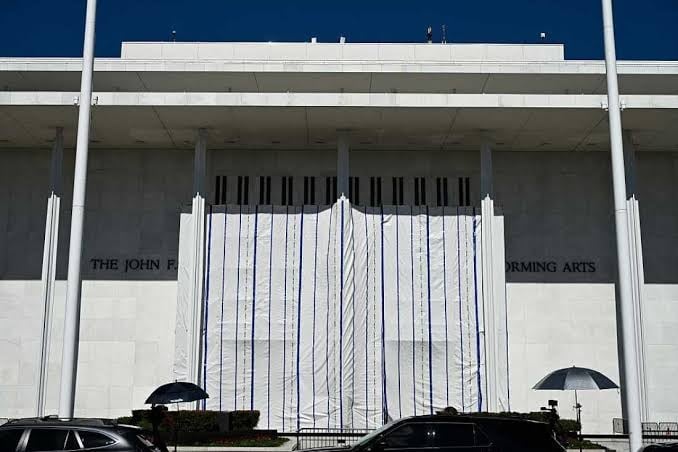
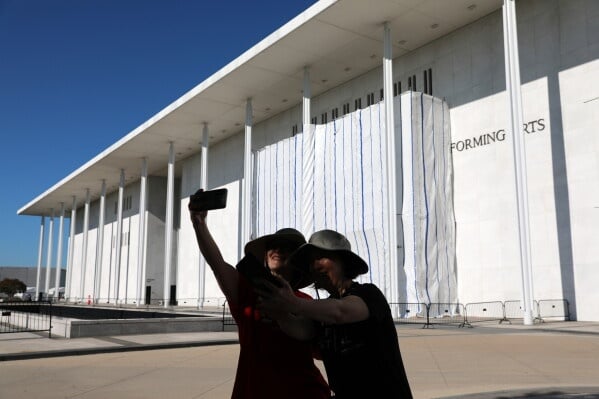
The physical removal became a spectacle of its own. Workers erected scaffolding around the section of the building where Trump’s name had been installed. Then, before dawn, tarps were placed over the scaffolding, blocking the public’s view of the work.
The use of tarps immediately drew criticism from people gathered outside. Many had come to witness the removal as a public moment. Some saw the covering as an attempt to hide a political defeat. Others believed it was simply a practical construction measure, especially as rain and storms moved through Washington.
Either way, the image was powerful. A famous building. A president’s name hidden behind fabric. Workers removing giant letters in the early morning. Protesters watching from below. It was the kind of scene built for viral news, because it looked like a metaphor before anyone even explained it.
Why The Removal Went Viral
The story spread quickly because it touched several emotional and political nerves at once. It involved Trump, one of the most polarizing figures in American politics. It involved the Kennedy name, one of the most recognizable names in modern American history. It involved a court order, a cultural institution, public protest, and dramatic visuals from the nation’s capital.
For Trump critics, the removal represented a rare moment where a court order physically reversed one of his visible acts of power. The name was not only removed from a document or website. It was taken off the side of a major public building.
For Trump supporters, the case could be framed as another example of institutions and courts pushing back against his agenda. That tension helped fuel attention across social media and news platforms. The issue was about letters on a building, but the reaction was about much more.
A Battle Over Washington’s Image
The Kennedy Center dispute happened during a broader period in which Trump sought to leave a visible mark on Washington, D.C. His administration pursued major changes to public spaces, federal buildings, and symbolic sites in the capital. Reports described efforts involving renovations, large banners, a White House ballroom project, and proposed monuments.
In that context, the Kennedy Center name change was not seen as isolated. Critics viewed it as part of a wider attempt to reshape the visual identity of the capital around Trump himself. Supporters argued that presidents often influence national architecture, public projects, and memorial landscapes.
But the Kennedy Center was different because its name was already tied to another president by law. That made the dispute a test of boundaries. How far can a sitting president go in renaming or rebranding public institutions? Who decides what a national cultural space represents? And when does renovation become politicization?
The Kennedy Name And Public Memory
The Kennedy Center carries the name of John F. Kennedy because it was built as a living memorial to him. Unlike a statue or a museum, it honors Kennedy through performance, culture, and public gathering. The name connects the building to a national story about arts, civic life, and presidential legacy.
Adding Trump’s name to that structure changed the meaning of the building in a way many people found jarring. It did not simply add a donor’s name to a hallway or performance space. It altered the identity of the entire institution, at least on the facade and official references.
That is why the court’s ruling mattered symbolically as well as legally. The decision reinforced the idea that national memorial names cannot be rewritten by administrative power alone. They belong to a broader public process, especially when Congress has already spoken.
The Administration’s Fundraising Argument
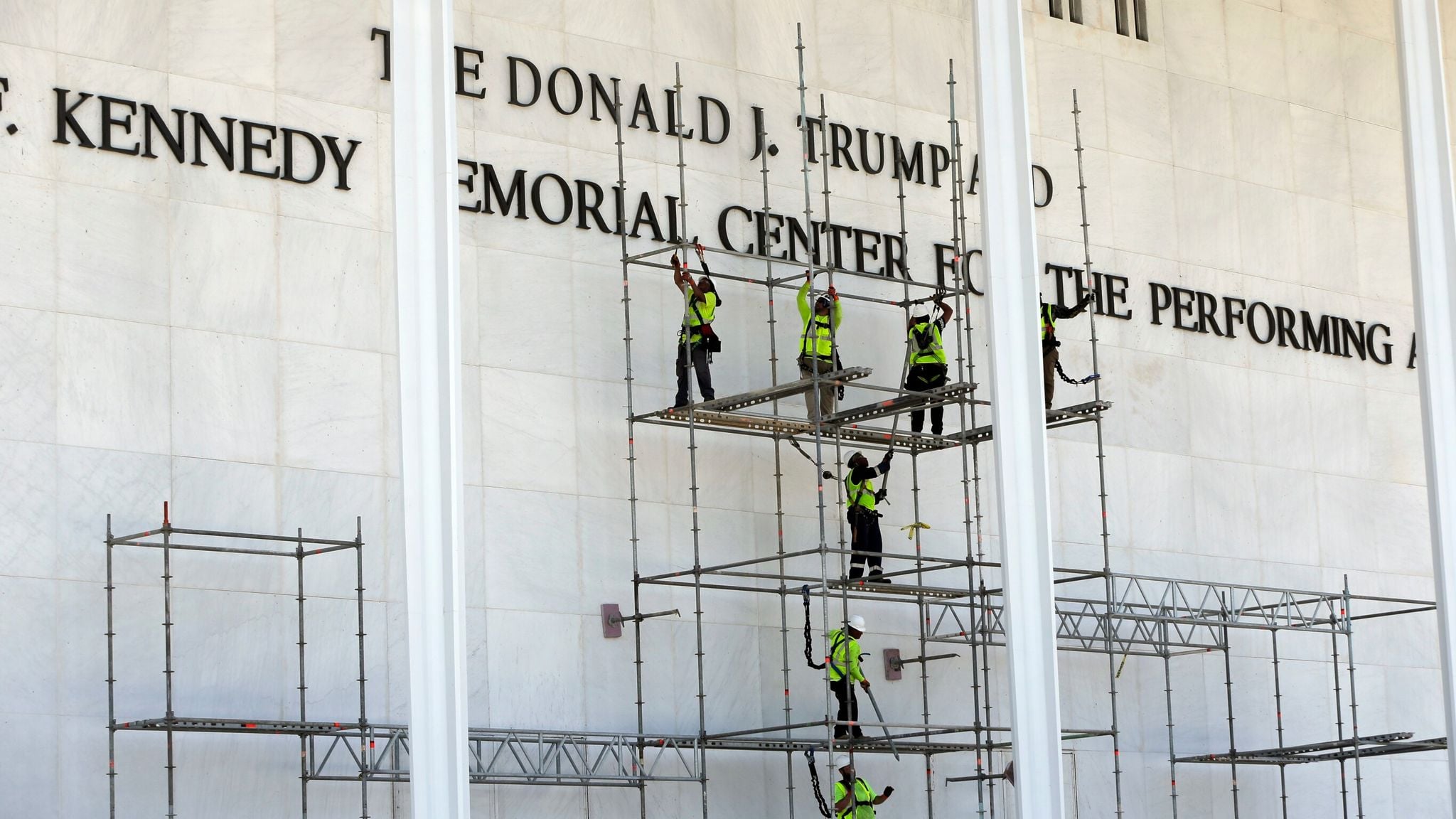
One of the administration’s central arguments was that Trump’s name helped attract donors and support renovation funding. According to court filings, officials claimed that removing his name could harm fundraising efforts and create financial consequences for the Kennedy Center.
That argument revealed a deeper tension. Public cultural institutions often rely on donations, sponsorship, and private support. Names can carry value in that world. Donor recognition is common in arts institutions, universities, museums, and hospitals. But the Kennedy Center is also a federally created national institution with a specific legal identity.
The question was whether fundraising benefits could justify a name change that had not gone through Congress. The court’s answer was no. Money, even if important, could not override the law governing the institution’s name.
Crowds Gather In The Rain
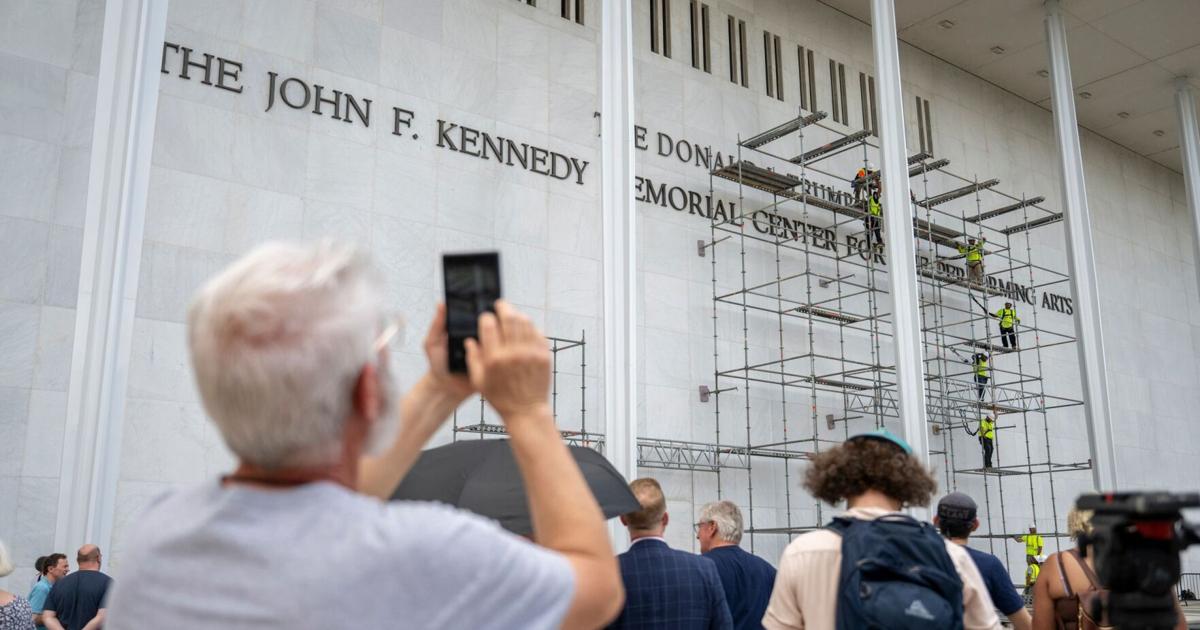
The removal drew onlookers who stood outside despite rain and thunderstorms. Some came out of curiosity. Others came to celebrate. Some wanted to record the moment for history. For many, the physical removal of the letters felt like a public act of correction.
People shouted as the tarps went up. Some criticized the workers for covering the removal. Others described the covered scaffolding as a symbol of secrecy. The scene quickly took on a theatrical quality, fitting for a performing arts venue.
In a city filled with monuments, signs, memorials, and symbols, even construction work can become political. The Kennedy Center removal proved that in Washington, a building facade is never just a wall. It can become a battlefield over memory, authority, and public meaning.
Lawmakers And Legal Pressure
Rep. Joyce Beatty of Ohio was among those connected to the legal challenge and publicly supported the removal. Her position reflected the argument that Trump and the Kennedy Center leadership had overstepped legal limits by changing the name without congressional approval.
The lawsuit was not only about aesthetics. It was about process. If Congress gave the center its name, then Congress had to be involved in changing it. That principle became central to the judge’s ruling and to the broader political message from opponents of the rename.
For lawmakers who criticized Trump’s move, the court decision was a reminder that even powerful presidents face legal boundaries. For Trump’s defenders, the ruling was another example of political resistance through the courts. The divide was predictable, but the outcome was concrete: the letters came down.
Website References Also Disappeared
The removal was not limited to the building facade. References to Trump connected to the Kennedy Center name were also removed from the center’s website and materials. That digital cleanup mattered because the rebranding had existed not only in bronze letters, but also in public-facing institutional language.
In modern public life, a name change is both physical and digital. Search results, official pages, donor materials, press releases, and signage all help define an institution. Removing Trump’s name from the website reinforced that the court order applied across the institution’s identity, not just to the outside wall.
The result was a broad reversal of the renaming effort. The building, website, and official references returned to the Kennedy Center identity recognized under law.
A Cultural Institution Under Pressure
The controversy also placed renewed attention on the future of the Kennedy Center itself. Leadership changes, renovation plans, programming concerns, and political disputes have all put the institution under scrutiny. Artists, patrons, donors, and lawmakers are watching closely to see how the center will operate after such a visible clash.
Cultural institutions depend on trust. They need audiences to believe the programming is not simply serving political power. They need artists to feel welcome. They need donors to believe their support is helping the arts, not fueling partisan conflict. When a venue becomes the center of a political storm, that trust can become fragile.
The removal of Trump’s name may resolve one legal issue, but it does not instantly settle the larger questions about governance, independence, and the future direction of the center.
What This Means For Trump
For Trump, the removal is a rare visible reversal in a city he has tried to reshape. The episode turned a name on a building into a national story about authority and limits. It also gave his critics a powerful image: his name being physically removed from a major Washington landmark after a court ruling.
Still, Trump has often used conflict as a political asset. Legal defeats, court battles, and institutional opposition can be recast as proof that he is fighting entrenched powers. His supporters may see the Kennedy Center decision through that lens.
That is why the political meaning of the removal will depend on the audience. To opponents, it is a humiliation. To supporters, it may become another grievance. To legal observers, it is a case about statutory authority. To cultural leaders, it is a warning about the vulnerability of public arts institutions in partisan times.
A Moment Bigger Than Signage
The removal of Trump’s name from the Kennedy Center may sound simple on paper. A court ruled. A deadline passed. Workers took down letters. The website was updated. But the scene carried far more weight because it happened at the intersection of law, culture, politics, and public memory.
The building remains the John F. Kennedy Center for the Performing Arts. The court ruling reinforced that the name cannot be changed by presidential preference or board action alone. Congress has authority over that identity, and the institution must follow the law that created it.
For the people who gathered outside in the rain, the removal was not just maintenance. It was a moment of accountability. For those who supported the Trump name, it was a setback in a larger fight over legacy and recognition. For the country, it was another reminder that public symbols matter because they tell people who holds power, whose memory is protected, and what kind of institutions belong to the public.
In the end, the missing letters may speak louder than the installed ones ever did. The controversy showed how deeply Americans care about the names on their buildings, the stories those names tell, and the legal lines that even presidents cannot cross without permission.