
Table of Contents
Trump’s Strong Appeal to Religious Voters
Trump’s announcement that he plans to rededicate America as “one nation under God” is not the first time he has connected religion with his political messaging. Throughout his presidency and beyond, Trump has worked to position himself as a champion of religious values, particularly among evangelical Christians. His policies, including appointing conservative judges and pushing back against secular trends, have made him a favored figure among those who see religion as a core element of America’s identity.
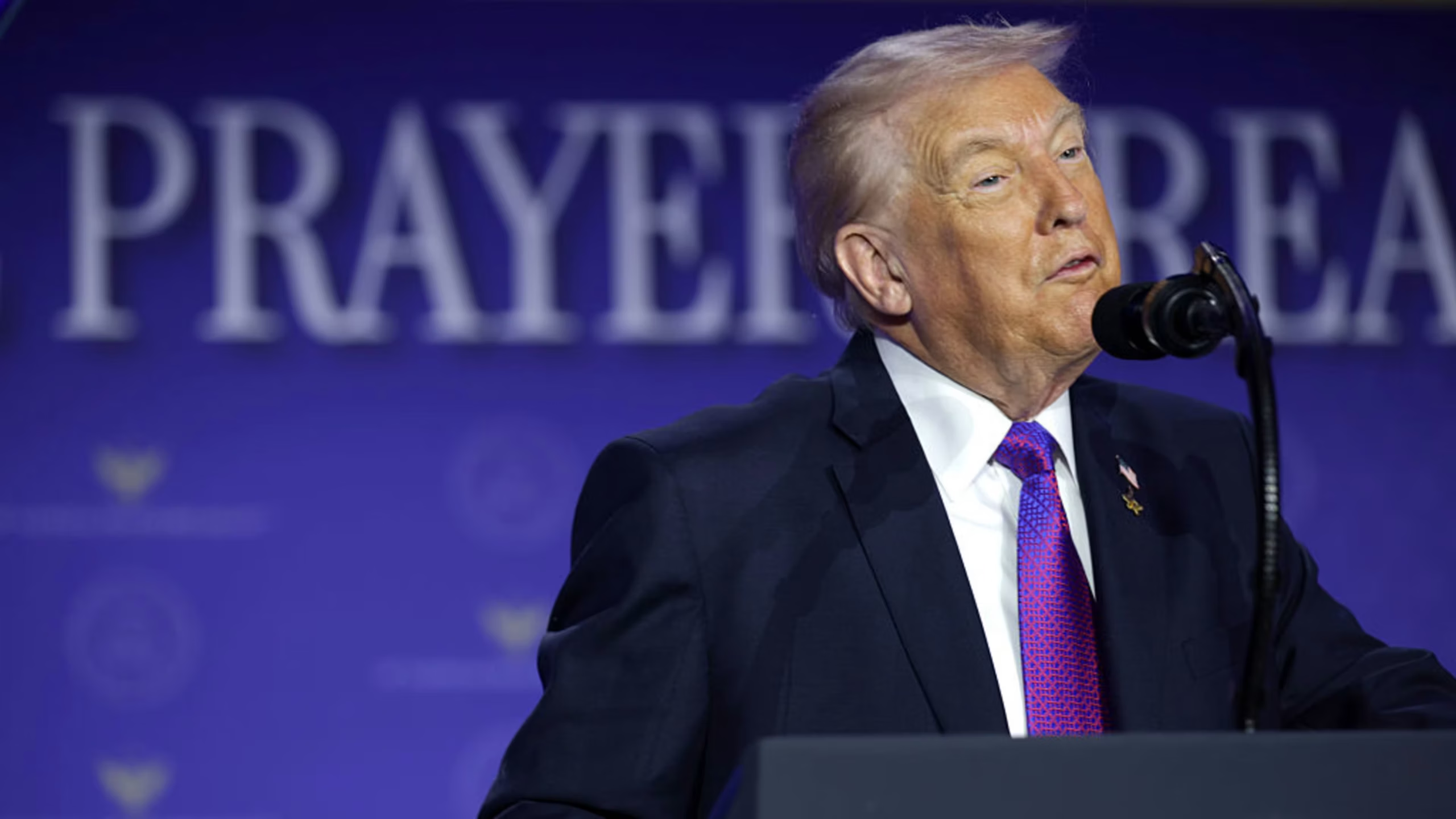
The National Prayer Mall event served as a direct appeal to this voter base, reinforcing his image as a leader who stands firm on values that align with religious teachings. By invoking “God” in his speech, Trump is signaling his commitment to the moral and ethical values that many religious voters believe are crucial to the nation’s future.
Trump’s approach to religious issues during his previous term included visible support for faith-based initiatives, such as the “Save the Babies” pro-life stance, his stance on religious freedom, and his active presence at events like the National Prayer Breakfast. This continued focus on religion may give him an edge in upcoming elections, particularly with conservative Christian voters who were instrumental in his 2016 victory.
The National Prayer Mall

The National Prayer Mall in Washington, D.C., has become an emblem of the intersection of religion and politics in the U.S. It’s a site of spiritual reflection, but it has also served as a backdrop for rallies, speeches, and events aimed at uniting faith communities across the nation. The symbolism of holding such a key event at this location speaks volumes about Trump’s strategy to reaffirm his alliance with faith-based voters.
By gathering at the National Prayer Mall, Trump is associating his political identity with a space that represents the deep religious convictions of many Americans. His speech at this revered location suggests that he sees the future of the nation as deeply connected to the idea of God’s presence in national life and governance.
This event could also serve as a platform to challenge secular movements that advocate for a separation of church and state, promoting the idea that religion, particularly Christianity, is an essential part of America’s national identity.
The Reactions
Trump’s declaration that America will be “rededicated as one nation under God” has sparked a mixed response. Supporters view this as a strong affirmation of American values, echoing a sentiment that has resonated with many conservative and religious groups. To them, this statement is a call to restore what they see as a nation that has drifted from its Christian roots. For these voters, Trump’s message reinforces their belief that America should return to its founding principles.
However, critics argue that blending religion with politics in such a direct manner could undermine the very foundation of American democracy, which has long upheld the separation of church and state. Some see this rededication as an attempt to marginalize non-Christian communities and secular Americans who do not share the same vision of a God-centered national identity.
Moreover, there are those who question the sincerity of Trump’s religious rhetoric. While he has positioned himself as a defender of religious freedoms, detractors point to his previous actions and policies, questioning whether his appeals to faith are truly motivated by conviction or political convenience.
Trump’s Religious Messaging

As Trump prepares for the 2024 election cycle, his strong religious messaging is a key part of his strategy to solidify his base. The invocation of religious themes—particularly the phrase “one nation under God”—appeals to a large section of his conservative following, who see the restoration of religious principles as vital to the nation’s future.
However, Trump’s relationship with religion has often been seen as opportunistic by his critics. While he champions religious values in speeches and policy, some argue that his actions and behavior during his presidency did not always align with the moral ideals he now promotes. This dichotomy could become a focal point in the upcoming elections as opponents scrutinize his record in office against his current rhetoric.
The Role of Religion in American Politics
Trump’s rhetoric around America’s rededication to God taps into a longstanding debate about the role of religion in American politics. For many, the country’s identity has always been intertwined with Christianity, and the mention of God in the national motto, “In God We Trust,” reflects this sentiment. Others, however, argue that such messages run counter to the foundational principles of religious freedom and pluralism that the nation was built upon.
As Trump navigates this sensitive issue, he is tapping into a broader cultural conflict between religious traditionalists and secular advocates. His message resonates with those who believe that America’s future should be rooted in religious faith, but it also alienates those who see the nation as a diverse, pluralistic society where all faiths—or none at all—are equally respected.
Trump’s Road Ahead

As Trump looks ahead to the 2024 election, his appeal to religious voters will likely be a central part of his campaign strategy. The phrase “one nation under God” carries significant emotional and cultural weight, and Trump is strategically aligning himself with the powerful religious movements that have supported him in the past. However, whether this rhetoric will continue to resonate with voters across different demographics remains to be seen.
His religious messaging could help him retain the evangelical base that was crucial to his 2016 victory, but it may not be enough to win over the broader electorate, particularly in a country that is becoming increasingly secular. The future of his political career depends on his ability to balance these religious appeals with policies that address the concerns of a diverse electorate.
The Broader Impact
Trump’s declaration is more than just a political statement—it’s a glimpse into the evolving relationship between religion and politics in America. As the nation becomes more polarized, the role of religion in public life continues to be a divisive issue. Some see the rededication of America to God as a way to return to moral and ethical roots, while others view it as a dangerous intrusion of religion into the public sphere.
As Trump moves forward with this rhetoric, he is tapping into a broader debate about what it means to be American. Is the country defined by its religious heritage, or by its commitment to religious freedom and pluralism? Trump’s statement invites Americans to consider these questions as they look toward the future of their nation.
Conclusion
Donald Trump’s bold declaration that America will be “rededicated as one nation under God” marks a significant moment in his political career. This statement, delivered at the National Prayer Mall, blends religious messaging with political ambition, as Trump seeks to consolidate support among evangelical voters and reaffirm his stance on traditional values. However, the implications of this message go beyond Trump’s political future—they speak to the broader cultural and political divide in the United States, where religion and politics often intersect in complex and controversial ways.