
Table of Contents
- The Incident That Sparked a National Controversy
- Indictment and Charges
- Resignation and Lifetime Ban
- Public Reaction and the Debate Over Judicial Accountability
- A History of Complaints Against Judge Speedlin Gonzalez
- The Role of Courtroom Authority and Boundaries
- The Impact of the Case on the Legal Community
- The Consequences of Unlawful Restraint and Official Oppression
- The Impact of Judge Gonzalez’s Actions on the LGBTQ+ Community
- The Future of Judicial Oversight and Accountability
The Incident That Sparked a National Controversy
It all started during a December 2024 court hearing in which Judge Gonzalez and a defense attorney became embroiled in a heated argument. The disagreement escalated when Gonzalez ordered a defense attorney to be taken into custody and placed in the jury box. This action was unusual, as it is highly uncommon for a judge to physically detain anyone inside a courtroom.
According to courtroom transcripts cited by the San Antonio Express-News, Gonzalez issued the order to the bailiff, saying, “Take her into custody and put her in the (jury) box.” Within moments, the defense attorney, identified as Ms. Russell, was placed in handcuffs. This decision went against established legal protocols, and the act of detaining a lawyer inside a courtroom crossed a significant legal line.
Indictment and Charges
The repercussions of Gonzalez’s actions were swift. A grand jury indicted the judge on charges of unlawful restraint and official oppression, which are felony offenses. Unlawful restraint involves the illegal detainment of a person, while official oppression pertains to a public official abusing their power to deprive someone of their rights. These charges carried the possibility of serious consequences, including prison time.
Gonzalez’s decision to detain the defense attorney was not an isolated incident. Over the course of her tenure as a judge, there had been several complaints regarding her behavior, including accusations of unprofessionalism and abuse of power. The handcuffing incident, however, proved to be the tipping point, leading to a formal investigation and legal proceedings.
Resignation and Lifetime Ban
While the case was poised to go to trial, Gonzalez ultimately agreed to a plea deal with prosecutors. In exchange for the charges being dropped, Gonzalez resigned from her position as a judge and accepted a lifetime ban from ever serving as a judge in Texas again. This plea deal meant that Gonzalez would avoid a criminal conviction and the possibility of prison time, despite the severity of the charges against her.
In a statement following the deal, Gonzalez expressed regret for her actions and acknowledged the harm caused by her decision to detain the defense attorney. The deal was accepted by both parties, with prosecutors stating that it was “in the interest of justice.” Despite the deal, Gonzalez’s career in the judiciary came to a permanent end, and the incident served as a stark reminder of the consequences of judicial misconduct.
Public Reaction and the Debate Over Judicial Accountability
The case sparked a significant public debate about judicial accountability. Critics of Gonzalez’s actions argued that the judge had abused her power and undermined the integrity of the legal system. Supporters, however, contended that the incident was an isolated mistake and that Gonzalez had been an otherwise competent judge during her time on the bench.
The case raised important questions about how judges are held accountable for their actions. While judges are granted considerable authority in the courtroom, they are also expected to exercise that power within the confines of the law. Many legal experts emphasized that the plea deal, while avoiding criminal conviction, did not fully address the severity of the misconduct.
A History of Complaints Against Judge Speedlin Gonzalez
Before the handcuffing incident, Gonzalez had already been the subject of several complaints. These complaints, which centered around allegations of unprofessional and abusive behavior, had been brought to the attention of judicial oversight bodies. However, the legal system’s response had been slow, and there had been no significant consequences for her actions until the December 2024 incident.
The mounting complaints against Gonzalez suggest that the handcuffing episode was part of a larger pattern of inappropriate behavior. Despite the seriousness of the charges, some felt that the legal system had failed to address her actions until they had reached a breaking point.
The Role of Courtroom Authority and Boundaries
The case of Judge Speedlin Gonzalez serves as a critical reminder of the importance of maintaining boundaries in the courtroom. Judges are given significant power in the legal system, but that power is not absolute. Courtroom authority must be exercised with restraint and respect for the rights of all individuals involved.
The fact that a judge could take such extreme measures against a defense attorney raises concerns about the potential for abuse of power in the courtroom. Legal experts argue that this case highlights the need for clearer guidelines and stronger oversight mechanisms to prevent future instances of judicial misconduct.
The Impact of the Case on the Legal Community
The case has had a significant impact on the legal community, both in Texas and beyond. It has prompted a reevaluation of how judges are monitored and held accountable for their actions. Legal professionals have expressed concern that the case could set a dangerous precedent, where judges feel emboldened to act outside the law without fear of serious consequences.
On the other hand, some legal scholars have pointed out that the case could lead to greater transparency in the judicial discipline process. The public nature of the case, combined with the plea deal and lifetime ban, has sparked calls for more robust systems of oversight for judges.
The Consequences of Unlawful Restraint and Official Oppression
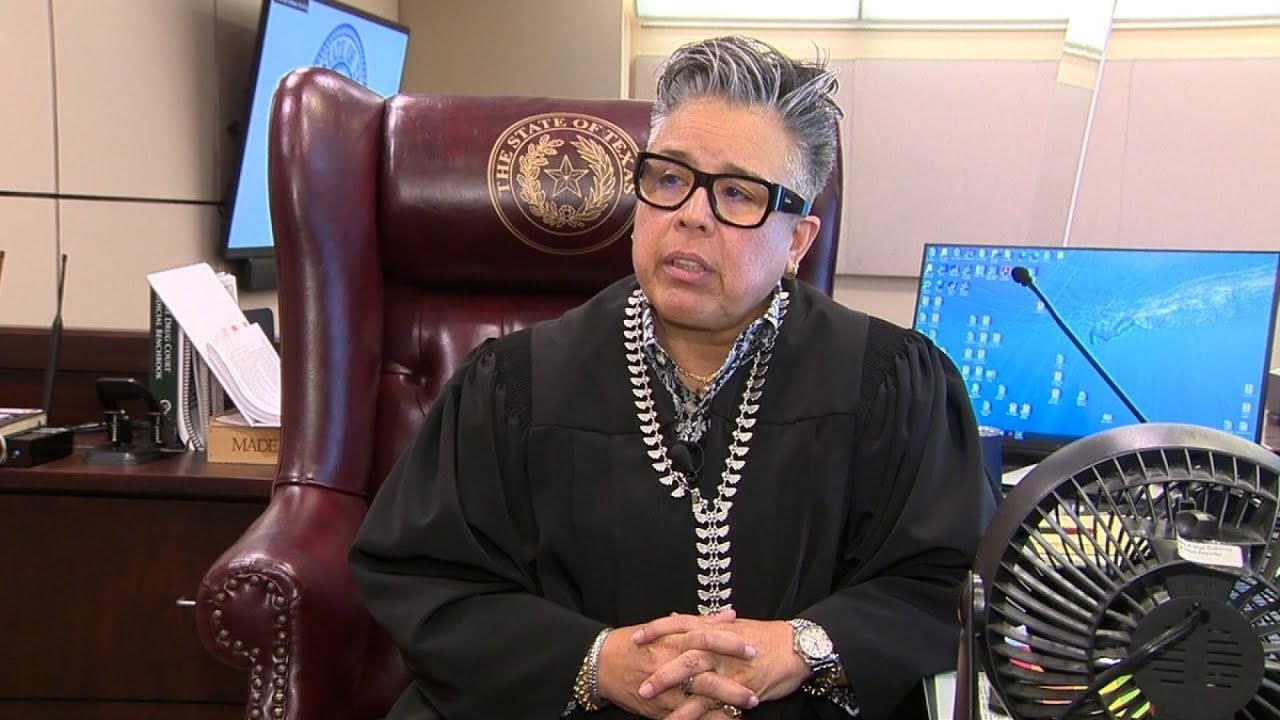
The charges of unlawful restraint and official oppression carry serious legal consequences. Unlawful restraint, in particular, is a crime that involves the detainment of a person without legal justification. In this case, the judge’s actions violated the rights of the defense attorney, who was detained without due process.
Official oppression, on the other hand, pertains to the abuse of power by a public official. In this case, Gonzalez’s decision to detain the defense attorney was seen as an abuse of her judicial authority. While Gonzalez avoided criminal conviction, the charges were still a stark reminder of the importance of ethical conduct for those in positions of power.
The Impact of Judge Gonzalez’s Actions on the LGBTQ+ Community
Gonzalez’s actions also have implications for the LGBTQ+ community, as she was the first openly gay judge in Bexar County, a fact that had garnered national attention when she was elected in 2018. While the case is not directly related to her sexual orientation, it raises questions about the intersection of identity and professional conduct. Many in the LGBTQ+ community had hoped Gonzalez’s election would signal progress, but the misconduct incident has complicated that narrative.
Her fall from grace highlights the challenges faced by LGBTQ+ individuals in positions of power, where the pressure to perform perfectly can be overwhelming. While Gonzalez’s actions do not represent the entire LGBTQ+ community, they do add complexity to discussions about LGBTQ+ representation in the judiciary.
The Future of Judicial Oversight and Accountability
The case of Judge Speedlin Gonzalez serves as a powerful reminder of the importance of judicial oversight and accountability. While Gonzalez has been permanently banned from the bench and avoided a criminal conviction, the case raises larger questions about how the legal system handles allegations of misconduct by judges. Going forward, it is crucial for the legal community to ensure that judges are held to the highest ethical standards, and that accountability measures are in place to prevent abuses of power.
As the legal profession continues to evolve, the Speedlin Gonzalez case should serve as a turning point for judicial discipline and oversight. While judges must be allowed to carry out their duties with authority, that authority must never be abused. The legal community must work together to foster a culture of accountability, transparency, and respect for the rule of law.