
Table of Contents
- A Discovery That Flips the Script on Everything We Thought About Gaming
- How a Controller Becomes a Brain-Building Tool
- The Gray Matter Effect: Why Gamers Have Stronger Brains
- Memory Gains: Why Games May Be Better Than Flashcards
- Problem-Solving: The Unexpected Training Behind Every Game
- Slowing Brain Aging: A Benefit No One Saw Coming
- The Emotional and Stress Benefits — Often Overlooked, But Powerful
- The Finance Angle: Better Brains Lead to Better Earning Power
- The Travel Angle: Gaming Improves Real-World Navigation
- The Home Improvement Angle: How Gaming Shapes Your Living Space
- If This Happened to You — How Would Your Life Change?
- The Real Reason Gaming Works: Immersion
- Why Some Critics Still Don’t Believe It
- Final Reflection: The Controller Might Be the Modern Brain’s Most Underrated Tool
A Discovery That Flips the Script on Everything We Thought About Gaming
For decades, gaming was dismissed as a distraction.
A waste of time.
A hobby for kids.
A digital escape with no real-world value.
But now, scientists are saying something shocking:
Video games may be one of the most powerful tools we have for boosting the human brain.
Not in theory.
Not as a metaphor.
But literally — in measurable, physical, neurological ways.
Studies show that playing certain types of games can:
- increase brain plasticity
- improve short-term and long-term memory
- strengthen problem-solving and decision-making
- increase gray matter
- boost attention control
- enhance motor skills
- slow cognitive aging
And the most surprising part?
These changes can happen at any age.
Whether you’re 12, 30, or 70, your brain can still grow — and video games may help spark that growth.
How a Controller Becomes a Brain-Building Tool
Your brain is constantly rewiring itself.
This ability — called neuroplasticity — is what helps you learn new skills, adapt to challenges, and recover from mistakes.
Researchers found that video games act like a gym for the brain.
Not because they’re “fun distractions,”
but because they stimulate multiple cognitive systems at once:
- visual processing
- spatial awareness
- working memory
- planning
- emotional regulation
- attention shifting
Traditional learning focuses on one skill at a time.
Video games activate dozens simultaneously.
It’s the neurological equivalent of lifting weights, running sprints, and solving puzzles — at the same time.
The Gray Matter Effect: Why Gamers Have Stronger Brains
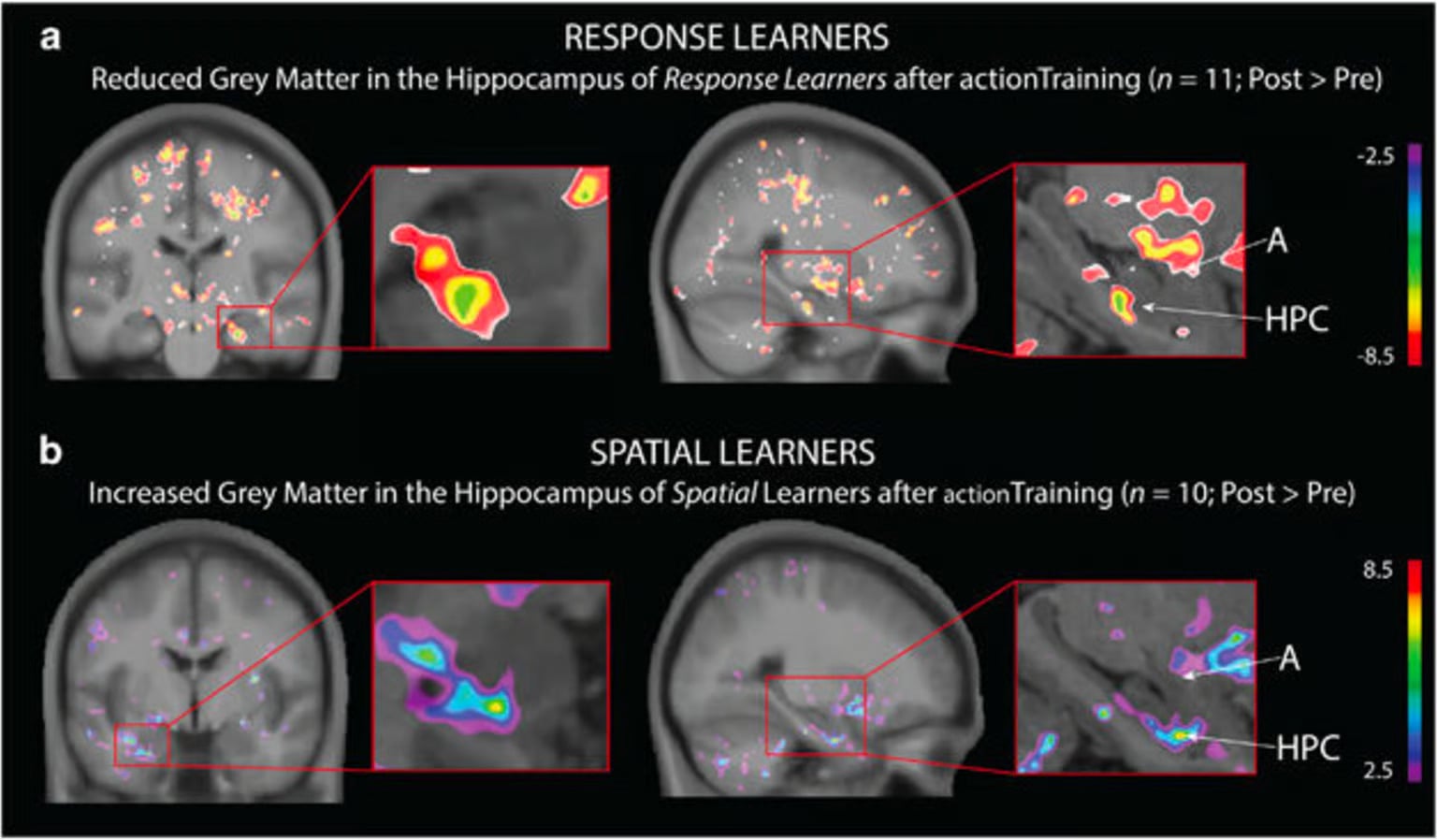
One of the most surprising discoveries is that video games can actually increase gray matter — the tissue responsible for:
- memory
- motor control
- decision-making
- emotional regulation
- learning
Brain scans consistently show that gamers have more gray matter in key regions, including:
- the hippocampus (memory)
- the prefrontal cortex (planning)
- the cerebellum (motor coordination)
These areas are the first to decline with age.
But gamers?
They’re actively strengthening them.
It’s like watching someone lift cognitive weights —
except the weight is a digital world, and the gym is your living room.
Memory Gains: Why Games May Be Better Than Flashcards
People often assume memory improves with repetition.
But neuroscientists now say engagement matters more than repetition.
Video games do something unique:
They demand constant attention.
They require fast recall.
They push players to track multiple events at once.
This makes gaming a “full-memory workout.”
Research shows that gamers often outperform non-gamers in:
- working memory
- visual memory
- spatial memory
- pattern recognition
- recall speed
A single gaming session can temporarily boost memory performance.
Long-term play creates lasting improvements.
Gamers aren’t “escaping reality” — they’re rewiring their brains to handle it better.
Problem-Solving: The Unexpected Training Behind Every Game
Whether you’re navigating a puzzle, building a city, surviving an alien planet, or strategizing your next move in a competitive match, your brain is performing high-level problem-solving.
Some games require:
- resource management
- strategy
- adaptability
- quick decision-making
- experimentation
- logic
- creativity
Others demand resilience — you fail, you learn, you adjust, you try again.
That repeated cycle of trial, failure, and adaptation is one of the most powerful forms of cognitive training.
Researchers say:
“Gamers develop faster pattern-recognition skills than non-gamers.”
And when life throws real-world challenges your way?
Gamers may have a surprising advantage.
Slowing Brain Aging: A Benefit No One Saw Coming
Brain aging isn’t just about memory loss.
It’s about slowing:
- processing speed decline
- attention lapses
- motor skills loss
- reduced adaptability
- decreased resilience
Games — especially fast-paced or strategic ones — keep these systems active.
One study found that seniors who played video games regularly showed:
- improved memory
- sharper attention
- faster reaction times
- reduced Alzheimer’s risk markers
- better emotional health
Some even performed like people 30 years younger in certain tasks.
This wasn’t magic.
It was training.
Just like physical exercise slows physical decline,
video games slow cognitive decline.
The Emotional and Stress Benefits — Often Overlooked, But Powerful
Gaming doesn’t just affect brain structure.
It affects emotional resilience.
Researchers found that video games can:
- reduce stress
- improve mood
- provide social connection
- increase feelings of competence
- boost motivation
- support emotional regulation
In a world filled with anxiety, uncertainty, economic pressure, and emotional burnout, video games may serve as a practical mental health tool.
Better yet — they’re accessible, inexpensive, and engaging.
It’s wellness without boredom.
Therapy without stigma.
Mental training disguised as fun.
The Finance Angle: Better Brains Lead to Better Earning Power
This might surprise you:
Cognitive skills gained through gaming — memory, adaptability, strategic decision-making — are some of the most highly valued skills in:
- tech
- finance
- engineering
- design
- management
- entrepreneurship
- problem-solving fields
Gaming doesn’t just boost personal wellness.
It increases economic potential.
People with stronger working memory, faster processing speed, and better pattern-recognition make:
- fewer errors
- better decisions
- faster adaptations
- smarter financial choices
Gamers may literally earn more because their brains work more efficiently.
Travelers rely heavily on:
- spatial awareness
- memory
- direction tracking
- adaptability in new environments
Gamers excel at these.
Studies show gaming improves:
- map reading
- navigation
- visual scanning
- environmental awareness
- multitasking in unfamiliar areas
Frequent travelers benefit from a brain trained to handle shifting environments and unexpected changes.
Gaming becomes a “travel skill amplifier.”
The Home Improvement Angle: How Gaming Shapes Your Living Space
Believe it or not, gaming influences home design.
As people game regularly, they often improve their living spaces:
- ergonomic setups
- better lighting
- improved organization
- cleaner cable management
- calming environments
- optimized sound
- multi-purpose rooms
Gamers unintentionally create brain-friendly homes:
- better posture
- better light exposure
- better acoustics
- reduced tension
The physical environment evolves to support mental performance.
It’s a wellness-driven home improvement trend growing worldwide.
If This Happened to You — How Would Your Life Change?
Imagine if your memory sharpened.
Your problem-solving improved.
Your brain aged slower.
Your stress decreased.
Your decision-making strengthened.
Your adaptability skyrocketed.
Would you pick up the controller?
Would you start gaming 15 minutes a day?
Would you let your brain grow in a way school never taught you?
Or would you keep swimming — staying exactly where you are?
This is the question scientists inadvertently raise.
Because the research is clear:
Video games aren’t just fun.
They’re transformative.
The Real Reason Gaming Works: Immersion
Games pull you into a world where:
- you must think fast
- you must remember
- you must analyze
- you must adapt
- you must persevere
The brain loves immersion.
Immersion accelerates neuroplasticity.
You aren’t just playing a game.
You’re practicing being human — at a higher level.
Why Some Critics Still Don’t Believe It
With such powerful findings, why do some people still resist the idea?
Because gaming is misunderstood.
People see:
- kids playing for hours
- adults using games to relax
- competitive scenes
- fast graphics
- loud noises
But they don’t see the brain activity beneath the surface.
The same way early critics dismissed:
- chess
- reading
- crosswords
- music practice
- sports
gaming is going through its “misjudgment era.”
But history shows:
What society dismisses… science often embraces.
Final Reflection: The Controller Might Be the Modern Brain’s Most Underrated Tool
Maybe the world got this wrong.
Maybe gaming was never the enemy.
Maybe it was a misunderstood ally — a digital form of mental strength training.
Playing video games doesn’t just pass time.
It builds:
- cognitive resilience
- memory power
- gray matter
- creativity
- problem-solving habits
- emotional balance
- lifelong brain health
In a world that’s aging faster, stressing more, and adapting slower…
video games offer something priceless:
A chance to keep the brain young.
And maybe — just maybe — that controller in your hand is not a toy.
It’s a tool.
A training device.
A cognitive investment in your future.