
Table of Contents
- A Health Scare That Stopped the White House Cold
- The Event That Was Supposed to Be Simple
- Witnesses Describe It in One Word: Sudden
- Trump’s Reaction: The Internet Couldn’t Handle It
- The Weight-Loss Drug Angle: An Uncomfortable Coincidence
- A Crisis in Slow Motion: Staff Took Over While Cameras Rolled
- Why People Reacted So Quickly — And So Emotionally
- The Bigger Issue: America’s Health Crisis Is Real
- Open Loop: What Happens Next?
- Finance Angle: The Weight-Loss Market Could Shift Overnight
- Travel and Tourism Angle: Health Episodes Change Behavior
- Home Improvement Angle: Health-Driven Design Is Rising
- The Human Side: What If This Happened to You?
- Trump’s Reaction Will Be Debated for Weeks
- Final Reflection: A Collapse, a Pause, and a Nation Watching
A Health Scare That Stopped the White House Cold
No one expected a simple event about weight-loss drugs to turn into a moment that captured global attention. But that’s exactly what happened when an attendee suddenly collapsed right in the middle of remarks — and all eyes shifted to one person:
Donald Trump.
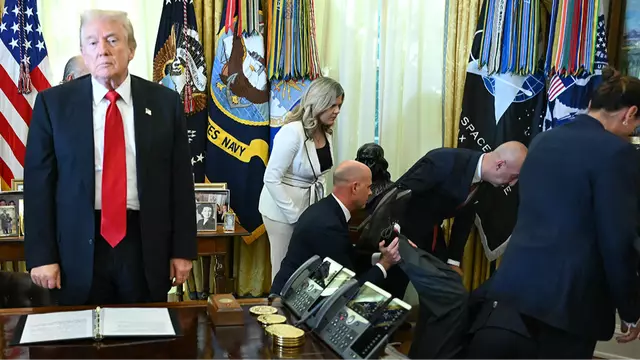
The former president was standing onstage, mid-sentence, promoting what he described as “a new generation of safe, effective weight-loss medications,” when chaos erupted in the audience. Chairs clattered. Someone shouted for medical help. Staff rushed forward.
And Trump’s reaction?
That’s what set the internet on fire.
Some viewers laughed. Some were horrified. Some were confused.
But everyone was talking.
Because once again, a moment of crisis turned into a moment of spectacle.
The Event That Was Supposed to Be Simple
The White House event was designed to highlight the booming market for weight-loss drugs — a multibillion-dollar industry touching finance, health, travel, and even home living trends.
The agenda:
- discuss new FDA-approved medications
- highlight success stories
- address the issue of rising obesity rates
- talk about insurance coverage
- present initiatives aimed at improving public health
What no one expected was that the event itself would become a case study in public health emergencies.
Witnesses Describe It in One Word: Sudden
According to attendees, the collapse happened “out of nowhere.”
One moment, everything was calm.
The next, a woman in the middle rows swayed sideways… and then hit the ground.
People gasped.
Staff rushed forward.
Security moved in.
And then — everyone waited to see what Trump would do.
Would he pause the event?
Call for help?
Step down from the podium?
His reaction became the headline.
Trump’s Reaction: The Internet Couldn’t Handle It
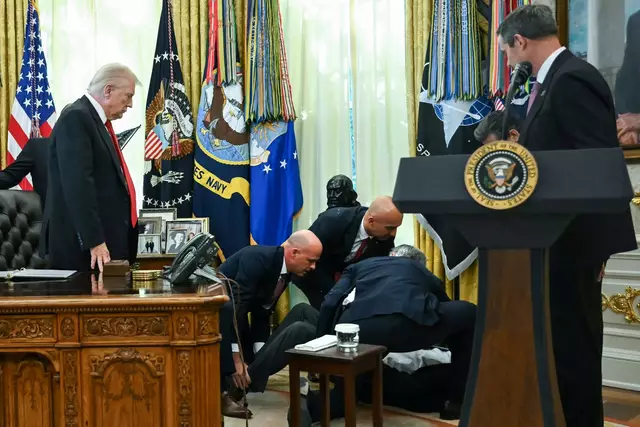
According to eyewitness clips already circulating online, Trump initially paused, squinted toward the crowd, and made a remark that instantly went viral.
Some say he appeared annoyed.
Others say he cracked a joke.
Others say he kept right on speaking.
Multiple interpretations spread faster than fact-checkers could react:
- “He looked confused.”
- “He didn’t know what to do.”
- “He acted like nothing happened.”
- “He waited for staff to handle it.”
- “He seemed irritated the event was interrupted.”
Regardless of interpretation, the public’s reaction was absolute chaos.
This wasn’t just a medical emergency — it was a political Rorschach test.
People saw what they wanted to see.
Supporters defended him.
Critics blasted him.
Everyone debated the meaning of a few seconds of body language.
The Weight-Loss Drug Angle: An Uncomfortable Coincidence

The collapse happened at an event discussing the very thing many Americans are concerned about: the safety of popular weight-loss drugs that have exploded into a global trend.
These medications — from semaglutide injections to new oral formulas — have reshaped:
- the wellness industry
- travel and hospitality sectors
- lifestyle choices
- home improvement and food purchasing habits
- insurance pricing
- healthcare finance
But they’ve also sparked warnings about:
- dehydration
- fainting
- nutrient deficiency
- blood pressure drops
- cardiac risks
- interactions with long-term medications
So when someone collapsed during a weight-loss drug event, critics instantly connected the dots — whether or not the drug was involved.
Even though the cause of the collapse was not immediately known, the symbolism was too strong for the internet to ignore.
A Crisis in Slow Motion: Staff Took Over While Cameras Rolled
As Trump hesitated onstage, medical staff rushed toward the fallen attendee.
White House physicians arrived within seconds.
Security cleared an aisle.
Someone shouted, “Give her space!”
Another yelled for water.
And meanwhile, the cameras kept rolling — livestreams, phones, news crews.
In today’s media world, every second is public.
That’s why Trump’s reaction mattered so much.
His expressions.
His movements.
His tone.
His decisions.
Everything was analyzed frame by frame.
Why People Reacted So Quickly — And So Emotionally
This isn’t just about one event.
It’s about years of polarized reactions to how Trump handles crises.
Storms.
Pandemics.
Protests.
Medical emergencies.
Unexpected interruptions.
Every moment becomes a referendum.
That’s why the internet erupted instantly.
People weren’t just reacting to this event —
they were reacting to every event they remembered.
This collapse became a symbol — intentionally or not.
The Bigger Issue: America’s Health Crisis Is Real
Weight-loss drugs aren’t just trending.
They’ve become a financial engine and a cultural reset.
Americans are buying:
- smaller fridges
- new kitchen storage
- different foods
- travel packages with “wellness menus”
- home gym upgrades
- personalized nutrition apps
- medical monitoring devices
- insurance add-ons for weight-loss support
People are redesigning their homes, travel plans, and grocery habits around new health identities.
But with that shift comes risk — and that risk was suddenly on display at the White House.
Even if this collapse had nothing to do with medication, it underscored a larger, uncomfortable truth:
America’s health system is stressed.
America’s bodies are stressed.
America’s culture is stressed.
The collapse wasn’t just a collapse.
It was a mirror.
Open Loop: What Happens Next?
The White House immediately issued a statement confirming that:
- the attendee was treated
- the person was stable
- the cause was under evaluation
- no further medical details were available yet
But that wasn’t enough for the online world.
People wanted to know:
- What caused the collapse?
- Did the drugs play a role?
- Should health events require medical screening?
- Should political figures be trained for onstage emergencies?
- Should there be new safety standards at wellness-related public functions?
These aren’t small questions — and they’re not going away.
Finance Angle: The Weight-Loss Market Could Shift Overnight
Analysts predict the weight-loss drug industry could surpass $100 billion globally within a few years.
But public confidence is delicate.
A viral collapse? Even unrelated?
That’s enough to sway:
- stock prices
- investor confidence
- insurance company policies
- FDA statement timing
- public perception
- healthcare provider caution
This event might become a case study in brand vulnerability.
One collapse at the wrong time, in the wrong place, with the wrong cameras rolling — and billions shift.
Travel and Tourism Angle: Health Episodes Change Behavior
Many people avoid crowded places after witnessing public collapses online.
It’s part of a rising trend in travel psychology.
People now ask:
- Are events safe?
- Are medical teams nearby?
- What if something happens during a tour?
- Should I avoid political events?
- Should I choose health-focused travel instead?
Travel experts say these questions influence:
- conference bookings
- tourism in Washington D.C.
- event planning
- insurance sales
- international visitor comfort
One collapse can ripple through industries unexpectedly fast.
Home Improvement Angle: Health-Driven Design Is Rising
This may seem unrelated, but health events like this often inspire people to change their environment at home.
After public scares, homeowners increasingly invest in:
- home defibrillators
- hydration stations
- home emergency kits
- smart health monitors
- remodeled bathrooms with safety rails
- air-quality systems
- ergonomic furniture
When people watch someone collapse unexpectedly, they instinctively look inward:
“What if this happened to someone in my family?”
This is why health scares drive the home improvement market.
Unexpected.
But real.
The Human Side: What If This Happened to You?
Imagine sitting in a crowded auditorium.
You start feeling dizzy.
Your vision blurs.
Your body drops.
Would you hope the speaker notices?
Stops?
Steps down to check on you?
Would you want the room to panic?
Stay calm?
React immediately?
These questions matter because they connect the audience emotionally to the event.
That’s why the story spread so quickly.
People imagined themselves in that seat.
And imagined someone they love collapsing instead.
Trump’s Reaction Will Be Debated for Weeks
Was it:
- appropriate?
- careless?
- confused?
- intentional?
- indifferent?
- practical?
It depends on who you ask.
But one thing is clear:
This moment will become part of the political conversation.
Part of the medical conversation.
Part of the cultural conversation.
The event will be replayed.
Memed.
Analyzed.
Debated.
Reinterpreted.
Because people saw not just a collapse —
but a reaction.
And reactions, in politics and in life, shape legacies.
Final Reflection: A Collapse, a Pause, and a Nation Watching
In a world where every second is filmed, every gesture becomes meaning.
A woman collapsed.
A room panicked.
Medical teams rushed.
And a former president reacted — in a way the world couldn’t stop discussing.
This story isn’t just about Trump.
It’s about leadership under pressure.
It’s about America’s fragile relationship with health and wellness.
It’s about the future of weight-loss drugs and public trust.
It’s about how one unexpected moment reveals who we are —
and who we expect our leaders to be.
If a single collapse can shake the White House,
what does that say about the weight we’re all carrying?
The story is far from over.
And the world is still watching.