
Table of Contents
- The Injury That Barely Bleeds… Yet Feels Like Fire
- Your Fingertips: The Most Sensitive Tools You Own
- Paper: The Surprisingly Sharp Blade Hiding in Plain Sight
- Why Paper Cuts Hurt Long After the Injury
- Your Brain Makes It Worse (And It Has a Very Good Reason)
- Why Paper Cuts Burn Instead of Throb
- Why Paper Cuts Matter More Than We Think
- The Science of Healing: How to Make a Paper Cut Hurt Less
- Why You Should Take Small Injuries Seriously (Especially If You Work With Your Hands)
- A Bigger Question: If Paper Cuts Hurt This Much, What Else Don’t We Understand About Pain?
- Final Thoughts: The Tiny Cut With a Big Story
The Injury That Barely Bleeds… Yet Feels Like Fire
It happens in less than a second.
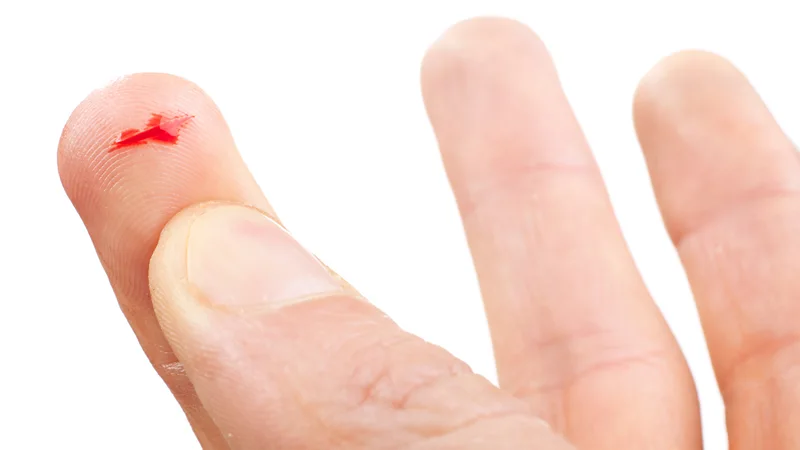
A quick swipe of an envelope, a turn of a page, or the lift of a receipt — and suddenly you jerk your hand back as a sting shoots through your finger.
A paper cut.
A wound so small you sometimes can’t even see it… yet somehow the pain is disproportionate, sharp, and lingering.
Why does something this harmless-looking hurt worse than injuries ten times its size?
Scientists say the answer lies deep under your skin — in a hidden world of nerve endings, sensory receptors, and biological design flaws that make your fingertips both powerful tools and vulnerable gateways.
And once you understand what’s happening beneath the surface, you may never look at paper the same way again.
Your Fingertips: The Most Sensitive Tools You Own
Your hands aren’t just for touching.
They’re for gathering data — constant, rich, and incredibly detailed information about the world.
The fingertips alone contain:
- Thousands of nerve endings per square inch
- Multiple types of sensory receptors
- High-density mechanoreceptors for fine detail
- Pain fibers ready to warn you of danger instantly
It’s no accident that surgeons, artists, craftsmen, and musicians rely so heavily on their fingertips.
They are evolution’s masterpiece of precision engineering — combining dexterity, pressure sensitivity, temperature detection, and texture recognition.
But there’s a downside to this perfection…
The richer the nerve supply, the sharper the pain.
This is why a cut on your thigh barely registers, while a nearly invisible slice on your finger becomes a day-ruiner.
Yet that’s only the beginning.
Your fingertips aren’t just sensitive — they’re poor healers, too.
Paper: The Surprisingly Sharp Blade Hiding in Plain Sight
You’ve probably never thought of paper as a weapon.
It’s soft, flexible, harmless… until it isn’t.
Under a microscope, a sheet of paper looks nothing like the smooth surface you see.
Instead, it resembles:
- A jagged forest of fibers
- Uneven edges
- Rough ridges capable of slicing skin
- Miniature serrations similar to a dull blade
Paper isn’t sharp like a knife —
it’s worse.
A knife makes a clean cut. Healing begins immediately. Nerve endings align smoothly.
Paper leaves a messy wound — torn fibers, irregular edges, exposed nerves.
And because a paper cut is so shallow, it doesn’t bleed much.
Which sounds good… until you realize:
Bleeding actually helps.
Blood cleans a wound, seals exposed nerves, and begins the healing cascade.
No bleeding means no buffering — the pain fibers remain open to the world.
So the next time a page slices you, remember: it was never harmless. It was a microscopic saw blade waiting for the perfect angle.
Why Paper Cuts Hurt Long After the Injury
Here’s where the story gets even more uncomfortable.
When you cut yourself somewhere else on your body — say your leg — the wound often scabs quickly. A protective shield forms, covering exposed nerve endings.
But your fingertips?
They rarely scab.
And when they do, the scab breaks every time you:
- Wash your hands
- Bend your fingers
- Pick up your phone
- Type on a keyboard
- Open a door
- Hold a steering wheel
You can’t immobilize your fingertips — they’re involved in nearly everything you do. This constant reopening keeps the nerves raw, irritated, and inflamed.
In other words:
You keep re-injuring the injury.
This explains why a paper cut feels like it lasts forever, even though the wound is technically almost nothing.
Your Brain Makes It Worse (And It Has a Very Good Reason)
Pain isn’t just physical — it’s also neurological.
Your brain interprets fingertip pain as a higher threat because:
- Fingers are essential for survival tasks
- They interact with the environment constantly
- Infections spread quickly through the hands
So your brain amplifies fingertip pain as a warning:
“Protect this area. You need it.”
It’s the same reason toe stubs feel catastrophic and why biting your tongue is agony — certain areas are biologically prioritized.
But here’s something even more fascinating:
Pain signals in the fingertips travel faster because those nerves have a direct superhighway to your spinal cord.
This means you feel the pain instantly, intensely, and vividly.
If you’ve ever thought, “Why does such a tiny cut feel so dramatic?”
The answer is: because your nervous system makes it dramatic.
Why Paper Cuts Burn Instead of Throb
Most wounds feel dull or achy.
Paper cuts feel sharp, raw, burning.
That burning sensation comes from:
- Exposed free nerve endings
- Air hitting the wound
- Salt, soap, and water irritating the open fibers
- Skin oils interacting with the cut
- The shallow depth stimulating only the most sensitive nerves
It’s almost like your pain receptors are being kissed by fire every time they’re stimulated — and fingertips don’t get breaks from stimulation.
You use your hands constantly.
Every touch is another zap.
Why Paper Cuts Matter More Than We Think
You might assume such a tiny injury is insignificant. But paper cuts are actually a window into something bigger:
They reveal how complex the human body is.
How your nerve fibers react.
How pain is processed.
How the skin communicates danger.
They highlight how fragile your most important tools are.
Your fingers are your interface with the world — and they’re more vulnerable than we realize.
And they expose a hidden truth:
Pain is not just about injury size.
It’s about nerve exposure, location, and biology.
This is why a paper cut can hurt more than a bruise, a scrape, or even a small burn.
Tiny wound.
Huge neural response.
The Science of Healing: How to Make a Paper Cut Hurt Less
A paper cut heals quickly… if you don’t keep irritating it.
Most people don’t know the best first-aid techniques — and what they do instead often makes the pain worse.
Here’s what scientists and dermatologists recommend:
1. Clean the wound gently
Rinse with cool water.
Avoid alcohol — it burns and delays healing.
2. Encourage light bleeding if possible
It removes debris and coats nerve endings.
3. Use antibiotic ointment
It prevents infection and reduces pain by sealing the cut.
4. Cover it temporarily
A fingertip bandage or liquid bandage shields exposed nerves.
5. Reduce friction
Typing, washing dishes, and phone swiping all reopen the cut.
6. Moisturize the area
Dry skin re-tears more easily.
If you’ve ever thought, “Why does my cut reopen every day?”
It’s usually because you’re not protecting it during the first 24–48 hours.
Why You Should Take Small Injuries Seriously (Especially If You Work With Your Hands)
For office workers, paper cuts are annoyances.
But for people in hands-on professions — mechanics, chefs, healthcare workers, artists, warehouse employees — they can be real hazards.
Open fingertip wounds increase risk of:
- Infection
- Slowed work performance
- Difficulty gripping tools
- Contamination
- Accidental larger injuries
Workplace safety experts even recommend keeping a first-aid kit specifically stocked for minor hand injuries.
It may sound excessive…
until a 2-mm cut keeps you from typing a report, preparing food, or holding a pen.
Sometimes the smallest problems create the biggest interruptions.
A Bigger Question: If Paper Cuts Hurt This Much, What Else Don’t We Understand About Pain?
Pain is one of the least understood systems in the human body.
Scientists still debate:
- Why some people feel more pain than others
- Why emotional distress increases physical pain
- Why certain small injuries feel worse than large ones
- How chronic pain develops
- How the brain filters danger signals
The humble paper cut reminds us:
Pain is not logical. It’s biological.
And biology is messy, sensitive, adaptive, and deeply interconnected.
If a harmless piece of office paper can trigger a miniature pain crisis…
what does that say about how the body protects us from real threats?
And how many other everyday sensations hold secrets we haven’t uncovered yet?
Final Thoughts: The Tiny Cut With a Big Story
A paper cut isn’t just an annoyance.
It’s a biological demonstration:
- Of how sensitive your fingertips are
- How your brain prioritizes pain
- How messy wounds hurt more than clean ones
- How important bleeding is for healing
- And how the smallest injuries can feel the biggest
The next time a piece of paper slices you, remember —
it’s not you being dramatic.
Your nerves, your brain, your skin, and millions of years of evolution are all firing at once, sending one message:
“Protect this part of your body. You need it.”
A tiny cut.
A huge pain.
And a fascinating story beneath the surface.