
Table of Contents
- Her Health Problems Began After Serious Illnesses
- Her Legs Became Permanently Locked
- Functional Neurological Disorder Added Complexity
- A Four Day Hospital Stay Became A Year And A Half
- Feeling Dismissed Became Part Of The Trauma
- Why Amputation Became The Only Option
- The Financial Struggle Added Another Layer
- Her Message To Others Facing Medical Uncertainty
- Living With The Emotional Reality Of Amputation
- Rare Conditions Often Leave Patients Feeling Invisible
- Her Story Resonated Far Beyond Medicine
- What Her Story Ultimately Represents
Her Health Problems Began After Serious Illnesses
Megan’s medical journey reportedly began when she was around 13 years old after suffering from whooping cough and glandular fever.
At first, the symptoms may have appeared similar to other post viral health complications that sometimes affect teenagers recovering from severe illness. But over time, her condition worsened dramatically.
By the age of 14, Megan says her legs stopped functioning normally.
What made the situation especially frightening was that doctors struggled to identify a clear explanation. Initially, she reportedly received a diagnosis of myalgic encephalomyelitis, often called ME or chronic fatigue syndrome.
However, Megan later explained that her symptoms did not fully align with the diagnosis.
Instead of stabilizing, her condition spiraled into something increasingly alarming.
She reportedly lost the ability to walk. Later, she also began losing the ability to sit upright independently. At one stage, she says she even struggled to speak properly.
For a teenager, the sudden collapse of physical independence can feel emotionally catastrophic.
Her Legs Became Permanently Locked
One of the most disturbing aspects of Megan’s condition involves the physical positioning of her legs themselves.
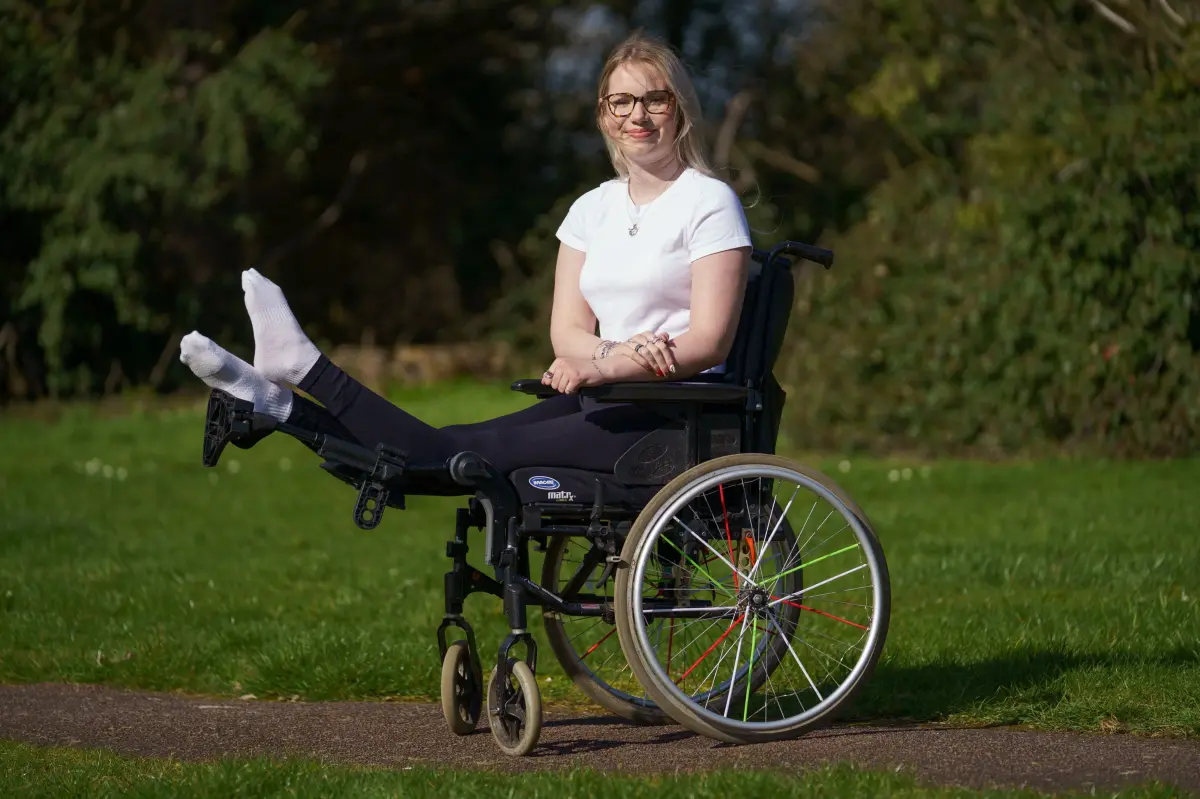
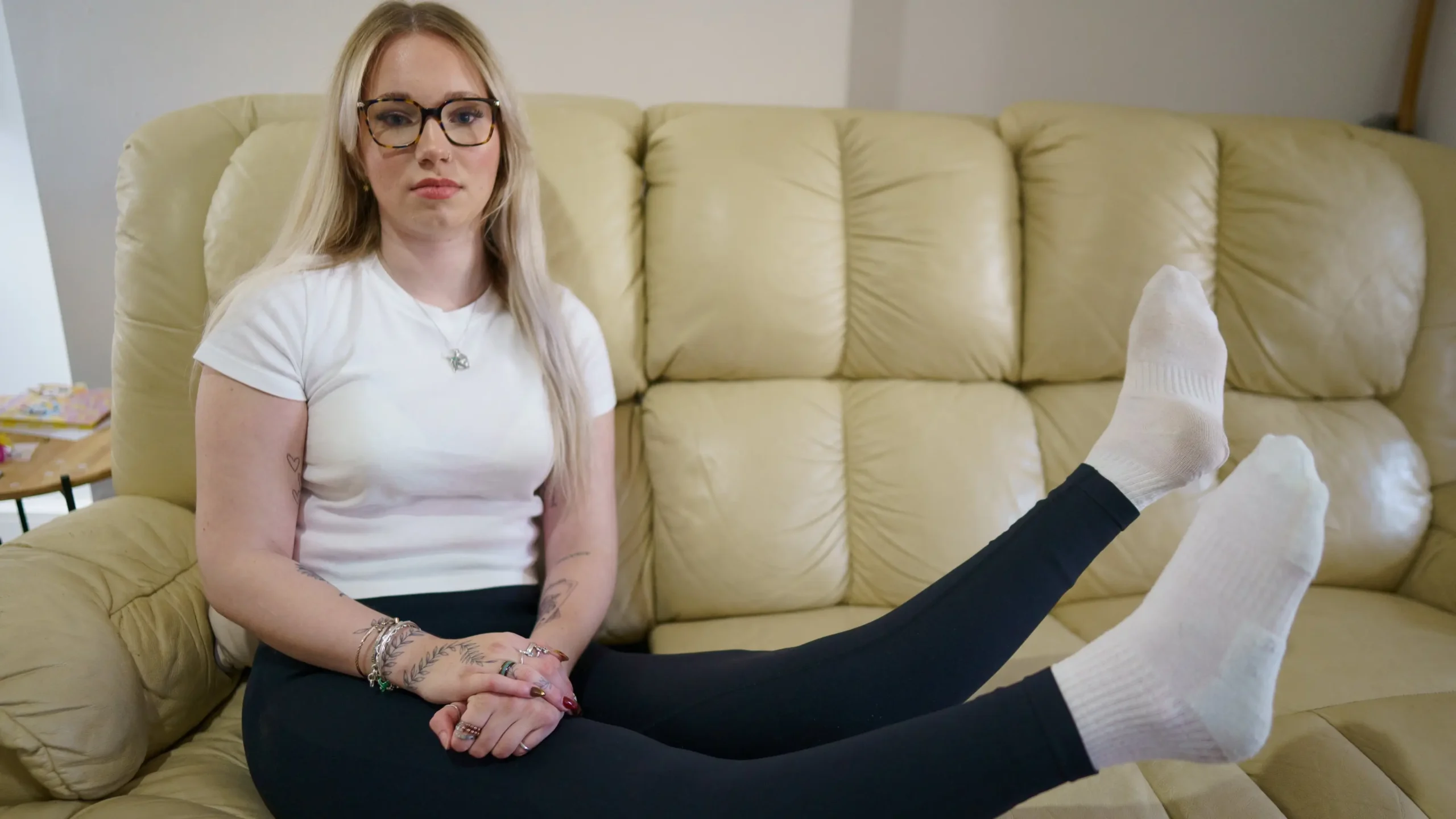
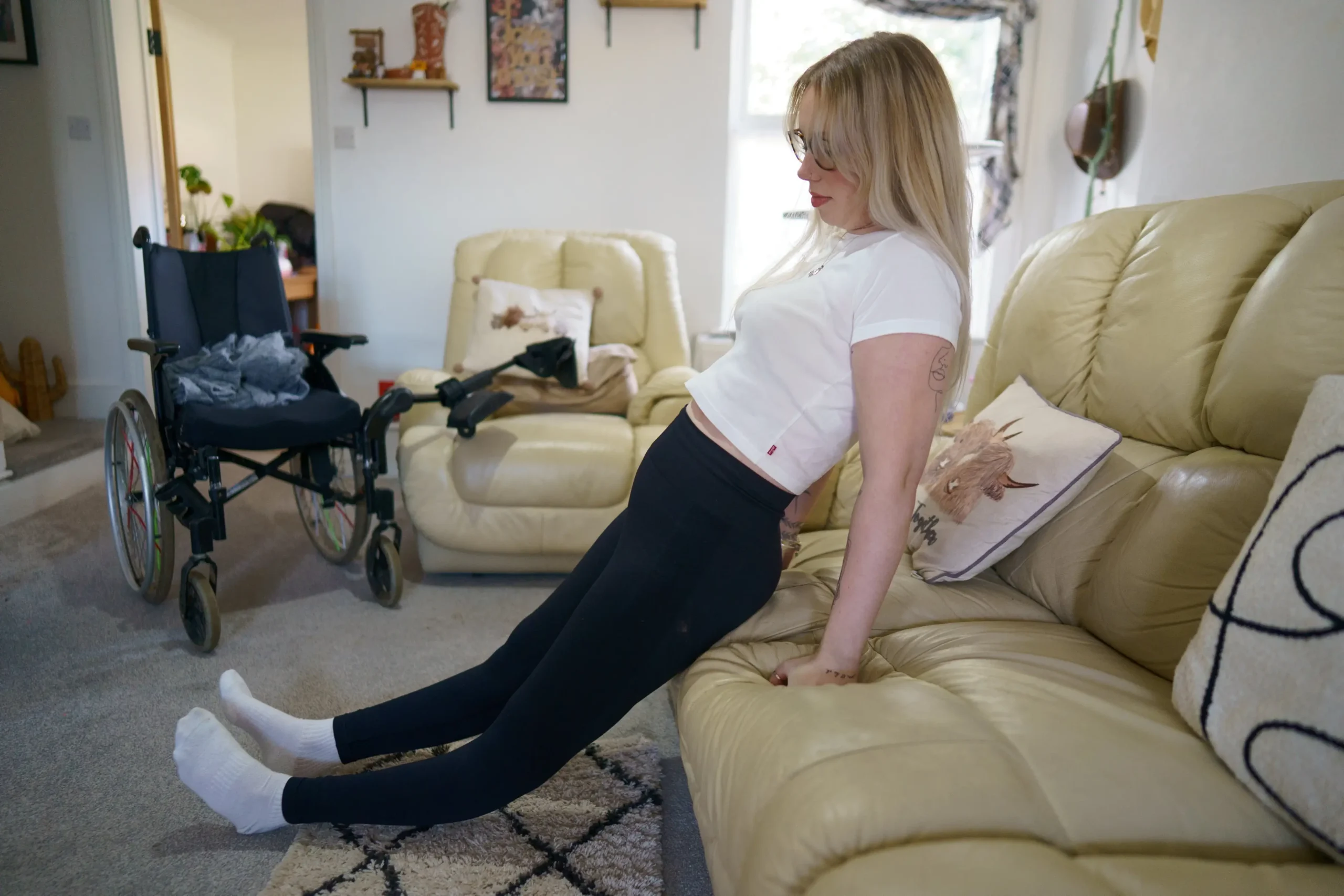
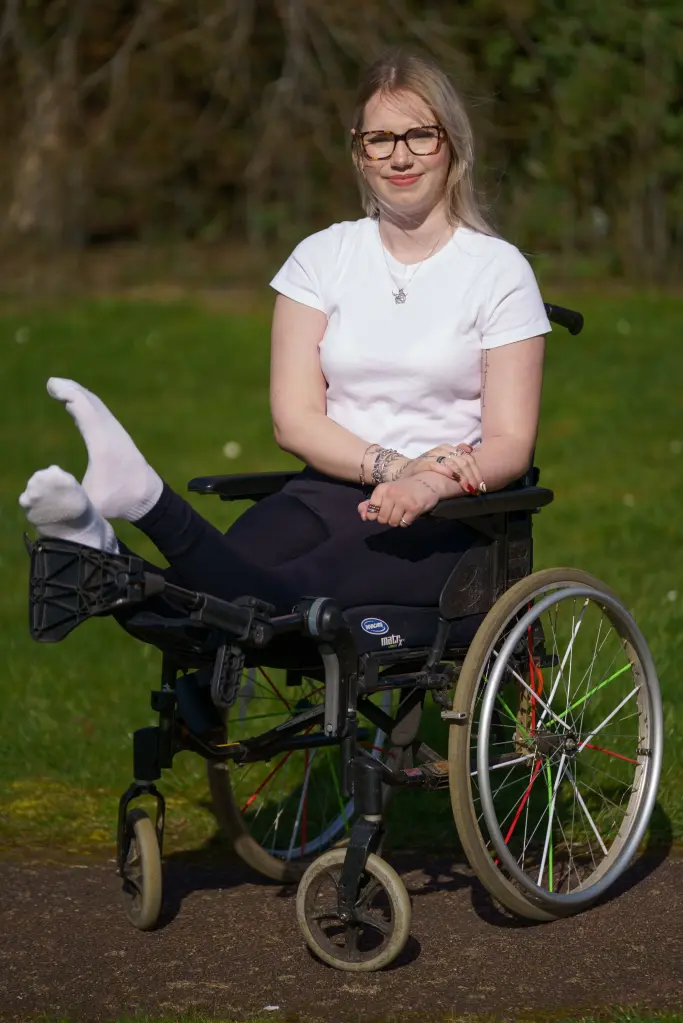
According to her description, her knees eventually became completely locked in a straight position and could no longer bend naturally. Even under anesthesia, doctors reportedly could not force the joints to move.
Over time, the condition appeared to worsen structurally.
Megan said one of her legs gradually began bending backwards by approximately ten degrees, creating a deeply abnormal alignment that contributed to severe pain and mobility problems.
The physical changes left her trapped inside a body that no longer functioned in recognizable ways.
For years, she reportedly remained unable to walk while also enduring constant discomfort.
The combination of immobility and chronic pain created enormous emotional and psychological strain.
Functional Neurological Disorder Added Complexity
Megan also reportedly suffers from Functional Neurological Disorder, often referred to as FND.
Functional neurological disorder is a condition involving disruptions in how the nervous system functions, even when structural scans or traditional tests may not fully explain the symptoms. FND can affect movement, sensation, speech, memory, and physical coordination.
The disorder remains poorly understood by many members of the public and even within some medical environments.
Patients with FND often describe frustrating experiences where symptoms are misunderstood, minimized, or mistakenly dismissed as psychological rather than physical.
That complexity may have contributed to the difficulties Megan experienced while seeking treatment.
Her condition reportedly became so severe at one point that doctors feared she may have suffered a stroke.
A Four Day Hospital Stay Became A Year And A Half
As Megan’s symptoms escalated, she was eventually rushed to the hospital for urgent medical evaluation.
What was initially expected to be a short hospital visit reportedly transformed into a year and a half long stay as doctors attempted to understand and manage her worsening condition.
During that period, Megan says she experienced extreme physical and emotional suffering.
She described entering what she called a “coma like state,” where she became unresponsive and difficult to wake. She also recalled feeling trapped inside intense pain while struggling to communicate effectively with people around her.
Perhaps most heartbreaking was her feeling that medical professionals sometimes doubted the seriousness of her suffering.
“I was silently screaming for 24 hours a day,” she reportedly explained.
Chronic illness patients frequently describe this kind of emotional isolation when visible symptoms fail to fit neatly into familiar diagnostic categories.
Feeling Dismissed Became Part Of The Trauma
One of the most emotionally painful parts of Megan’s story involves her belief that she was not fully listened to for many years.
She says she repeatedly tried explaining the severity of her pain and physical changes, only to feel dismissed or told the symptoms were psychological.
That experience is unfortunately common among many people with rare, poorly understood, or difficult to diagnose conditions.
Patients whose illnesses do not produce straightforward test results sometimes spend years navigating uncertainty while their symptoms continue progressing.
For Megan, that delay may have carried devastating long term consequences.
According to her account, by the time she finally found a surgeon willing to help investigate further, the damage inside her knees had reportedly become irreversible.
The years lost searching for answers may ultimately have eliminated possibilities for recovery.
Why Amputation Became The Only Option
Eventually, after seeing multiple surgeons, Megan says specialists concluded that amputation represented the only realistic path forward.
The decision was reportedly devastating emotionally.
For many people, amputation represents not only physical loss but also grief connected to identity, independence, body image, and imagined futures.
Megan openly admitted she hoped doctors would eventually discover another solution.
Instead, she says she was told that removing both legs would likely provide the best chance of reducing suffering and improving quality of life moving forward.
That reality remains difficult for her to fully accept.
“It was the hardest when I met with the amputee clinic,” she reportedly explained. “I was hoping deep down they would say there was another way.”
Her honesty resonated with many readers because she did not try to present herself as emotionally fearless or perfectly optimistic.
She acknowledged the situation feels overwhelming.
The Financial Struggle Added Another Layer
Beyond the physical pain and emotional trauma, Megan has also faced practical financial challenges connected to her condition.
Because she cannot walk independently, she reportedly began fundraising for an electric wheelchair in order to regain some mobility and independence.
Long term disability often creates enormous financial strain, especially for young adults whose lives suddenly become centered around medical care, equipment, transportation, and physical assistance.
For many disabled individuals, access to proper mobility support can dramatically influence mental health, independence, education opportunities, and social participation.
Megan’s efforts to secure an electric wheelchair highlight how chronic illness frequently affects every aspect of life beyond the condition itself.
Her Message To Others Facing Medical Uncertainty
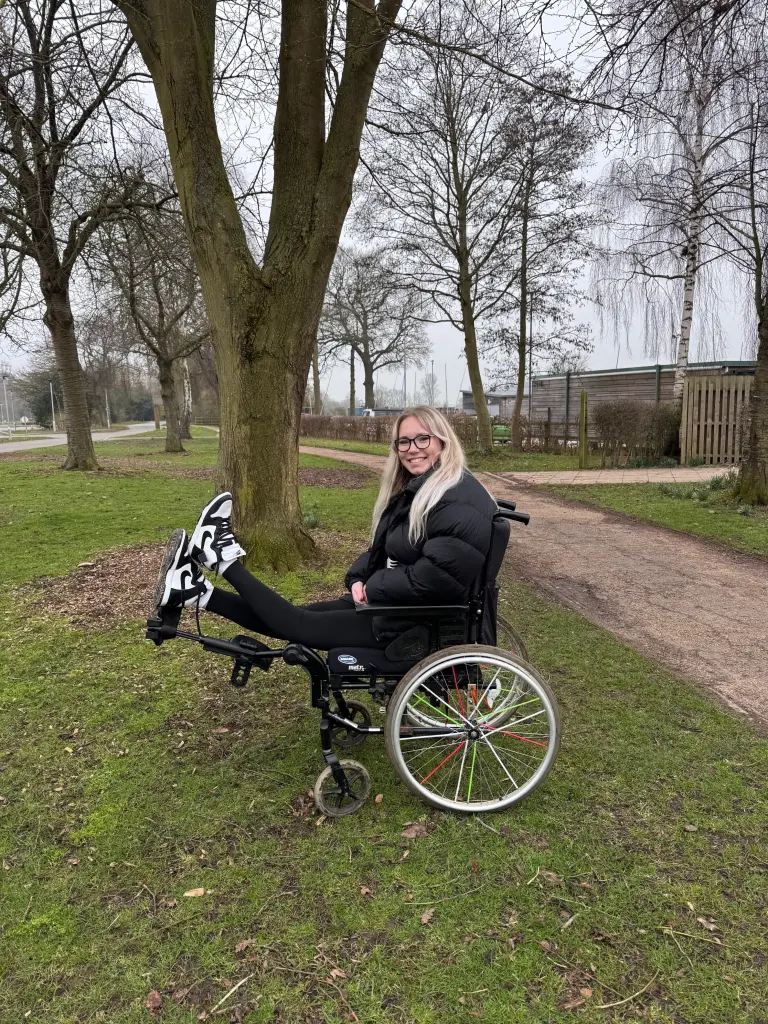
Despite everything she has endured, Megan has used her story to encourage others experiencing unexplained medical symptoms to trust their instincts and continue advocating for themselves.
She warned that being repeatedly dismissed delayed proper intervention for years.
“If something doesn’t feel right in your body, please listen to it and trust yourself,” she reportedly said.
That message connected strongly with many people online who have experienced similar struggles involving chronic illness, rare disorders, or delayed diagnoses.
Patients with invisible illnesses often describe feeling forced to become their own advocates within complicated healthcare systems.
Megan’s story reflects the emotional exhaustion that can emerge when individuals must constantly fight to convince others that their suffering is real.
Living With The Emotional Reality Of Amputation
Megan also spoke candidly about the emotional reality of facing possible amputation.
Rather than offering simplistic positivity, she acknowledged the fear, grief, and uncertainty involved.
“There are no words that can truly make it easier,” she reportedly explained.
That honesty likely resonated with many readers because it avoided romanticizing hardship.
At the same time, Megan also described trying to hold onto small moments of hope even during extremely dark periods.
She spoke about focusing on tiny positives including kindness from others, moments of strength, and the possibility of eventually living with less pain and greater independence.
That balance between realism and resilience became one of the most emotionally powerful parts of her story.
Rare Conditions Often Leave Patients Feeling Invisible
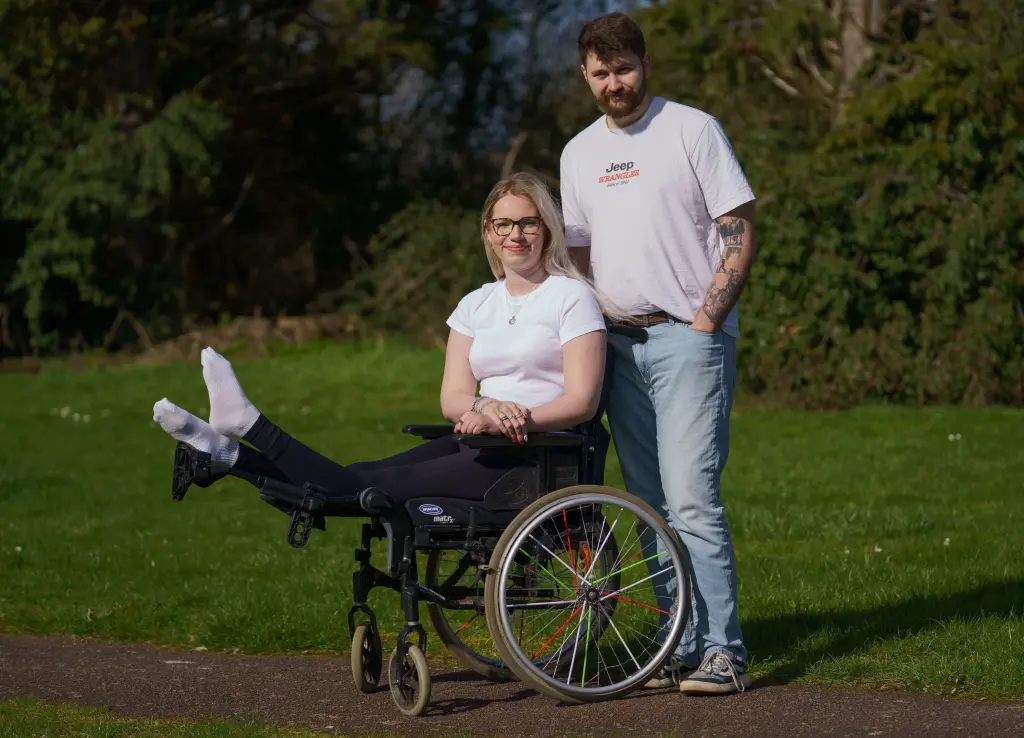
Stories like Megan’s often spark broader conversations about how healthcare systems respond to unusual or poorly understood illnesses.
Patients with rare conditions frequently experience years of uncertainty because symptoms may not match common diagnostic patterns clearly.
In some cases, patients are forced to navigate multiple specialists, repeated testing, skepticism, and emotional exhaustion before receiving meaningful answers.
Functional neurological disorder itself remains misunderstood by many people despite growing awareness.
The situation becomes even more complicated when symptoms evolve unpredictably or overlap with multiple possible conditions simultaneously.
For patients, that uncertainty can become psychologically devastating.
Her Story Resonated Far Beyond Medicine
Part of why Megan’s story spread so widely online is because it reflects universal human fears involving uncertainty, loss of control, and not being believed.
Most people cannot imagine waking up one day and slowly losing the ability to walk while doctors struggle to explain why.
The image of a teenager watching her legs physically change while feeling unheard emotionally carries enormous emotional weight.
At the same time, many readers were also moved by Megan’s resilience and honesty.
Despite enduring years of pain, disability, and fear, she continues speaking openly about her experience in hopes of helping others feel less alone.
What Her Story Ultimately Represents
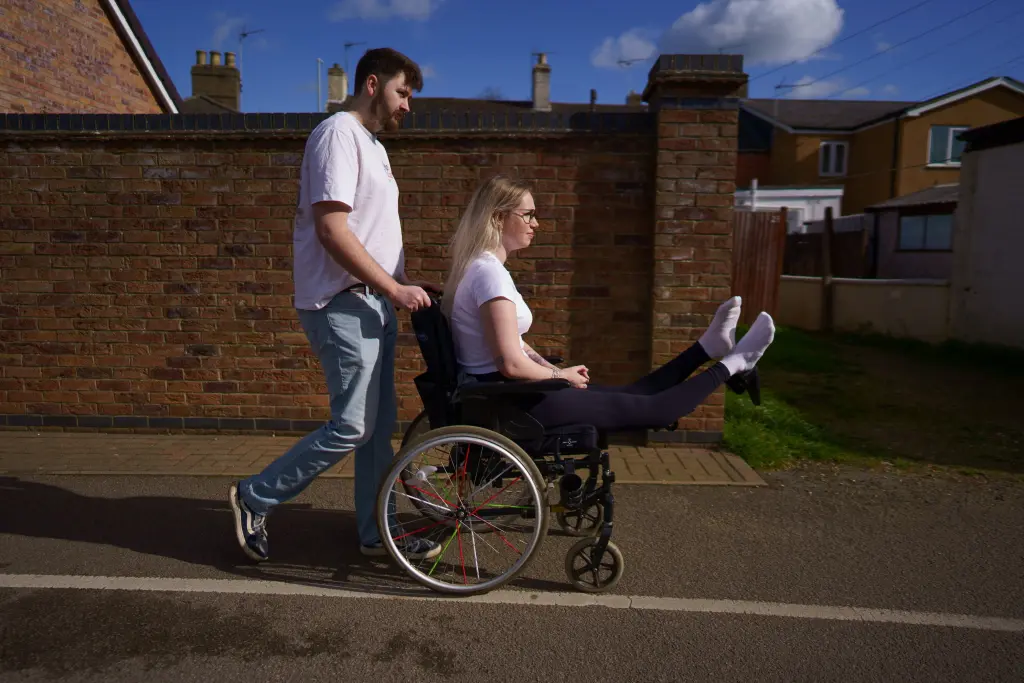
Ultimately, Megan Dixon’s story is about far more than a rare medical condition.
It is about the emotional cost of uncertainty.
It is about the terrifying reality of watching the body change in ways nobody can fully explain. It is about fighting to be heard while living with invisible pain. And it is about trying to build hope even while facing life altering decisions that no young person ever expects to confront.
Her journey also highlights how chronic illness can reshape every aspect of identity, independence, and future planning long before clear answers ever arrive.
Now, as Megan prepares for the possibility of double amputation, her story continues resonating with thousands of people worldwide who see in her struggle something deeply human: the determination to keep moving forward even when life changes in unimaginable ways.