
Table of Contents
- A Bird So Famous, Its Legend Outlived Its Body
- The Lost Battalion’s Desperate Last Stand
- Cher Ami Takes Flight — And Nearly Dies Doing It
- A Hero’s Death — and a Century-Old Mystery
- The Final Secret: Cher Ami Was Likely Female
- How a 10-Ounce Bird Changed Battlefield Communication Forever
- The Lost Battalion’s Legacy—Paid in Courage
- A Lesson in Leadership, Resilience, and the Unexpected
- Cher Ami in Modern Culture
- The Science Behind the Legend
- Why This Story Still Matters Today
- Final Thoughts: A Tiny Bird, A Giant Legacy
A Bird So Famous, Its Legend Outlived Its Body
In 1918, deep inside the forests of the Meuse-Argonne, a small, wounded pigeon saved nearly 200 American soldiers trapped behind enemy lines. That pigeon—Cher Ami—became one of the most decorated birds in military history.
But more than a century later, researchers uncovered something unexpected: a final secret about Cher Ami that had gone unnoticed since the First World War.
A secret so surprising that it challenges part of the story millions believed for generations.
And it makes the tale of courage, survival, and sacrifice even more extraordinary.
What could a century-old pigeon reveal today? The answer may shock you.
The Lost Battalion’s Desperate Last Stand
October 1918. As the First World War neared its end, U.S. troops launched the Meuse-Argonne offensive, one of the largest battles in American history.
A group of units—later known as the Lost Battalion—advanced too far and became trapped in a ravine. Surrounded by German forces, low on food, without radio communication, and accidentally being shelled by their own artillery, they were nearly doomed.
Only pigeons could carry messages out.
Most were shot down.
Only one remained.
A pigeon named Cher Ami.
Imagine being pinned down, hearing friendly fire raining onto your own position… and knowing the last chance of survival is a bird so small it could sit in your hand.
Would you trust that final hope?
Cher Ami Takes Flight — And Nearly Dies Doing It
Major Charles Whittlesey, the battalion’s commander, tied a final desperate message to Cher Ami’s leg:
“We are along the road… Our artillery is dropping a barrage directly on us. For heaven’s sake, stop it.”
The moment Cher Ami took off, German soldiers opened fire.
The pigeon was hit in the chest.
Another bullet struck the leg carrying the message.
Still another shattered the bird’s wing.
Yet Cher Ami kept flying—kept flapping—kept pushing forward through explosions, bullets, smoke, and 25 miles of forest.
When Cher Ami finally reached the command post, the bird was bloody, nearly blind, and hanging on to life by a thread… but the message was delivered.
And because of that one flight, 194 men survived.
Their lives were tied to a bird that refused to fall.
But the story didn’t end there.
A Hero’s Death — and a Century-Old Mystery
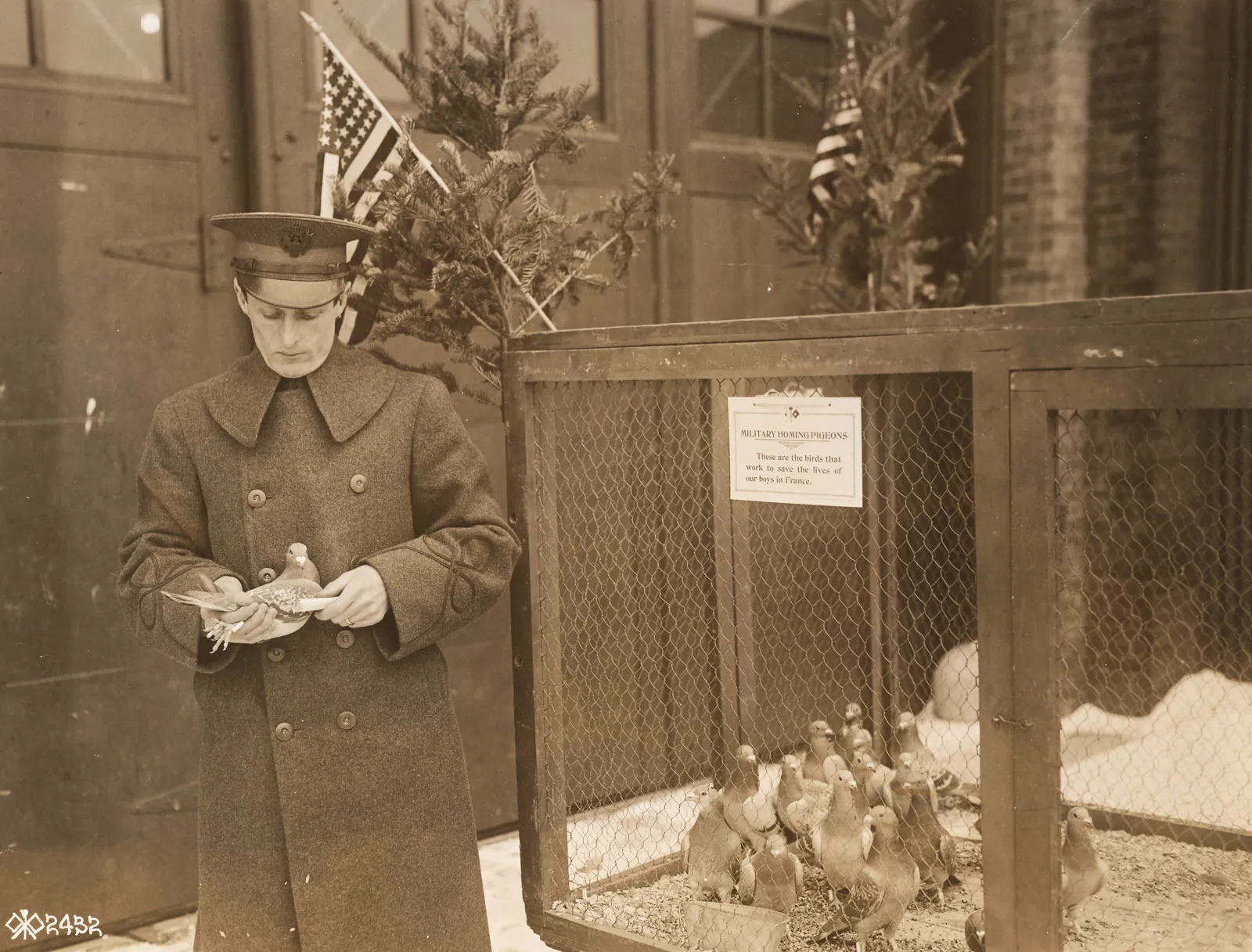
After the war, Cher Ami died from the injuries sustained during the mission. Taxidermists preserved the body, and the pigeon was displayed at the Smithsonian, becoming a symbol of heroism and devotion.
For decades, historians repeated the same account:
Cher Ami was a male pigeon.
Books, documentaries, children’s stories, and military records all described him as such.
But researchers began asking:
Were they sure?
DNA testing wasn’t available in 1918. And the Smithsonian noted unusual physical characteristics that didn’t quite match male pigeons.
Still, no one questioned it—until now.
The Final Secret: Cher Ami Was Likely Female
More than a century after the war, researchers finally performed an analysis on the remains.
The result shocked historians:
Cher Ami was almost certainly a female pigeon.
The pelvis shape.
The bone structure.
The feather pattern.
All pointed toward the same conclusion.
For generations, the world celebrated a “he” who was actually a “she.”
Why does this matter?
Not because gender changes the level of heroism—
but because it changes the entire narrative.
Female pigeons tend to be more cautious, more attached to home, and more driven to return to their roost—traits that may explain Cher Ami’s remarkable determination under fire.
In other words, her biology may have been part of the reason she survived the impossible.
A small detail, hidden for 100 years, that deepens the legend.
How a 10-Ounce Bird Changed Battlefield Communication Forever
Cher Ami’s story is not just inspirational—it represents a turning point in how wars were fought.
Before digital technology, pigeons were:
- faster than runners
- harder to intercept than radio signals
- more reliable than early telegraph systems
Even in the chaos of WWI, carrier pigeons had success rates above 95%.
Today, battlefield communication has evolved into drones, satellites, and encrypted networks… but the core lesson remains:
When technology fails, resilience saves lives.
What does this mean for modern life?
If a pigeon could rewrite history through pure determination, what could humans accomplish when pushed to their limits?
The Lost Battalion’s Legacy—Paid in Courage
The survivors of the Lost Battalion credited Cher Ami for their lives.
Major Whittlesey later said:
“Without that bird, none of us would have walked out of those woods.”
Cher Ami was awarded:
- the French Croix de Guerre
- honorary medals from the U.S. Army
- international recognition as a symbol of heroism
But trauma lingered.
Whittlesey, haunted by the war, later took his own life.
Many soldiers struggled with PTSD long before the term existed.
Cher Ami’s story is a reminder that survival comes with scars—both visible and invisible.
Yet in that darkness, a bird delivered light.
A Lesson in Leadership, Resilience, and the Unexpected
Even in corporate leadership seminars and military training programs today, Cher Ami’s story is used to teach:
- decisive action under pressure
- persistence despite obstacles
- the power of unlikely heroes
- trust in teamwork—even from unexpected sources
Think about your own challenges:
Would you keep going with a shattered wing, a lost eye, a wounded body—yet a mission that still mattered?
Sometimes the greatest stories of resilience come from the smallest warriors.
Cher Ami in Modern Culture
More than 100 years later, Cher Ami continues to inspire:
- Films and animations
- Children’s books
- Museum exhibits
- Leadership talks
- Military history courses
- Home décor and memorabilia collectors
Travelers visiting Washington, D.C. still stop by the Smithsonian’s bird hall to see Cher Ami preserved behind glass—silent, but never forgotten.
Even now, people leave small notes beside the display:
“Thank you.”
“You saved them.”
“You mattered.”
How often do we underestimate small acts—or small creatures—that shape the world?
The Science Behind the Legend
Modern researchers studying Cher Ami don’t just see a war hero; they see:
- the evolution of avian biology
- the psychology of homing instincts
- the impact of environment on resilience
- the historical use of animals in warfare
- new insights into how animals navigate danger
Her story continues to fuel studies in communication, survival, and biological adaptation.
What else might we learn from these silent soldiers of history?
Why This Story Still Matters Today
Cher Ami’s tale resonates in today’s world because it speaks to themes we all relate to:
- fighting against impossible odds
- protection of those who depend on us
- loyalty stronger than fear
- resilience despite injury
- purpose beyond survival
In a world filled with noise and complications, Cher Ami’s message is simple:
Do what you were born to do—even when the sky is full of fire.
Final Thoughts: A Tiny Bird, A Giant Legacy

Cher Ami’s gender doesn’t change her heroism—but it reshapes how we see it.
A female pigeon, injured almost beyond recognition, carried a message that saved nearly 200 men.
A century later, her final secret reminds us that history still has mysteries waiting to be uncovered.
The greatest heroes aren’t always the ones holding weapons or giving orders.
Sometimes, they’re the ones with broken wings who fly anyway.
If a 10-ounce bird could change the course of a war,
what excuse do we have not to chase our own missions—no matter how difficult?