

Table of Contents
- What Is Chronic Wasting Disease
- Why People Are Talking About Zombie Squirrels
- How the Disease Affects the Brain
- The Spread of Chronic Wasting Disease
- Why Scientists Are Concerned
- Wildlife Ecosystems Under Pressure
- Public Curiosity and Viral Stories
- Monitoring Wildlife Health
- Separating Fact From Sensation
- The Importance of Scientific Research
- Looking Ahead
What Is Chronic Wasting Disease
Chronic wasting disease is a progressive neurological disorder that affects certain members of the deer family. The illness belongs to a category known as prion diseases. These diseases are caused by abnormal proteins that damage brain tissue.
Unlike bacteria or viruses, prions are misfolded proteins that trigger a chain reaction in the brain. Once the disease begins, it gradually destroys nerve cells, leading to severe neurological impairment.
Animals infected with chronic wasting disease often experience dramatic weight loss, confusion, lack of coordination, and unusual behavior. These symptoms have led some observers to describe infected animals as zombie like.
Although the nickname captures attention, scientists prefer to focus on the biological mechanisms behind the disease rather than sensational descriptions.
The illness has been detected in numerous regions across North America and continues to spread slowly through wildlife populations.
Why People Are Talking About Zombie Squirrels
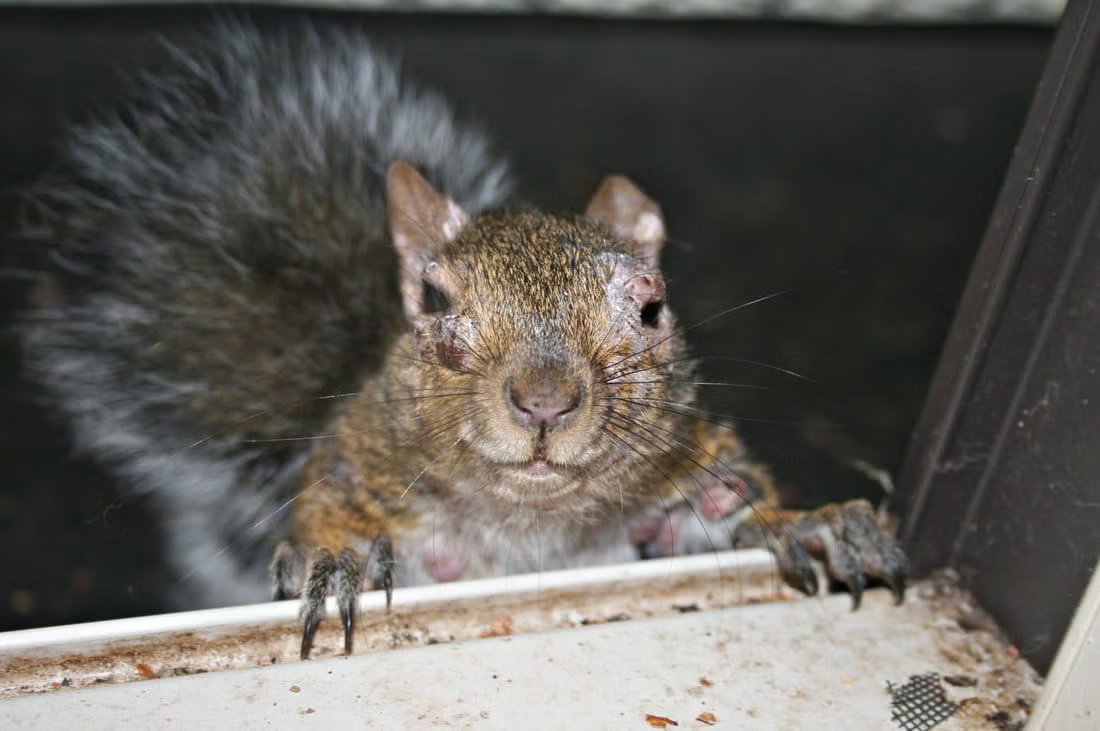
The phrase zombie squirrels emerged from reports of squirrels behaving strangely in areas where wildlife diseases were being studied. Observers noted animals that appeared unusually fearless, confused, or uncoordinated.
In some cases, squirrels were seen approaching humans more closely than normal or displaying irregular movement patterns.
Such behaviors can have multiple explanations. Injuries, parasites, neurological infections, or environmental stress can all affect animal behavior.
However, because chronic wasting disease has already spread widely among deer populations, some researchers began investigating whether similar neurological problems might appear in other animals.
While there is currently limited evidence that squirrels are affected by chronic wasting disease in the same way as deer, the unusual sightings have sparked interest among wildlife biologists.
These reports illustrate how closely people are watching changes in animal behavior.
How the Disease Affects the Brain
Prion diseases are particularly concerning because they directly attack the brain. As abnormal proteins accumulate, they gradually destroy nerve cells and leave holes in brain tissue.
This process interferes with the brain’s ability to control movement, coordination, and behavior.
In deer infected with chronic wasting disease, symptoms often include excessive drooling, difficulty walking, and severe weight loss. Animals may appear confused or disoriented.
These visible symptoms are one reason why the illness has attracted widespread attention.
The nickname zombie deer has already been used by some observers to describe infected animals. Now similar language is occasionally used when unusual behavior appears in other wildlife.
Scientists emphasize that such labels can oversimplify complex biological processes, but they also help draw public attention to the issue.
The Spread of Chronic Wasting Disease

One of the most troubling aspects of chronic wasting disease is how easily it can spread among animals.
The prions responsible for the disease can persist in the environment for long periods of time. They may remain in soil, plants, or water sources even after infected animals are gone.
When healthy animals come into contact with contaminated environments, they may become infected.
This environmental persistence makes controlling the disease extremely difficult.
Wildlife managers have attempted various strategies, including monitoring populations, limiting animal movement, and studying transmission patterns.
Despite these efforts, chronic wasting disease continues to expand into new regions.
Researchers believe understanding its spread is essential for protecting wildlife populations.
Why Scientists Are Concerned
Although chronic wasting disease currently affects animals rather than humans, scientists remain cautious about its long term implications.
Other prion diseases have crossed species barriers in the past. For example, bovine spongiform encephalopathy in cattle led to human infections during the late twentieth century.
While there is no confirmed evidence that chronic wasting disease has infected humans, researchers continue studying whether such a possibility could exist.
Public health agencies recommend precautions when handling wild game, especially in areas where the disease is known to occur.
Hunters are often encouraged to test animals for infection before consuming meat.
These measures are designed to reduce potential risks while scientists continue investigating the disease.
Wildlife Ecosystems Under Pressure

The spread of chronic wasting disease may have consequences beyond individual animals. Wildlife populations play crucial roles in maintaining balanced ecosystems.
If large numbers of deer or related species are affected, the ecological impact could be significant.
Predators that rely on these animals for food may also face challenges.
Plant populations may change if herbivore numbers decline or behavior shifts.
Understanding how diseases influence ecosystems is an important part of modern wildlife science.
Researchers often study patterns over many years to identify long term environmental effects.
The unusual behavior observed in animals such as squirrels reminds scientists that ecosystems are complex networks where many species interact.
Public Curiosity and Viral Stories
Stories about zombie animals often spread quickly online because they combine mystery, science, and dramatic imagery. Videos showing animals behaving strangely can capture millions of views within hours.
While such attention can sometimes exaggerate scientific findings, it also raises awareness about wildlife health.
Scientists frequently use public curiosity as an opportunity to educate people about real environmental issues.
By explaining the science behind unusual animal behavior, researchers help people understand how diseases spread and why monitoring wildlife matters.
Public interest can also encourage support for conservation programs and scientific research.
Monitoring Wildlife Health

Tracking diseases in wildlife populations requires careful observation and data collection.
Biologists often rely on field surveys, laboratory tests, and collaboration with hunters and local communities.
When animals display unusual symptoms, samples may be analyzed to determine whether diseases such as chronic wasting disease are present.
Modern technology also helps researchers study animal populations more effectively. GPS tracking, environmental monitoring, and genetic analysis can reveal patterns that were once difficult to detect.
These tools allow scientists to understand how diseases move through ecosystems.
The more information researchers gather, the better they can develop strategies to protect wildlife.
Separating Fact From Sensation
The phrase zombie squirrels captures attention, but scientists caution against assuming that every unusual animal behavior is linked to a single cause.
Wild animals may behave strangely for many reasons.
Injuries, infections, toxins, parasites, or environmental stress can all influence behavior.
Careful scientific investigation is necessary before drawing conclusions about the causes of such observations.
By studying wildlife health carefully, researchers aim to distinguish between isolated incidents and broader patterns.
This approach helps ensure that public concern is guided by accurate information rather than speculation.
The Importance of Scientific Research
Understanding diseases like chronic wasting disease requires long term scientific research.
Laboratories analyze prions and their effects on brain tissue. Field biologists track animal populations and collect samples.
Public health experts evaluate whether diseases might pose risks to humans.
Each of these efforts contributes to a broader understanding of how wildlife diseases develop and spread.
Funding for such research often depends on public awareness and government support.
When unusual animal behavior captures public attention, it can encourage greater investment in scientific study.
That investment may ultimately help prevent larger ecological problems.
Looking Ahead
The growing conversation about zombie squirrels highlights how quickly unusual wildlife observations can capture the public imagination. While the nickname may be dramatic, the underlying issue involves a serious scientific challenge.
Chronic wasting disease continues to spread through wildlife populations, and researchers are working to understand its long term effects.
The strange behavior seen in some animals serves as a reminder that ecosystems are constantly changing.
By studying these changes carefully, scientists hope to protect both wildlife and environmental balance.
In the end, the story behind zombie squirrels is not about horror or sensational headlines. It is about the ongoing effort to understand the hidden processes shaping the natural world.
And as researchers continue their work, the answers they uncover may help protect wildlife for generations to come.