
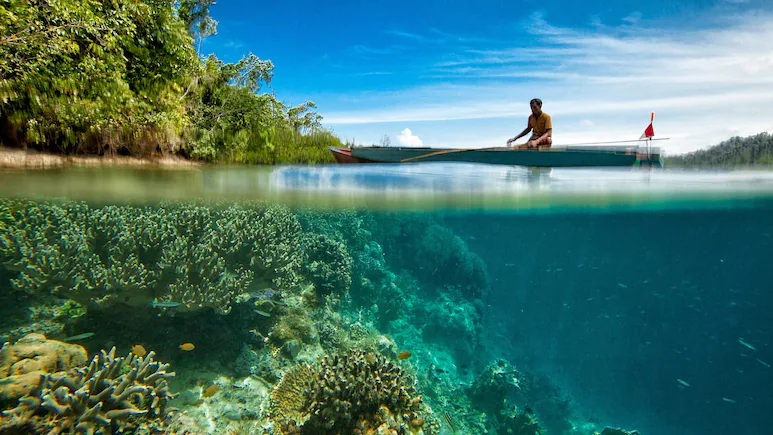
When Thai authorities quietly announced that a popular island would be closed indefinitely to visitors, the news initially drew little attention outside conservation circles. But as details emerged, it became clear this was not a routine tourism decision. Scientists had confirmed extensive coral bleaching across surrounding reefs, a warning sign that the island’s marine ecosystem was approaching a critical tipping point. What followed was not just a closure, but a sobering moment that revealed how fragile even the world’s most beautiful coastal environments have become.
The decision reflects a growing recognition that coral reefs, long celebrated as resilient underwater cities, are now among the most vulnerable ecosystems on the planet. In Thailand, where tourism and marine life are deeply intertwined, shutting down an island represents both an environmental emergency and a difficult economic sacrifice. Yet officials say the alternative—allowing continued damage—could lead to permanent loss.
What is happening beneath the water’s surface tells a much larger story, one that extends far beyond a single island.
Table of Contents
- The Discovery That Prompted an Immediate Shutdown
- Why Coral Reefs Matter More Than Most People Realize
- Rising Sea Temperatures and the Climate Connection
- Tourism Pressure Compounding a Natural Crisis
- Lessons from Past Closures in Thailand
- The Human Cost of Conservation Decisions
- Monitoring the Reef’s Chances of Recovery
- A Warning Signal for the World’s Oceans
- What This Decision Says About the Future of Tourism
- A Fragile Hope Beneath the Surface
The Discovery That Prompted an Immediate Shutdown
Marine researchers surveying the waters surrounding the island reported widespread coral bleaching across multiple reef zones. Large sections of coral had turned stark white, a visual signal that the organisms were under extreme stress. While coral bleaching is not new, the scale and intensity observed alarmed scientists, who warned that continued exposure could lead to irreversible reef collapse.
Bleaching occurs when corals expel the microscopic algae living within their tissues. These algae are not just passengers; they provide corals with food and vibrant color through photosynthesis. Without them, corals weaken, lose their ability to grow, and become vulnerable to disease. Prolonged bleaching often ends in coral death.
What made this discovery especially concerning was how rapidly the bleaching had spread. Areas that had appeared healthy just months earlier were now showing signs of severe distress, suggesting that environmental conditions had deteriorated faster than anticipated.
Why Coral Reefs Matter More Than Most People Realize
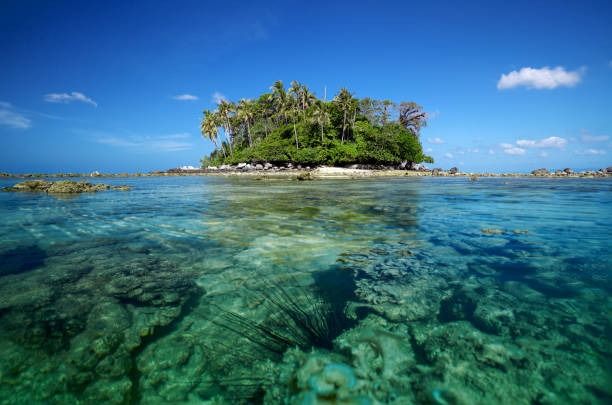
To many travelers, coral reefs are scenic backdrops for snorkeling photos. But ecologically, they are among the most productive systems on Earth. Coral reefs support roughly a quarter of all marine species, despite covering less than one percent of the ocean floor. They act as nurseries for fish, protect coastlines from erosion, and sustain food sources for millions of people worldwide.
In Thailand, reefs play an essential role in coastal stability and local livelihoods. Fishing communities depend on healthy reefs for sustainable catches, while tourism economies rely on their beauty to attract visitors. When reefs decline, the consequences ripple outward—impacting food security, employment, and natural disaster resilience.
Scientists warn that once a reef passes a certain threshold of damage, recovery becomes unlikely, even if human pressure is removed. That reality made the island closure not just precautionary, but urgent.
Rising Sea Temperatures and the Climate Connection
The primary driver behind the bleaching event appears to be prolonged exposure to elevated sea temperatures. As global temperatures rise, oceans absorb much of the excess heat, leading to warmer waters that corals cannot tolerate for extended periods.
Unlike storms or pollution, heat stress leaves no visible trace above water. Yet its impact is devastating. Even a sustained temperature increase of one to two degrees Celsius can trigger mass bleaching events. Scientists monitoring Thailand’s waters noted that recent temperature anomalies aligned closely with the bleaching patterns observed on the reefs.
Climate models suggest that such heatwaves will become more frequent and intense unless global emissions are significantly reduced. This means that coral bleaching is no longer an occasional crisis—it is becoming a recurring threat.
Tourism Pressure Compounding a Natural Crisis
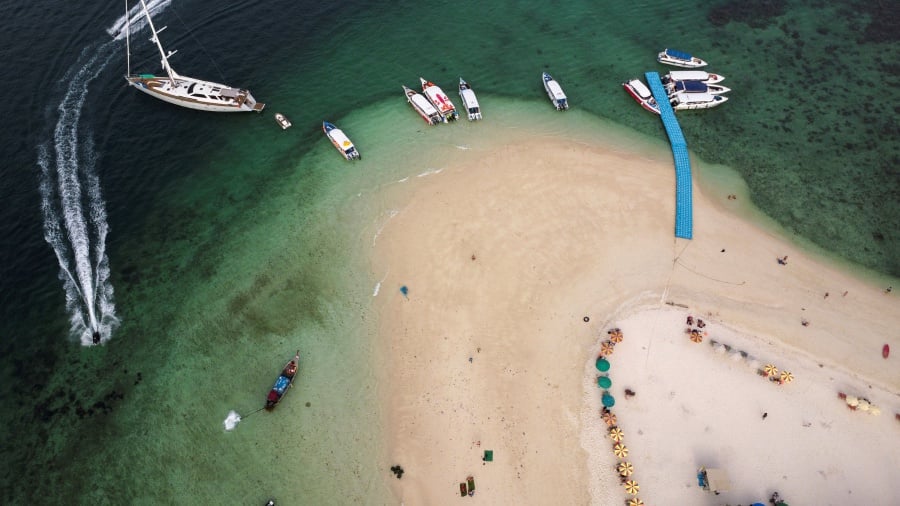
While climate change is the dominant factor, human activity can accelerate reef degradation. Heavy tourism brings boat traffic, anchoring damage, sunscreen chemicals, and physical contact that stress corals already struggling to survive.
In popular destinations, even well-intentioned visitors can unintentionally cause harm. Reefs weakened by heat stress are less able to recover from physical damage, making tourism pressure particularly dangerous during bleaching periods.
Thai officials acknowledged that limiting human access was necessary to give the reefs a chance to stabilize. Closing the island eliminates daily disturbances and allows marine life to recover without added stress.
Lessons from Past Closures in Thailand
Thailand has faced similar decisions before. In previous years, authorities closed several iconic beaches after environmental damage reached alarming levels. In some cases, these closures led to remarkable recoveries. Coral coverage improved, fish populations returned, and water clarity increased.
These success stories helped shape confidence in the current decision. Environmental experts argue that temporary closures, when enforced properly, can serve as powerful tools for restoration. However, recovery is not guaranteed—especially when climate stressors persist.
This time, scientists stress that reopening must depend on ecological indicators, not tourism demand.
The Human Cost of Conservation Decisions
Closing an island comes with real economic consequences. Local businesses that rely on tourism—boat operators, guides, restaurants, and accommodation providers—face immediate losses. For many, the closure threatens their primary source of income.
Thai authorities have acknowledged this hardship, emphasizing that environmental protection and economic survival are deeply connected. A destroyed reef would ultimately mean the permanent loss of tourism revenue, while preservation offers the possibility of long-term sustainability.
Some conservation groups are urging the government to support affected communities through alternative livelihoods, training, and compensation during the closure period.
Monitoring the Reef’s Chances of Recovery
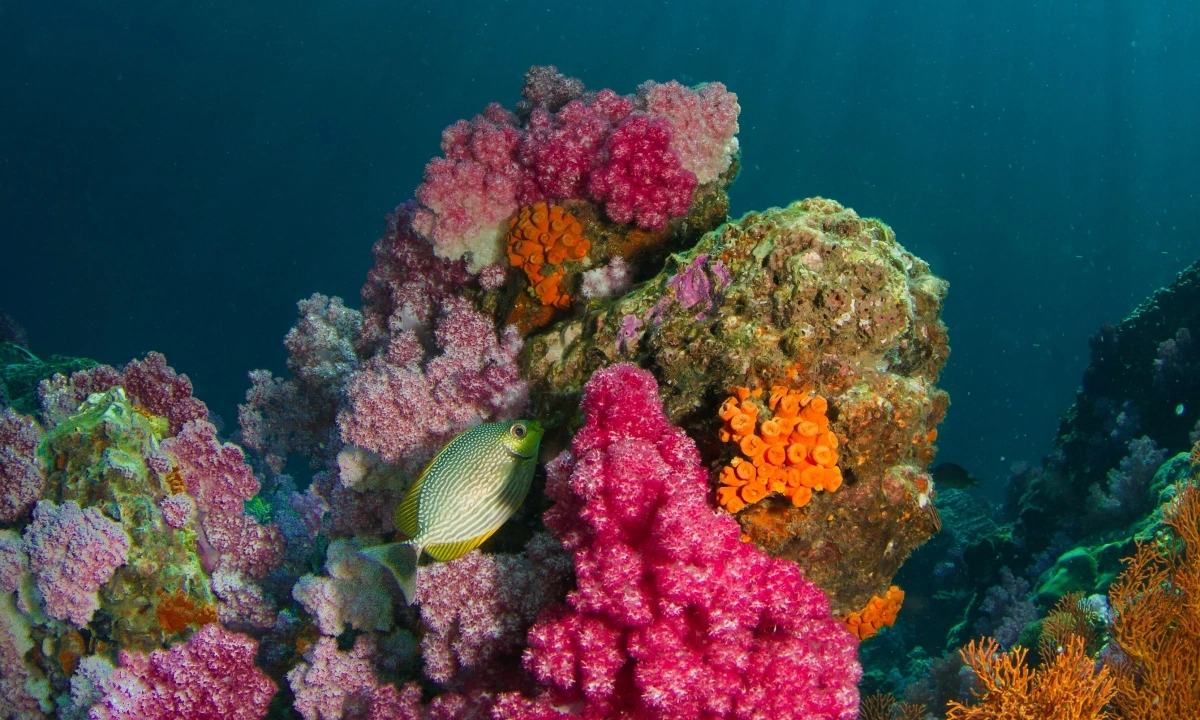
Scientists will continue to monitor coral health throughout the closure, tracking water temperature, algae regrowth, and signs of coral regeneration. Recovery, if it occurs, will be slow. Corals grow at a pace of just a few centimeters per year under ideal conditions.
Early indicators of recovery include the return of symbiotic algae, improved coloration, and increased fish activity. However, repeated heat stress events could undermine even the most carefully managed restoration efforts.
Experts caution that protecting individual reefs, while essential, cannot replace global action on climate change.
A Warning Signal for the World’s Oceans
The closure of this Thai island is not an isolated incident. Coral bleaching events have been reported across the Great Barrier Reef, the Caribbean, and the Indian Ocean in recent years. Together, they paint a troubling picture of an ocean under strain.
Marine scientists describe coral reefs as early warning systems for planetary health. Their sensitivity to temperature changes makes them among the first ecosystems to show signs of environmental imbalance.
What happens to corals today may foreshadow challenges for other marine and terrestrial systems tomorrow.
What This Decision Says About the Future of Tourism
The island shutdown reflects a broader shift in how destinations are balancing conservation with economic growth. Sustainable tourism is no longer just a marketing phrase; it is becoming a necessity for survival.
Some experts argue that the future of travel will involve fewer visitors, stricter regulations, and greater environmental accountability. Others believe technology and education can reduce human impact without limiting access.
Thailand’s decision suggests that when ecosystems reach a breaking point, protection must come first—even when the cost is high.
A Fragile Hope Beneath the Surface
For now, the island remains quiet. Boats no longer anchor offshore. Snorkelers no longer drift above the reefs. Beneath the surface, corals struggle to adapt to a warming world, their fate uncertain.
The closure offers them time—perhaps their most valuable resource. Whether that time is enough depends not only on local protection efforts, but on global choices still being made.
As scientists continue to study the reefs, the island stands as a powerful reminder: the natural wonders people travel across the world to see are far more vulnerable than they appear. And once they are gone, no amount of regret or restoration funding can bring them back.