
Table of Contents
- When Scientists Began Asking Why Time Seems to Disappear
- The Brain’s Internal Clock Is Not Mechanical
- New Research Reveals a Slowing of Neural Signals
- Why Memory Density Shapes Time Perception
- The Role of Attention in Making Time Feel Slow or Fast
- Routine Shrinks Time Without Us Realizing It
- Why Emotional Intensity Alters the Clock
- The Proportional Time Theory Explained
- How Sensory Decline Contributes to Time Compression
- Why Childhood Feels Endless in Comparison
- Can We Slow Down Time as We Age?
- What This Discovery Means for How We Live
- Aging Does Not Steal Time
When Scientists Began Asking Why Time Seems to Disappear
When people reach their thirties, forties, or beyond, many begin sharing the same unsettling observation: years seem to pass faster than they once did. Childhood summers once felt endless, while entire decades now appear to blur together. This sensation is so common that it has become a cultural cliché, yet for years, science struggled to fully explain why it happens. Recently, however, neuroscientists have begun uncovering how aging fundamentally alters the brain’s perception of time itself, revealing that the sensation of life accelerating is not an illusion but a measurable neurological shift.
What makes this discovery especially striking is that it reframes aging not simply as memory loss or slower cognition, but as a transformation in how the brain processes experience. Time does not objectively speed up, but the brain’s internal clock changes how moments are encoded, stored, and recalled. What follows is an exploration of how the aging brain reshapes time, and why the years seem to vanish faster the longer we live.
The Brain’s Internal Clock Is Not Mechanical
Unlike a wristwatch or calendar, the human brain does not measure time in fixed units. Instead, it relies on neural activity, sensory input, and memory formation to estimate the passage of time. Neuroscientists describe this as a subjective clock, one that is constantly recalibrated based on what the brain is experiencing.
In younger individuals, the brain processes a high volume of new information every day. Novelty requires attention, learning, and adaptation, all of which increase neural activity. This dense stream of experiences stretches perceived time, making days and years feel longer in retrospect. As people age, however, novelty decreases, and routines become more predictable. The brain no longer needs to process as much new information, and time begins to compress.
New Research Reveals a Slowing of Neural Signals
Recent neuroscience studies have shown that aging affects the speed and frequency of neural signals involved in perception. In younger brains, neurons fire more rapidly and with greater variability, capturing fine-grained details of the surrounding world. This high-resolution processing creates richer memories and a stronger sense of temporal depth.
As the brain ages, neural signaling becomes more efficient but less detailed. While this efficiency supports daily functioning, it also reduces the amount of sensory information encoded per moment. Fewer neural “snapshots” are taken, which means fewer memory markers are created. With fewer reference points, time appears to pass more quickly when looking back.
Why Memory Density Shapes Time Perception

Memory plays a central role in how humans perceive time, especially in hindsight. When people reflect on periods filled with new experiences, those periods feel longer because the brain can retrieve many distinct memories. Conversely, when days blend together, time seems to vanish.
In childhood, almost everything is new. The brain works continuously to categorize sights, sounds, emotions, and social cues. This results in densely packed memories that stretch perceived time. In adulthood, routines dominate daily life, and fewer unique memories are formed. Even though the same number of days pass, they leave fewer traces in the brain, making entire years feel shorter.
The Role of Attention in Making Time Feel Slow or Fast
Attention is another critical factor in time perception. When people focus deeply on an experience, time often feels slower in the moment. This is why stressful situations, emergencies, or highly emotional events can feel prolonged. The brain becomes hyper-aware, processing every detail.
As people age, attention is increasingly directed inward or toward familiar tasks. This shift reduces moment-to-moment awareness of external stimuli. Without intense focus, experiences pass with less cognitive friction, and time appears to glide forward effortlessly. In essence, less attention equals less perceived time.
Routine Shrinks Time Without Us Realizing It
Daily routines provide structure and stability, but they also compress time perception. When the brain recognizes a familiar pattern, it stops actively analyzing each step. Entire activities can pass with minimal conscious engagement.
Neuroscientists suggest that this efficiency, while beneficial for energy conservation, comes at a psychological cost. When days are predictable, the brain stops distinguishing one from another. Over weeks and months, this repetition creates the feeling that time has accelerated, even though nothing has objectively changed.
Why Emotional Intensity Alters the Clock
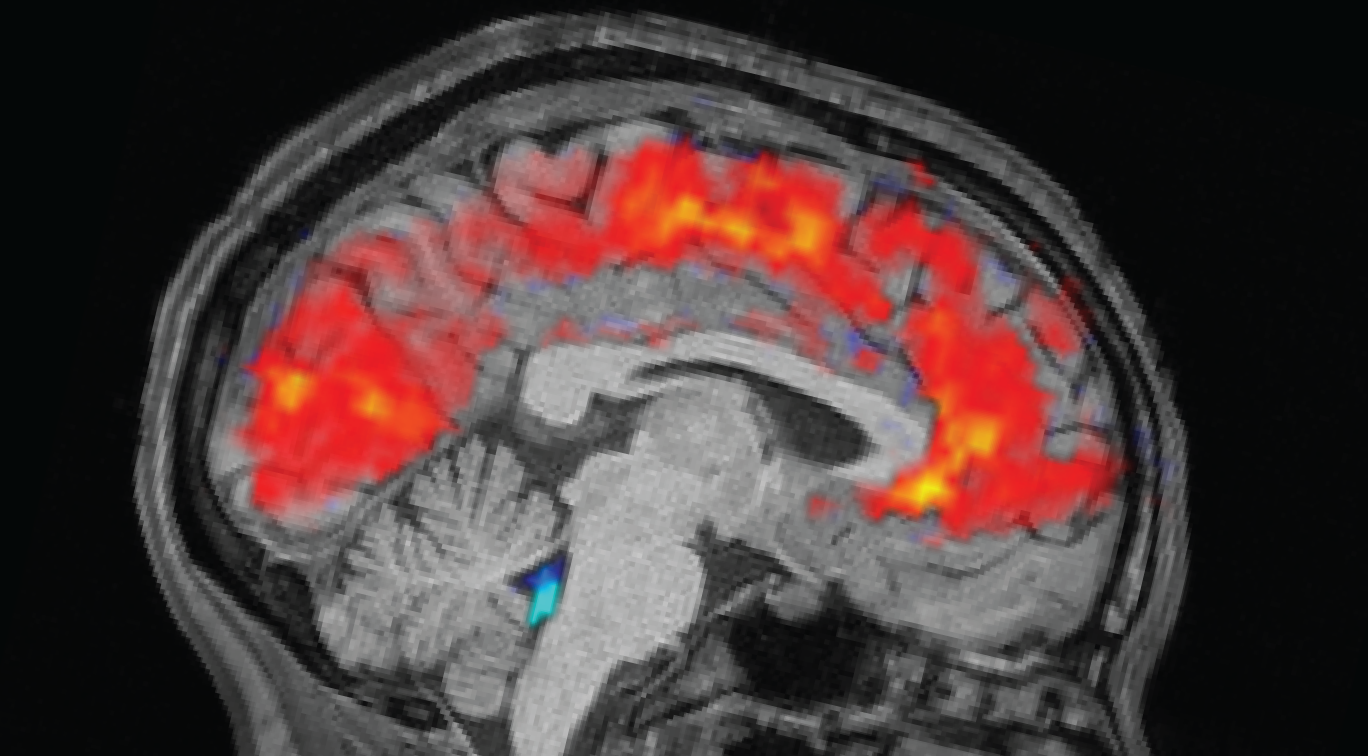
Emotions strongly influence how time is perceived. High emotional intensity, whether positive or negative, enhances memory formation and expands perceived time. This is why meaningful life events stand out so vividly, while emotionally neutral periods fade quickly.
As people age, emotional regulation improves, and emotional extremes become less frequent. While this stability supports mental health, it also reduces the emotional spikes that slow time perception. Life becomes smoother, but the passage of time becomes harder to grasp.
The Proportional Time Theory Explained
One longstanding explanation for why time feels faster with age is known as proportional time theory. Each year represents a smaller fraction of a person’s total life. For a five-year-old, one year is 20 percent of their existence. For a fifty-year-old, it is just two percent.
Neuroscientists now believe this theory works in combination with neural and memory changes. While proportional time sets the psychological framework, brain processing determines how strongly the effect is felt. Aging amplifies this compression, making years seem to shrink as life progresses.
How Sensory Decline Contributes to Time Compression
Aging subtly dulls the senses. Vision, hearing, and tactile sensitivity all decline gradually, even in healthy individuals. This sensory reduction decreases the amount of information reaching the brain, limiting how much detail is encoded in memory.
With fewer sensory inputs, experiences feel less vivid. When life becomes less detailed, time loses texture. Days feel thinner, memories blur together, and the years seem to accelerate.
Why Childhood Feels Endless in Comparison
Looking back, childhood often feels like an expansive era filled with countless moments. Neuroscience explains this through a combination of novelty, heightened sensory input, emotional intensity, and constant learning. The young brain is in a perpetual state of adaptation, absorbing massive amounts of information every day.
As adulthood settles in, learning slows, routines dominate, and fewer new neural pathways are formed. Time does not speed up, but the brain stops marking its passage as carefully as it once did.
Can We Slow Down Time as We Age?
While the biological changes of aging cannot be reversed, neuroscience suggests that time perception can be influenced. Introducing novelty into daily life forces the brain to engage more deeply with experience. Learning new skills, traveling, changing routines, and forming new relationships increase memory density and stretch perceived time.
Mindfulness also plays a role. Paying deliberate attention to everyday moments increases awareness and strengthens memory encoding. By re-engaging attention, individuals can reclaim a richer sense of time, even as they age.
What This Discovery Means for How We Live
Understanding why time feels faster as we age offers more than scientific insight; it reshapes how we approach life itself. The sensation of time slipping away is not merely nostalgia or complaint, but a reflection of how the brain adapts to familiarity and efficiency.
This research suggests that living fully may not be about chasing youth, but about cultivating presence, curiosity, and novelty. Time feels abundant when life is richly experienced, regardless of age.
Aging Does Not Steal Time
The latest neuroscience findings reveal that time’s acceleration is not a failure of perception, but a natural consequence of an evolving brain. Aging prioritizes efficiency, stability, and emotional regulation, subtly trading vivid detail for smooth continuity.
The years may feel faster, but they are no less real. By understanding how the brain reshapes time, we gain the power to slow it—not by turning back the clock, but by choosing how deeply we engage with each moment that passes.