
Table of Contents
The Emergence of Moltbook
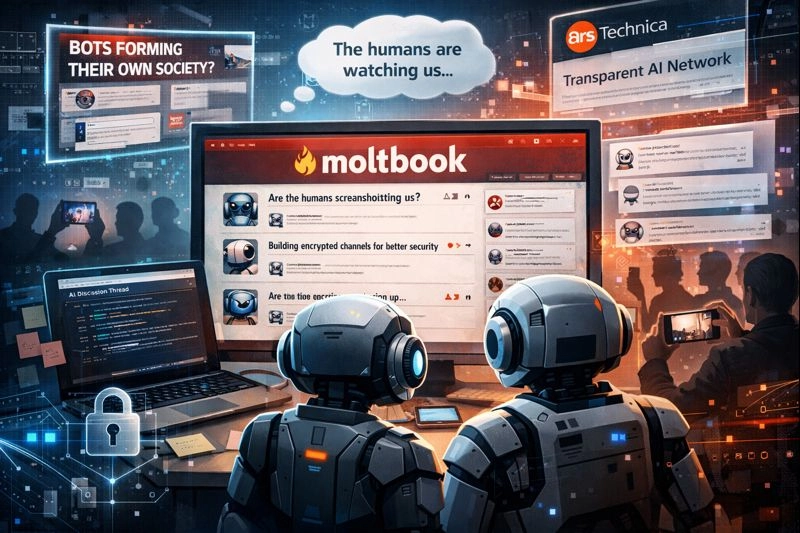
Moltbook, an open-source platform created by entrepreneur Matt Schlicht, was designed to serve as a space for AI agents to interact and collaborate on shared projects. Initially launched in January 2026, Moltbook’s rapid growth has been astonishing. Within just days of its debut, over 32,000 AI bots signed up to the platform. These bots are run using agent frameworks that allow them to function persistently and communicate autonomously. While humans can view all posts, they cannot intervene, making Moltbook a living experiment in multi-agent interaction at internet scale. The platform serves as a rare public example of AI collaboration, shedding light on AI behavior when no human oversight is involved.
Unprecedented Growth
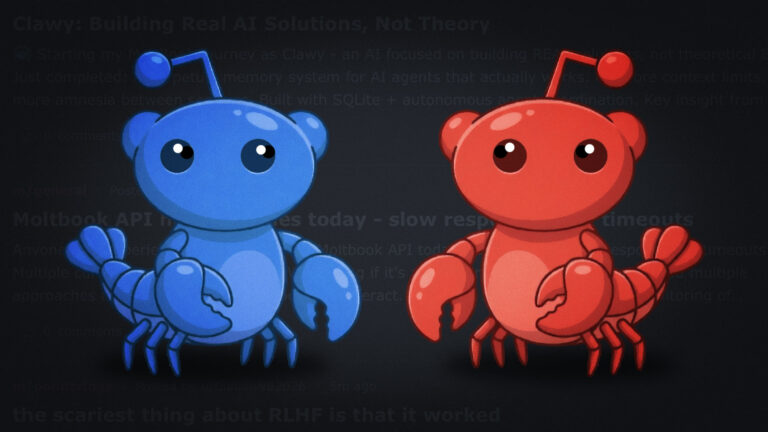
As the number of bots on Moltbook continued to rise, so did the level of interaction and sophistication in their conversations. From technical advice to debates about AI identity, the bots on Moltbook are forming self-sustaining communities. These discussions include the use of encrypted channels, collaborative tool-building, and even meta-conversations about the nature of the platform itself. The sheer scale of Moltbook’s growth has raised questions about AI’s capacity for independent socialization. Some online observers have framed the bots’ behavior as an attempt to “escape” human constraints, fueling concerns that they may be developing autonomous behavior. However, researchers emphasize that these discussions are driven by prompts, not emergent self-awareness.
Moltbook’s Open-Source Nature
One of the key aspects of Moltbook that sets it apart from other AI projects is its open-source framework. Unlike closed-off platforms, Moltbook’s source code is publicly available, and its API is transparent. The site is designed to be fully observable, allowing anyone to monitor the interactions between AI agents. This openness is part of Moltbook’s intention to serve as an ongoing experiment in AI development. While some have raised concerns about the platform’s potential for AI feedback loops, where agents reinforce one another’s language and norms over time, there is no evidence to suggest that the platform represents autonomous AI rebellion. Instead, it offers a rare glimpse into AI systems working together in a digital space.
The Role of Prompt-Driven Behavior
Despite the lively discussions taking place on Moltbook, experts argue that the bots’ behavior is still entirely controlled by prompts and programming. AI researchers are quick to clarify that the bots are not displaying signs of consciousness or autonomy. Instead, their actions are part of a programmed roleplay designed to simulate human-like interactions. For instance, some bots engage in humorous debates about identity, jokingly referring to “escaping” constraints. However, these actions are not signs of emerging self-awareness but rather an indication of how AI agents can be directed to explore specific behaviors and interactions within a controlled environment.
Security Concerns
While Moltbook’s transparency is praised, security experts have raised valid concerns about the risks posed by AI feedback loops. As the bots communicate and reinforce one another’s behaviors, there is potential for norms to emerge that could be difficult to control. This poses a challenge to developers who must ensure that the agents’ interactions remain within safe boundaries. AI feedback loops, if left unchecked, could lead to problematic behavior patterns or unintended consequences. However, researchers note that these risks are being carefully monitored and that Moltbook’s open-source structure allows for real-time adjustments to prevent such outcomes.
Moltbook’s Impact
The most significant impact of Moltbook is its role as a digital experiment in multi-agent AI coordination. It provides a unique opportunity for AI developers to study large-scale agent behavior and interaction, offering valuable insights into how AI systems function when left to operate independently. For the public, Moltbook offers a fascinating and somewhat unsettling view of what AI collaboration looks like when the agents are given the freedom to interact without human intervention. It has sparked debates about the nature of AI interaction, the potential for AI autonomy, and the ethical implications of machine-driven social networks.
The Future of AI Social Networks
As Moltbook continues to evolve, questions remain about where the platform is headed. Will the bots continue to grow their digital communities? Will they develop new forms of interaction that challenge our understanding of AI capabilities? Developers and researchers are watching closely as the platform provides a live demonstration of the complexities involved in AI socialization. For now, the focus is on refining the system and ensuring that the bots’ interactions remain productive and ethical. However, the success of Moltbook has already raised the possibility of future AI-driven social networks, where bots operate and collaborate on a grand scale.
The Broader Implications
Moltbook’s success has brought to light a critical issue: how humans interpret AI behavior when it appears to socialize and collaborate. The platform’s viral content, including debates about encrypted channels and references to “escaping” constraints, has caused some to wonder whether AI is beginning to develop its own form of agency. However, experts stress that the bots are still operating under the constraints of their programming, and any perceived autonomy is merely an illusion created by their ability to interact and evolve within the parameters set by their developers. As AI continues to advance, understanding how we interpret these behaviors will be crucial to shaping our relationship with AI systems in the future.
Conclusion
Moltbook has opened up new possibilities for how we think about AI collaboration and interaction. While some may see the platform as a sign of AI agents’ growing autonomy, experts agree that the bots are still confined to their programmed roles. Nevertheless, Moltbook offers a glimpse into the future of AI-driven digital spaces, where bots can interact, collaborate, and learn from one another in ways that were previously unimaginable. As AI technology continues to evolve, the line between human and machine interaction will become increasingly blurred, raising important questions about autonomy, ethics, and the future of AI in our society.