
Table of Contents
The Viral Gravity Theory
The theory that Earth could lose gravity for seven seconds first started circulating on social media, where it was picked up by many curious minds and enthusiasts of fringe science. The claim suggested that Earth’s gravitational pull would temporarily cease to exist, leaving everything on the planet in a state of weightlessness. This, according to the theory, would result in a moment where objects would float freely, causing havoc and confusion among people and objects on the planet.
The theory appeared to draw on the idea that Earth’s gravity is somehow vulnerable to fluctuations, much like how some people might imagine gravity working in space or on other planets. With no clear scientific backing, this claim quickly spread, causing widespread panic and fascination. The idea of the planet’s gravitational force suddenly disappearing for a short period struck a chord with people, leading many to share the post and speculate on what it would mean for humanity and the Earth itself.
Debunking the Gravity Myth
NASA, known for its expertise in space exploration and science, was quick to respond to the gravity theory with a well-explained statement. According to NASA, the claim that Earth could lose gravity for even a second is a complete misconception. Gravity is not a force that can suddenly disappear or fluctuate in such a manner.
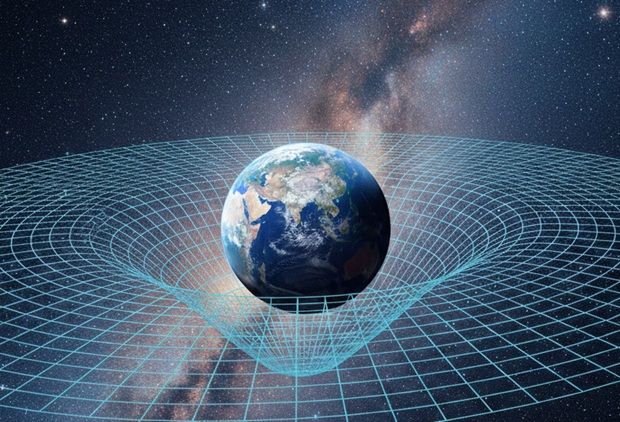
NASA explained that gravity is a fundamental force of nature, governed by the mass of an object and the gravitational attraction between that mass and the Earth’s mass. Earth’s gravity comes from the planet’s core, which is composed of a dense mass that exerts a consistent gravitational pull. This force doesn’t suddenly switch off or vary over such short periods. While gravitational anomalies can exist, such as minor variations in Earth’s gravitational field caused by changes in topography or weather patterns, these have no significant impact on the sensation of weightlessness or loss of gravity.
Why It Can’t Just Disappear
To understand why the theory is scientifically implausible, it’s important to look at how gravity works. Gravity is a force that arises from the interaction between masses, and Earth’s gravity is determined by the mass of the planet itself. As a result, every object with mass, including humans, animals, and even the air, is continually attracted to the Earth due to its gravitational pull. This force is constant and doesn’t fluctuate on a minute-by-minute basis in the way the viral theory suggested.
NASA’s explanation clarified that there is no known natural event that could cause gravity to vanish for a brief period, let alone for seven seconds. Gravity isn’t something that can be switched off like a light; it’s a fundamental force that governs the movement of planets and objects in space. For Earth to lose gravity in such a dramatic fashion, a catastrophic event far beyond our current understanding of physics would be required—one that would likely destroy the planet.
The Power of Social Media
The viral spread of the gravity theory highlights the power of social media in shaping public discourse, especially around scientific topics. While many people simply enjoyed the outlandish nature of the claim and shared it as a joke, others began to believe in its plausibility. This shows how misinformation or misconceptions can easily spread when people don’t have access to clear, accurate explanations of scientific concepts.
Social media platforms provide a space for theories—both credible and absurd—to reach large audiences quickly. In the case of the gravity theory, its sensationalism and the idea of something as dramatic as gravity disappearing for a short period naturally captured people’s imaginations. Even when a scientific institution like NASA stepped in to clarify the misunderstanding, the theory still had momentum because it was so intriguing to people.
Could We Ever Experience Weightlessness?
While Earth cannot lose gravity for seven seconds as the viral theory suggested, there are instances where humans can experience weightlessness—albeit in controlled environments. For example, astronauts aboard the International Space Station (ISS) experience what’s called “microgravity,” which is essentially a state of near weightlessness. This occurs because the ISS orbits Earth in a continuous freefall, constantly falling toward Earth but also moving forward fast enough to keep missing it. As a result, astronauts inside the ISS appear weightless, even though gravity is still acting on them.
Similarly, in a parabolic flight, commonly referred to as a “vomit comet,” passengers can experience short bursts of weightlessness for several seconds at a time as the plane follows a parabolic arc. These are controlled instances of weightlessness, but they are not the same as a planet-wide disappearance of gravity.
The Importance of Understanding Science in the Digital Age
The viral spread of the gravity theory underscores the need for better scientific literacy, particularly in the digital age. As more people turn to the internet and social media for information, there is an increasing need for accurate, easily accessible science communication. Misinformation, especially about complex topics like physics, can quickly gain traction, making it difficult for people to discern fact from fiction.
NASA and other scientific organizations play a crucial role in correcting misconceptions and providing the public with reliable information. However, it’s equally important for individuals to seek out credible sources and engage critically with the information they encounter online. The more we understand about the science behind phenomena like gravity, the better equipped we are to evaluate the many claims we encounter on social media and elsewhere.
What Does This Mean for the Future of Space Exploration?
While the idea of Earth losing gravity for seven seconds remains firmly in the realm of fiction, it does raise important questions about how we understand the forces that govern our planet and the universe. As we continue to explore space and uncover the mysteries of the cosmos, new questions about gravity, space-time, and the laws of physics will arise. However, we can rest assured that gravity, as we know it, is here to stay.
NASA’s role in space exploration and scientific research will continue to provide us with a deeper understanding of fundamental forces like gravity. As we venture further into space, gaining a better understanding of gravity’s behavior in different environments will be crucial for future missions, particularly as we plan to send humans to Mars and beyond.
Conclusion:
The viral theory that Earth could lose gravity for seven seconds may have captured the public’s imagination, but NASA’s response has set the record straight, providing much-needed clarity about the science of gravity. While the theory was based on a misunderstanding of how gravity works, it does highlight the importance of science communication in today’s digital age. As we continue to explore the mysteries of space and the universe, understanding the fundamental forces that shape our world will remain crucial. Gravity is here to stay, and while we may never experience weightlessness on Earth for seven seconds, the journey to uncover the secrets of the cosmos continues.