
Table of Contents
- A Daily Routine Interrupted By Rain
- Why The Image Stopped People
- The Unspoken Bond Between The Man And His Dog
- Poverty Does Not Cancel Compassion
- Why Small Acts Often Speak Loudest
- Animals As Mirrors Of Human Values
- The Role Of Street Vendors In Urban Life
- Public Reaction And Emotional Response
- What This Moment Teaches About Dignity
- Broader Implications In A World Focused On Scarcity
- A Quiet Lesson In Humanity
- Closing Reflection
A Daily Routine Interrupted By Rain
For many elderly street vendors in the Philippines, selling vegetables is not a choice but a necessity. Income is uncertain, competition is fierce, and weather can turn a difficult day into an impossible one. Rain means fewer customers, lower earnings, and greater physical strain.
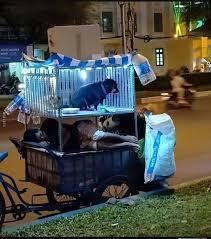
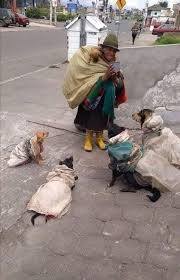
On this particular day, the rain did not stop the man from setting up his stall. He stood by the roadside with his produce arranged neatly, hoping for buyers despite the weather. The rain soaked his shoulders and legs, yet he made no effort to shield himself fully. Instead, his attention remained fixed on his dog.
The dog sat calmly beside him, dry and still, unaware that its comfort had become a symbol seen by thousands.
Why The Image Stopped People
Those who witnessed the moment described a feeling of pause. In the rush of daily life, something about the scene demanded attention. The contrast was striking. A man with little protecting an animal with even less.
It was not pity that viewers felt first, but recognition. Many saw their own relationships reflected in that simple act of care. Love expressed not through words, but through choice. The choice to endure discomfort so another does not have to.
In a society where success is often measured by accumulation, this image reminded people that values are revealed most clearly when resources are scarce.
The Unspoken Bond Between The Man And His Dog
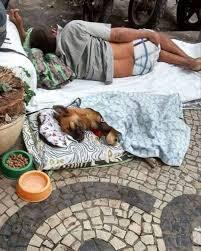
Little is known about how long the man and his dog had been together. But those who understand street life know that animals often become family for people living on the margins. Dogs provide companionship, protection, routine, and emotional grounding.
For elderly individuals especially, animals can become anchors against loneliness. They offer presence without judgment. They ask for care, and in doing so, give purpose.
The man’s actions suggested that the dog was not an accessory, but a responsibility he took seriously.
Poverty Does Not Cancel Compassion
One of the most powerful aspects of the story is how it challenges assumptions about poverty. There is a persistent myth that hardship erodes kindness, that survival leaves no room for empathy. This moment contradicts that idea completely.
Despite his circumstances, the man demonstrated attentiveness, foresight, and gentleness. He did not discard responsibility simply because his own needs were unmet.
Sociologists often note that compassion does not diminish with poverty. In many cases, it sharpens. People who know struggle intimately recognize vulnerability more clearly in others.
Why Small Acts Often Speak Loudest
Grand gestures are easy to celebrate, but small acts reveal character. Shielding a dog from rain does not change the world in measurable ways. Yet it changes how people see it.
This moment required no audience. The man did not know he was being watched. His actions were not performative. They were habitual.
That authenticity is what made the image resonate so widely.
Animals As Mirrors Of Human Values
The way people treat animals has long been viewed as a reflection of societal values. Compassion toward animals often correlates with empathy toward others. This story reminded viewers that care is not transactional.
The dog did not earn protection through productivity or utility. It was protected because it was loved.
In that sense, the scene offered a quiet critique of a world that often assigns worth based on output rather than presence.
The Role Of Street Vendors In Urban Life
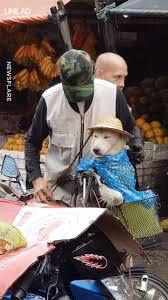
Street vendors like this elderly man are woven into the fabric of daily life in many cities. They provide affordable food, maintain informal economies, and often go unnoticed unless something extraordinary happens.
Rainy days are particularly punishing. Without shelter or financial buffer, vendors face physical exhaustion and lost income.
Yet even in that vulnerability, this man chose gentleness.
Public Reaction And Emotional Response
As images and stories spread, reactions poured in from people across different cultures and backgrounds. Many expressed admiration. Others shared similar stories from their own communities.
What united the responses was a sense of humility. Viewers were reminded that kindness does not require abundance.
Some said the image made them reconsider their own priorities. Others said it restored a sense of faith in humanity.
What This Moment Teaches About Dignity
Dignity is often misunderstood as pride or independence. In reality, dignity is about how one treats others when no reward is guaranteed.
The elderly man did not abandon responsibility because his situation was difficult. He upheld it.
That is dignity.
Broader Implications In A World Focused On Scarcity
The world frequently frames resources as scarce and compassion as optional. Stories like this disrupt that narrative. They suggest that care is not something people give only when they have excess.
Care is something people choose.
In moments of scarcity, those choices become visible.
A Quiet Lesson In Humanity
There were no speeches. No interviews. No appeals. Just an elderly man standing in the rain, selling vegetables, keeping his dog dry.
In that quiet act was a lesson many needed to see. Humanity does not announce itself. It reveals itself in moments of inconvenience.
Closing Reflection
The image of an elderly man in the Philippines shielding his dog from the rain while enduring the storm himself is more than a touching scene. It is a reminder of what remains when everything else is stripped away.
When money is scarce. When comfort is limited. When life is heavy.
What remains is choice.
And in this case, the choice was care.