

Table of Contents
- A Historic Night Echoing the Miracle on Ice
- Jack Hughes: Heroics Under Pressure
- The Game: Strategy, Grit, and Key Moments
- National Reaction: Joy, Pride, and Shared Identity
- Legacy and Comparisons to the 1980 Miracle
- Personal and Cultural Dimensions
- Implications for International Hockey
- What This Means for Future Olympic Narratives
- Conclusion
A Historic Night Echoing the Miracle on Ice
The U.S. men’s hockey team’s victory in the 2026 Winter Olympics held layers of historical resonance. The term “Miracle on Ice” refers to the iconic win by the United States over the dominant Soviet Union at the 1980 Winter Olympics, a defining moment in American sports history when amateur players upset seasoned professionals and went on to win Olympic gold. That event has been enshrined as one of the greatest sports achievements of the 20th century, symbolizing courage under pressure and national unity.
Fast forward to the Milano Cortina Games, and a new generation of American players had the chance to add their own chapter to Olympic lore. Facing Canada in the gold‑medal game, the U.S. squad worked through a tense matchup that remained tied into the final period. The decisive goal, scored by Jack Hughes just 1 minute and 41 seconds into overtime, mirrored the drama and emotional uplift of its historic predecessor albeit in a very different hockey era. The game ended with a 2‑1 win for the United States, a result that broke a nearly half‑century drought for American men’s hockey at the Olympics.
Jack Hughes: Heroics Under Pressure

Jack Hughes, widely recognized as one of the top talents in hockey, played every shift with grit and resolve. In the third period of the Olympic final, he left the ice after a high stick to his face that knocked out at least one tooth, later revealing during celebrations a bloodied gap in his smile. Rather than exit the game, he returned to the ice and helped secure victory, scoring the gold medal winner in overtime — a moment that quickly became one of the Olympics’ defining highlights.
Hughes’ performance was more than an athletic feat; it became a symbol of toughness, resilience, and leadership. Teammates and commentators marveled at his willingness to play through pain and deliver when it mattered most. This narrative echoed not just on the ice but throughout American sports circles, drawing comparisons to legendary performances in Olympic history and elevating Hughes’ status from great player to national icon.
The Game: Strategy, Grit, and Key Moments
The gold medal match itself was a testament to strategic play and defensive determination. The Canadian team, traditionally a powerhouse in international hockey, pressured the Americans throughout regulation. Yet the U.S. team’s goaltender — Connor Hellebuyck — stood tall with a masterful performance, stopping 41 shots and anchoring a perfect penalty kill that kept Canada’s potent offense in check. His efforts were pivotal in maintaining the tie that ultimately allowed overtime to unfold.
Both teams traded chances, and as the final minutes of regulation waned, every possession felt weighted with history and national expectation. The overtime format — three‑on‑three sudden death — lent itself to open ice and fast transitions. It was in that space that Hughes found the game‑winning opportunity, capitalizing on a pass from defenseman Zach Werenski and burying the puck into the net, sending the U.S. bench and fans into a frenzy.
Hellebuyck’s performance, often overshadowed by Hughes’ heroics, was crucial in setting the stage for the moment. Without his clutch saves and calm under pressure, the game might never have reached the pivotal overtime where the U.S. seized its chance. Such collective effort underscored that the victory was not just one man’s triumph but a team accomplishment rooted in preparation, depth, and resilience.

In the immediate aftermath of the win, expressions of pride poured in across media, social platforms, and from fans worldwide. Hughes’ postgame remarks captured the mood: “This is all about our country right now. I love the USA. I love my teammates. … I’m so proud to be American today.” His declaration connected with many who view Olympic success not only as a sporting achievement but as a reflection of national character and unity in competition.
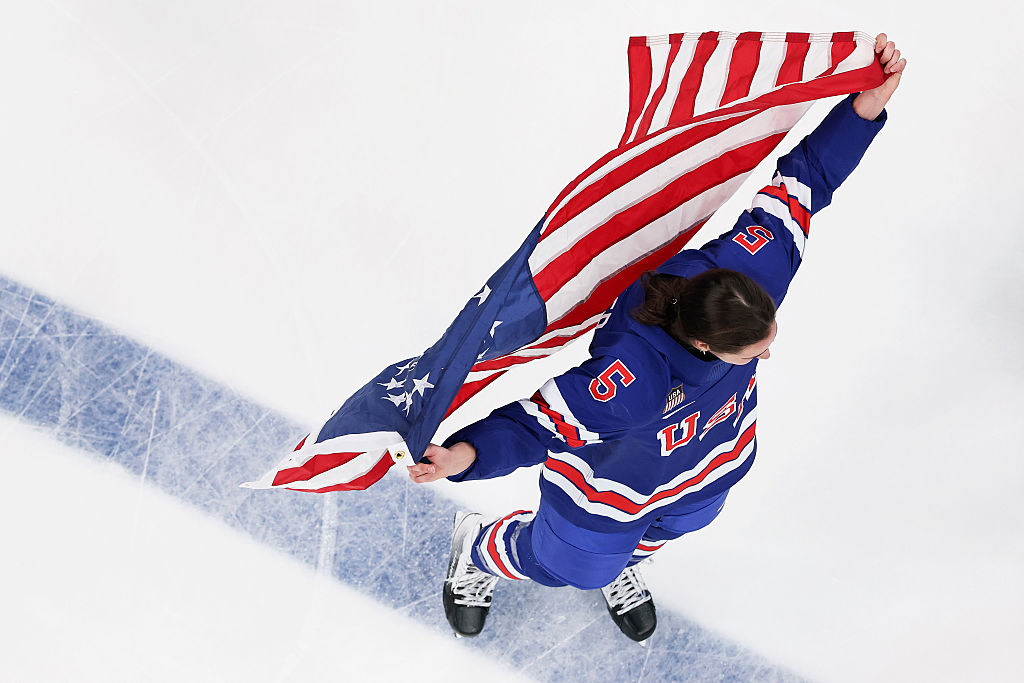
The emotional imagery — Hughes holding the American flag, bloodied and missing teeth, celebrating with teammates — quickly became iconic. Such scenes traveled beyond sports news into cultural conversation, sparking discussions about courage, identity, and what it means to represent a nation at its highest level. For many Americans, especially those who grew up hearing about the 1980 Miracle on Ice, this victory evoked both nostalgia and fresh hope for future generations of athletes.
Legacy and Comparisons to the 1980 Miracle
It is rare for a single moment in sports to resonate across generations, yet the context of the 2026 victory invited natural comparisons to the Miracle on Ice. While the hockey landscape in 1980 was dominated by amateur players facing the veteran Soviet Union, the 2026 U.S. team comprised elite NHL professionals competing in a high‑stakes Olympic final. Nonetheless, the shared element of overcoming adversity — whether geopolitical pressure or entrenched rival dominance — links both events.
The comparison is not merely nostalgic. It frames the 2026 win as part of a larger narrative about American hockey’s place on the world stage, reminding fans that legendary achievements can resurface in new forms. In both 1980 and 2026, Team USA defied expectations and delivered performances that lifted the spirits of fans and offered a memorable chapter in Olympic history.
Personal and Cultural Dimensions
Jack Hughes’ own background adds texture to this story. Beyond his athletic skill, his leadership and emotional commentary about team unity and patriotism struck a chord with many observers. Some saw the result as not just a sporting triumph but a cultural moment that reaffirmed pride in national representation and collective effort. This has led to wider reflections on the role of sports in national identity, especially when teams succeed on the world’s biggest stage.
Beyond the U.S., the victory elicited respect from international fans and athletes, many of whom acknowledged the skill and determination it took for the Americans to prevail. While intense rivalries remain — particularly with hockey powerhouses like Canada — the broader Olympic community recognized this as a showcase of elite competition and mutual respect between nations.
Implications for International Hockey
The 2026 gold medal win may also usher in new momentum for hockey programs in the United States and around the world. Success at the Olympic level often inspires increased youth participation, investment in training infrastructure, and fresh enthusiasm for the sport’s development. For Team USA, the victory validates years of investment in talent pipelines and international competition exposure, and signals that American hockey can thrive at the highest levels against elite global opponents.
Internationally, the dramatic nature of the 2026 final — complete with standout goaltending, intense defensive battles, and a thrilling overtime conclusion — makes a compelling case for hockey’s continued prominence in the Olympic showcase. It also highlights that even traditional rivalries like USA vs Canada can produce moments that elevate the sport beyond national boundaries and into a shared human spectacle of athletic achievement.
What This Means for Future Olympic Narratives
The story of the 2026 men’s hockey gold extends beyond a single game. It reflects how sport can intersect with history, memory, and cultural pride. By winning on the anniversary of the Miracle on Ice, the American team offered a bridge between past and present — reminding both seasoned fans and newcomers that moments of sporting greatness can transcend generational divides.
Looking ahead, this victory may stand as a touchstone for future Olympic narratives, inspiring athletes and fans alike to embrace the drama, unpredictability, and emotional impact of global competition. From children who watched on television to aspiring athletes who now see a path to Olympic glory, the 2026 triumph will be remembered as a defining athletic and cultural moment.
Conclusion
When Team USA’s men’s hockey team ended its 46‑year Olympic gold medal drought on February 22, 2026, the outcome was more than a win on ice — it was a story of perseverance, national pride, and symbolic resonance that evoked memories of the 1980 Miracle on Ice while crafting a new legacy for a new generation. Led by Jack Hughes’ dramatic overtime goal and backed by stellar performances from teammates and goaltender Connor Hellebuyck, the American squad delivered a victory that brought joy, reflection, and inspiration to fans around the world. Through determination, grit, and unyielding teamwork, they reaffirmed what sport can mean: unity, excitement, and shared national pride echoed on the ice and in hearts across multiple generations.