
Table of Contents
Kid Rock’s Controversial Remarks
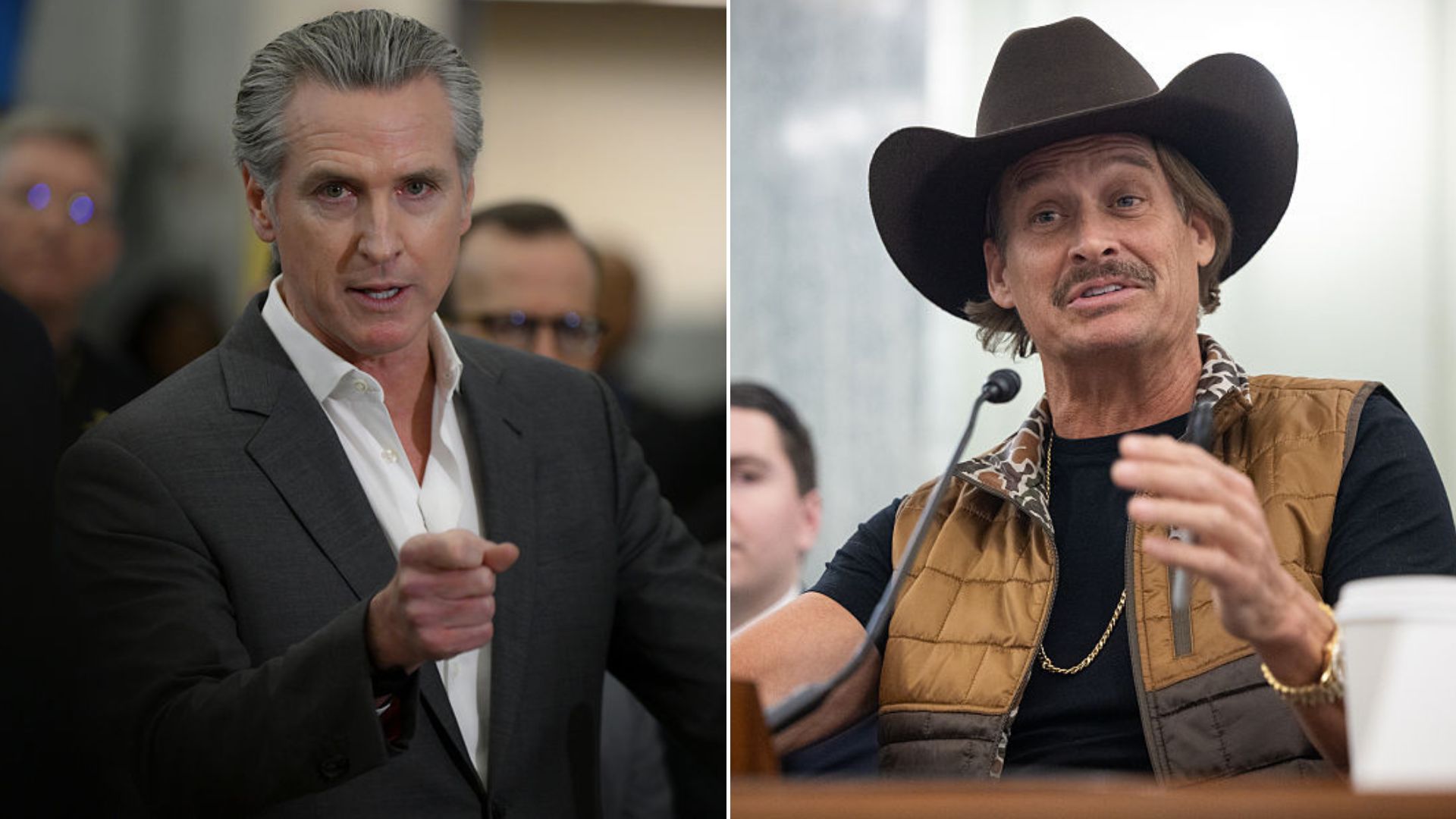
Kid Rock, whose real name is Robert Ritchie, has long been known for his controversial comments and outspoken political views. The musician, who rose to fame in the late 1990s and early 2000s, has made headlines in recent years for his public support of conservative causes and his outspoken criticism of Democratic politicians, including Newsom.
The catalyst for the Governor’s decision to ban Kid Rock from California was a recent event in which the singer made inflammatory remarks about social issues and political leaders. In particular, Kid Rock’s comments on immigration, gun control, and his criticism of Newsom’s policies, which he deemed as “anti-American,” led to a backlash from various political figures, especially within the liberal-leaning state of California.
While Kid Rock is no stranger to controversy, this latest series of remarks prompted Newsom to take action, signaling that such public figures who spread harmful rhetoric would not be welcome in California. The Governor’s ban has reignited the debate about the extent to which public officials should use their authority to punish individuals for their political opinions and statements.
The Governor’s Decision
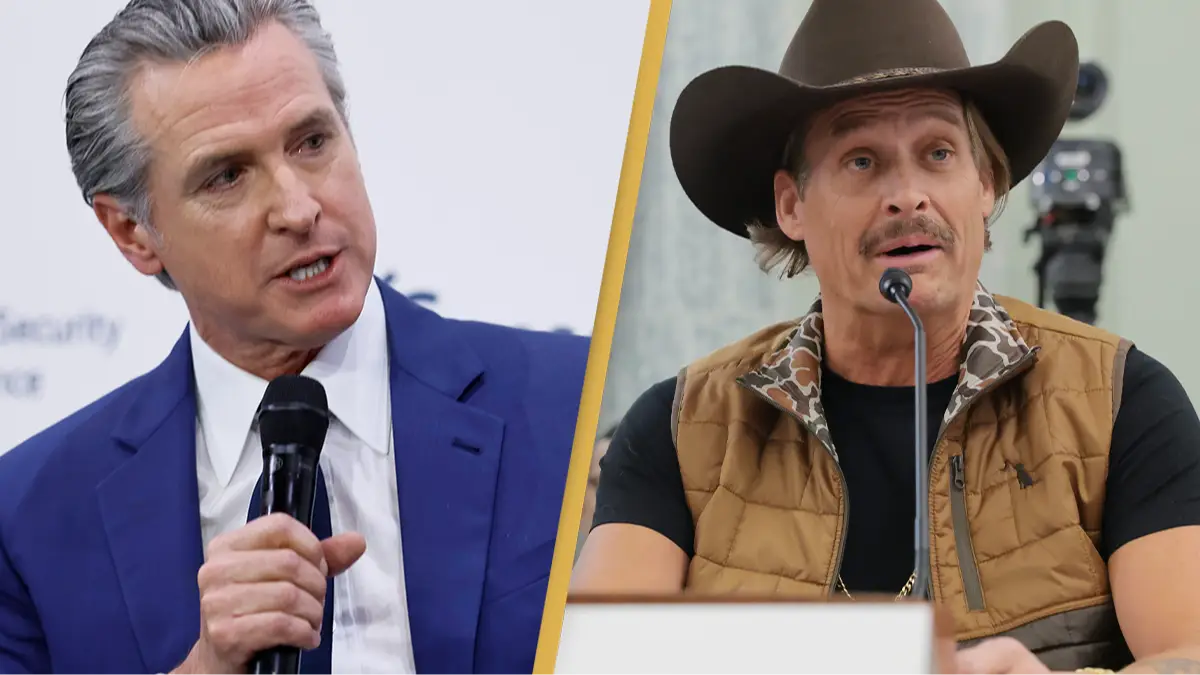
Governor Gavin Newsom’s decision to issue the ban was framed as a response to Kid Rock’s inflammatory comments, which many saw as divisive and harmful. In his statement, Newsom emphasized that while freedom of speech is a fundamental right, it is essential for leaders to stand against rhetoric that promotes hate or incites violence.
Newsom’s office cited several instances where Kid Rock’s remarks crossed the line from political discourse to harmful rhetoric. His comments about immigrants, racial minorities, and other vulnerable groups in society were seen by many as contributing to an atmosphere of intolerance and division. In California, a state known for its progressive policies on issues such as immigration, racial equality, and LGBTQ rights, Kid Rock’s rhetoric was viewed as incompatible with the values the state seeks to promote.
While Newsom’s decision was widely discussed, it has not been without its critics. Many opponents of the Governor’s move argue that banning someone from a state based on their political beliefs sets a dangerous precedent for limiting free speech and restricting access to public spaces based on ideology. The move has sparked heated discussions about the limits of free speech and how much power public officials should have in controlling who is allowed to visit or perform in their state.
Celebrity Influence in Politics
The controversy surrounding Kid Rock’s ban highlights the growing intersection between celebrity and politics. In recent years, musicians, actors, and other public figures have increasingly used their platforms to weigh in on political matters. While some celebrities are praised for their activism, others—like Kid Rock—have faced backlash for their divisive or controversial remarks.
This issue is especially poignant in today’s polarized political climate, where celebrities who hold strong political views can influence their fans and followers in ways that shape public opinion. Kid Rock, for example, has a large following among conservative and right-wing groups, and his political statements have been widely circulated within those communities.
The rise of celebrity influence in politics is not new, but it has become more pronounced in recent years, with figures like Kid Rock, Kanye West, and even former President Donald Trump drawing attention for their unapologetic political stances. This trend has raised important questions about the role of celebrities in shaping political discourse. Should public figures be allowed to use their platforms to promote political ideologies? And if so, should they be held accountable for the impact their words have on society?
Free Speech vs. Accountability
At the heart of the controversy surrounding Newsom’s ban is the issue of free speech. Kid Rock, like all individuals, has the constitutional right to express his opinions, even if those opinions are controversial or unpopular. However, Newsom’s decision raises the question: to what extent should government officials be allowed to take action against public figures for what they say?
Some argue that Newsom’s ban was an overreach, as it infringes on Kid Rock’s right to express his views freely. They contend that the Governor’s decision represents a slippery slope toward government censorship of political speech, especially when it targets those with whom political leaders disagree. If government officials begin to penalize individuals based on their speech, it could pave the way for more authoritarian practices that limit dissent and stifle political debate.
On the other hand, proponents of Newsom’s decision argue that actions like Kid Rock’s incendiary remarks contribute to a culture of hate and intolerance, and public figures who engage in such behavior should be held accountable. From this perspective, the Governor’s decision was not about silencing free speech but about ensuring that the state’s public spaces remain places where respect, tolerance, and inclusivity are prioritized.
The Public Response
As expected, the public response to Newsom’s decision has been sharply divided. On one side, supporters of the Governor argue that his actions were necessary to uphold California’s values of inclusivity and respect for all individuals, regardless of their political beliefs. These supporters view Kid Rock’s remarks as part of a larger pattern of harmful rhetoric that should not be tolerated.
On the other hand, Kid Rock’s supporters have rallied behind him, claiming that the Governor’s decision represents an attack on free speech and the rights of individuals to express their political opinions. They argue that the move is politically motivated and represents a double standard, as public figures from the left are often allowed to espouse controversial views without facing similar consequences.
The controversy has also sparked debates about the role of celebrities in politics. Some argue that celebrities should be more cautious with their words, as they have a significant influence over their followers. Others believe that celebrities, like all citizens, should be free to express their political opinions without fear of government intervention.
Legal and Political Ramifications
Legally, Newsom’s decision is likely to face challenges, as critics argue that banning an individual from entering a state based on their political views is unconstitutional. The legal ramifications of the ban could set important precedents regarding the limits of governmental power when it comes to freedom of speech and public access.
Politically, the ban is likely to have ramifications for Newsom’s relationship with his opponents. The move has already become a talking point in political circles, with some claiming that it’s an attempt by the Governor to silence voices that oppose him. Others view it as a bold stand for the values of tolerance and inclusivity that Newsom advocates for in California.
This incident is also likely to fuel further discussions on how politicians handle controversial figures in their states. It raises questions about the balance between free expression and the need for public officials to protect citizens from harmful or divisive rhetoric.
Looking Ahead
The ban on Kid Rock may be just the beginning of a larger conversation about how public officials handle the political activities of celebrities. As the influence of celebrities in politics continues to grow, politicians will be faced with difficult decisions regarding how to navigate these complex issues. Should public figures be allowed to freely express controversial views, or should there be limits to what can be said without consequence?
The outcome of this situation may set a precedent for how other governors and lawmakers address the relationship between politics and celebrity. It will also likely influence future discussions about the role of free speech in American democracy, especially in an era where political opinions are often amplified through social media and celebrity culture.
Conclusion
Governor Gavin Newsom’s decision to ban Kid Rock from California has sparked widespread debate, raising important questions about free speech, celebrity influence in politics, and the role of government in regulating public figures. While the decision has been praised by some as a necessary stance against harmful rhetoric, others view it as an overreach that threatens the fundamental rights of citizens to express their opinions.
As the political and legal ramifications of the ban continue to unfold, it is clear that this incident is part of a larger conversation about the intersection of politics, public figures, and the media in modern America. The controversy surrounding Kid Rock’s visit to California will likely be remembered as a defining moment in the ongoing culture wars, as athletes, musicians, and other celebrities continue to wield their influence in the political arena.