
Table of Contents
- A Reward Notice With Enormous Symbolic Weight
- Who Mojtaba Khamenei Is and Why He Matters
- Why the Timing Makes This So Explosive
- The Bigger Strategy Behind Rewards for Justice
- The US Message to Iran and the Region
- Trump’s Claim That Iran Is Close to Surrender
- Why Other Iranian Officials Were Named Too
- Tehran’s Likely Interpretation of the Move
- What This Means for the Conflict Ahead
A Reward Notice With Enormous Symbolic Weight
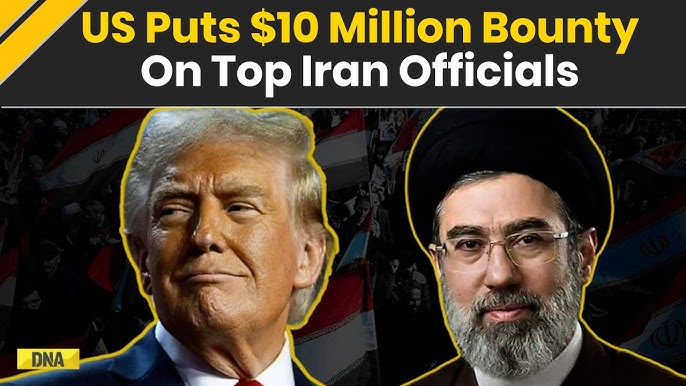
The number in the headline is what catches the eye first. Up to $10 million is large enough to generate instant global attention, but the deeper importance lies in who was named and when. Reuters reported that the US offer included Mojtaba Khamenei as well as other top Iranian officials such as figures tied to intelligence and internal security. That made the announcement unusually sensitive because it touched the uppermost layer of Iranian authority at a moment when the country was already struggling to project continuity and control.
Rewards for Justice has long been used by Washington as a tool to gather intelligence on individuals accused of terrorism or links to terrorism against the United States. In this case, the reward functioned on multiple levels at once. On the surface, it was a practical attempt to solicit information. At a deeper level, it was a message that the US regarded Iran’s emerging post succession leadership not as a stable new reality to be quietly accepted, but as a structure to be tracked, pressured, and challenged.
That is why the announcement resonated so widely. It was not just a bureaucratic update. It was a statement of intent.
Who Mojtaba Khamenei Is and Why He Matters
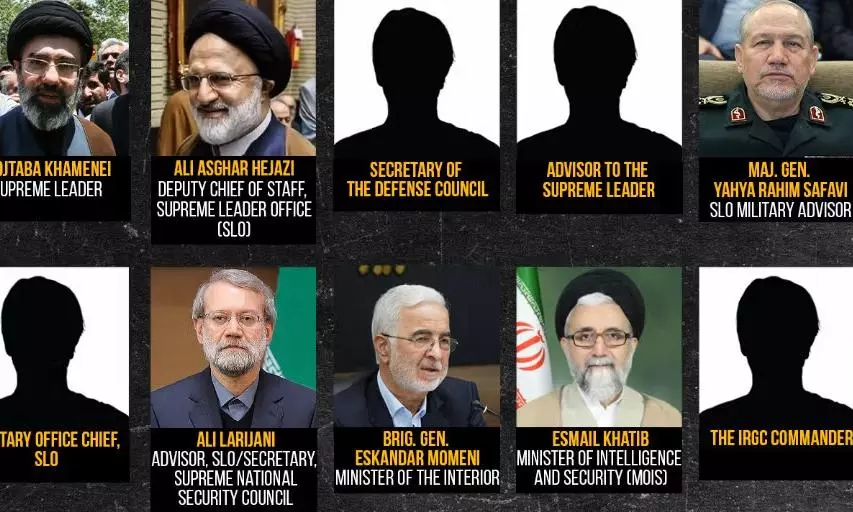
Mojtaba Khamenei is not a new name inside Iran’s power circles, but for years he remained more influential behind the scenes than in public life. Reuters reported that after the death of Ayatollah Ali Khamenei in joint US Israeli airstrikes on February 28, Mojtaba was elevated as Iran’s new supreme leader. His appointment was highly consequential because it marked a dramatic transfer of authority in the middle of war and because he is widely seen as a hardliner with close ties to the Revolutionary Guards.
That background matters because the supreme leader in Iran is not merely a ceremonial figure. The office holds enormous influence over the military, security services, foreign policy, judiciary, and broad direction of the state. So when the US publicly offers a reward involving the new supreme leader, it is not only challenging a government official. It is confronting the center of Iran’s political and ideological system.
Mojtaba’s rise also brought immediate scrutiny because he has long been considered less visible and less publicly tested than his father. Reports have described him as a figure whose power base comes heavily from elite networks, especially hardline clerical and military backing, rather than broad public presence. That makes the current moment especially volatile. A new leader who has not fully consolidated his legitimacy is now facing not only internal uncertainty, but an open American effort to gather intelligence on his whereabouts and inner circle.
Why the Timing Makes This So Explosive
Timing is everything in international politics, and this announcement arrived during one of the most fragile moments in the region. Reuters reported that Mojtaba Khamenei took power after his father was killed in the initial wave of the current war, and that he himself had reportedly been injured. At the same time, speculation over his health and visibility has intensified because he has not appeared publicly in person since taking office, apart from written messages and official statements relayed through others.
That context turns the US reward announcement into something more than a standard intelligence notice. It comes at a moment when Washington appears eager to exploit uncertainty around Iran’s leadership. If the new supreme leader is wounded, hidden, or struggling to establish authority, then an American reward program aimed at senior officials does not just gather tips. It adds psychological and political strain to an already pressured regime.
This is also why the move is likely to be read in Tehran not as a limited counterterrorism step, but as part of a wider campaign to undermine the regime during wartime. In the language of statecraft, money can act as a signal just as powerfully as missiles. A reward says: we are watching, we believe your system is vulnerable, and we want insiders, defectors, or regional actors to think seriously about helping us.
The Bigger Strategy Behind Rewards for Justice
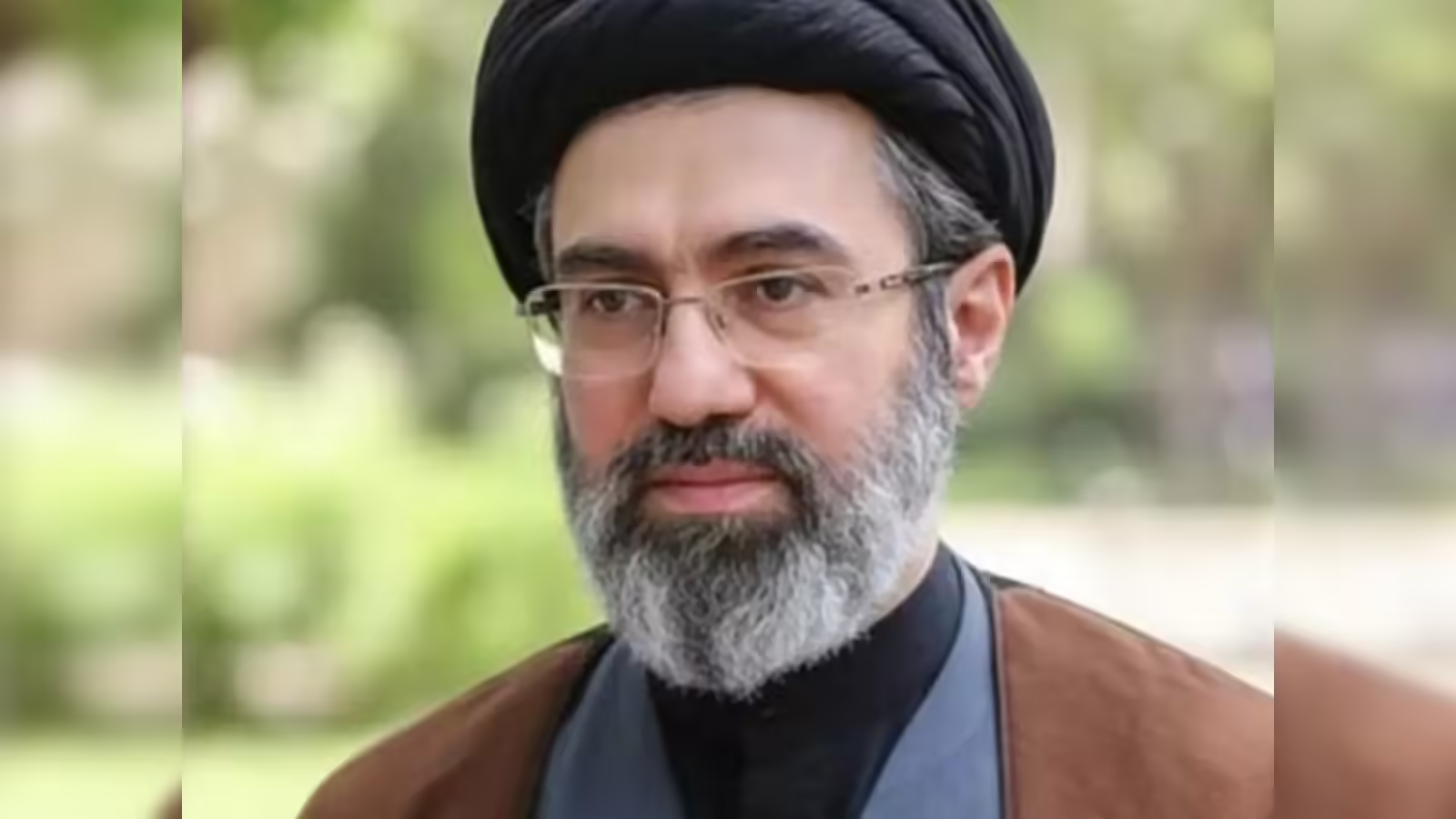
To understand why this matters, it helps to see the reward in the larger strategic frame. The Rewards for Justice program is designed to attract actionable information from sources that formal diplomacy, surveillance, or public pressure may not reach. In some cases that means locating suspects. In others it means mapping networks, uncovering safe houses, identifying operational links, or encouraging defections. Reuters described the current offer as directed at ten senior figures tied to the Revolutionary Guards, which the US designates as a foreign terrorist organization.
In practical terms, that means Washington is trying to widen the pressure field around Iran’s ruling elite. Instead of focusing only on battlefield deterrence or sanctions, it is also leaning into intelligence based disruption. Such tactics can create anxiety inside targeted systems because they force leaders to ask who around them might be tempted, compromised, or already talking.
The value of the reward is part of that calculation. Up to $10 million is not just about generosity. It is about attention and persuasion. It tells potential informants that the US believes the information is valuable enough to pay for, and it tells Iranian officials that even the people closest to them may now be seen as possible weak points.
The US Message to Iran and the Region
Washington’s move also sends a broader message to the region. By publicizing the reward at this stage of the war, the US is showing that it is not thinking only in terms of immediate military exchanges. It is also preparing for a longer contest over who holds power inside Iran, how coherent that power remains, and whether cracks can be widened over time. Reuters reported that Mojtaba’s succession followed a devastating strike that killed his father and other relatives, making the present Iranian leadership transition highly unusual and deeply unstable.
In that light, the reward becomes part of a campaign of cumulative pressure. Military strikes can damage infrastructure and eliminate key figures. Sanctions can constrict the economy. Diplomatic isolation can reduce room for maneuver. Intelligence rewards can then target secrecy and internal trust. Each instrument works differently, but together they create a climate in which a regime may feel besieged on multiple fronts at once.
That does not mean the strategy will necessarily succeed. States under intense pressure do not always fracture. Sometimes they harden. Sometimes they become even more secretive and repressive. But the announcement makes clear that the US is trying to increase the cost of holding power inside Tehran, not just the cost of opposing Washington abroad.
Trump’s Claim That Iran Is Close to Surrender
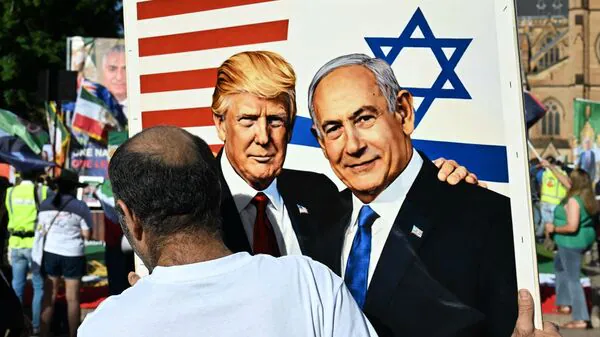
Adding to the drama was President Donald Trump’s claim that the Iranian government was “about to surrender.” That kind of language raises the stakes even further because it suggests the White House sees Iran not merely as under pressure, but as nearing a breaking point. Yet the broader reporting does not show a government visibly collapsing. Instead, it shows an Iranian system under immense stress, under leadership uncertainty, and facing significant military and diplomatic strain, but still functioning, still communicating, and still trying to project control.
This gap between rhetorical certainty and messy reality is important. War narratives often favor dramatic language, but political systems rarely fall in neat, linear ways. Even where there is confusion, injury, or elite rivalry, regimes can survive much longer than outside observers predict. That is especially true in Iran, where the security state, the Revolutionary Guards, and hardline clerical institutions remain deeply embedded.
So while Trump’s statement fits the broader American posture of maximum pressure, it should also be understood as political messaging rather than settled fact. The same applies to the reward announcement. It reveals Washington’s intentions, but not necessarily Tehran’s immediate weakness.
Why Other Iranian Officials Were Named Too
One of the most revealing aspects of the announcement is that Mojtaba Khamenei was not listed alone. Reuters said the reward also covered other senior Iranian officials, including top security and intelligence figures. That is a clue to how the US sees the current structure of power. Rather than assuming every decision flows through one leader alone, Washington appears to be focusing on a wider network of individuals whose authority spans internal repression, intelligence operations, and security coordination.
That broader focus matters because Iran’s system is not a simple one man hierarchy. The supreme leader holds immense power, but the regime’s survival also depends on institutions and personalities around him. Interior ministries, intelligence arms, and security councils all help maintain control. If the US wants to pressure the system effectively, it must look beyond the headline name and target the architecture underneath.
This also means the reward is likely intended to generate intelligence not just on whereabouts, but on relationships. Who is meeting whom. Who is influencing succession decisions. Who is controlling lines of communication. Who is still visible and who has disappeared. In wartime, that kind of knowledge can be as strategically important as a location itself.
Tehran’s Likely Interpretation of the Move
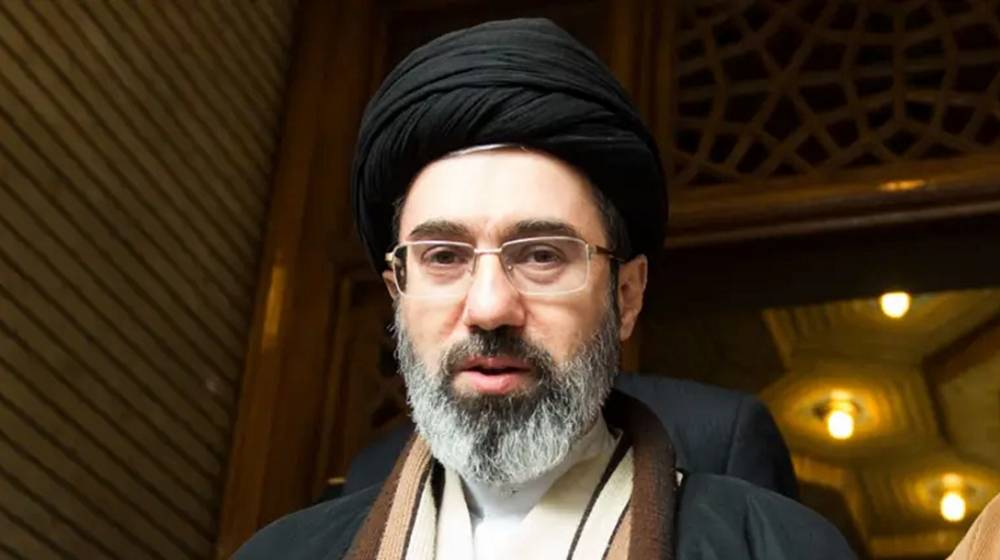
From Tehran’s perspective, the reward will almost certainly be seen as an aggressive and humiliating escalation. Iran has long accused Washington of using terrorism designations and intelligence tools as political weapons, and it is unlikely to treat the Rewards for Justice listing as a narrow legal action. Instead, Iranian officials are more likely to interpret it as a deliberate attempt to delegitimize the new supreme leader and shake confidence inside the ruling class.
That matters because perception shapes reaction. If Iran sees the reward as part of a broader effort to destabilize the regime, it may respond not with concession but with tighter internal discipline, stronger anti espionage crackdowns, and more aggressive rhetoric abroad. Indeed, recent coverage already suggests Tehran is under heavy internal strain and on alert for spies and infiltrators. In such an atmosphere, even symbolic moves can produce real consequences on the ground.
The effect may also extend beyond Iran. Regional allies and proxy groups will read the reward as proof that Washington is willing to keep escalating pressure on the regime’s core. That could deter some actors, alarm others, and complicate any near term path back to negotiation.
What This Means for the Conflict Ahead
The offer of up to $10 million for information on Mojtaba Khamenei and other Iranian officials is not just another item in the news cycle. It is a sign that the conflict is moving into a more layered and dangerous phase, where leadership uncertainty, intelligence warfare, public messaging, and military pressure are all interacting at once. Reuters’ reporting shows that Iran’s new supreme leader has emerged during extraordinary turmoil, has not fully appeared in public, and is already the subject of intense speculation and scrutiny.
In that environment, the US reward does not stand alone. It becomes part of a larger narrative about whether Iran’s ruling structure is stabilizing or fraying, whether Washington believes more internal disruption is possible, and whether the region is heading toward renewed negotiation or deeper confrontation. The answer is not yet clear. What is clear is that when a superpower publicly posts a multimillion dollar reward tied to the top tier of another country’s wartime leadership, the move is designed to reverberate far beyond the official notice itself.
For now, the reward is both a headline and a warning. It tells the world that the US sees Iran’s new leadership as a legitimate intelligence target. It tells Tehran that even succession will not provide political breathing room. And it tells everyone watching that this crisis is no longer only about missiles, retaliation, or battlefield exchanges. It is also about who can see deeper into the machinery of power, who can shake that machinery, and who can survive the pressure that follows.