

Table of Contents
- The arrest that turned a tech founder into global headlines
- Why Telegram’s tiny workforce became part of the story
- What French investigators were actually looking at
- Telegram’s defense and its free speech position
- Macron, Moscow, and the politics around the case
- A warning shot for the wider tech industry
- The paradox at the heart of Telegram’s appeal
- Why this case matters beyond one arrest
- The future Telegram now has to confront
The arrest that turned a tech founder into global headlines
French authorities detained Durov as part of a preliminary investigation focused on allegations that Telegram had not done enough to curb criminal activity on its platform and had failed to cooperate adequately with law enforcement. Reuters reported that the probe involved concerns over Telegram’s alleged role in enabling illicit activity through insufficient moderation and weak cooperation with investigators. This was not merely a symbolic questioning of a famous executive. It was tied to a serious legal effort examining whether the structure and conduct of the platform itself may have contributed to criminal misuse. The arrest immediately drew global attention because Telegram is not a niche app. It has become one of the world’s most influential messaging services, widely used for political communication, wartime updates, activist organizing, media distribution, and private messaging across multiple countries.
What made the moment even more explosive was Durov’s public image. For years, he had cultivated the persona of a libertarian minded tech founder who resisted state pressure and positioned Telegram as a defender of privacy and free expression. That image made his detention feel to supporters like a clash between individual freedom and state control, while critics saw it as overdue accountability for a platform accused of looking away while criminal networks exploited its tools. That tension is precisely why the case spread so quickly across news cycles, opinion pages, and social media feeds.
Why Telegram’s tiny workforce became part of the story

Harsh Goenka’s post did not create the scandal, but it helped frame public fascination around one important question: how can a platform of Telegram’s scale operate with such a tiny team? According to widely circulated coverage of his post, Goenka highlighted that Telegram had around 1 billion users, a $30 billion valuation or market value estimate, no advertising model, only about 30 employees, and no HR department, with Durov personally involved in recruiting talent through contests. That description was so unusual that it quickly became a headline in itself.
The viral appeal of that claim was obvious. In a tech industry known for sprawling management structures, huge moderation teams, and aggressive hiring, Telegram appeared to represent the opposite extreme. Supporters praised the company as a masterclass in lean execution. Critics, however, argued that this same tiny workforce may help explain why Telegram has repeatedly faced questions about moderation capacity, compliance systems, and governance oversight. In other words, what looked like operational brilliance to some also looked like structural vulnerability to others.
That is why the “30 employees, no HR” detail became more than a curiosity. It became a symbol of the larger controversy surrounding Telegram. If a platform is large enough to shape public discourse and attract organized criminal misuse, critics argue it also needs robust systems for safety, accountability, and cooperation. Admirers may see a clean, efficient company. Regulators may see a platform too large to be run like a small startup.
What French investigators were actually looking at
At the center of the case were allegations that Telegram failed to respond adequately to criminal abuse of the platform and did not sufficiently cooperate with law enforcement requests. Reuters reported that the wider legal concerns involved alleged facilitation of illicit activity, while later reporting said French prosecutors linked the investigation to serious offenses including child sexual abuse material, drug trafficking, money laundering, and fraud related abuses allegedly occurring on Telegram. These are the kinds of accusations that shift a case from a political talking point into a high stakes legal matter.
That distinction matters. The case was not simply about whether Telegram hosted controversial speech. It was about whether authorities believed the company’s systems, policies, and actions fell short in the face of clearly illegal activity. For many observers, that changed the tone of the debate. A platform can defend free speech, but it cannot legally ignore serious criminal conduct. French investigators appeared to be testing where that line should be drawn when a messaging app emphasizes privacy, limited intervention, and lean staffing.
At the same time, the case raised difficult questions about what level of responsibility should rest with a platform founder. Telegram and Durov’s defenders argued that holding the head of a platform personally responsible for user misconduct was unreasonable. Critics countered that when systemic non cooperation or weak enforcement is alleged, responsibility at the leadership level becomes part of the legal conversation.
Telegram’s defense and its free speech position
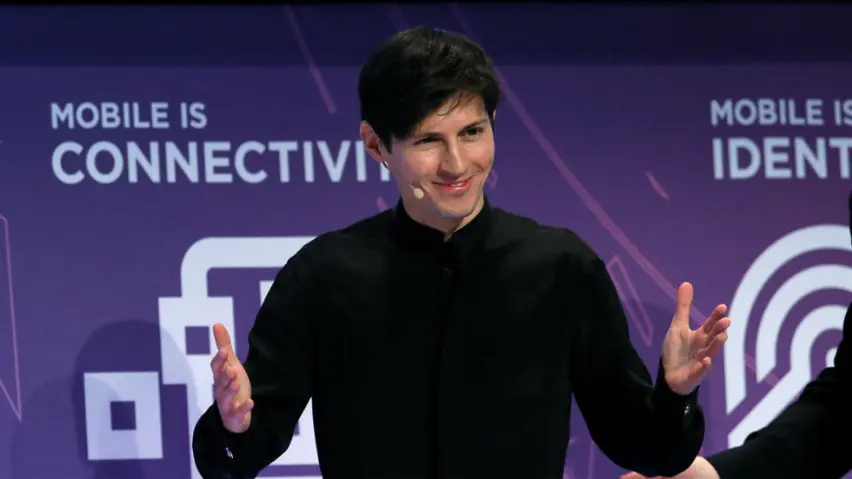
Telegram responded sharply, rejecting the suggestion that either the platform or its owner should be blamed for misuse by bad actors. Reuters reported that Telegram said it complies with European Union laws and operates with moderation standards consistent with industry norms. The company’s messaging has consistently emphasized that it processes legitimate requests to remove illegal public content, such as channels, bots, and sticker sets, while also maintaining that it does not submit to politically motivated censorship or broad local restrictions on speech.
This defense reflects the balancing act Telegram has tried to maintain for years. On one side, it presents itself as a privacy focused, politically neutral platform that resists pressure from governments. On the other, it insists it does take action against illegal public content when proper legal requests are made. The problem for Telegram is that such a position may sound principled in a public statement yet appear inadequate to investigators who believe the company’s actual cooperation or enforcement has been insufficient.
The arrest therefore intensified an old question that has haunted digital platforms for years: where does principled resistance end and negligence begin? Telegram’s stance is appealing to users who fear censorship. But to regulators and law enforcement, especially in cases involving organized crime or child exploitation, the same stance can look like obstruction or passivity.
Macron, Moscow, and the politics around the case
French President Emmanuel Macron moved quickly to say that Durov’s arrest was not a political decision. That statement was important because the case had the potential to become instantly geopolitical. Durov is a globally known Russian born entrepreneur with French citizenship, and Telegram itself has long been associated with debates over state pressure, censorship, and digital freedom. Macron’s intervention appeared aimed at drawing a clear line between criminal investigation and political persecution.
Still, the case did not stay politically neutral in public discussion. The Kremlin said the accusations required serious evidence and warned that the matter should not become political persecution. Russian officials framed the issue partly through the lens of freedom of communication, even though Russia itself has had its own long history of conflict with Telegram over regulation and compliance. That irony did not go unnoticed.
The political reactions exposed how difficult it is to isolate a global tech case from broader narratives. Supporters of Durov interpreted the arrest as a signal to dissenting platforms. Critics viewed the political outrage as a distraction from allegations involving serious crimes. In practical terms, both readings helped drive the story’s viral power. It was not just about one man or one app anymore. It had become a symbolic fight over who controls the future of digital communication.
A warning shot for the wider tech industry
Reuters Breakingviews described the arrest as a fuzzy warning to Big Tech, and that framing captured why the case resonated far beyond Telegram alone. If prosecutors can pursue a founder over allegations tied to platform abuse and inadequate cooperation, then other companies may also face growing pressure to prove they have credible systems for moderation, safety, and legal responsiveness. The case suggested that the era of tech executives hiding comfortably behind the scale and complexity of their platforms might be narrowing.
This does not mean every messaging platform is about to face the same kind of action. Telegram occupies a particular place in the digital ecosystem. It is huge, politically visible, and often discussed in connection with both free speech advocacy and harmful content concerns. But the broader implication is clear. Regulators increasingly want platforms to show that they are not merely neutral pipes. They want evidence of meaningful governance.
For startup founders and established tech giants alike, the Telegram case may become an example cited in future debates over executive liability, platform architecture, and moderation obligations. Even if the legal outcome remains contested, the message from authorities was unmistakable. Scale without responsibility is becoming harder to defend.
The paradox at the heart of Telegram’s appeal
Part of Telegram’s success comes from the very traits that now place it under scrutiny. Its minimalist structure, founder driven identity, resistance to state pressure, and emphasis on privacy have made it deeply attractive to users who distrust traditional institutions or heavily moderated platforms. That appeal has been especially strong in politically tense regions, war zones, and countries where users fear censorship or surveillance. Reuters noted Telegram’s major role in distributing information during the Russia Ukraine war, highlighting just how central the app has become in modern information flows.
But that same openness creates a paradox. A service designed to maximize user autonomy and reduce institutional control can also become highly attractive to criminals, propagandists, extremists, fraud networks, and illicit traders. The more influential the platform becomes, the more difficult it is to argue that design philosophy alone should excuse governance weaknesses.
This paradox is what makes the Durov case more than celebrity founder drama. It reaches into the central contradiction of internet culture itself. People want freedom, privacy, and minimal interference. They also want safety, accountability, and protection from harm. Platforms that promise both often discover that the balance is fragile and politically explosive.
Why this case matters beyond one arrest
For many readers, the temptation is to reduce the story to a sensational headline about a billionaire founder arrested in France. But the deeper significance lies in what the case reveals about digital infrastructure and public trust. Telegram is not just another app. It is a communication layer used by ordinary families, political organizers, journalists, dissidents, financial scammers, conspiracy communities, and criminal actors all at once. That complexity means every legal move against the platform will be interpreted through multiple competing moral lenses.
It also matters because public appetite for simple narratives is colliding with the messy reality of platform governance. Some people want Durov cast as a free speech martyr. Others want him portrayed as a reckless executive who built a system too indifferent to abuse. The truth may be far more uncomfortable. Modern platforms can genuinely expand freedom while also creating spaces where severe harm becomes easier to organize, hide, or scale.
That is why this case is likely to stay relevant. It raises questions that no court ruling alone can settle. How much moderation is enough? How much privacy is too much? How much personal responsibility should a founder bear when a platform becomes massive enough to shape society?
The future Telegram now has to confront
Whatever happens next in French courts or investigations, Telegram’s public image has already been altered. The company can no longer rely only on its mythology of lean innovation, rebellious independence, and founder charisma. Those qualities may still inspire loyal users, but they are now competing with a more damaging narrative: that Telegram grew too big, too influential, and too consequential to be managed like an ideological experiment.
That does not automatically make the accusations true, nor does it prove the company deliberately enabled criminal conduct. But it does mean the burden on Telegram has changed. The platform must now convince the public, regulators, and perhaps courts that it can remain committed to privacy and free expression while also responding credibly to illegal abuse and lawful investigations.
In the end, Pavel Durov’s arrest became global news because it touched a raw nerve in the modern internet. The world has spent years celebrating disruptive founders who build systems outside old institutional rules. Now governments, courts, and users are asking a harder question. When those systems become powerful enough to shape lives, politics, and crime, who answers for the consequences? Telegram’s future may depend on whether it can offer an answer that satisfies all three.