
Table of Contents
- The Images That Instantly Hooked the Internet
- Why So Many People Thought It Might Be Real
- The Truth Behind the Viral Photos
- The Viral Economy Rewards Absurdity
- Why AI Detection Is Not a Perfect Solution
- Stephen Hawking’s Public Legacy Meets the AI Era
- Bill Clinton, Celebrity Politics, and Shareable Fiction
- How Context Vanishes Across Platforms
- What This Says About the Future of Social Media
- The Bigger Warning Behind One Viral Joke
The Images That Instantly Hooked the Internet
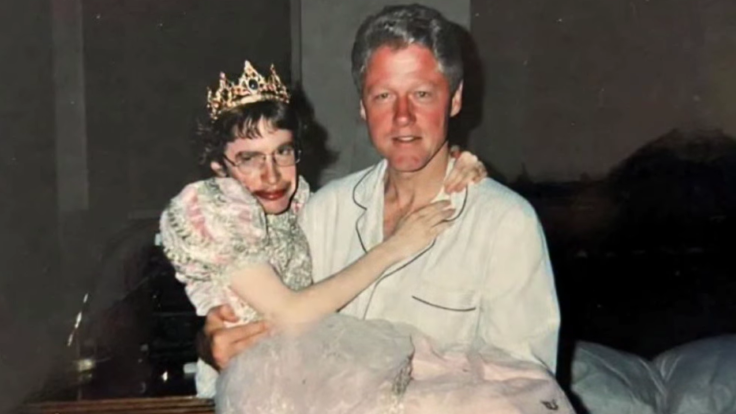
The reason the pictures spread so quickly is not difficult to understand. They combined two globally recognizable public figures in a scene that seemed almost too strange to invent. Stephen Hawking, one of the most famous scientists in modern history, appeared in a princess costume. Bill Clinton, a former president whose face is instantly familiar to millions, appeared to be carrying him. The setting looked festive and indoors, with details that suggested some sort of themed gathering.
That kind of image is designed for virality, whether intentionally or not. It is visually striking, emotionally confusing, and easy to react to in public. Users did not need background context to comment on it. The image itself became the conversation. Some saw it as comedy. Some treated it as digital nonsense. Others asked serious questions about whether it might be authentic. The images moved so quickly because they invited participation without requiring verification.
This is one of the defining features of today’s viral culture. Content no longer spreads because people understand it. It spreads because people feel something before they understand it. Shock, amusement, disbelief, and curiosity all function like fuel. By the time facts catch up, the content has already travelled far beyond its original context.
Why So Many People Thought It Might Be Real
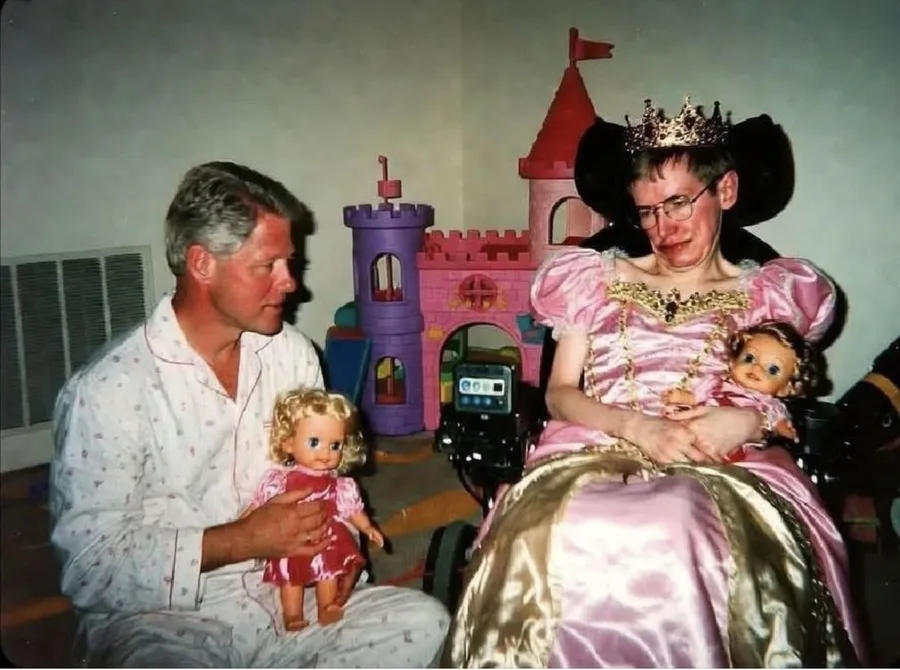
At first glance, the scene seemed ridiculous. But online audiences have become so accustomed to bizarre celebrity images, unexpected archival photos, and strange slices of elite social life that even the improbable can feel possible for a few seconds. That brief window of uncertainty is often enough.
The pictures apparently showed enough realism in the faces, clothing textures, and body positioning to make people pause. That pause matters. Most viral misinformation does not succeed because it is perfectly believable. It succeeds because it is believable long enough to be shared.
The names involved also made the images harder for some people to dismiss outright. Stephen Hawking was known not just for his scientific achievements, but also for his public presence, his wit, and his willingness to engage popular culture. Bill Clinton has spent decades in the public eye and remains recognizable across generations. When famous figures are placed inside an absurd visual narrative, audiences often search their memory for some possible explanation instead of immediately rejecting the image.
That is one reason fabricated images involving celebrities and public figures spread so effectively. Familiar faces lower skepticism. The audience already knows the people, so the brain becomes more willing to process the image as a distorted version of reality rather than a total invention.
The Truth Behind the Viral Photos
The images were later identified as artificial creations rather than genuine photographs. According to the account described in your source text, the images were reportedly generated by a Facebook user and originally posted in a group known for AI generated content. The creator is said to have labeled them as AI made, apparently assuming that the absurdity of the scene itself would make the joke obvious.
That assumption did not hold once the images left their original setting. Once reposted on other platforms, stripped of disclaimers and removed from the context in which they were created, they began functioning like standalone images. In that stripped down form, they no longer carried the warning that they were synthetic. They simply looked like strange photographs circulating online.
This is one of the central dangers of generative AI content. Context travels poorly. A label attached to an original upload may disappear when the image is screenshotted, reposted, cropped, or embedded in a meme. What begins as satire inside one online community can arrive elsewhere as apparent evidence.
The result is not always a giant political deception or a coordinated propaganda campaign. Sometimes it is simply confusion. But confusion on a mass scale is not harmless. It changes how people interpret reality, how they assess media, and how easily they trust what they see.
The Viral Economy Rewards Absurdity
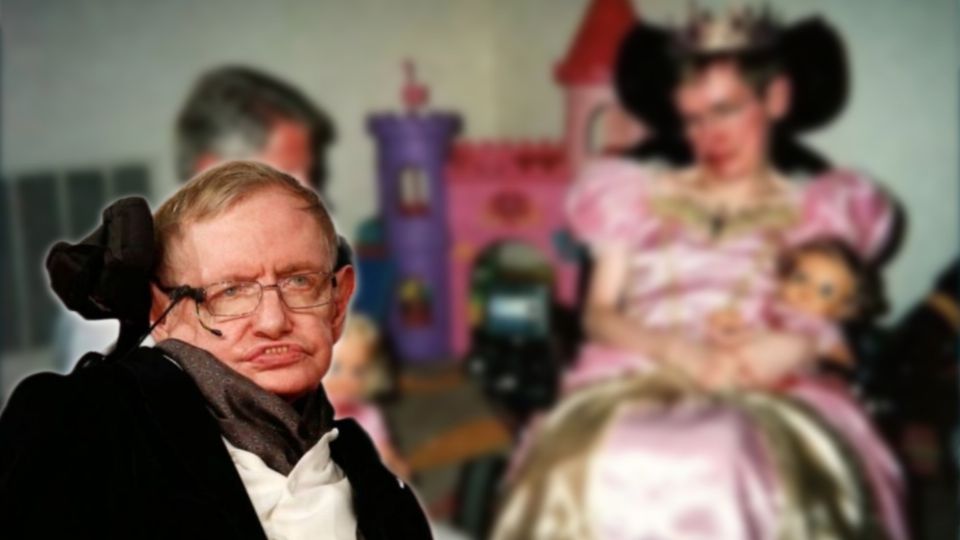
There is another reason these images exploded online. Platforms are built to reward emotional response. Content that is confusing, outrageous, hilarious, offensive, or surreal tends to attract more attention than content that is calm and clearly explained. The Hawking and Clinton images fit perfectly into that system.
People did not need to verify the image to benefit socially from sharing it. They could post it to make a joke, to express disbelief, to signal cultural awareness, or simply to join the moment. That is how the viral economy works. The reward comes first. The truth often arrives later, if it arrives at all.
This also explains why absurd AI images have become especially powerful. They sit at the intersection of novelty and realism. They are strange enough to get attention, yet polished enough to trigger uncertainty. In other words, they are perfect products for social media circulation.
The more outrageous the image, the more people think they are safe sharing it ironically. But ironic sharing still spreads the content. It still introduces it to people who will see it without context. It still builds momentum. Even skepticism can function as distribution.
Why AI Detection Is Not a Perfect Solution
One detail in the original account makes the story even more revealing. AI detection tools reportedly gave mixed results. One tool identified the pictures as synthetic, while another did not flag them clearly. That inconsistency reflects a larger technological problem.
Many people assume there is now a reliable technical method to determine whether an image is real or AI generated. In reality, the situation is much less stable. Detection systems can help, but they are not universal truth machines. Some work better on certain types of images than others. Some can miss content that has been compressed, edited, or reposted multiple times. Some may produce confident results that are wrong.
This matters because the public is often told to rely on tools without being told how limited those tools may be. In practice, verification still requires judgment, source tracing, and contextual investigation. Technology can assist, but it cannot replace careful evaluation.
The weakness of detection tools also means the problem may intensify as image generation improves. Every improvement in synthetic realism raises the bar for verification. The same systems used to create more convincing images also make it harder for audiences to tell when they are being fooled.
Stephen Hawking’s Public Legacy Meets the AI Era
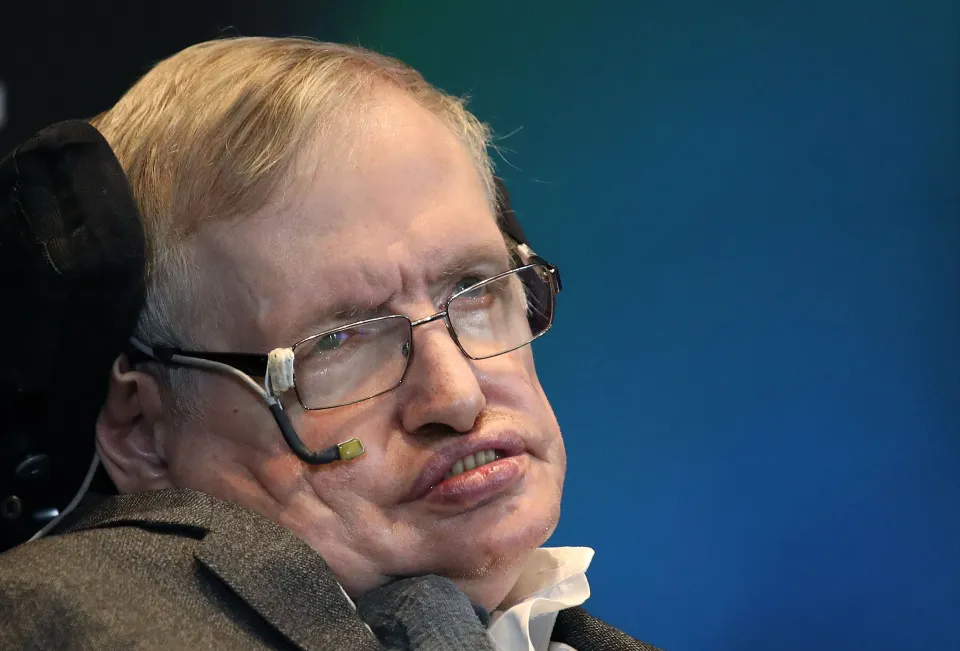
Part of what made this particular fabrication so provocative is that it involved Stephen Hawking, a figure whose public identity carries enormous symbolic weight. Hawking was not just a scientist. He became an icon of intellect, resilience, and scientific imagination. Even after his death, his image continues to carry cultural power.
That makes him especially vulnerable to posthumous digital manipulation. Once a person becomes a symbol, their image can be reused, reshaped, and repackaged for countless online narratives. AI intensifies that possibility because it allows creators to generate scenes that never happened while preserving enough facial realism to evoke a sense of authenticity.
There is also an ethical dimension here. When deceased public figures are inserted into fabricated scenes, the issue is not only misinformation. It is also dignity, memory, and consent. Hawking cannot clarify, object, or respond. His public image can be repurposed without his participation in ways that blur humor, exploitation, and manipulation.
That question will become more pressing in the years ahead. As generative systems improve, society will have to decide what boundaries should exist around the synthetic use of the dead, especially those whose likeness still holds public authority.
Bill Clinton’s presence in the image added another layer to the viral formula. He belongs to a category of public figure that occupies both political and celebrity space. That dual identity makes him especially usable in online content. He is familiar enough to be instantly recognizable, political enough to attract controversy, and culturally embedded enough to support endless reinterpretation.
Images involving figures like Clinton spread quickly because they activate multiple audience instincts at once. Some users react politically. Others react as pop culture consumers. Still others engage because the content feels like a weird twist in the long running spectacle of elite public life.
This is why synthetic images involving politicians are rarely just jokes. Even when created for humor, they enter an information environment where audiences already carry assumptions, biases, and suspicions. A strange image does not land in a vacuum. It lands in a culture primed for speculation.
That is what makes viral AI images so difficult to contain. They do not merely show something false. They invite people to attach their own interpretations, and those interpretations often spread faster than the factual correction.
How Context Vanishes Across Platforms
One of the most important lessons from this episode is how quickly context collapses when content moves between platforms. A post that begins in an AI art group may include labels, captions, or community assumptions that make its artificial nature obvious. But once the image is reposted elsewhere, all of that can disappear.
A screenshot rarely includes the full original explanation. A repost account may deliberately omit the disclaimer because confusion drives engagement. A meme page may add text that changes the tone entirely. A user on another platform may encounter the image as a detached artifact, with no indication of where it came from or why it was made.
This is why platform level labeling matters, but also why labeling alone is not enough. The internet is not a single controlled channel. It is an ecosystem of copying, remixing, reposting, and decontextualization. Once content becomes viral, its original meaning is often lost almost immediately.
That makes the verification burden heavier on ordinary users, who are now expected to behave like investigators while scrolling at speed through emotionally charged material.
What This Says About the Future of Social Media
The Hawking and Clinton image story is not memorable simply because it was bizarre. It matters because it reveals where social media is heading. Platforms are becoming environments where seeing is no longer even a weak guarantee of believing. Visual evidence used to hold a special place in public culture. A photograph carried weight because it seemed to document reality. That assumption is eroding.
As AI generated images become easier to make and harder to detect, public trust in visual media may weaken across the board. That creates a dangerous paradox. Fake images may spread more easily, but real images may also be dismissed more quickly. Once people become accustomed to fabrication, everything becomes arguable.
This could reshape journalism, politics, entertainment, and even personal relationships. Evidence will require more than appearance. Verification will become a more central skill. And the public may become increasingly vulnerable to a mix of gullibility and cynicism, believing false things when they are emotionally compelling while doubting true things when they are inconvenient.
The Bigger Warning Behind One Viral Joke
At first glance, the viral images of Stephen Hawking in a princess costume being carried by Bill Clinton may seem like little more than internet absurdity. They look like the kind of digital prank designed to produce laughter and confusion for a day before disappearing into the endless stream of online nonsense. But that reading is too small.
What the episode really shows is how fragile visual trust has become. It shows how easily disclaimers can vanish, how quickly synthetic images can outrun their origins, and how effectively famous faces can be used to manufacture attention. It also shows that the problem is not limited to malicious propaganda. Even content created as a joke can become misinformation once it escapes its original frame.
That is the reality of the AI era. The danger is no longer just that false content exists. False content can now arrive polished, viral, emotionally magnetic, and socially rewarding to share. The public is being asked to navigate that environment in real time, often with incomplete tools and even less patience.
In the end, this story is not just about one strange image. It is about the future of credibility itself. If a fabricated scene this absurd can travel so widely and confuse so many people so quickly, then the real question is no longer whether AI generated misinformation is here. It is how society plans to live with it.