
Table of Contents
- A Rescue Dog’s Cancer Fight Turns Into a Global Story
- Why This Case Captured So Much Attention
- How ChatGPT Became Part of the Process
- Turning Tumor Tissue Into Data
- Where AlphaFold Entered the Picture
- Why mRNA Became the Chosen Route
- The Hardest Part Was Not the Science
- What Happened After the Vaccine Was Given
- Can AI Really Help Create Vaccines?
- What This Could Mean for the Future of Personalized Medicine
A Rescue Dog’s Cancer Fight Turns Into a Global Story
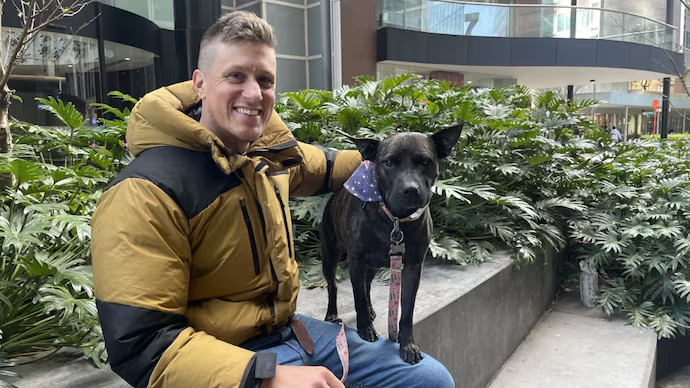
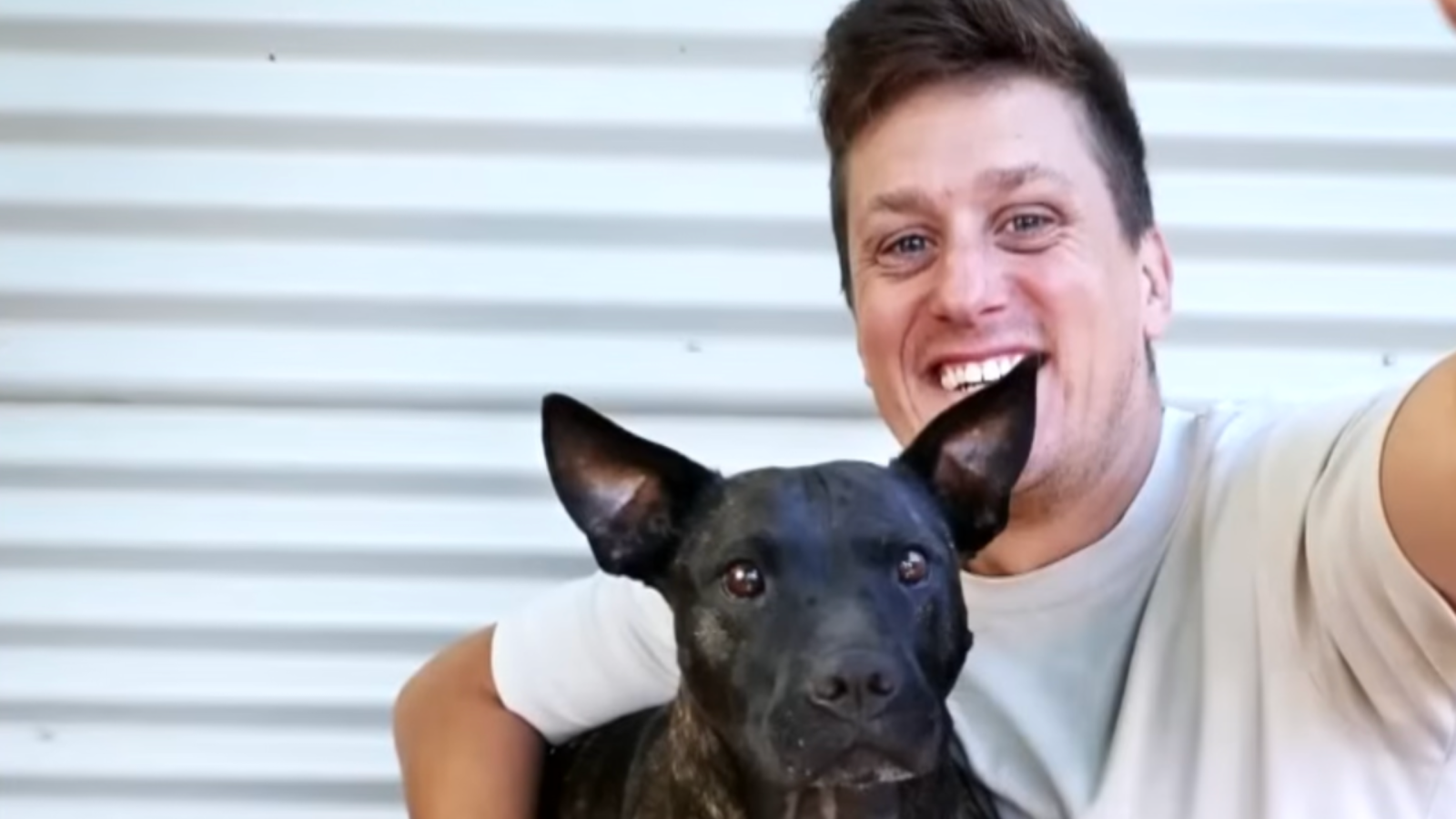
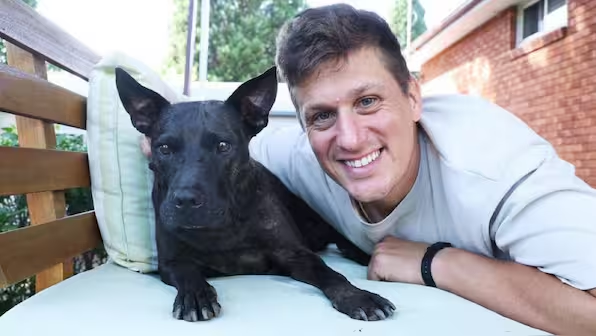
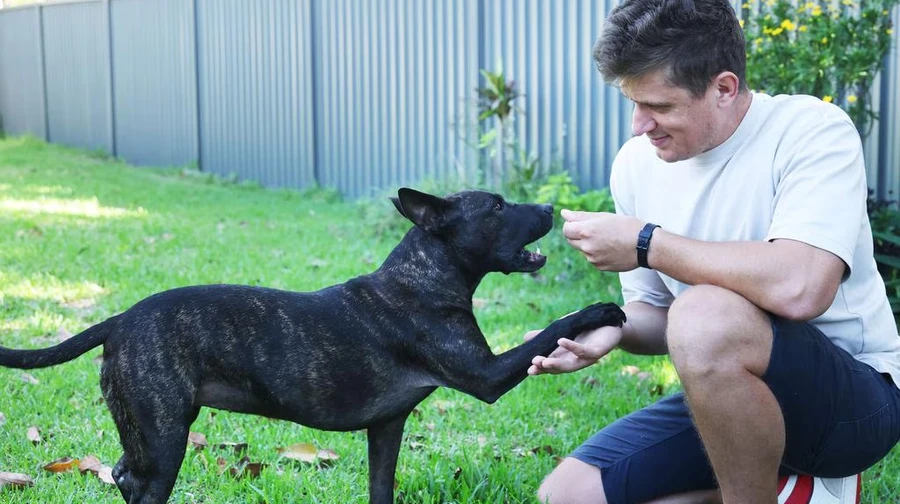
Rosie was not just a pet. By all accounts, she was a companion who had stood by Paul Conyngham through some of life’s hardest seasons. The Staffordshire terrier and Shar Pei mix had been adopted from an animal shelter in 2019, and over time became deeply woven into her owner’s life. So when Rosie was diagnosed in 2024 with mast cell cancer, the news hit with unusual force.
Mast cell tumors are among the more common cancers seen in dogs, but they can also be unpredictable and aggressive. Rosie’s condition appears to have progressed despite conventional treatment. Surgery and chemotherapy were tried, and significant money was spent, yet the disease continued to advance. Tumors reportedly grew on one of her back legs, and her outlook became grim.
For many pet owners, that would have been the point where medicine shifted from treatment to comfort care. But Conyngham did not see the moment that way. He had a background in machine learning and data analysis, and instead of accepting the standard path, he began asking whether the tools used in advanced computing could somehow help chart another option.
Why This Case Captured So Much Attention
The story spread quickly because it combines several of the most powerful themes in modern science and media. There is the emotional element of a man trying to save his dog. There is the futuristic appeal of AI stepping into biology. And there is the unusual image of a consumer facing chatbot becoming part of a highly personal medical journey.
In an age when artificial intelligence is often discussed in terms of office productivity, education, and content creation, this case pushed the conversation into a more intimate and dramatic space. It suggested that AI might not only help process information but also help ordinary people navigate problems that once belonged exclusively to specialists in research labs and pharmaceutical companies.
That does not mean ChatGPT or AlphaFold simply produced a miracle cure. The real story is more complex than that. The treatment required scientific sequencing, expert consultation, institutional support, regulatory approval, and specialist development of an mRNA vaccine. But the fact that AI played a guiding and analytical role throughout the process is exactly why the story resonated so strongly.
How ChatGPT Became Part of the Process
According to Conyngham’s account, one of the first things he did was turn to ChatGPT to help him think through a possible plan. That is a striking detail because it shows how the tool was used not as a magic box that solved the disease, but as a kind of strategic assistant. It helped him organize next steps, identify institutions that might assist, and structure a pathway that could move from theory to action.
That distinction matters. AI in this case appears to have functioned as a support system for decision making, research direction, and information handling. It did not replace scientists or veterinarians. Instead, it helped a highly motivated person navigate an incredibly dense medical and technical problem.
This is one reason the case has drawn both excitement and caution. Supporters see it as proof that AI can democratize access to complex knowledge. Skeptics point out that such tools can sound confident even when they are wrong, and that real medicine still depends on expert validation. Both views can be true at once. The Rosie story seems to show AI at its most useful when it is paired with human expertise rather than treated as a substitute for it.
Turning Tumor Tissue Into Data
One of the most important stages in the process was genomic sequencing. Conyngham reportedly worked with scientists to sequence Rosie’s DNA as well as the DNA of her tumor. This transformed the disease from a visible physical condition into a data rich biological puzzle.
The comparison between healthy and diseased tissue is a cornerstone of personalized medicine. By looking at the genetic differences between normal cells and cancer cells, researchers can identify mutations that may be driving the disease. In Rosie’s case, the sequencing was described almost like comparing a new engine with one that had gone hundreds of thousands of kilometers and accumulated damage. The analogy made the science understandable, but the underlying process was sophisticated.
This is where the story moves beyond sentiment and into serious biomedical territory. Sequencing creates enormous amounts of data. That data must be interpreted, filtered, and connected to known biological mechanisms. It is exactly the kind of task where AI systems can be useful, especially when humans need help spotting patterns and organizing information across massive datasets.
Where AlphaFold Entered the Picture
After sequencing helped identify mutations, Conyngham reportedly used AlphaFold, the protein structure prediction system developed by Google DeepMind. AlphaFold is not a general chatbot. It is a specialized AI tool that has transformed parts of biology by helping researchers predict how proteins fold and behave.
That capability matters because proteins are central to disease processes and treatment design. Cancer is not just a problem of altered DNA. Those DNA changes can lead to altered proteins, and those altered proteins can become targets for therapy. Understanding which mutations matter, and how they affect cellular behavior, is a key step in designing more targeted interventions.
In this case, AlphaFold reportedly helped narrow down which mutations might be important and which drugs or approaches might be relevant. That does not mean it independently invented Rosie’s vaccine. But it did help bridge the gap between raw mutation data and plausible therapeutic direction. In other words, AI was not simply part of the story for dramatic effect. It was part of the translation layer between information and action.
Why mRNA Became the Chosen Route
At some point in the process, immunotherapy was considered. But when access to a pharmaceutical option reportedly did not materialize, attention turned to mRNA technology. That shift is one of the most compelling parts of the story, because mRNA treatments have become globally familiar since the pandemic, yet many people still associate them almost entirely with infectious disease vaccines.
In reality, mRNA is a platform, not a single purpose tool. It can potentially be used to instruct cells to produce specific proteins, which in turn can train the immune system to recognize a target. In cancer treatment, the goal is often not prevention in the traditional sense, but teaching the immune system to identify and attack cancer related markers already present in the body.
That is what makes Rosie’s case so fascinating. This was not just a vaccine in the everyday sense. It was an attempt at individualized therapeutic design, built around the biology of one dog’s tumor. The treatment reportedly involved the collaboration of experts at the RNA Institute at UNSW, showing that while AI may have helped shape the blueprint, experienced scientists were essential in turning that blueprint into something real.
The Hardest Part Was Not the Science
One of the most revealing details in the case is that the hardest part, according to Conyngham, was not building the treatment concept. It was getting permission to administer it. That says a great deal about where the true bottlenecks often lie in cutting edge medicine.
The popular imagination tends to assume that invention is the hardest stage. But in many cases, ethics approval, trial design, documentation, institutional oversight, and legal compliance form an equally difficult barrier. Conyngham reportedly spent months preparing paperwork to secure approval, underscoring the fact that medicine is not only a scientific field but also a regulatory one.
This part of the story adds an important layer of realism. Even when AI accelerates analysis and design, real world implementation still moves through established systems intended to reduce harm. Those systems can feel slow and frustrating, especially in urgent cases, but they exist for good reason. The Rosie case therefore reflects both the promise of rapid innovation and the friction that always follows when science meets regulation.
What Happened After the Vaccine Was Given
According to Conyngham, Rosie received the custom mRNA vaccine over Christmas, and one of her tumors later shrank by around half. That reported response is what transformed the story from an intriguing experiment into a headline grabbing medical narrative.
Any apparent tumor shrinkage in an aggressive cancer case will attract attention, especially when it follows an individualized experimental intervention. But it is also important to view the result with caution. A single case, no matter how emotionally powerful, does not establish general proof. It may suggest promise. It may justify further investigation. But it does not mean the approach is validated as a standard treatment.
Even Conyngham seems to understand this. By his own account, he does not view the treatment as a cure. Instead, he sees it as something that may have bought Rosie more time and improved her quality of life. That realism is part of what makes the story credible. It is not being presented as a miracle. It is being presented as a bold attempt that may have produced meaningful benefit.
Can AI Really Help Create Vaccines?
The short answer is yes, but not in the simplistic way many headlines imply. AI can absolutely assist vaccine development and drug discovery by helping researchers model molecules, predict biological interactions, analyze large datasets, and optimize delivery systems. That role is already expanding across biomedical research.
Researchers have been exploring how machine learning can help design lipid nanoparticles, the tiny delivery vehicles often used in RNA therapies. Others are using AI to prioritize candidates, predict toxicity, or identify patterns in genomic and proteomic data. In that sense, Rosie’s case fits into a much larger movement already underway in laboratories around the world.
What makes this story unusual is not the idea that AI can help in therapeutic design. Scientists already know it can. What is unusual is the pathway. A dog owner with technical experience, armed with determination and consumer accessible AI tools, helped push a personalized treatment concept forward for one animal. That is what gives the case its viral energy. It feels like a boundary crossing moment between elite science and public initiative.
What This Could Mean for the Future of Personalized Medicine
Rosie’s story may ultimately be remembered less for one dog’s outcome and more for what it symbolizes. It suggests a future in which AI tools help individuals and clinicians move faster from diagnosis to tailored treatment ideas. It points toward medicine that is more data driven, more individualized, and potentially more collaborative across technical and scientific fields.
At the same time, it raises hard questions. If personalized treatments become easier to conceptualize, who gets access to them? Who verifies safety? How do regulators keep up with custom therapies built for single patients or animals? And how should the public understand AI’s role without exaggerating its powers?
Those questions are likely to become more urgent, not less. The Rosie case sits at the intersection of emotional urgency and scientific acceleration. It shows the hope AI can inspire, but also the importance of expert oversight, ethical review, and careful interpretation of results.
In the end, this is not just a story about a dog, or even about one man’s refusal to give up. It is a story about a new kind of medical frontier, where algorithms, genomic data, and human love are beginning to meet in ways that would have sounded impossible only a few years ago. Whether Rosie’s treatment becomes a footnote or a milestone, it has already done something important. It has forced people to imagine a future where medicine may become more personal, more computational, and more open to unlikely breakthroughs than ever before.