
Table of Contents
- When Hegseth declared Iran’s navy had been driven to the bottom
- The Pentagon is describing a campaign of overwhelming force
- Why Iran’s navy became such a central target
- The war is now reaching deeper into Iranian territory
- The administration says Iran’s attacks have sharply declined
- Iran’s senior leadership is now openly in the crosshairs
- Energy infrastructure is making the war even more explosive
- The biggest unanswered question is how long this can keep growing
- A brutal message, and a dangerous one
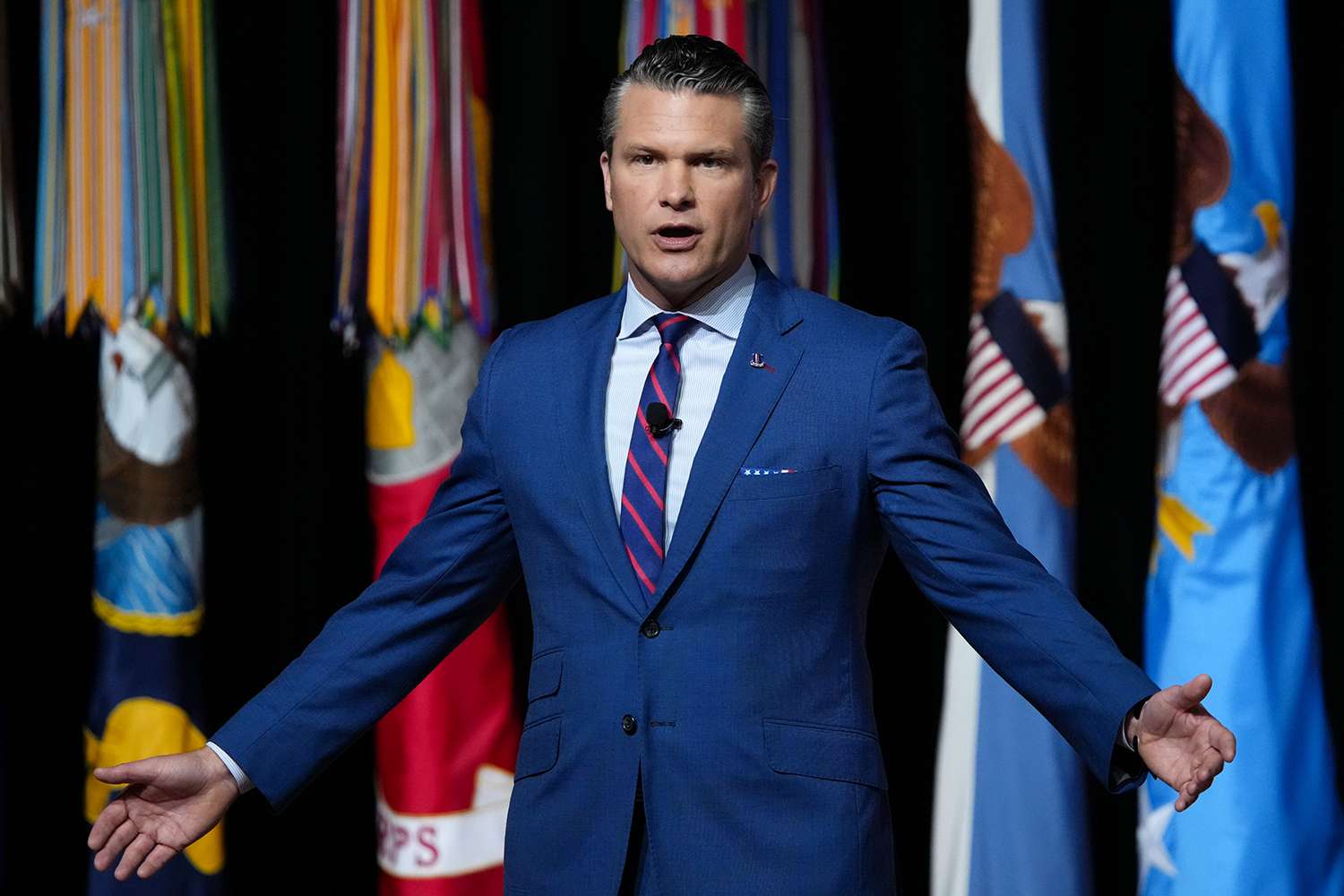
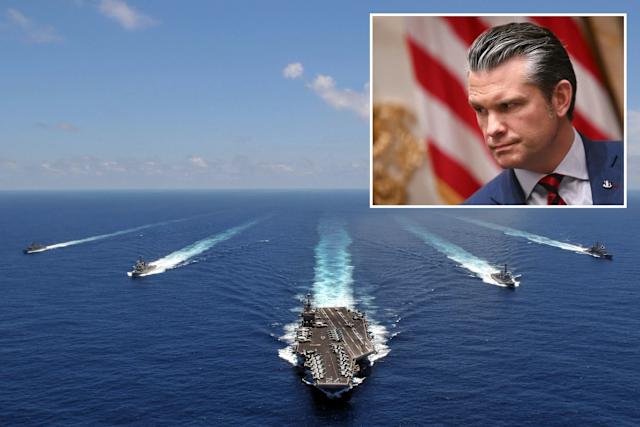
When Pete Hegseth stepped before reporters and declared that the United States had chosen to “share the ocean” with Iran by giving it “the bottom half,” the remark instantly became one of the most striking lines yet from a war that is already reshaping the Middle East. It was not simply a piece of dark military bravado. It was a statement meant to send a message to Tehran, to Washington, to U.S. allies in the Gulf, and to a nervous world watching oil prices surge and regional infrastructure burn. According to Hegseth, Iran’s naval power has been so thoroughly battered by weeks of U.S. strikes that its surface fleet is now “no longer a factor,” with more than 120 Iranian naval vessels reportedly damaged or sunk and all 11 of its submarines destroyed. Those were the claims he laid out as the Pentagon prepared what he called the largest strike package yet of Operation Epic Fury.
The significance of that statement reaches far beyond the image of wrecked warships. Naval power in the Gulf is not symbolic. It sits at the center of global energy security, shipping routes, missile threats, and the ever present fear that the Strait of Hormuz could become a chokepoint for world markets. If Iran’s naval capabilities have truly been gutted to the degree Hegseth described, that would represent one of the most consequential military degradations of the conflict so far. But it would also signal something else: that the war is moving into an even more dangerous phase, one in which Washington is no longer describing its campaign as limited pressure, but as a broad effort to systematically dismantle Iran’s military ability to threaten the region.
The Pentagon is describing a campaign of overwhelming force
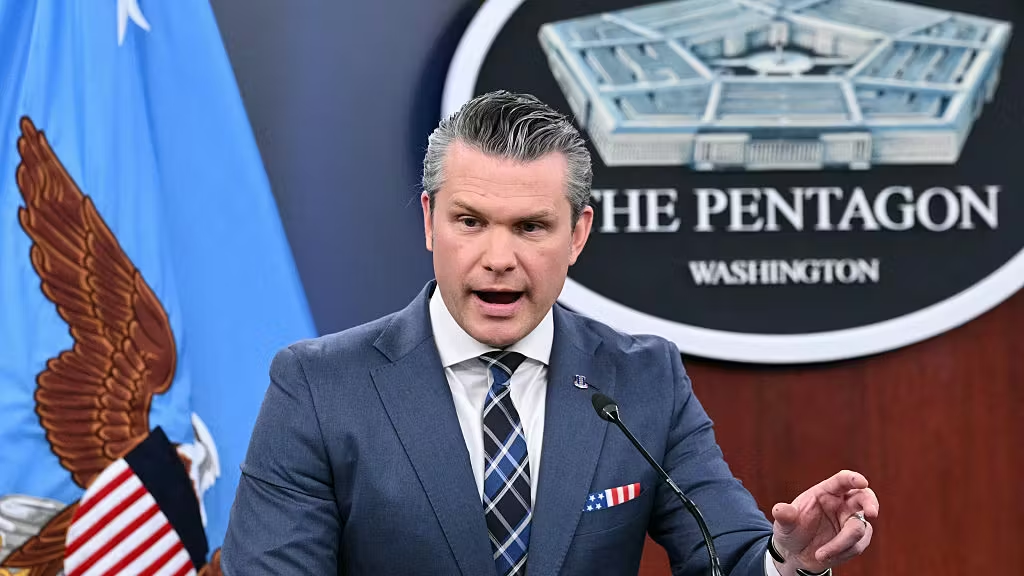
At the core of Hegseth’s briefing was the argument that the United States is not drifting into a vague or improvised conflict. Reuters reported that he said U.S. objectives in Iran have not changed since the war began on February 28. Those goals include dismantling Iran’s missile launch capability, degrading its defense industry and navy, and preventing it from obtaining nuclear weapons. He rejected suggestions that the campaign had become open ended and insisted it was still being carried out under a clear plan.
That framing matters because critics of any expanding war usually begin with the same question: what is the mission, and where does it end? Hegseth’s answer was to emphasize scale and momentum. According to both Reuters and the Daily Wire account of the briefing, he said the United States had already struck more than 7,000 targets across Iran and its military infrastructure. He described that not as incremental pressure, but as overwhelming force applied with precision. In military terms, it was an unmistakable attempt to portray the campaign as decisive rather than hesitant, and crushing rather than symbolic.
Yet the sheer size of those numbers also reveals how much this war has already grown. A campaign involving thousands of targets, sustained strikes deep into Iranian territory, and repeated references to expanding strike packages is no longer a peripheral operation. It is a full scale war effort by any ordinary reading, even if the administration continues to present it as disciplined and strategically contained. That tension between official confidence and the obvious size of the conflict now sits at the center of the story.
Iran’s naval forces have long played a unique role in the country’s military strategy. Unlike a blue water navy built for distant deployment, Iran’s maritime posture has been tied to asymmetric disruption. Its vessels, mine laying ships, missile boats, submarines, and coastal defense systems have all been viewed as tools for threatening shipping lanes, harassing Western or Gulf vessels, and raising the cost of any direct confrontation. In a region where energy flows through narrow sea routes, even a weaker navy can create outsized danger.
That is why Hegseth’s claim about “sharing the ocean” landed so hard. Reuters reported that U.S. officials said the conflict has included strikes on mine laying vessels and submarines, and the Pentagon has repeatedly tied its goals to protecting regional stability and limiting Iran’s ability to threaten maritime routes. If Iran’s fleet has truly been reduced to wreckage, Washington is effectively saying that one of Tehran’s most important instruments of regional leverage is being stripped away in real time.
But there is another side to that story. The more the U.S. succeeds in hitting Iranian naval assets, the more pressure there may be on Tehran to retaliate through other means. That could mean missile attacks, proxy activity, energy sabotage, or attempts to hit Gulf infrastructure even more aggressively. In other words, crippling the navy may reduce one danger while increasing incentives for other forms of escalation.
The war is now reaching deeper into Iranian territory
Joint Chiefs Chair General Dan Caine said during the same briefing that U.S. operations were continuing to attack deeper into Iranian territory and farther east into Iranian airspace, according to the Daily Wire account. Reuters separately reported that U.S. officials say they are making progress in penetrating more of Iran’s military network, even while acknowledging Tehran still retains missile capabilities. That combination is crucial. It means Washington is projecting confidence, but not victory.
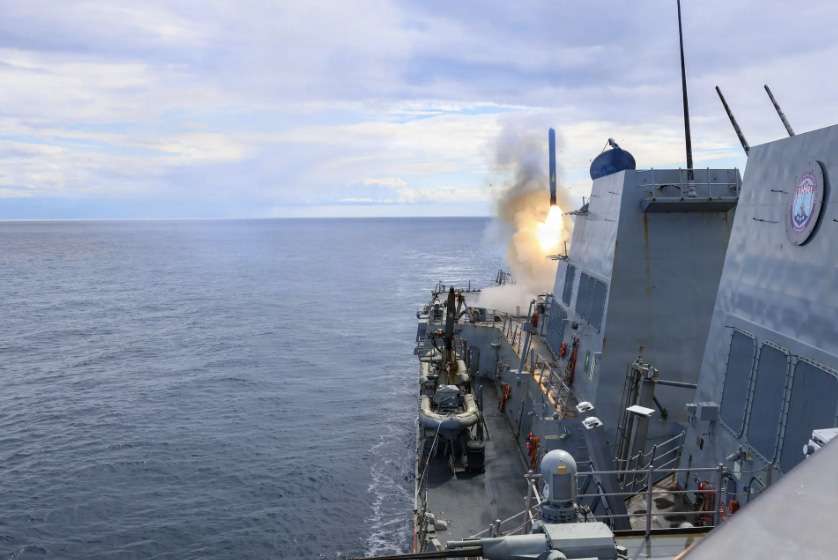
Caine also referenced the use of 5,000 pound penetrator weapons against underground storage facilities holding coastal defense weapons, cruise missiles, and support equipment. That detail points to another major shift in the war: this is not just a battle over surface targets or symbolic command posts. It is now increasingly about hard targets buried underground, protected infrastructure, and the deeper skeleton of Iran’s war fighting capacity.
When campaigns begin moving from visible targets to buried ones, the political and military stakes usually rise. Such strikes can suggest that planners are no longer focused merely on signaling strength. They are focused on degrading systems that matter over the long term. That may satisfy hawks who want a decisive outcome, but it also raises the risk of prolonged operations, wider retaliation, and more severe civilian fear inside Iran as the war reaches farther from the initial battlefield.
The administration says Iran’s attacks have sharply declined
One of Hegseth’s most important arguments was that the campaign is working in measurable ways. According to the Daily Wire report, he said Iranian ballistic missile attacks against U.S. forces had dropped by 90 percent since the operation began. Reuters likewise reported that U.S. officials were presenting the campaign as one that has significantly reduced Iran’s ability to launch attacks, even if not eliminated it.
This is a critical part of the administration’s public case. It is not enough to say the United States is hitting thousands of targets. Officials also need to show that these attacks are producing strategic results. A drop in missile activity is the kind of metric that can be used to argue that the war is not just destructive, but effective. It gives the White House a way to claim the operation is making American forces safer and reducing Tehran’s room to maneuver.
Still, such numbers can cut both ways politically. If the public hears that missile attacks are down sharply, some may ask why the largest strike package is still needed. If the enemy is already badly degraded, why intensify further? That question hangs over the briefing, especially because Hegseth declined to provide a clear timeline for when the operation might end. A war described as successful but still rapidly expanding can begin to look less like closure and more like momentum for its own sake.
Iran’s senior leadership is now openly in the crosshairs
Hegseth also highlighted recent strikes targeting senior Iranian figures, including intelligence chief Esmaeil Khatib and Gholamreza Soleimani, who commands the Basij paramilitary organization under the Islamic Revolutionary Guard Corps, according to the Daily Wire report. His mocking comment that the last job anyone wants right now is to be a senior IRGC or Basij leader was meant to underscore how directly the campaign is now bearing down on top levels of Iran’s security state.
That kind of rhetoric matters because it frames the campaign not just as battlefield attrition, but as leadership attrition. Washington is signaling that it is willing to pressure Tehran where it hurts most, not only by destroying equipment but by targeting the people who oversee coercion, repression, intelligence, and internal control. For Iran’s leadership, that creates pressure beyond military losses. It turns personal survival into part of the war calculation.
But history also shows that wars intensify unpredictably when leaders feel individually hunted. A campaign that reaches this level may weaken decision making on the other side, but it can also harden it. States under pressure often become more dangerous, not less, when senior figures believe they are running out of options.
Energy infrastructure is making the war even more explosive
The broader regional setting makes Hegseth’s remarks even more combustible. Reuters and AP both reported that the conflict has already damaged energy infrastructure across the Gulf, including Iran’s South Pars gas field and major Qatari facilities after retaliatory strikes. Reuters reported that Qatar’s LNG export capacity has been significantly hit, while energy markets have reacted with alarm as oil and gas prices rise sharply.
This matters because maritime security and energy security are now fully intertwined. The campaign against Iran’s navy is unfolding alongside a much larger contest over gas fields, export terminals, and the future of shipping in the Gulf. President Trump’s warning that the United States would respond massively if Iran attacked Qatari energy infrastructure again added another layer of volatility. Reuters reported that Trump said Israel would halt further attacks on South Pars unless Iran escalated against Qatar, and threatened overwhelming retaliation if it did. AP similarly described the warning as part of a rapidly escalating confrontation over energy assets.
So when Hegseth talks about giving Iran the bottom half of the ocean, the line is about more than naval combat. It is about control over the arteries of global energy. It is about who gets to threaten the Gulf and who does not. And because the world economy is so deeply tied to those routes, every military boast now has market consequences far beyond the battlefield.
The biggest unanswered question is how long this can keep growing
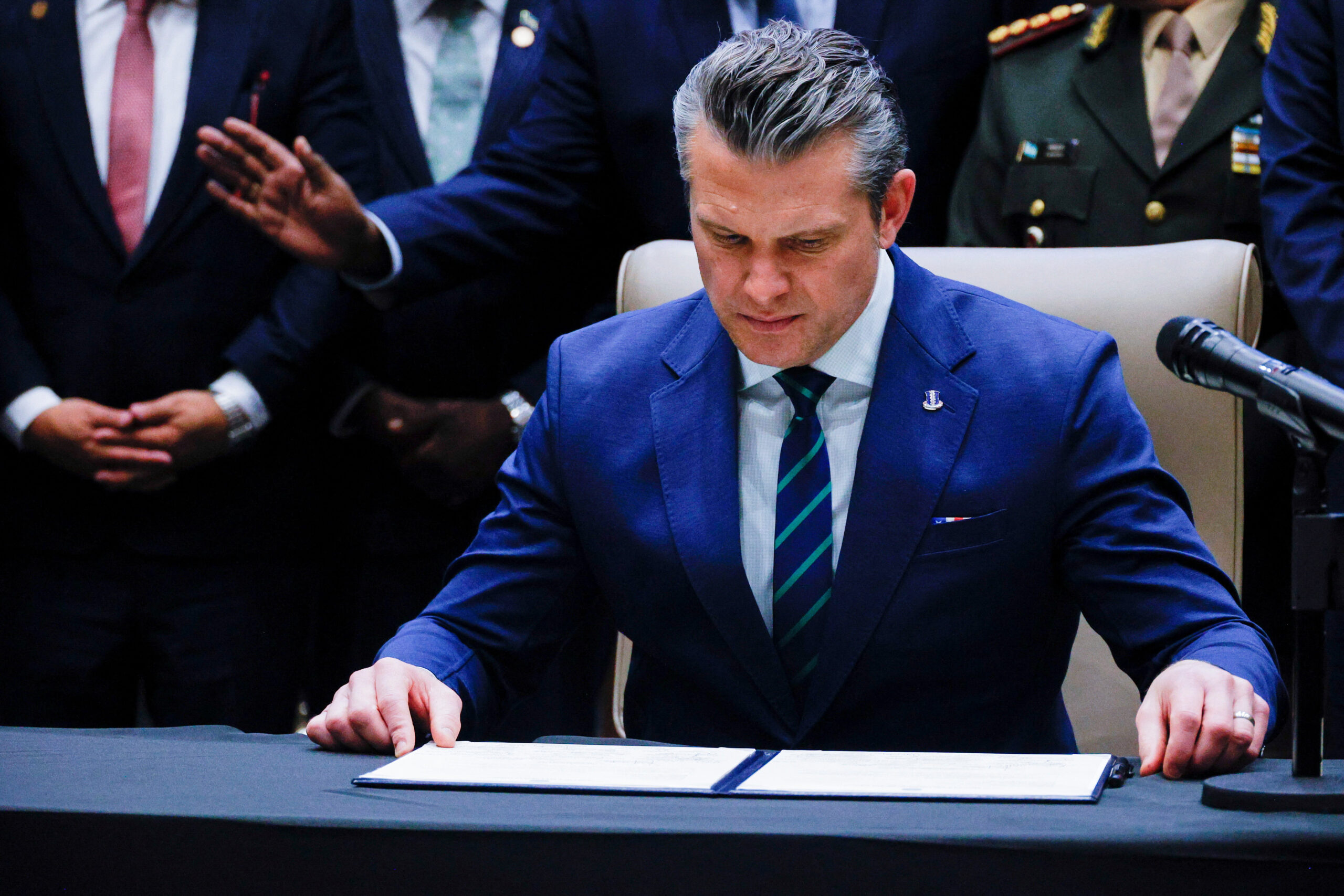
When asked how long the operation would continue, Hegseth declined to give a definitive timeline. He said the administration was following its plan and closely reviewing metrics, but he offered no fixed endpoint. That answer may be understandable from a military perspective, but politically it leaves the central concern unresolved. Americans have heard before that a war is on plan, producing gains, and guided by clear goals, only to discover that the definition of success keeps moving.
This is where the administration faces its hardest challenge. The more dramatic and effective its battlefield claims become, the more the public may expect a clear explanation of the end state. Is the aim simply to degrade Iran’s military? To force concessions? To compel regime behavior change? Or to break the regime’s strategic capacity entirely? Hegseth’s language suggests deep ambition, but the administration has not fully translated that ambition into an ending the public can clearly visualize.
And that uncertainty is what makes the current moment feel so unstable. On one hand, the Pentagon is presenting a story of overwhelming success. On the other, the war is widening geographically, energy infrastructure is under assault, and the region is showing signs of deeper fracture. Victories in such environments can become invitations to push further, even when the political destination remains murky.
A brutal message, and a dangerous one
Hegseth’s statement about giving Iran the bottom half of the ocean was designed to project certainty, dominance, and contempt for the enemy’s remaining capabilities. In that sense, it succeeded. It compressed an enormous amount of destruction into one unforgettable phrase. It told Americans that the U.S. campaign is not tentative. It told Iran that its military losses are being publicly celebrated. And it told allies and adversaries alike that Washington wants this phase of the war to be seen as overwhelming, not ambiguous.
But the deeper meaning of the remark may be less reassuring than its authors intended. A conflict in which thousands of targets have already been hit, senior leaders are being singled out, underground facilities are being pounded, naval fleets are being obliterated, and energy systems across the Gulf are under attack is not a conflict nearing simplicity. It is a conflict entering a harsher and more consequential stage. Every sign of U.S. success may also be a sign that the stakes are growing, the retaliation risks are changing, and the eventual cost of miscalculation is rising.
That is why this story matters beyond the headline and beyond the quote. It is not only about whether Iran’s navy has been broken. It is about what happens when a superpower publicly signals that one whole arm of an adversary’s military has effectively been sent to the seafloor, while at the same time preparing even larger strikes. In wars like this, the most memorable line is rarely the final one. More often, it is the line that marks the moment the conflict crossed into something even more dangerous.