
Table of Contents
- When a Refugee Journey Became a Story the World Could Not Ignore
- A Life Interrupted by War in Syria
- The Sea Crossing That Changed Everything
- Courage at Sea Was Not Just About Strength
- From Lesbos to Berlin, the Journey Continued
- The Olympic Dream Refused to Disappear
- The Refugee Olympic Team Changed the Meaning of Representation
- Why Yusra’s Story Resonated Far Beyond Sport
- What Her Journey Still Means Today
When a Refugee Journey Became a Story the World Could Not Ignore
When news broke that a teenage Syrian refugee had spent three hours in open water helping push a crowded boat toward safety, the world was not just hearing another migration story. It was witnessing a moment of raw human courage that cut through statistics, politics, and distance. Yusra Mardini was only 18, displaced by war, separated from the life she once knew, and facing a journey that had already broken countless others. Yet in one of the most dangerous moments of her escape, she did not freeze. She swam.
That is what makes her story so extraordinary. It is not only about survival. It is about what someone does in the instant when survival seems uncertain. Mardini and her sister, both trained swimmers, were among the people trying to reach the Greek island of Lesbos from Turkey in a dinghy carrying far more people than it should have. When the engine failed in open water, panic could easily have turned into disaster. Instead, Yusra, her sister Sarah, and another man entered the sea and began kicking the boat forward, trying to save everyone on board. What followed was three hours of cold water, exhaustion, fear, and determination that would later become one of the most powerful refugee stories in the world.
But the real power of this story does not end with the boat. It continues in Berlin, in the training pool, in the Olympic dream she refused to abandon, and in the message her journey sent to millions of displaced people who rarely see themselves represented as anything other than victims. Yusra Mardini’s story became bigger than one heroic act because it revealed something deeper about resilience, identity, and what it means to keep moving forward after everything familiar has been shattered.
A Life Interrupted by War in Syria
Before she became known around the world, Yusra Mardini was simply a competitive swimmer in Syria. She had trained seriously, lived with ambition, and imagined a future shaped by sport. That life was not defined by crisis. It was defined by effort, routine, family, and discipline. Like many young athletes, she had a clear sense of what she loved and where she hoped it could take her.
Then war shattered that reality. As violence spread across Syria, daily life became unstable and dangerous. Homes were destroyed, neighborhoods changed, and families were forced to make impossible decisions. For Mardini and her family, staying was no longer a realistic option. The ordinary future she had once been building in the pool was replaced by a much more urgent goal: escape.
This is what often gets lost in refugee stories. People do not begin their journeys as symbols. They begin as students, siblings, athletes, workers, and dreamers whose lives are interrupted by forces beyond their control. Yusra was not trying to become famous. She was trying to survive and, somehow, still hold onto the part of herself that had existed before the war. That part was swimming.
The Sea Crossing That Changed Everything
The most dramatic chapter of Mardini’s journey came during the crossing from Turkey to Lesbos, one of the most dangerous routes taken by refugees trying to reach Europe. The dinghy she boarded was meant for far fewer people than it carried. Reports described it as built for around seven or eight passengers, yet roughly 20 were on board. That imbalance alone tells the story of desperation. When people believe they may have no safe future behind them, they take risks they would never otherwise accept.
Then the engine failed. In open water, that kind of mechanical breakdown can turn into catastrophe within minutes. People aboard the boat could not all swim. Fear would have spread quickly, because there are few things more terrifying than being trapped at sea in an overcrowded inflatable vessel with land still far away.
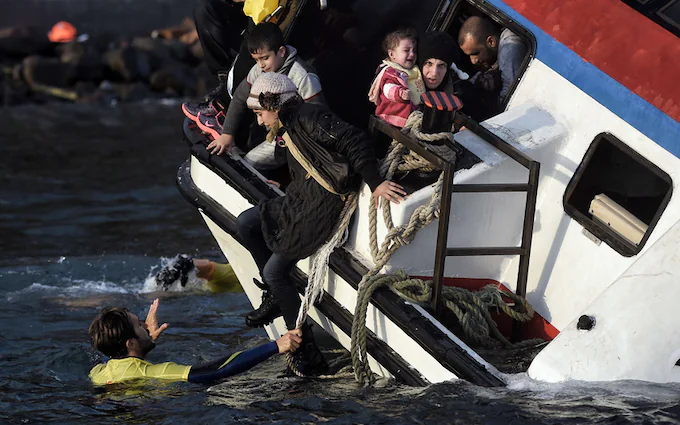
Mardini, her sister Sarah, and another man entered the water. They kicked and pulled the dinghy forward for three hours. Their shoes came off in the effort. Their bodies gave everything they had to keep the boat moving. Yusra later made clear that she did not see inaction as an option. If she was going to drown, she said, she would rather drown proud, knowing she had tried to save others. That statement captured the essence of her character. Even at the edge of danger, she was thinking not only of herself but of the people whose lives depended on that boat reaching shore.
Courage at Sea Was Not Just About Strength

It would be easy to reduce this moment to physical bravery alone, but that would miss something important. Swimming for hours in open water certainly required strength, skill, and endurance. Yet it also demanded moral clarity. Mardini and the others in the water were responding to a crisis in which hesitation could have cost lives. They chose action under pressure, even though they themselves were refugees, exhausted and vulnerable.
Sarah Mardini later said the most frightening part was not for her own sake but for the people still in the boat. That perspective matters. It shows that the rescue effort was not a dramatic act carried out for attention or recognition. It was driven by an immediate sense of responsibility. There were people in that dinghy who did not know how to swim, and that fact transformed the moment from survival into duty.
The image of Yusra in the water has become iconic because it captures so many truths at once. It shows the danger refugees face. It shows the skill and humanity that so often go unseen in migration narratives. And it shows that heroism does not always come from trained rescuers or officials. Sometimes it comes from those already under the greatest threat.
From Lesbos to Berlin, the Journey Continued
Reaching Lesbos did not end Yusra’s ordeal. It only marked the end of one dangerous phase and the beginning of another. Like many refugees arriving in Greece during that period, she still had to continue across Europe, navigating uncertainty, bureaucracy, exhaustion, and the psychological aftermath of what she had survived. With her sister, she traveled through central Europe before finally arriving in Berlin in 2015.
Berlin offered something she desperately needed: the possibility of rebuilding. But rebuilding after displacement is never simple. Refugees do not arrive in a new city with their previous lives restored. They arrive carrying grief, trauma, and the disorienting knowledge that everything familiar has been lost. For Mardini, however, one thread from her old life remained strong enough to follow. She began looking for a swim club almost as soon as she could.
That decision says a great deal about her mindset. Many people in her circumstances would understandably focus only on immediate survival. Yusra did that too, of course, but she also did something else. She reached back toward the identity war had not fully erased. She was still a swimmer, and in searching for a pool in Berlin, she was reclaiming that truth.
The Olympic Dream Refused to Disappear
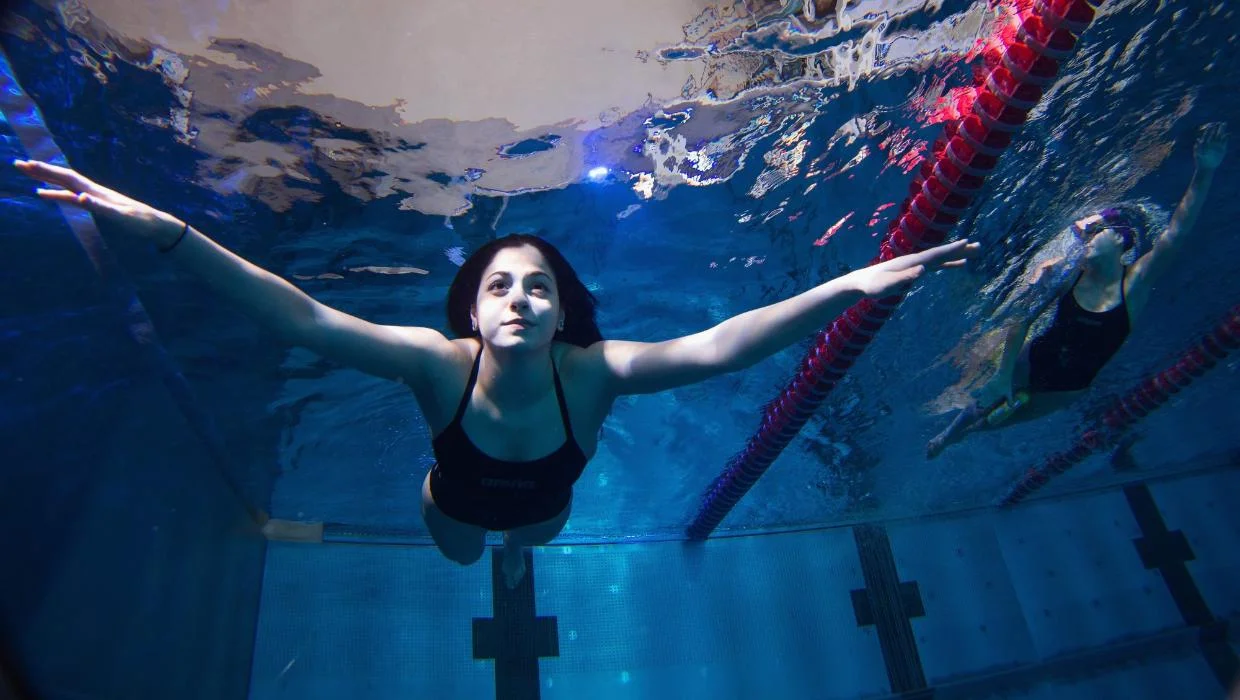
When Mardini found a place at Wasserfreunde Spandau 04, a respected Berlin swim club, her story began to shift from survival to ambition. Coaches assessed her ability and welcomed her into a competitive environment where she could begin training seriously again. In a pool originally built for the 1936 Olympic Games, she started chasing not safety, but seconds.
That transition is one of the most compelling aspects of her journey. The same body that had been pushed to its limits in the sea was now back in structured training, measured not by desperation but by timing. She was only a few seconds away from the qualification time she needed for the 200 meter freestyle, and that gap became the next mountain to climb.
Yusra spoke openly about wanting to reach the Olympics. She said it with confidence, even joy. It was not presented as fantasy. It was a serious goal. And in that goal was something profoundly moving. She was not asking the world to feel sorry for her. She was asking the world to recognize that refugees can still do great things, even after losing their homes, their routines, and so much of what once anchored their lives.
The Refugee Olympic Team Changed the Meaning of Representation
At the time, the International Olympic Committee had identified a group of refugee athletes who could potentially compete at the Rio Games under a separate banner. This was a groundbreaking idea. Rather than forcing displaced athletes into invisibility or requiring immediate national representation that many could not access, the IOC created a path for them to appear on one of the biggest stages in sport.
Yusra Mardini became one of the most visible faces of that effort. The significance of this cannot be overstated. Refugees are often represented in media through suffering alone. While suffering is undeniably part of many refugee journeys, it is not the whole story. The Refugee Olympic Athletes project offered another image: discipline, talent, pride, and possibility.
The team was expected to include athletes from several countries and different sports, including swimming and athletics. They would live in the athletes’ village and be granted the same privileges as other competitors. The symbolism was powerful. A person displaced by conflict would not march under the flag of a nation state, but neither would they be excluded from the global celebration of sport. Instead, they would stand as proof that human worth and talent do not disappear because borders close or war destroys a home.
Why Yusra’s Story Resonated Far Beyond Sport

There are many remarkable athletes, and there are many heartbreaking refugee stories. Yusra Mardini’s journey captured global attention because it brought both worlds together in a way that felt almost impossible to ignore. She was not simply an athlete who overcame personal hardship. She was a refugee whose athletic skill helped save lives, and who then used that same gift to pursue one of the highest honors in sport.
That combination gave her story unusual emotional force. It challenged simplistic narratives about refugees as burdens or anonymous masses. Yusra was specific, talented, articulate, and brave. She put a human face on a global crisis that had often been discussed in numbers rather than names. More than a million refugees had crossed from Turkey and Greece into Europe during that period, and tens of millions were displaced worldwide. In that vast human movement, Yusra’s story became a way for many people to grasp the scale of loss and resilience through one unforgettable life.
Her message also mattered. She said she wanted refugees to be proud of her and to feel encouraged that they could still achieve meaningful things, even outside their homeland and after hardship. That aspiration transformed her story into something communal. She was no longer swimming only for herself. She was swimming with the awareness that others, watching from camps, cities, and temporary shelters, might see in her a reason not to give up.
What Her Journey Still Means Today
Yusra Mardini’s story endures because it speaks to more than one moment in history. It is about war, exile, and the perilous routes people take when home becomes impossible. But it is also about identity surviving displacement. It is about how a skill learned in childhood can become the thing that saves lives in adulthood. And it is about how dignity can persist even after a person has lost almost everything else.
In the end, the power of her journey lies in its refusal to stay inside one category. It is not only a refugee story. It is not only a sports story. It is not only a rescue story. It is all of those at once. That is why it continues to resonate. It reminds the world that behind every migration crisis are individuals with histories, gifts, and futures still waiting to unfold.
Yusra Mardini entered the sea as a refugee trying to survive a crossing. She emerged not only as a survivor, but as a symbol of courage shaped by action rather than image. Then, instead of letting that moment define the end of her story, she kept going. She trained. She dreamed. She aimed for the Olympics. In doing so, she offered something rare and urgently needed: proof that even after war, even after terror, even after the long road away from home, a person can still move toward hope with astonishing force.