
Table of Contents
- A launch more than 53 years in the making
- What Artemis II will actually do
- The rocket that has been tested by setbacks
- Meet the four astronauts carrying a new era
- Why the weather and the calendar matter so much
- A mission built on the shadow of Artemis I
- Why this mission matters politically and globally
- The psychological pull of going back
- What happens if Artemis II succeeds
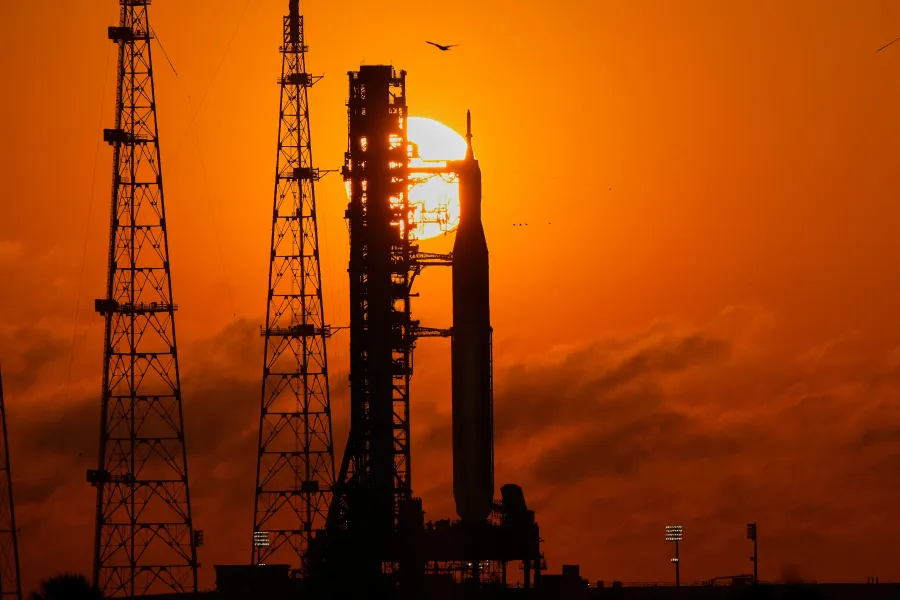
A launch more than 53 years in the making
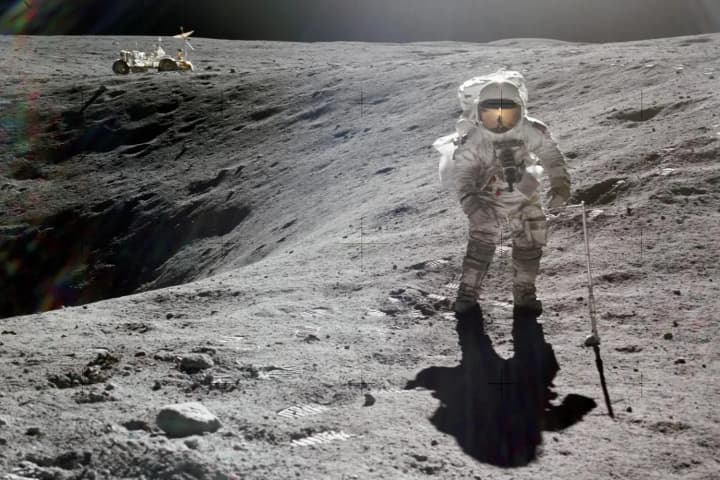
For many people, the sheer timespan is what gives Artemis II its emotional force. The last crewed mission to the moon was Apollo 17 in December 1972. Since then, astronauts have lived in low Earth orbit, repaired space telescopes, built the International Space Station, and carried out hundreds of scientific missions, but no human crew has returned to lunar space. Artemis II changes that. It brings the moon back from the realm of history books and grainy black and white memories into the living present.
That is one reason NASA has framed this moment not simply as a launch, but as the beginning of a new chapter. Artemis is not a copy of Apollo. It is a different program with different goals. Apollo was a race driven by Cold War urgency and national prestige. Artemis is being sold as a longer arc, one meant to establish sustainable lunar exploration, develop systems for future landings, and build experience that could one day support human missions to Mars. Artemis II is the first crewed test in that broader strategy. It has to prove that the spacecraft, the rocket, and the team can safely handle the demands of deep space travel before NASA attempts a landing mission later in the program.
What Artemis II will actually do
The mission profile is both elegant and demanding. After launch, the crew will spend time in orbit around Earth before Orion is sent onto a lunar trajectory. The spacecraft will not enter lunar orbit and it will not dock anywhere. Instead, it will perform a flyby around the moon, passing around the far side before using the moon’s gravity to help swing back toward Earth. This figure eight style path is intended to test the spacecraft in the exact kind of deep space environment that NASA will need to master for future missions.
The simplicity of “go there and come back” can sound deceptively straightforward, but in reality this is a demanding systems test. Artemis II is meant to validate navigation, communications, life support, propulsion, heat shielding, and crew operations during a high profile mission in which there is no margin for casual error. The astronauts will be inside Orion for the entire journey, and that means NASA has to prove that the capsule can support human life comfortably and safely far beyond Earth orbit. The return is especially important because reentry from lunar distance is faster and more intense than reentry from low Earth orbit. NASA will be watching every stage closely.
The rocket that has been tested by setbacks
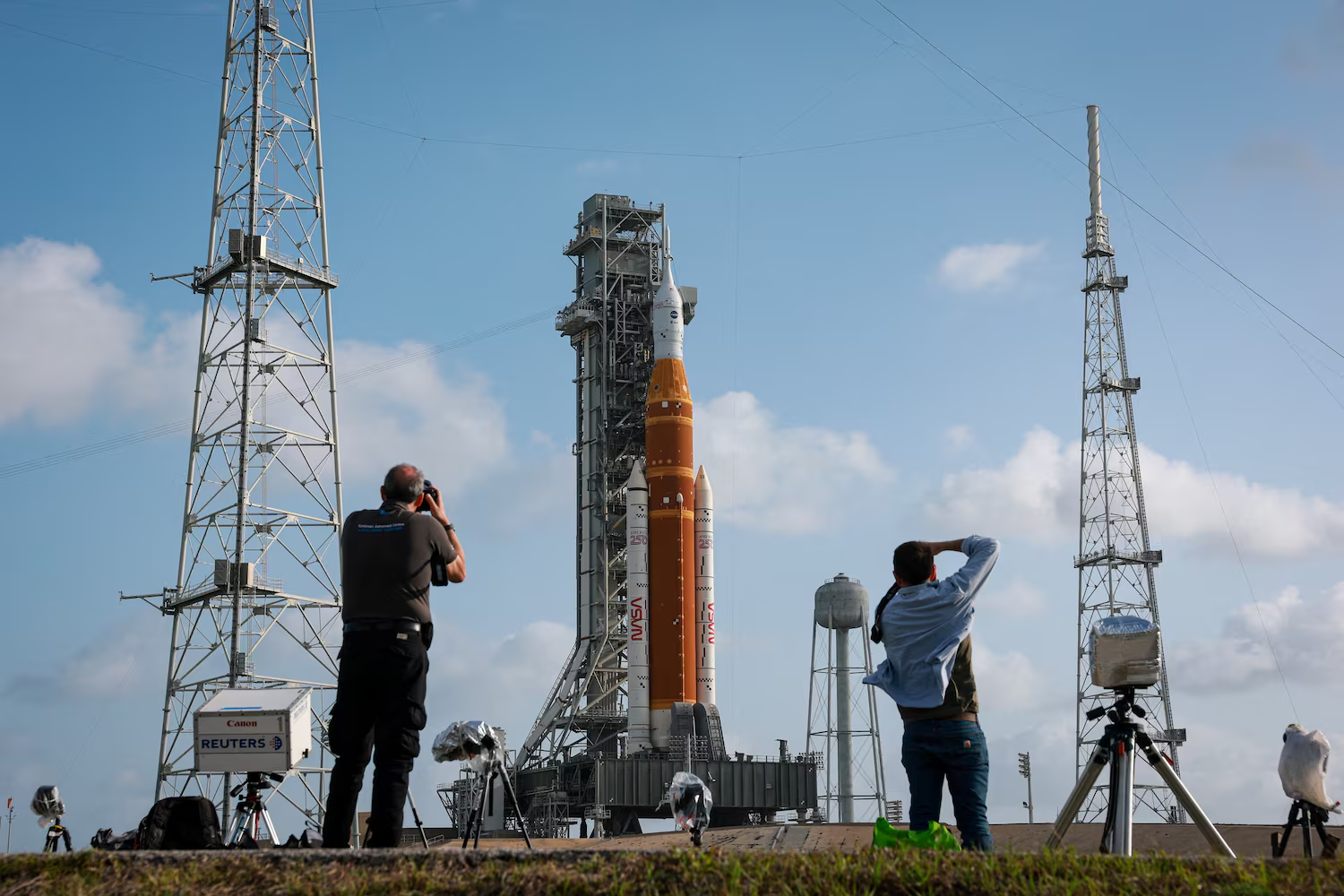
One reason this countdown feels especially dramatic is that Artemis II has not arrived at this moment easily. NASA had originally aimed for an earlier launch, but the mission was pushed back by technical issues that had to be resolved before the agency could safely proceed. According to NASA and AP reporting, the mission was delayed by hydrogen fuel leaks and later by a clogged helium pressurization line, which forced additional repairs and even a return to the Vehicle Assembly Building before the rocket was rolled back to the pad.
Those setbacks matter because they reveal the difficulty of launching a mission of this scale. The Space Launch System is a 32 story rocket, the most powerful rocket NASA has flying today, and every piece of it has to work in harmony. Cryogenic fueling, pressure systems, avionics, crew safety procedures, and the Orion capsule all have to align. NASA officials have said the latest repairs went well, and launch managers said this week that the vehicle is in excellent shape. That language reflects the cautious confidence NASA often tries to project in the final run up to launch. The agency knows the stakes are huge, but it also knows the cost of pretending a rocket is ready when it is not.
Meet the four astronauts carrying a new era
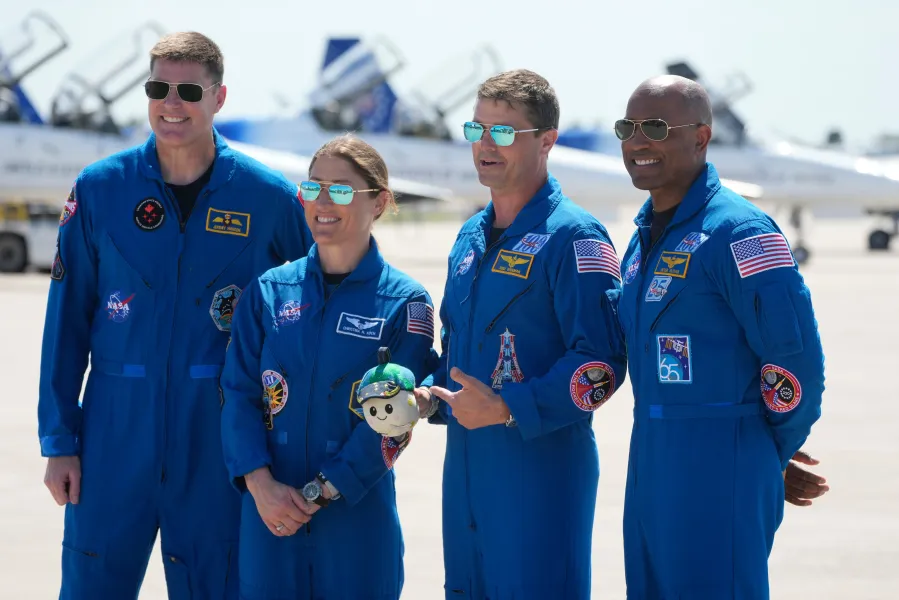
Artemis II’s crew is another reason this mission stands out. NASA selected commander Reid Wiseman, pilot Victor Glover, mission specialist Christina Koch, and Canadian Space Agency astronaut Jeremy Hansen for the flight. That lineup carries symbolic power far beyond the cockpit. Christina Koch is set to become the first woman assigned to a mission around the moon, Victor Glover the first Black astronaut on such a mission, and Jeremy Hansen the first non American astronaut to fly to the moon.
NASA has leaned into that representation because Artemis is supposed to signal a broader future than Apollo did. The Apollo moon missions were flown by American men only. Artemis II presents a noticeably different picture of who gets to be seen at the frontier of exploration. Victor Glover himself has spoken about wanting children to see the crew and recognize possibility in it, while also hoping for a future where these “firsts” no longer need to be emphasized and deep space exploration is simply understood as part of shared human history. That tension, between the importance of symbolic breakthroughs and the desire to eventually move beyond them, gives this mission an emotional dimension that resonates well beyond engineering.
Why the weather and the calendar matter so much
Spaceflight is always at the mercy of the smallest technical detail and the broadest environmental conditions. For Artemis II, the immediate news has been encouraging. AP reported that weather was expected to be about 80 percent favorable for launch, giving NASA one of the better outlooks it could hope for in Florida, where wind, cloud cover, and rain can all cause trouble.
Still, favorable does not mean guaranteed. NASA has made clear that there are only limited opportunities in the immediate launch period. The agency has a series of launch chances in the opening days of April before it would need to stand down until later in the month. These windows are shaped by orbital mechanics, mission constraints, and operational requirements. In practical terms, that means every countdown matters. If something small goes wrong on launch day, NASA cannot simply reset for the next afternoon without checking that the mission profile still works. This is part of why the countdown itself becomes such a public drama. It is not ceremony. It is the final choreography of hundreds of critical tasks that have to land exactly right.
A mission built on the shadow of Artemis I
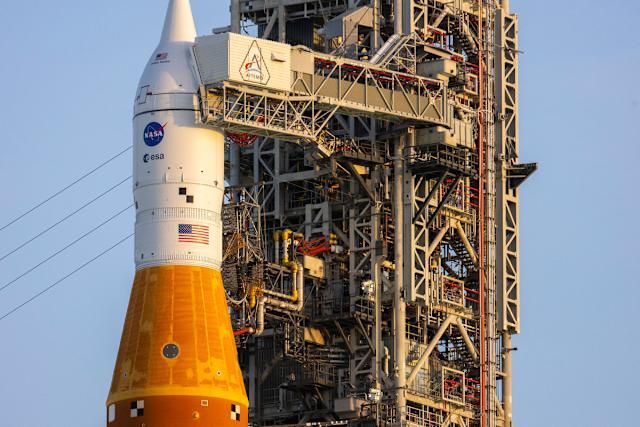
It is easy to forget that Artemis II rests on the success of Artemis I, the uncrewed test mission that sent Orion around the moon in late 2022. Artemis I proved that the spacecraft and launch system could survive the broad shape of the mission. But flying empty is not the same as flying with people on board. Human crews introduce new layers of complexity, from cabin habitability to life support reliability to crew interface with spacecraft systems. Artemis II must show that Orion can safely carry astronauts through the same punishing conditions.
This is where the technical and the human sides of the story meet. A rocket can be called successful when it reaches orbit. A human space mission has a more demanding standard. It has to protect life, preserve confidence, and prove that the experience inside the spacecraft is sustainable for the people relying on it. Artemis II is, in that sense, a stress test not only of technology but of NASA’s readiness to send human beings into lunar space again after decades away.
Why this mission matters politically and globally
Artemis II is also unfolding in a world very different from the one that produced Apollo. The race to the moon is no longer framed only through the lens of the Soviet Union and the United States. Today, the lunar landscape includes a wider set of national and commercial ambitions. The United States wants to reassert leadership in human deep space exploration, while other powers, including China, are pursuing major lunar goals of their own. Several news outlets have noted that Artemis II carries geopolitical weight because it signals that the US is not merely talking about a return to the moon, but is now visibly doing it.
At the same time, Artemis is more international than Apollo ever was. Jeremy Hansen’s presence on the crew symbolizes that shift, and the broader Artemis framework includes international partnerships, commercial contractors, and a more collaborative tone. This does not make the mission less political. It may actually make it more so. Space exploration has always been about science and technology, but it is also about national identity, prestige, industrial capacity, and the ability to inspire future generations.
The psychological pull of going back
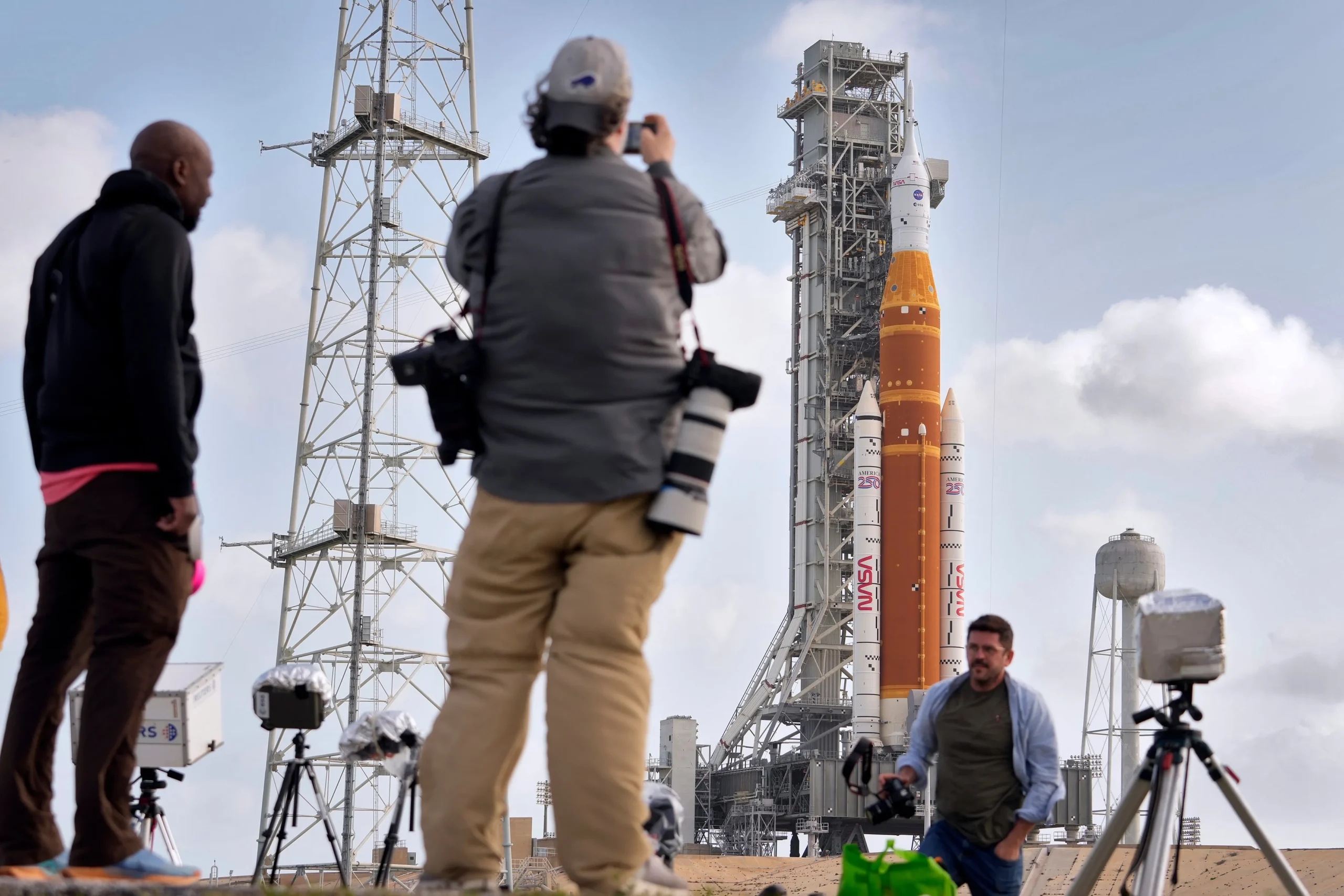
There is another reason Artemis II has captured attention. It touches something primal in the public imagination. The moon is close enough to feel reachable yet distant enough to still feel mythic. Low Earth orbit has become familiar to the public. The moon still feels epic. That emotional gap matters. It is one reason the words “crew to the moon” still sound different from almost anything else in modern science.
NASA knows this. The agency has invested heavily in telling the story of Artemis not just as a technical program, but as a generational one. It is trying to build continuity between the wonder of Apollo and a future in which lunar missions are no longer rare miracles but part of a sustained human presence beyond Earth. Artemis II will not complete that transformation on its own, but it can make it feel real in a way plans and renderings never could.
What happens if Artemis II succeeds
If the mission launches on time and flies successfully, the consequences will be immediate and profound. NASA will have validated the first crewed flight of the Space Launch System and Orion in lunar space. The agency would then be in a much stronger position to move toward a landing mission later in the Artemis program. The crew would also deliver something harder to measure but equally important: confidence. After decades without a human lunar mission, success would show that returning to the moon is not just an aspiration. It is operational.
That confidence could shape policy, budgets, public enthusiasm, and international partnerships. Space programs are often sustained not only by technical merit, but by visible success. Artemis II has the potential to become exactly that kind of milestone, one that makes future steps easier to defend and easier to imagine.
In the end, the countdown NASA has begun is about far more than hours, minutes, and launch procedures. It is the countdown to humanity’s first crewed voyage toward the moon in 53 years. It is the countdown to a mission built on engineering recovery after delays, on a crew chosen to represent a broader future, and on a program that wants to turn a distant dream into a sustained reality. If Artemis II rises from the Florida coast this week, it will not simply be a rocket launch. It will be the moment a long paused journey finally starts moving again.